
2026-11-18 · Moni Happy
How does a wet wipes wholesale line get into Singapore childcare centres?
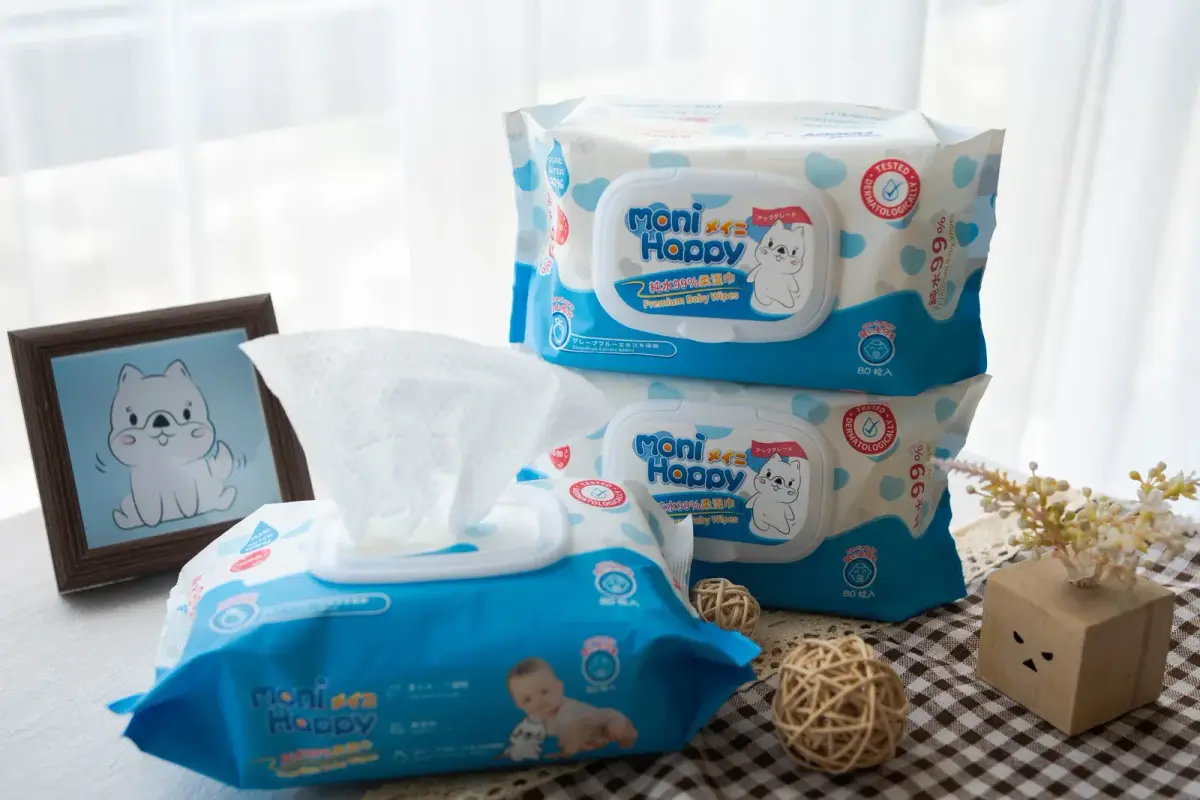
A Singapore childcare centre buys wipes by the carton, twelve months a year, and the order is usually placed by a head office rather than the teacher who runs out. That single fact decides how a wet wipes wholesale line should approach the account. The centre consumes the product daily, on nappy changes, hand wiping and table cleaning, so the volume is predictable. The decision sits with a procurement team that is screening for a specification, a safety file and a delivery rhythm it can put into a contract, and price is one line in that screen rather than the whole of it.
Who actually buys wipes in a Singapore childcare centre?
Three different buyers, and they respond to different things.
Anchor operators run large networks and buy through a central office, usually on an annual or two-year contract with a fixed price and a delivery schedule by centre. Mid-sized chains sit in between, with a purchasing manager covering ten to forty centres. Independent centres, which are the majority by count, buy by phone or messaging, often monthly, and often from whichever supplier answers quickly. A wet wipes wholesale supplier who pitches the same way to all three wastes the first year. The anchor operator needs a tender response with volumes, delivery slots and a penalty clause. The independent centre needs a phone number that gets answered and a carton that arrives in two days.
What does the procurement team screen for?
Fragrance, water claim, label language, and a safety file.
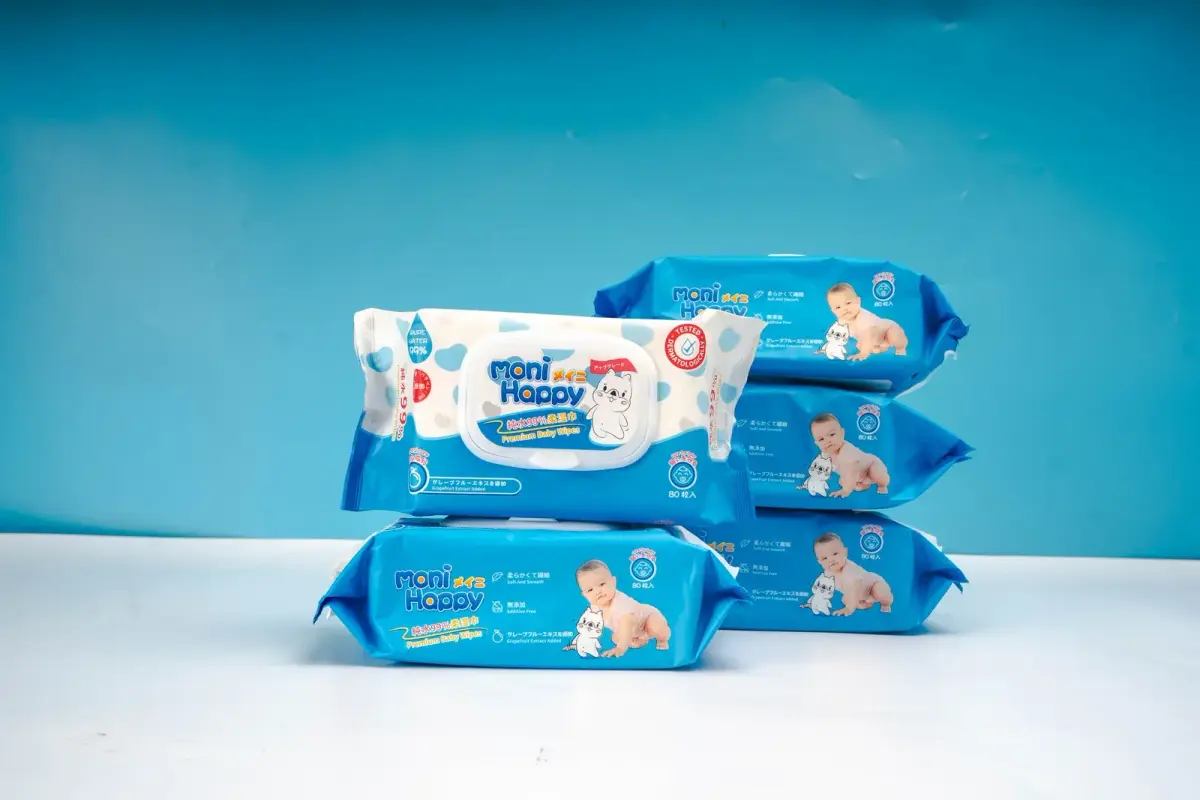
Wipes touch newborn skin and staff hands several hundred times a day, so the screen starts with what is in them. A fragrance-free product with a purified water claim is the easiest to approve. The label has to be in English, with the ingredient list, the pack count and the importer's name on it. Beyond the label, most teams want a file they can hand to a parent who asks: the ingredient list, a dermatological test report, and a safety data sheet if the supplier has one. A product that arrives without that file can win on price and still lose the order, because the person approving it carries the risk. Our baby wipes range is built on 99.9% purified water and a fragrance-free formula, which is the specification this channel asks for first.
How much does one centre consume in a month?
Enough to justify a standing order, small enough that delivery cost decides the margin.
Work an illustrative centre with 60 children aged 18 months to 4 years. Nappy changes run to roughly five per child per day across the youngest group, and each change uses two to four wipes; hand wiping and table cleaning add more. At an illustrative 300 wipes a day across the centre, a 66-sheet pack lasts about four and a half days, so a centre clears close to seven packs a week and around 28 a month. Four cartons of 24 packs covers a month with a small buffer. Multiply that by the network and the account becomes worth pursuing; keep it as a single centre and the delivery run costs more than the goods. That arithmetic is why the route into this channel is a group, not a building.
How should a supplier approach the head office?
With a sample box, a one-page spec and a delivery promise, in that order.
- Send three packs and a spec sheet to the purchasing contact, not to the centre. The centre cannot approve a supplier.
- State the price per carton, the pack count, the minimum order and the lead time in one page. Leave the brochure out of it.
- Offer a trial: one centre, one month, invoiced normally. Trials convert because the staff discover the pack size works or does not.
- Quote delivery to each centre address rather than to a warehouse, and say how many days a week the run covers.
The delivery promise is where most suppliers lose the account after winning it. A group with eighty centres cannot absorb a supplier who delivers on a Thursday one week and a Monday the next, because the centre that runs dry borrows from a neighbouring branch and the purchasing team hears about it.
How do GST and payment terms change the numbers?
Nine percent goes on the invoice, and 30 days is the norm against a group.
Singapore's GST rate has been 9% since 1 January 2024, and a GST-registered supplier charges it on every invoice to a centre. A supplier below the registration threshold cannot charge it, which sounds like an advantage until a group's accounts payable team has to process a non-GST invoice through a system built for GST ones. Payment terms run 30 days from invoice for most groups, longer for the anchor operators, and independent centres often pay on delivery. Price the working capital accordingly: a 30-day term on a monthly carton order is a month of stock financed at the supplier's cost, and a wet wipes wholesale line sold at a thin margin does not carry many of those. Terms are negotiated before the first delivery, not after.
What ends the account after it is signed?
Dry packs, late deliveries, and a spec change nobody was told about.
Three failures show up repeatedly. The first is a pack that dries out, which happens when the lid does not reseal after the tenth opening and the centre is halfway through a 100-sheet pack; staff stop using it and the purchasing team switches supplier at renewal. The second is a delivery that misses a week, which forces the centre to buy retail and makes the contract look expensive. The third is a silent spec change, where a substrate or a water claim shifts between batches and the file held by the purchasing team no longer matches the carton. Any of the three is recoverable once. All three in a year is a lost account, and in this channel a lost group is eighty centres at once. For the paperwork side of a first shipment, the import documentation note covers what a buyer in the region is asked to produce. If you are quoting a childcare group, request pricing and a sample box with the delivery schedule attached.
Frequently asked questions
Do centres buy wipes directly or through a head office?
Larger operators buy through a head office or a central purchasing team. Independent centres buy directly, usually by phone, and pay faster.
Is a safety data sheet required for baby wipes?
Not by law for a cosmetic-type wipe, but most procurement teams ask for one. Keep the ingredient list, the certificate and the English label ready in one file.
What pack size suits a centre?
A 60 to 80 sheet pack with a resealable lid. Larger packs dry out between uses at a small centre, and smaller packs raise the cost per wipe.
Can a supplier invoice each centre separately?
Yes, and it is often what the operator prefers. One purchase order from head office, deliveries and invoices split per centre, consolidated statement monthly.
Sources and further reading
- Early Childhood Development Agency, licensing and centre directory for Singapore preschools, ecda.gov.sg.
- Inland Revenue Authority of Singapore, current GST rate and registration rules, iras.gov.sg.
- National Environment Agency, guidance on hygiene practice in preschool settings, nea.gov.sg.
Bottom line: the centre uses the wipes but the group buys them, so the first call belongs to the purchasing office and the first shipment should be a trial at one centre. Win on a fragrance-free purified water spec, an English label and a safety file, then hold the account with a delivery day that never slips. Price GST and 30-day terms into the carton before quoting, because both are already in the buyer's model.
Frequently Asked Questions
Do centres buy wipes directly or through a head office?
Larger operators buy through a head office or a central purchasing team. Independent centres buy directly, usually by phone, and pay faster.
Is a safety data sheet required for baby wipes?
Not by law for a cosmetic-type wipe, but most procurement teams ask for one. Keep the ingredient list, the certificate and the English label ready in one file.
What pack size suits a centre?
A 60 to 80 sheet pack with a resealable lid. Larger packs dry out between uses at a small centre, and smaller packs raise the cost per wipe.
Can a supplier invoice each centre separately?
Yes, and it is often what the operator prefers. One purchase order from head office, deliveries and invoices split per centre, consolidated statement monthly.
Distributor resources
If you are evaluating suppliers for your market, these are the pages that answer the commercial questions — in the order buyers usually need them.
