
2026-11-09 · Moni Happy
How should a diaper wholesale buyer split the first pallet across the five lines?
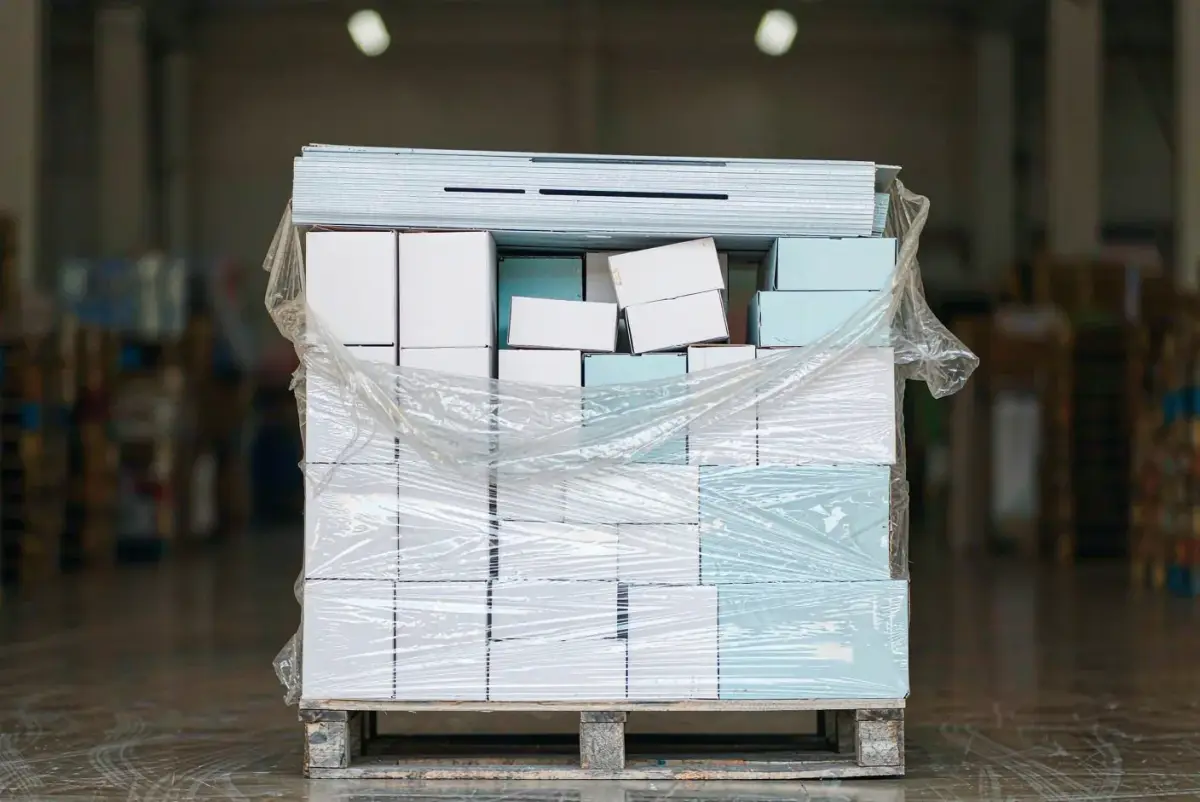
Put about 55 percent of the cartons on tape diapers, 18 percent on pull-up pants, 15 percent on wet wipes, and split the remaining 12 percent between facial tissue and cotton towels. On a pallet of roughly 50 cartons that is 27, 9, 8, 4 and 2 - a split that gives every line enough presence to be read on a shelf without burying the working capital in a category the store may not support.
The instinct on a first order is to concentrate. Buy one line, learn it, add the next. That works when the buyer is a single-category discounter. It fails with the accounts that matter in this region, because baby stores, medical halls and pharmacy chains buy a range and judge a diaper wholesale supplier on whether that range is complete. A distributor who arrives with diapers only gets a diapers listing, and a diapers listing on its own rarely survives the first category review.
So the first order mix is a sampling instrument, not a stocking decision. Its job is to put all five lines in front of a buyer at the lowest total cost, and the split below is built around that job rather than around any single line's margin.
What split actually works on a first pallet?
The 55/18/15/8/4 split, adjusted for the account format rather than for the diaper wholesale price list.
Tape diapers take the majority because they are the line every account already sells and the one that pays for the pallet. Pull-up pants take a fifth because they are the fastest-growing line in most of these markets and the one buyers ask about first when they are deciding whether a supplier is current. Wet wipes take a sixth because they attach to almost every diaper sale and cost little shelf space. Facial tissue and cotton towels take single-digit shares because they are range completers: a baby store wants them present, but nobody opens a new supplier relationship to buy them.
- Diapers: two or three sizes rather than a full size ladder, weighted to the middle sizes.
- Pants: two sizes, matched to the diaper sizes immediately above them so the shelf reads continuously.
- Wipes: one or two pack formats, not a full variant range.
- Tissue and towels: one carton configuration each, chosen for the pack count the account already stocks.
Written as a first order mix, this gives a buyer a range they can put on a shelf in one afternoon and a distributor a read on five lines from one shipment.
Why should diapers dominate the pallet but not fill it?
Because diapers fund the order and the other four lines justify the listing, and a pallet of only diapers does neither job completely.
Diapers are the line with the clearest velocity and the most predictable reorder, so they carry the pallet's commercial weight. But a buyer who takes only diapers is comparing you with every other diaper supplier on piece price alone, and on piece price alone a new brand loses. The moment tissue and towels are on the same purchase order, the comparison shifts from a single price to a range, and range is where a new supplier can actually win.
There is a working-capital argument too. In diaper wholesale, the pallet that ships is also the pallet that gets reordered, so the majority line has to be the one with predictable velocity. Diapers are bulky too, so they consume pallet space and warehouse space out of proportion to their value. Loading 90 percent of the pallet with diapers produces a shipment that is expensive to store and slow to turn, while the fast-moving wipes and tissue that would have improved the account's rotation never arrive at all.
How do carton dimensions decide how many lines fit?
By cubing, not by counting. A standard pallet takes 45 to 60 cartons in this category, and the limit is usually reached on height before weight.
Diaper cartons are large and light, so a pallet layer might hold eight or ten of them and stack four or five high. Wet wipes cartons are smaller and denser, so more of them fit but they weigh more per litre of pallet space. Tissue cartons are the most compressible and the easiest to damage under load, which is why they belong in the upper layers rather than at the base.
Two practical rules follow. First, never plan a mixed pallet to the theoretical cube - leave one layer of headroom so the load can be rebuilt when a line is short. Second, ask for the carton configuration in writing before the order is confirmed: length, width, height and gross weight per carton for every SKU on the pallet. A pallet plan built on assumed dimensions falls apart at the loading dock, and the cost of rebuilding it lands on the buyer.
Which line should I drop first if the pallet will not cube out?
Drop facial tissue first, cotton towels second, and never drop wipes.
Tissue is the line with the highest carton volume relative to its value and the lowest attachment rate to a diaper purchase. If space is short, a tissue carton costs the pallet more than it earns. Cotton towels are next: they are a genuine range completer in a baby store, but they are also the line most likely to sit, because the parent who buys them buys them once a month rather than once a week.
Wipes are the last thing to cut. They attach to the diaper sale, they turn fast, and they give the account a reason to place a small repeat order between container cycles. A pallet without wipes produces a distributor who hears from the account twice a year.
How does the mix change for a pharmacy chain rather than a baby store?
Shift two cartons from diapers into wipes and towel, and drop tissue entirely.
Pharmacy buyers in this region treat baby care as an attachment category to a much larger health and beauty business. Their shelf is narrow, their planogram is set centrally, their carton configuration is fixed by the distribution centre rather than by the store, and their category review rewards lines that sell per facing rather than lines that complete a range. Wipes and cotton towels fit that logic because they are small, high-rotation and adjacent to the pharmacy's existing customer. Tissue competes with the store's own tissue range, which is usually already local and cheaper.
A baby store inverts the logic. It wants the range complete, it will give a new supplier a facing for a line it does not yet have, and it measures the supplier on whether the shelf looks like a baby brand. Same five lines, two different first order mixes, and the difference is worth a carton or two in either direction.
Why does per-SKU MOQ set the real floor, not pallet size?
Because MOQ is calculated per SKU, and a pallet spread across nine SKUs has to clear nine minimums before the pallet itself matters.
This is where most diaper wholesale first orders go wrong. A buyer plans a beautiful mixed pallet, then discovers that each size and each pack format carries its own minimum, and the total lands well above what the pallet can physically hold. The fix is to reduce the number of SKUs before reducing the carton count: two diaper sizes instead of four, one wipes format instead of three, one tissue configuration. Fewer SKUs at a workable quantity per SKU beats nine SKUs sitting just under their minimums.
Ask for the quotation to show the MOQ against each line and each size, and the piece price at that quantity rather than at container quantity. A mixed pallet price that is extrapolated from a full-container rate is not a price you can actually buy at, and the gap between the two is the most common source of a first order that loses money before it lands. A quotation that will not state MOQ per line is a quotation you cannot compare with another.
When you are ready to test a mix, apply as a partner and we will build the pallet plan with you against the carton dimensions and minimums for each line. Partners in Singapore and Thailand usually start with a pallet or a part-container and extend to the full range once two lines have proven. If you want the category detail before choosing, the product range page lists what each line carries.
Frequently asked questions
Should the first pallet carry the same pack sizes as the market leader?
Match the pack size the account already shelves for diapers and wipes, then differentiate on price per piece or on the pack count. A pack size the store has no facing for will not be stocked regardless of the price.
Is a mixed pallet more expensive per piece than a full container?
Usually yes, because setup and packing are spread over fewer units per SKU. Treat that premium as the cost of testing the range, and expect it to narrow as the order size grows.
How many SKUs is too many on a first pallet?
More than six to eight. Beyond that, the quantity per SKU gets so thin that neither the shelf nor the data tells you anything useful.
Can I mix pallets across a part-container shipment?
Yes, and that is the usual route for a first order in this region. Confirm with the forwarder how the pallets will be loaded and whether the mix survives transhipment without being rebuilt.
Sources and further reading
- GS1 barcode standards for retail units and cases (GS1, current): the identification basis a chain needs before any mixed pallet can be received into a distribution centre.
- ISO 3394 - Dimensions of rigid rectangular packages, transport packages (ISO): the modular basis behind pallet and carton dimension planning.
- EDANA - absorbent hygiene and nonwoven product standards (EDANA, current): category reference for diaper, pants and wipe specifications used in the mix.
Bottom line
A diaper wholesale first pallet should carry all five lines in a fixed proportion - roughly 55 percent diapers, 18 percent pants, 15 percent wipes and the rest split between tissue and towels - because the pallet's job is to test a range, not to optimise one line. Reduce SKU count before carton count, confirm carton configuration in writing, and reorder the same mix only once eight to twelve weeks of sell-through per store has been read line by line.
Frequently Asked Questions
How many cartons fit on one standard pallet?
Usually between 45 and 60 cartons for this category, depending on carton dimensions and stack height. Diaper cartons are bulky and light; wipes and tissue cartons are denser, so the pallet often cubes out before it reaches its weight limit.
Should the first order include all five lines?
Yes if the buyer is a baby store or a mixed retailer, because a single-line listing rarely earns a second order from a range-driven buyer. Skip a line only when the account format makes it unsellable, such as a pharmacy that will not carry tissue.
Does a mixed pallet raise the piece price?
It can, because each SKU carries its own setup and packing cost and per-SKU MOQ applies. Ask for the quotation to show the piece price per line on the mixed configuration rather than extrapolating from a single-line price.
How long before I know whether the mix worked?
Eight to twelve weeks of sell-through data per store, per line. Reordering the same mix at week four tells you what the pallet contained, not what sold.
Distributor resources
If you are evaluating suppliers for your market, these are the pages that answer the commercial questions — in the order buyers usually need them.
