
2026-11-13 · Moni Happy
How much do storage and handling take out of a diaper wholesale margin?
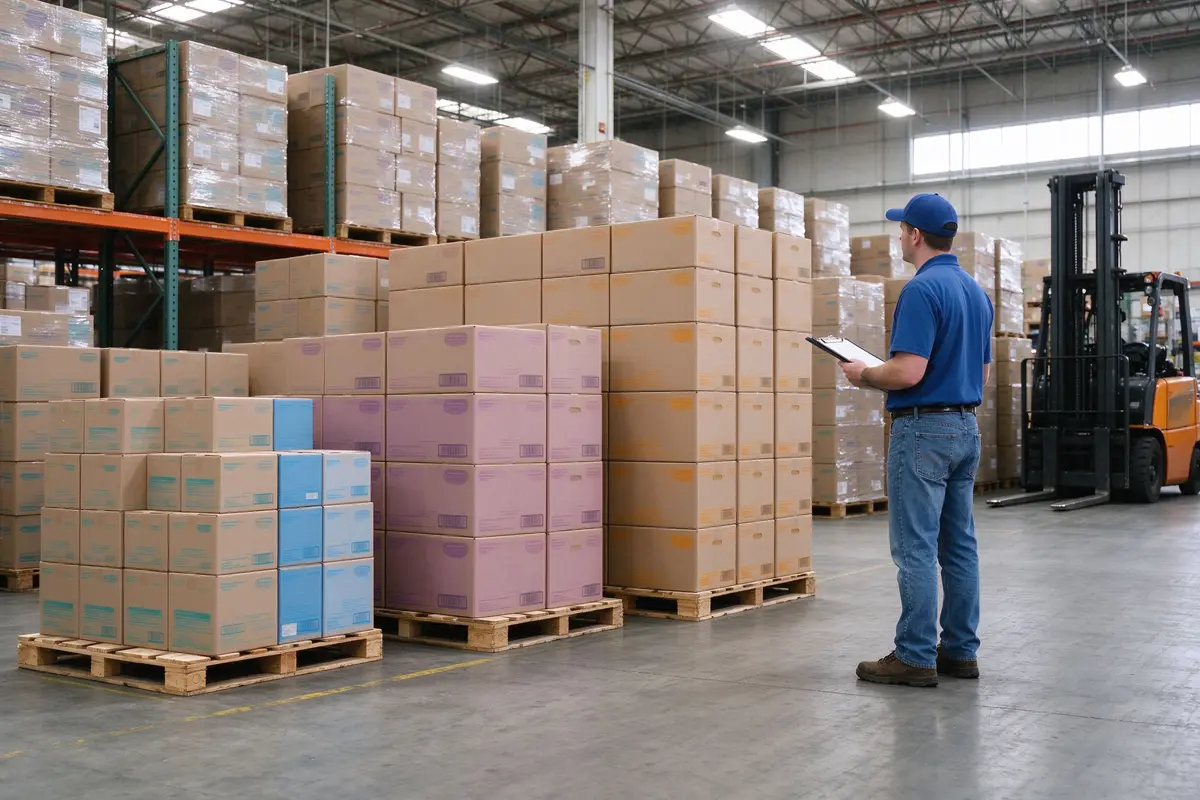
Storage and handling take roughly 2 to 5 percentage points off a diaper wholesale margin. On a container holding 48,000 pieces at USD 0.18 to 0.28 landed cost, that is USD 0.004 to USD 0.014 per piece, or USD 190 to USD 670 per container per month of holding. The number is small per piece and large per year, which is exactly why it survives unnoticed in most distributor P&Ls.
Most buyers on a diaper wholesale order model freight, duty and the piece price, then treat the warehouse as a fixed cost that arrives whether or not the container does. That works until volume grows and the pallet count grows with it. At that point the storage cost line starts deciding which SKUs are worth carrying, and the answer is rarely the SKU with the highest margin on paper.
How much do storage and handling take out of a diaper wholesale margin?
Two to five points, split roughly one third rent and two thirds handling. The split matters because the two halves respond to completely different decisions.
Rent responds to how long stock sits and how high you stack. The handling cost responds to how many times each carton is picked up, which is set by your order profile and your delivery routing. A distributor with 40 drops a week pays more handling than one with 12 drops of the same total volume, and the gap is usually larger than the rent difference between a good and a mediocre warehouse.
Put the two together as a rate per pallet position per month, then divide by the pieces on that pallet. A mixed pallet of diaper cartons carrying 1,900 to 2,200 pieces and costing USD 18 to USD 30 a month to hold works out at USD 0.008 to USD 0.016 per piece. That range is the honest starting point for the line in your quote.
How many pallet positions does one container actually occupy?
Twenty-two to twenty-six, depending on whether the cartons arrive palletised or floor-loaded. One pallet position is the unit everything else divides by, and it is the single number most often guessed wrong.
A 40-foot high cube offers about 65 to 68 cubic metres of usable volume. Floor-loaded standard diaper cartons fill it with roughly 48,000 pieces. Rebuild those cartons onto 1.2 by 1.0 metre pallets at about 1.4 metres high and you get 22 to 26 positions, with 60 to 72 cartons on each. Arrive palletised from origin and you lose 4 to 6 cubic metres to the pallet bases and the slip sheets, so the same container lands at 20 to 22 positions.
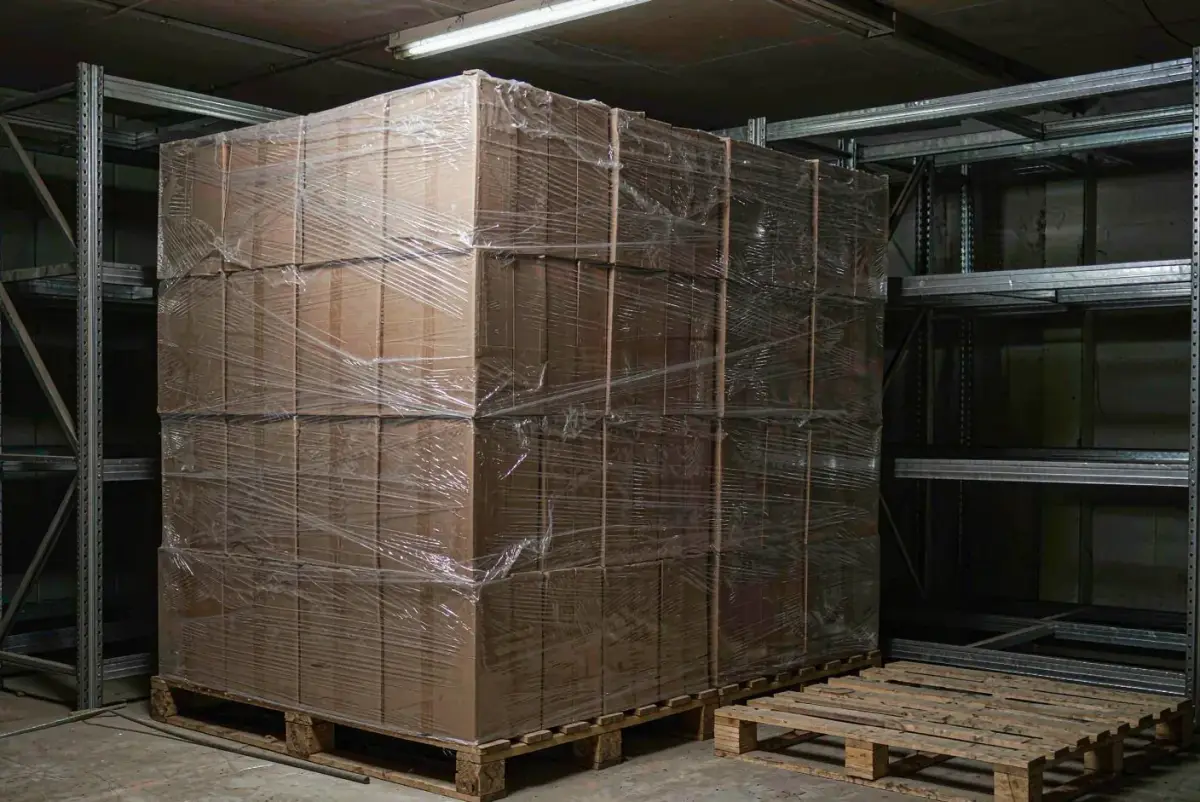
Ask for the pallet pattern with the quotation. A supplier who cannot state cartons per pallet and pallets per container has not shipped this product in this configuration, and you will discover the real number at the loading bay.
What does a pallet position cost per month, and how do I calculate it?
Take the rent per square metre, divide by the positions you can stack on that square metre, add the racking depreciation, and you have the number. Everything else is arithmetic.
Worked as a planning example, clearly hypothetical: rent at USD 7 per square metre per month in a secondary industrial area, with two-high racking on 1.2 by 1.0 metre pallets giving about 1.4 positions per square metre, produces a rent component near USD 5 per position. Add racking depreciation, insurance and utilities and the occupied position lands at USD 8 to USD 10. Multiply by the 30% of positions that hold slow-moving lines rather than fast ones, and the effective rate on the slow lines doubles.
Two cautions. First, confirm local rents with a broker rather than a blog post, because industrial rents move in bands by state and by year. Second, count positions, not square metres. A warehouse with a wide aisle layout can lose 20% of its positions to circulation and still show the same rent per square metre.
Why does handling cost more than rent?
Because every carton is touched five to seven times between the container door and the store shelf, and each touch carries a labour minute.
- Unload and count. Container unloading, carton count against the packing list, damage check. Piece-level counting instead of carton-level counting doubles this step.
- Putaway. Cartons move from the dock to a rack or a bulk stack. Floor stacking near the dock saves a touch but blocks rotation.
- Pick. An order for 15 cartons across 4 SKUs means 4 stops, not 1. Every extra line in the order adds a stop.
- Stage and check. Order assembly, document check, seal or shrink wrap if the drop needs it.
- Load and deliver. Truck loading, the drop itself, and the paperwork signed at the store.
Multiply by cartons per month. A route delivering 600 cartons a week at 5 touches and 20 seconds a touch is 10 labour hours a week before driving. At a loaded labour rate of USD 6 to USD 12 an hour depending on the market, that is USD 60 to USD 120 a week, or USD 0.10 to USD 0.20 per carton. On 60 pieces per carton, that is under USD 0.004 per piece for handling alone, before any of the warehouse rent.
How do I price storage back into a per-piece quotation?
Build it as three lines rather than one blended overhead: position cost, touch cost, and the cost of capital on the stock while it sits. Then divide by pieces.
The capital line is the one distributors forget. Stock held 60 days at a 7% annual funding cost adds 1.15% of the stock value, and on landed cost of USD 0.20 that is USD 0.0023 per piece. Combine the three lines and a slow-moving line carrying 90 days of stock costs two to three times per piece what a fast line costs, even though both arrived on the same container.
This is the arithmetic to bring to a price review on any diaper wholesale line. A brand that wants a distributor to hold 90 days of cover on a slow SKU is asking for a real number, and showing it in cents per piece is more persuasive than showing it as a rent invoice.
When does a smaller, faster drop beat a full container?
When the storage and handling saved exceeds the freight premium paid for the smaller shipment, which happens more often than the container economics suggest on low-volume SKUs.
A full 40-foot container carries the lowest freight per piece. It also lands 22 to 26 pallet positions at once. If a distributor can turn 12 positions a month, the other half sits for a month, and the holding cost on that half is what the freight saving was supposed to buy. Run both numbers before committing: the freight per piece on the full container, and the storage and handling per piece over the actual selling period.
For a first order the full container still usually wins, because the fixed clearing and documentation cost per shipment is the larger item. From the second or third cycle, the calculation flips on any line that sells slower than the container lands. If you are at that stage and want the per-piece arithmetic run against your own drop profile, the partner programme will return pricing and a first-order mix suggestion together, and the distributor onboarding guide covers the clauses that make the holding cost visible in the contract.
Frequently asked questions
Is storage really a margin line, or is it just overhead?
It is a margin line. A pallet that sits 60 days instead of 30 doubles the storage cost carried by those pieces, and nothing in the price list changes. Track it per pallet position and the number moves with order frequency, not with warehouse size.
How many pallets does one container of diapers become?
A 40-foot high cube floor-loaded with standard diaper cartons holds around 48,000 pieces, which repalletises to roughly 22 to 26 positions at 1.2 by 1.0 metres. Arriving palletised costs you 4 to 6 cubic metres of cube and lands at 20 to 22 positions.
Should I charge storage to the brand or absorb it?
Absorb it only for stock you turn inside 45 days. Beyond that, pass a holding charge into the next price review or cut the slow lines. A brand that never sees the holding cost will keep shipping the lines that sit longest.
Does handling cost more in Singapore than in Malaysia?
Yes, mainly on labour. Warehouse wages and land rent are both higher in Singapore, so the per-carton handling rate runs two to three times the Malaysian figure. Singapore drops end up smaller and more frequent, which pushes the cost up again.
Sources and further reading
- ISO 6780 (International Organization for Standardization): principal dimensions and tolerances for flat pallets used in intercontinental materials handling.
- EDANA (current): nonwovens and absorbent hygiene product industry association, including compression and packaging guidance for absorbent hygiene articles.
- Logistics Performance Index (World Bank, current edition): comparative customs, infrastructure and logistics scores for Malaysia, Singapore, Thailand, Vietnam and Laos.
Bottom line
Storage and handling cost 2 to 5 points of a diaper wholesale margin, and two thirds of that is labour rather than rent. Count pallet positions instead of square metres, count touches per carton instead of per order, and put the cost of capital on slow stock into the same line. The arithmetic takes an hour and it changes which SKUs you agree to carry.
Frequently Asked Questions
Is storage really a margin line, or is it just overhead?
It is a margin line. A pallet of diaper cartons that sits 60 days instead of 30 doubles the storage cost carried by those pieces, and nothing in the price list changes. Distributors who track it per pallet position find the number moves with order frequency, not with warehouse size.
How many pallets does one container of diapers become?
A 40-foot high cube floor-loaded with standard diaper cartons holds around 48,000 pieces, which repalletises to roughly 22 to 26 pallet positions at 1.2 by 1.0 metres. If the cartons arrive already palletised, expect 20 to 22 positions and 4 to 6 cubic metres of cube lost to the pallet bases.
Should I charge storage to the brand or absorb it?
Absorb it only for stock you can turn inside 45 days. Beyond that, either pass a holding charge into the next price review or stop ordering the slow lines. A brand that never sees the holding cost will keep shipping the lines that sit longest.
Does handling cost more in Singapore than in Malaysia?
Yes, mainly on labour. Warehouse wages and land rent are both higher in Singapore, so the per-carton handling rate is typically two to three times the Malaysian figure. That is why Singapore drops tend to be smaller and more frequent, which pushes the cost up again.
Distributor resources
If you are evaluating suppliers for your market, these are the pages that answer the commercial questions — in the order buyers usually need them.
