
2026-11-12 · Moni Happy
How much does poor container loading add to the cost per piece on a diaper wholesale order?
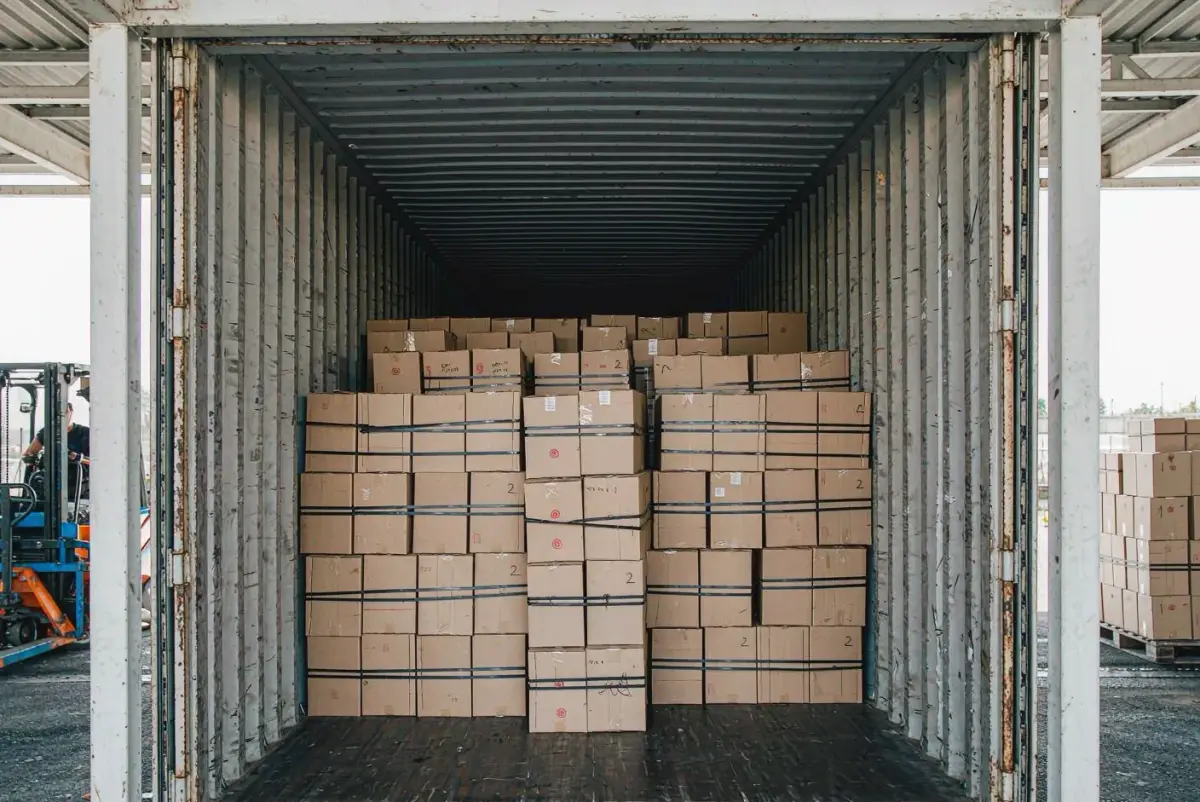
Poor container loading adds roughly 1% to 3% to landed cost per piece on a diaper wholesale order. The number that hurts is the fallback: when a short load splits into a second, part-container shipment, landed cost can move by up to 8%, because part-container freight is charged at several times the full-container rate per cubic metre.
Most buyers treat the freight line as a market number they cannot influence. In this category it is the one line they can influence without renegotiating anything, because diapers cube out long before they weigh out. A 40-foot high cube offers roughly 65 to 68 cubic metres of usable volume and can legally carry about 26 tonnes; a load of diaper cartons reaches the volume limit at a small fraction of that payload. Once the box is full, the only variable left is how efficiently the cartons fill it.
How much does poor container loading actually add to the cost per piece?
About 9% on the freight and fixed-cost lines, which translates to 1% to 3% of landed cost per piece. Container loading touches two different cost lines and only one of them is large, so the arithmetic only works once you separate the lines that scale with volume from the lines that do not.
Freight, terminal handling, customs clearance, inland haulage, inspection and the minimum insurance premium are all charged per container. Only duty, VAT and the piece price scale with the number of pieces inside. So if a container that should hold 48,000 pieces ships 44,000 instead, every per-container cost is spread across 8.3% fewer pieces and the per-piece figure rises by the same 8.3% on those lines.
Work it through on the site's standard ranges. Landed cost runs at USD 0.18 to 0.28 per piece, and the per-container cost block is typically 12% to 20% of that. An 8.3% rise inside that block is 1.0% to 1.7% of landed cost, or roughly USD 0.002 to 0.005 per piece. On a 48,000-piece container that is USD 96 to 240. Real, recoverable, and not the reason a first order fails. Run the same carton configuration at 88% fill and at 96% fill, and the difference in freight per piece is the number the loading plan is arguing about.
The reason a first order fails sits one step further down the chain.
Why does carton cube matter more than carton weight in this category?
Because you are buying space, not tonnage. Two suppliers can quote the same piece price and the same carton count, and one will fit 30% more cartons into the same box. The gap between them is carton configuration, and it shows up as a lower freight per piece before anything else in the quotation changes.
Three things set the cube a carton occupies: its outer dimensions, how far the packs compress inside it, and whether the carton is designed to stack in full layers. A carton that is 5mm taller than the layer height of the cartons under it wastes a strip of space across the entire container. Multiply that strip by the number of layers and a 5mm decision becomes a cubic metre.
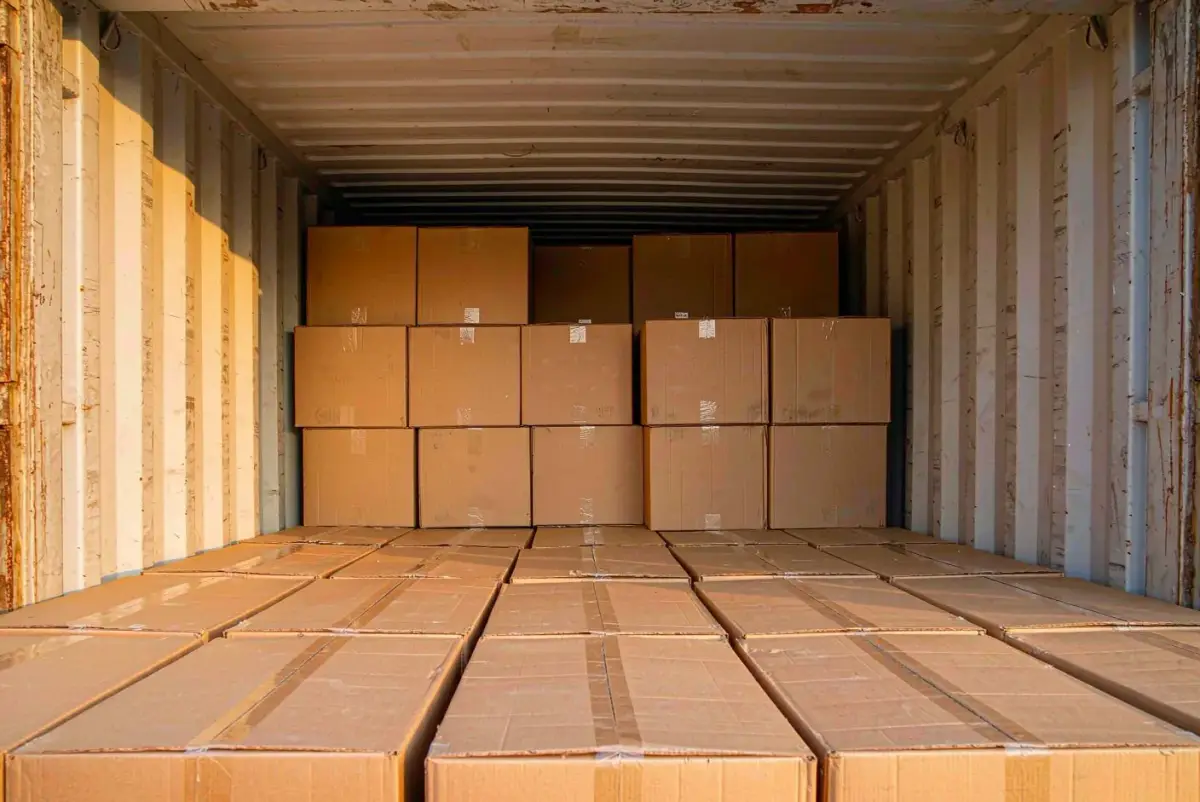
This is why carton configuration belongs in the commercial negotiation and not in the packing department. Ask for the outer carton dimensions in millimetres, the number of packs per carton, and the cartons per layer and layers per pallet or per container floor. A supplier who cannot answer within a day has not loaded this product recently.
What fill rate should I ask the supplier to confirm before booking?
Ask for a fill rate against usable cube, in writing, and treat anything under 88% as a question that needs an answer. On a diaper wholesale order of any size, that one number decides more of the landed cost than the freight rate does.
- Usable cube, not nominal. A 40-foot high cube is nominal 76 cubic metres and usable 65 to 68. Quote the fill rate against usable, or the number is decorative.
- Cartons per container and pieces per container. Two numbers, both stated, so the freight per piece can be derived and compared across quotations.
- The loading plan. Floor-loaded or palletised, layer pattern, and how the last partial layer is handled. Floor loading typically wins on cube; pallets win on handling time at destination. Choose deliberately.
- The verified gross mass. Container weight verification is a legal requirement before loading, and a light cargo still needs the declaration. It is also the fastest way to find out that a supplier has substituted a heavier board grade.
How do mixed SKU orders quietly lose cube?
Every additional line reduces the chance that cartons stack to a common layer height, and the loss compounds at the tail of the order.
A five-line first order is normal, and it is fine when all five lines share a carton footprint. It stops being fine when the smallest line is a different carton size, because that line cannot share a layer with anything else and ends up as a partial layer with air above it. The pieces in that partial layer cost more to ship per unit than anything else in the container, and they are usually the pieces you wanted least.
Three practical limits keep this under control. Keep the first order to lines with a shared carton footprint where you can. Put the odd-sized line on top, where a partial layer wastes least. And price the odd line as a separate landed cost before you approve the mix, so the tail of the order is not subsidised by the head of it without anyone noticing.
When does a short load turn into a second shipment, and what does that cost?
When the balance is too small for a container and too large to abandon, which is usually anything above a couple of pallets. That is the expensive outcome.
Part-container freight is charged per cubic metre or per tonne, whichever is greater, and the per-unit rate is several times the full-container equivalent on the same lane. Add a second set of documentation, a second clearance, a second inland delivery and a second round of handling damage, and the effective landed cost of the balance of the order can be a third higher than the main shipment.
Label it honestly in your own model: if 15% of an order moves as a part container at three times the per-unit freight, the blended freight line rises by roughly 30%, and on a 12% to 20% freight share that is 3.6% to 6% of landed cost. That is where a container loading decision stops being a rounding error on cost per piece and becomes the reason an order loses money. It is the scenario worth avoiding, and it is avoided at the quotation stage, not at the port.
What documents prove the loading I paid for?
Four, and you should have them before the seal number is issued: the packing list with carton dimensions and total volume, the loading photographs, the seal number, and the verified gross mass declaration.
- The packing list should show cartons, pieces, outer dimensions in millimetres, net and gross weight, and total cubic metres per line, not just totals.
- Loading photographs should show the container number, the door open before loading, the first layer, the mid-point and the closed door with the seal. Four frames settle most arguments.
- The seal number belongs on the bill of lading and on your copy of the packing list, so a short delivery can be tied to a specific box.
- The verified gross mass declaration is the cross-check: if the declared mass is far below what the packing list implies for the stated volume, the cartons are not what the packing list says.
None of this requires a plant visit. It requires the four documents in the same email before the booking closes, which is a normal request for a supplier who ships this category regularly. When you are comparing suppliers for a first container, ask for a redacted loading report from a previous shipment as part of the quotation package, in the same way you would ask for a test report.
If you are still at the stage of choosing between suppliers, the onboarding guide at the distributor onboarding guide sets out what to request in the first exchange. If you already have a quotation in hand and want it checked against a loading standard, request pricing and a loading plan and we will return both with the carton dimensions attached.
Frequently asked questions
Does a fuller container really lower the price I pay per diaper?
Yes, but by less than most buyers expect. Freight and fixed clearing costs are usually 12-20% of landed cost on intra-Asia lanes, so a 9% improvement in fill only moves landed cost by 1-3%. It matters most when it is the difference between one shipment and two.
What fill rate is realistic for a diaper container?
Floor-loaded cartons of standard diaper packs normally reach 90-96% of the usable cubic capacity of a 40-foot high cube. Below 88% there is usually a carton dimension or mixed-SKU stacking problem rather than a weight problem.
Can I load to the container weight limit instead of the volume limit?
Almost never in this category. Diaper cartons are light, so a container cubes out long before it approaches the payload limit. Carton dimensions and layer height decide the economics, not tonnes.
Who pays when the container arrives short-loaded?
The buyer, in practice. Freight is charged per container, not per piece, so a short load is a cost the importer absorbs. The protection is a written loading standard plus the packing list and load photographs.
Sources and further reading
- World Shipping Council (current): container weight verification and payload rules behind the verified gross mass requirement cited above.
- Review of Maritime Transport (UNCTAD, annual): container capacity and freight rate context for the per-container cost structure used here.
- ISO 3394 - Dimensions of rigid rectangular packages (ISO): the modular basis behind carton and pallet dimension planning.
Bottom line
Loading efficiency is worth about 1% to 3% of landed cost on a well-run diaper wholesale order, and up to 8% when a short load splits into a part container. The fix is not a plant visit: it is a stated fill rate against usable cube, carton dimensions on the quotation, and four documents before the seal goes on. Price your containers in pieces per container rather than in cartons, and the number that decides your margin stops being a number someone else chose.
Frequently Asked Questions
Does a fuller container really lower the price I pay per diaper?
Yes, but by less than most buyers expect. Freight and fixed clearing costs are usually 12-20% of landed cost on intra-Asia lanes, so a 9% improvement in fill only moves landed cost by 1-3%. It matters most when it is the difference between one shipment and two.
What fill rate is realistic for a diaper container?
Floor-loaded cartons of standard diaper packs normally reach 90-96% of the usable cubic capacity of a 40-foot high cube. Below 88% there is usually a carton dimension or mixed-SKU stacking problem rather than a weight problem. Confirm the number in writing before the booking is made.
Can I load to the container weight limit instead of the volume limit?
Almost never in this category. Diaper cartons are light, so a container cubes out long before it approaches the payload limit. That is why carton dimensions, compression and layer height decide the economics, and why a heavier pack does not automatically cost more to ship.
Who pays when the container arrives short-loaded?
The buyer, in practice. Freight is charged per container, not per piece, so a short load is a cost the importer absorbs. The only protection is a written loading standard plus the packing list and load photographs that let you raise it as a claim before the seal is broken.
Distributor resources
If you are evaluating suppliers for your market, these are the pages that answer the commercial questions — in the order buyers usually need them.
