
2026-09-04 · Moni Happy Editorial Team
Introducing Sippy Cups & Weaning from the Bottle: A Mom's Step-by-Step Guide
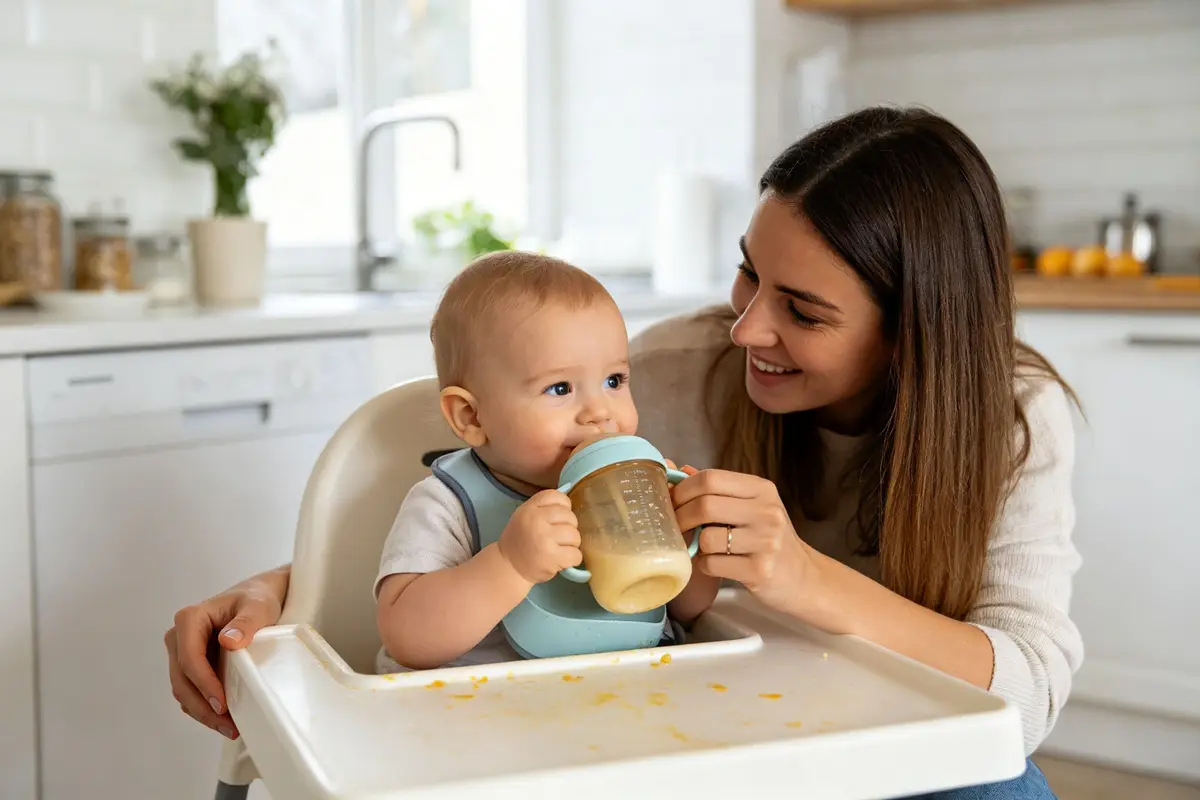
Introducing Sippy Cups & Weaning from the Bottle: A Mom's Step-by-Step Guide
With my first baby, I let her use a bottle way too long. She was 18 months old and still carrying her bottle around like a security blanket. The pediatrician warned me about bottle tooth decay, and sure enough, by age 2 she had a small cavity. I felt terrible. With my second, I introduced a sippy cup at 6 months and had him completely off the bottle by 12 months—no battles, no cavities. With my third, I went straight to a straw cup and an open cup, skipping the spout sippy entirely, and it was the smoothest transition of all. Here's everything I've learned about introducing cups, choosing the right type, and weaning from the bottle without tears.
When to Introduce a Cup & Why It Matters
The American Academy of Pediatrics (AAP) recommends introducing a cup around 6 months of age, when your baby starts solid foods, and weaning completely from the bottle by 12-18 months. Here's why the timing matters:
- Preventing baby bottle tooth decay: Prolonged bottle use, especially at night or with milk/juice in the bottle, is the leading cause of early childhood caries (cavities in babies and toddlers). When a baby falls asleep with a bottle, milk or juice pools around the teeth, and bacteria feed on the sugar producing acid that attacks tooth enamel. The upper front teeth are most commonly affected. Weaning from the bottle by 12-15 months significantly reduces this risk.
- Developing oral motor skills: Drinking from a cup uses different mouth muscles than drinking from a bottle or breast. Cup drinking helps develop the tongue, lip, and jaw muscles needed for speech development and proper chewing. Babies who use bottles past 18 months may have delayed oral motor development.
- Reducing the risk of ear infections: Drinking from a bottle while lying down can cause milk to flow into the Eustachian tubes, increasing the risk of ear infections (otitis media). Cup drinking, especially in an upright position, reduces this risk.
- Healthy weight management: Babies who use bottles past 18 months tend to consume more milk and fewer solid foods, which can contribute to excessive weight gain. Transitioning to a cup encourages age-appropriate milk intake (16-24 oz per day for 1-2 year olds) and more solid food consumption.
- Emotional independence: The bottle often becomes a comfort object for toddlers, and the longer you wait to wean, the more attached they become and the harder the transition. Starting early and making it gradual prevents the bottle from becoming a security blanket.
Signs your baby is ready for a cup: Sits up independently with good head and neck control, shows interest in your cup and reaches for it, can hold objects and bring them to their mouth, has started solid foods (usually around 6 months), and has lost the tongue-thrust reflex (no longer pushing things out of the mouth with the tongue). Most babies show these signs around 6 months, though some may be ready a little earlier or later.
Types of Cups: Which One to Choose
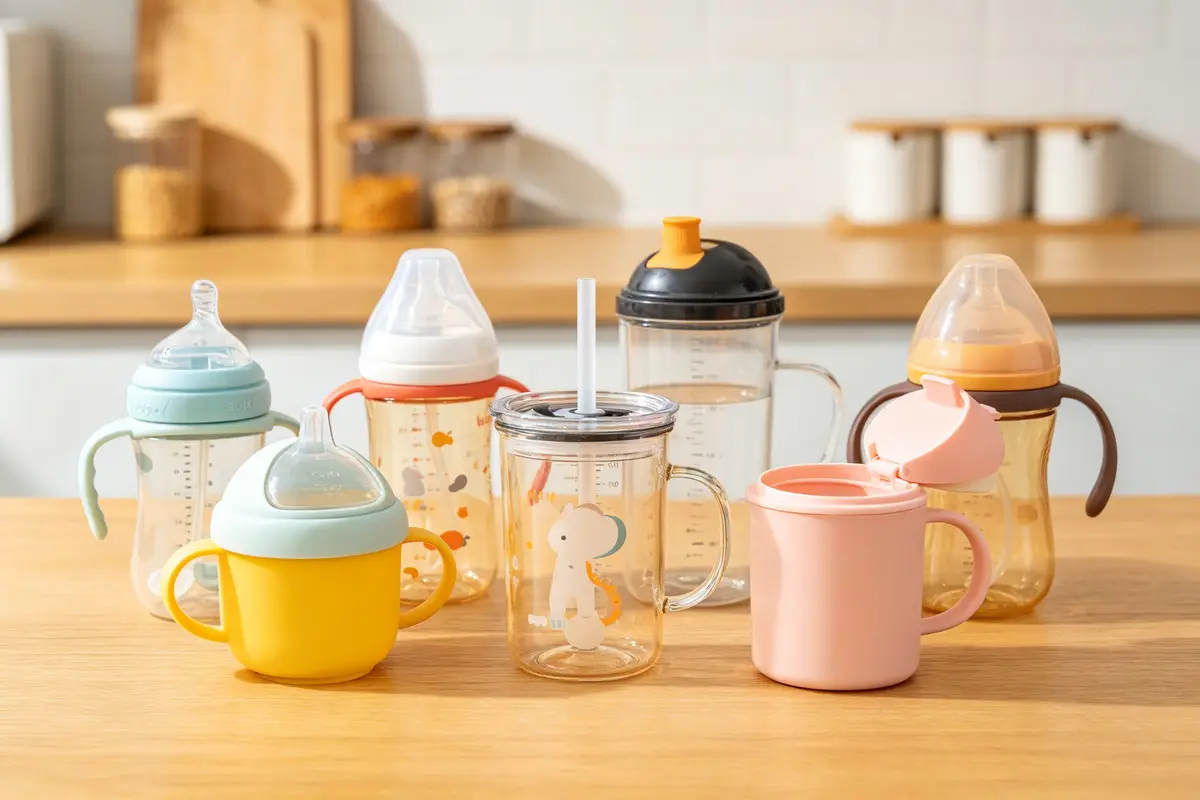
There are many types of cups on the market, and it can be overwhelming. Here's a breakdown of the most common types, their pros and cons, and when to use each:
1. Soft-spout sippy cup (traditional sippy):
- Description: A cup with a soft, silicone spout that the baby bites or sucks on to get liquid. Often has handles and is spill-proof when the spout has a valve.
- Pros: Easy transition from bottle (similar sucking motion), spill-proof, handles for small hands, widely available, affordable.
- Cons: The sucking motion is similar to a bottle, so it doesn't promote mature oral motor skills as well as other cup types. Some speech therapists recommend limiting spout cup use because it can encourage immature tongue positioning. The valves can be hard to clean and may grow mold. Some babies find the spout confusing or refuse it.
- Best for: Initial transition from bottle for babies who are attached to the bottle sucking motion. Use as a short-term transitional tool, then move to a straw or open cup.
2. Straw cup:
- Description: A cup with a straw (often a weighted straw that stays in the liquid even when the cup is tilted). May have handles or be handle-free. Some are spill-proof with a valve, others are free-flowing.
- Pros: Promotes mature oral motor skills (lip closure around the straw, tongue retraction, swallowing), which supports speech development. Many babies take to straws easily. Weighted straws allow drinking at any angle. Can be used for water, milk, and smoothies.
- Cons: Some babies need to be taught how to drink from a straw (though most learn quickly). Straws can be harder to clean (use a straw brush). Spill-proof valves can make it hard to suck. Some straw cups leak if not assembled correctly.
- Best for: Babies 6+ months. Many pediatric feeding specialists recommend straw cups as the preferred transitional cup because they promote proper oral motor development. Popular brands: Munchkin Weighted Straw Cup, Philips Avent Straw Cup, OXO Tot Straw Cup, Pura Kiki Stainless Steel Straw Bottle.
3. 360-degree cup (rim-drinking cup):
- Description: A cup with a special rim that allows drinking from any side (like an open cup) but is spill-proof when not being drunk from. The baby learns to tilt the cup and sip from the rim, similar to an open cup.
- Pros: Promotes open-cup drinking skills (lip closure, tilting, sipping) without the mess of a true open cup. Spill-proof design makes it good for travel and outings. Easy to clean (fewer parts than straw cups). Handles available on some models.
- Cons: Some babies find the rim confusing at first and may bite it rather than sip. The silicone rim can be chewed and damaged by teething babies. Not truly spill-proof if turned upside down and shaken (some leakage). The rim can be hard to clean thoroughly.
- Best for: Babies 6+ months who are learning open-cup skills. The Munchkin Miracle 360 Cup is the most popular brand. Great for transitioning from sippy to open cup.
4. Open cup (regular cup):
- Description: A small, open cup (often with two handles and a weighted base) with no spout, straw, or valve. The baby drinks directly from the rim, like an adult cup.
- Pros: Best for oral motor development (promotes proper lip closure, tongue control, jaw stability, and mature swallowing patterns). No valves or parts to clean. No risk of mold in hidden parts. Encourages independent drinking skills. The AAP and many feeding specialists recommend introducing an open cup as early as 6 months.
- Cons: Messy! Babies will spill, pour, and dump the cup as they learn. Not spill-proof for travel or outings. Requires more supervision. Some babies get frustrated with the mess.
- Best for: Use at home during supervised meals, starting at 6 months. Small, lightweight cups with handles work best (like the Doidy Cup, EzPz Tiny Cup, or small shot glass-sized cups). Use for water at mealtimes—expect spills, it's part of the learning process.
My recommendation: Start with a small open cup for water at mealtimes (6 months, supervised, expect mess) AND a straw cup for milk and water when you need less mess (6+ months). Use the spout sippy cup only as a very short-term transition if your baby is strongly attached to bottle sucking, then move to straw/open cup as soon as possible. By 12 months, aim for straw cup and open cup as the primary drinking vessels, with the bottle completely eliminated. By 18-24 months, transition to a regular open cup for most drinks, keeping a straw cup for travel/outings.
How to Teach Your Baby to Drink from a Cup
Some babies take to a cup immediately, while others need more practice and patience. Here's how to teach each type:
Teaching open cup drinking:
- Start with a small, lightweight cup (like the Doidy Cup, EzPz Tiny Cup, or a small 2-oz cup). Fill it with just a small amount of water (1-2 teaspoons at first) to minimize spills.
- Hold the cup for your baby at first, guiding it to their mouth and tilting it slowly so a tiny amount of liquid touches their lips. Let them experiment with sipping.
- Model drinking from a cup yourself—babies learn by imitation. Drink from your own cup at mealtimes and make it look fun.
- Once they get the hang of it, let them hold the cup themselves with two hands. Expect lots of spills at first—this is normal and part of learning. Use a splash mat or bib to contain the mess.
- Practice at every meal, even if just for a few sips. Consistency is key—most babies master open cup drinking within a few weeks of consistent practice.
- Don't force it—if your baby pushes the cup away or gets frustrated, try again at the next meal. Keep it positive and low-pressure.
Teaching straw cup drinking:
- Choose a straw cup with a soft, flexible straw (some babies prefer a thinner straw, others a thicker one). A weighted straw cup (like the Munchkin Weighted Straw Cup) is great because the straw stays in the liquid even when the cup is tilted.
- Some babies instinctively know how to suck from a straw, but others need to be taught. Here's a trick: put a small amount of liquid in the cup, put the straw in your baby's mouth, and gently squeeze the cup (if it's a soft silicone cup) or blow gently into the straw to push a small amount of liquid into their mouth. This helps them understand that liquid comes from the straw.
- Another method: use a regular straw in a cup, put your finger over the top to trap liquid in the straw, then put the straw in baby's mouth and release your finger to let the liquid flow out. This teaches them that sucking brings liquid.
- Model straw drinking yourself—drink from a straw and make it look fun. Babies love to imitate.
- Practice at mealtimes with water first. Once they've mastered water, you can use the straw cup for milk (if transitioning from bottle).
- Be patient—some babies learn in one try, others take a week or two. Don't give up!
Teaching spout sippy cup (if using):
- Choose a soft-spout cup with handles. Some babies will automatically bite/suck on the spout because it's similar to a bottle nipple.
- Dip the spout in breast milk, formula, or a familiar liquid to encourage them to put it in their mouth.
- Model drinking from the cup yourself (or have an older sibling demonstrate).
- Offer the cup at mealtimes with water first, then transition to milk if desired.
- Try to limit spout cup use to 1-2 months before transitioning to a straw or open cup, to avoid prolonged immature sucking patterns.
General tips: Use water first for practice (less sticky, less staining if spilled). Practice at mealtimes when baby is sitting upright and supervised. Be consistent—offer the cup at every meal, even if just for a few sips. Keep it positive—celebrate small successes, don't react negatively to spills. Expect mess—spills are part of learning, use a splash mat, waterproof bib, or do practice sessions in just a diaper. Don't give up—some babies need 1-2 weeks of consistent practice before they get the hang of it.
Weaning from the Bottle: A Gentle, Step-by-Step Approach
Weaning from the bottle doesn't have to be a battle. The key is to make it gradual and positive, replacing one feed at a time rather than going cold turkey. Here's the approach that worked for my babies:
Step 1: Introduce the cup early (6 months). Start offering a cup (open cup for water at meals, straw cup for practice) as soon as your baby starts solids, around 6 months. This gets them used to the idea of drinking from a cup before the bottle becomes a deeply ingrained habit. At this stage, the bottle is still the primary source of milk—just offer the cup for water and practice.
Step 2: Replace one bottle feed at a time (9-10 months). Start by replacing the least important bottle feed of the day (usually the midday or afternoon feed) with a cup of milk (breast milk, formula, or whole cow's milk if over 12 months). Offer the cup in a high chair at mealtime, making it a positive, social experience. Keep the other bottle feeds as usual. Wait 3-7 days (or until your baby is comfortable with that cup feed) before replacing the next bottle feed.
Step 3: Gradually replace more feeds (10-12 months). Continue replacing bottle feeds one at a time, every 3-7 days. A typical order: midday bottle → afternoon bottle → morning bottle → bedtime bottle. Save the bedtime bottle for last, as it's usually the most comfort-oriented and hardest to give up. By 12 months, aim to have only 1-2 bottle feeds left (usually morning and bedtime).
Step 4: Eliminate the final bottle feeds (12-15 months). Replace the morning bottle with a cup of milk at breakfast (offer it in a fun cup, maybe let your toddler pick out a special cup). Replace the bedtime bottle with a cup of milk as part of the bedtime routine (you can still have the cozy, quiet time—just in a cup instead of a bottle). The AAP recommends completely eliminating the bottle by 12-15 months, and definitely by 18 months at the latest.
Step 5: Remove all bottles from the house. Once your baby is consistently drinking from a cup for all feeds, pack up all the bottles and put them away (out of sight, out of mind). If your toddler asks for a bottle, calmly say "Bottles are for babies, you're a big kid now who uses a cup!" and offer the cup. Don't go back to the bottle once you've eliminated it—consistency is key.
Tips for a smooth transition:
- Make it fun: Let your baby/toddler pick out a special cup (with their favorite character or color). Use a fun straw (silicone, colorful). Praise and celebrate when they drink from the cup ("Wow, you're such a big kid drinking from a cup!").
- Keep the routine: If the bedtime bottle was part of a cozy routine (bath, book, bottle, bed), replace the bottle with a cup but keep everything else the same. The routine provides comfort and security, so the transition feels less abrupt.
- Don't use the bottle as a comfort object: Avoid letting your toddler carry the bottle around the house or use it as a pacifier. The bottle should only be used for feeding, sitting upright in a high chair (not in bed, not while walking around). This prevents the bottle from becoming a security blanket.
- Never put baby to bed with a bottle: This is the #1 cause of baby bottle tooth decay. If your baby needs a drink before bed, offer it in a cup at story time, then brush teeth before bed.
- Expect some resistance: Some babies/toddlers will protest the transition, especially if they're attached to the bottle. Be calm and consistent—don't give in to the bottle after you've started weaning, as this teaches them that crying gets them what they want. Offer extra cuddles and comfort in other ways (stories, songs, special blanket).
- Ensure adequate milk intake: During the transition, make sure your toddler is still getting enough milk (16-24 oz per day for 1-2 year olds, including milk used in cooking and cereal). If they're drinking less from the cup, offer milk in foods (oatmeal, smoothies, yogurt, cheese) to ensure adequate calcium and vitamin D intake.
- For breastfed babies: If you're breastfeeding, you don't need to introduce a bottle at all—you can go straight from breast to cup around 6-12 months. The weaning process is similar: replace one breastfeeding session at a time with a cup of expressed milk or whole milk (if over 12 months), gradually reducing breastfeeding sessions until fully weaned (the AAP recommends breastfeeding for at least 1 year, and as long after as mutually desired).
Article Summary
Introducing a cup and weaning from the bottle is an important developmental milestone that affects dental health, oral motor skills, speech development, and healthy eating habits. The AAP recommends introducing a cup around 6 months (when solids start) and completely weaning from the bottle by 12-15 months (definitely by 18 months). Prolonged bottle use increases the risk of baby bottle tooth decay (especially with bedtime bottles or milk/juice in the bottle), ear infections (from lying down while drinking), delayed oral motor development, and excessive weight gain. There are four main cup types: soft-spout sippy cups (easy transition from bottle but promotes immature sucking—use short-term only), straw cups (best for oral motor/speech development, recommended by feeding specialists, weighted straws work at any angle), 360-degree rim cups (promotes open-cup skills with less mess, like the Munchkin Miracle 360), and open cups (best for oral motor development, messy but worth it for supervised mealtimes). My recommendation: start with a small open cup for water at supervised meals (6 months, expect spills) AND a weighted straw cup for milk/water when less mess is needed. Use spout sippy cups only as a very short-term transition if needed, then move to straw/open cup. By 12 months, aim for straw + open cup as primary vessels; by 18-24 months, transition to regular open cups for most drinks. Teaching cup drinking takes patience and consistency: start with small amounts of water, model drinking yourself, hold the cup for baby at first, practice at every meal, expect spills (they're part of learning), and keep it positive and low-pressure. Weaning from the bottle should be gradual: introduce the cup at 6 months, replace one bottle feed at a time starting at 9-10 months (least important feed first, save bedtime bottle for last), gradually replace more feeds over 10-12 months, eliminate final bottle feeds by 12-15 months, then remove all bottles from the house. Make it fun (special cup, praise), keep the bedtime routine (just replace bottle with cup), never put baby to bed with a bottle, expect some resistance but stay consistent, ensure adequate milk intake (16-24 oz/day for 1-2 year olds), and for breastfed babies, go straight from breast to cup without a bottle. The transition doesn't have to be a battle—with early introduction, gradual replacement, patience, and consistency, most babies transition smoothly and are proud of their "big kid" cup skills. For more baby feeding and care guides, see our baby solid food guide and explore Moni Happy baby care products.
Frequently Asked Questions
When should I start solid foods?
Most babies are ready for solids around 6 months, when they can sit up with support, show interest in food, and have lost the tongue-thrust reflex. Some babies show readiness as early as 4 months, but always check with your pediatrician before starting.
What are the best first foods for my baby?
Single-ingredient, iron-rich foods are ideal first foods — rice cereal, oatmeal, pureed sweet potato, avocado, banana, or pureed chicken. Introduce one new food at a time and wait 3-5 days to watch for allergic reactions. You can offer purees or try baby-led weaning with soft finger foods.
How do I introduce allergenic foods safely?
Current guidelines recommend introducing common allergens (peanut, egg, dairy, wheat, soy, fish, shellfish, tree nuts, sesame) early — around 6 months — and offering them regularly (2-3 times a week) to build tolerance. Start with a small amount in the morning so you can watch for reactions during the day.
How much solid food should my baby eat?
At 6 months, solids are mostly for practice — 1-2 tablespoons once a day is fine. By 8-9 months, aim for 2-3 meals a day with a variety of foods. By 12 months, your baby should be eating 3 meals plus snacks, with breast milk or formula still providing important nutrition. Let your baby's hunger and fullness cues guide you.
Frequently Asked Questions
When should I introduce a sippy cup and when should my baby be off the bottle?
The American Academy of Pediatrics (AAP) recommends introducing a cup around 6 months of age, when your baby starts solid foods, and completely weaning from the bottle by 12-15 months (definitely by 18 months at the latest). Here's the reasoning: At 6 months, most babies show signs of readiness for a cup: sitting independently with good head/neck control, showing interest in your cup and reaching for it, able to hold objects and bring them to their mouth, started solid foods, and lost the tongue-thrust reflex (no longer pushing things out). You can start offering a cup for water at mealtimes even earlier (4-6 months) for practice, as long as baby can sit supported. Why the 12-15 month deadline for weaning from the bottle: 1) Baby bottle tooth decay: Prolonged bottle use, especially at night or with milk/juice, is the leading cause of early childhood cavities. When a baby falls asleep with a bottle, liquid pools around the teeth and bacteria produce acid that attacks enamel. 2) Oral motor development: Cup drinking uses different mouth muscles than bottle sucking, supporting speech development and proper chewing. 3) Ear infections: Drinking from a bottle while lying down can cause milk to flow into Eustachian tubes, increasing ear infection risk. 4) Healthy weight: Toddlers using bottles past 18 months tend to consume too much milk and too few solids. 5) Emotional attachment: The longer you wait, the more attached the bottle becomes and the harder the weaning battle. A realistic timeline: 6 months - introduce cup (open cup for water at meals, straw cup for practice), bottle still primary for milk. 9-10 months - start replacing one bottle feed at a time with a cup. 10-12 months - gradually replace more bottle feeds (one every 3-7 days). 12 months - aim for only 1-2 bottle feeds left (morning and bedtime). 12-15 months - eliminate final bottle feeds, remove all bottles from house. 18 months - absolute latest deadline for complete bottle weaning (AAP recommendation). For breastfed babies: You don't need to introduce a bottle at all—you can go straight from breast to cup around 6-12 months. The AAP recommends breastfeeding for at least 1 year, and as long after as mutually desired. When you're ready to wean from breastfeeding, replace one session at a time with a cup of expressed milk or whole cow's milk (if over 12 months). If your baby is premature, adjust the timeline based on corrected age, and consult your pediatrician for personalized guidance.
What type of cup is best for my baby: spout, straw, 360, or open cup?
There are four main cup types, each with pros and cons. The 'best' cup depends on your baby's age, skills, and the situation. Here's a detailed comparison: 1) Soft-spout sippy cup (traditional): Description: Cup with a soft silicone spout that baby bites/sucks, often with handles and spill-proof valve. Pros: Easy transition from bottle (similar sucking motion), spill-proof, handles for small hands, widely available, affordable. Cons: Sucking motion is similar to bottle, so it doesn't promote mature oral motor skills as well; some speech therapists recommend limiting use because it encourages immature tongue positioning; valves can be hard to clean and grow mold; some babies refuse the spout. Best for: Short-term transitional tool only (1-2 months max) for babies strongly attached to bottle sucking. 2) Straw cup: Description: Cup with a straw (often weighted to stay in liquid when tilted), may have handles, spill-proof or free-flowing. Pros: Promotes mature oral motor skills (lip closure, tongue retraction, swallowing) supporting speech development; many babies take to straws easily; weighted straws allow drinking at any angle; works for water, milk, smoothies. Cons: Some babies need teaching (though most learn quickly); straws need a brush to clean; spill-proof valves can make sucking hard; some leak if not assembled correctly. Best for: Babies 6+ months. MANY pediatric feeding specialists recommend straw cups as the PREFERRED transitional cup because they promote proper oral motor development. Popular: Munchkin Weighted Straw Cup, Philips Avent Straw Cup, OXO Tot, Pura Kiki. 3) 360-degree rim cup: Description: Cup with special rim allowing drinking from any side (like open cup) but spill-proof when not being drunk from. Pros: Promotes open-cup drinking skills (lip closure, tilting, sipping) without the mess; spill-proof for travel; easy to clean (fewer parts than straws); handles available. Cons: Some babies find the rim confusing and bite it instead of sipping; silicone rim can be chewed/damaged by teething babies; not 100% spill-proof if shaken upside down; rim can be hard to clean thoroughly. Best for: Babies 6+ months learning open-cup skills. Most popular: Munchkin Miracle 360 Cup. Great transition from sippy to open cup. 4) Open cup (regular cup): Description: Small open cup (often with handles and weighted base), no spout/straw/valve. Pros: BEST for oral motor development (proper lip closure, tongue control, jaw stability, mature swallowing); no valves/parts to clean or grow mold; encourages independent drinking; AAP and feeding specialists recommend introducing as early as 6 months. Cons: MESSY—babies spill, pour, dump; not spill-proof for travel; requires supervision; some babies get frustrated. Best for: Supervised mealtimes at home starting at 6 months. Use small lightweight cups (Doidy Cup, EzPz Tiny Cup, 2-oz cups) with just 1-2 tsp water initially. MY RECOMMENDED APPROACH: Start with BOTH a small open cup (for water at supervised meals, 6 months, expect mess) AND a weighted straw cup (for milk/water when less mess is needed, 6+ months). Use the spout sippy cup ONLY as a very short-term transition if your baby is strongly attached to bottle sucking, then move to straw/open cup as soon as possible. By 12 months: straw cup + open cup as primary vessels, bottle eliminated. By 18-24 months: regular open cup for most drinks, straw cup for travel/outings. The key is variety—don't rely on just one cup type, as different cups promote different oral motor skills. And remember: all cups should be used while baby is sitting upright (not in bed, not walking around) to prevent tooth decay and choking.
How do I teach my baby to drink from a straw cup or open cup?
Teaching cup drinking takes patience and consistency—some babies learn in one try, others take 1-2 weeks. Here's how to teach each type: TEACHING OPEN CUP DRINKING: 1) Start with a small, lightweight cup (Doidy Cup, EzPz Tiny Cup, or a small 2-oz cup). Fill with just 1-2 teaspoons of water initially to minimize spills. 2) Hold the cup for your baby at first—guide it to their mouth and tilt slowly so a tiny amount of liquid touches their lips. Let them experiment with sipping. 3) Model drinking from a cup yourself—babies learn by imitation. Drink from your own cup at mealtimes and make it look fun and exaggerated. 4) Once they get the hang of it, let them hold the cup themselves with two hands. Expect LOTS of spills at first—this is normal and part of learning. Use a splash mat, waterproof bib, or do practice sessions in just a diaper. 5) Practice at every meal, even just for a few sips. Consistency is key—most babies master open cup drinking within a few weeks of consistent daily practice. 6) Don't force it—if baby pushes the cup away or gets frustrated, try again at the next meal. Keep it positive and low-pressure. Celebrate small successes. TEACHING STRAW CUP DRINKING: 1) Choose a straw cup with a soft, flexible straw. A weighted straw cup (Munchkin Weighted Straw) is great because the straw stays in the liquid even when tilted. 2) Some babies instinctively know how to suck from a straw, others need teaching. Method 1 (squeeze method): Put a small amount of liquid in a soft silicone straw cup, put the straw in baby's mouth, and gently squeeze the cup to push a small amount of liquid into their mouth. This teaches them that liquid comes from the straw. Method 2 (finger trap method): Use a regular straw in a cup, put your finger over the top to trap liquid in the straw, put the straw in baby's mouth and release your finger to let liquid flow out. This teaches that sucking brings liquid. Method 3 (dip method): Dip the tip of the straw in liquid (breast milk, formula, or a favorite liquid) to give it a familiar taste, then put it in baby's mouth to encourage sucking. 3) Model straw drinking yourself—drink from a straw and make it look fun. Babies love to imitate. 4) Practice at mealtimes with water first. Once mastered, use the straw cup for milk (if transitioning from bottle). 5) Be patient—some learn in one try, others take a week or two. Don't give up! TEACHING SPOUT SIPPY CUP (if using): 1) Choose a soft-spout cup with handles. Some babies automatically bite/suck because it's similar to a bottle nipple. 2) Dip the spout in breast milk, formula, or familiar liquid to encourage them to put it in their mouth. 3) Model drinking from the cup yourself or have an older sibling demonstrate. 4) Offer at mealtimes with water first, then transition to milk if desired. 5) Limit spout cup use to 1-2 months before moving to straw/open cup to avoid prolonged immature sucking patterns. GENERAL TIPS: - Use water first for practice (less sticky, less staining if spilled). - Practice at mealtimes when baby is sitting upright and supervised. - Be consistent—offer the cup at every meal, even just for a few sips. - Keep it positive—celebrate small successes, don't react negatively to spills. - Expect mess—spills are part of learning; use a splash mat, waterproof bib, or practice in just a diaper. - Don't give up—some babies need 1-2 weeks of consistent practice. - Never leave baby unattended with a cup (choking hazard, especially with straws). - Ensure the cup is age-appropriate and doesn't have small parts that could break off. Remember: every baby learns at their own pace. Some take to cups immediately, others need more time and practice. The key is consistent, positive, low-pressure practice at every meal. With patience, most babies are proficient cup drinkers by 9-12 months.
How do I wean my toddler from the bottle without a battle?
Weaning from the bottle doesn't have to be a battle—the key is gradual, consistent, positive transition. Here's a step-by-step plan that worked for my three babies and is recommended by pediatricians: STEP 1: Introduce the cup EARLY (6 months). Start offering a cup (open cup for water at meals, straw cup for practice) when solids start, around 6 months. This gets baby used to cups before the bottle becomes a deeply ingrained habit. Bottle is still primary for milk at this stage—cup is just for water and practice. STEP 2: Replace ONE bottle feed at a time (9-10 months). Start with the LEAST important bottle feed (usually midday or afternoon) and replace it with a cup of milk (breast milk, formula, or whole cow's milk if over 12 months). Offer the cup in a high chair at mealtime, making it positive and social. Keep other bottle feeds as usual. Wait 3-7 days (until baby is comfortable with that cup feed) before replacing the next bottle feed. STEP 3: Gradually replace more feeds (10-12 months). Continue replacing one bottle feed every 3-7 days. Typical order: midday → afternoon → morning → bedtime. Save the bedtime bottle for LAST because it's usually the most comfort-oriented and hardest to give up. By 12 months, aim for only 1-2 bottle feeds left (morning and bedtime). STEP 4: Eliminate final bottle feeds (12-15 months). Replace the morning bottle with a cup of milk at breakfast (let toddler pick a special cup). Replace the bedtime bottle with a cup of milk as part of the bedtime routine (keep the cozy quiet time—just in a cup instead of a bottle). AAP recommends complete bottle elimination by 12-15 months, definitely by 18 months. STEP 5: Remove ALL bottles from the house. Once consistently drinking from a cup for all feeds, pack up all bottles and put them away (out of sight, out of mind). If toddler asks for a bottle, calmly say 'Bottles are for babies—you're a big kid who uses a cup!' and offer the cup. Don't go back to the bottle once eliminated—consistency is key. TIPS FOR A SMOOTH TRANSITION: 1) Make it fun: Let toddler pick out a special cup (favorite character/color). Use a fun colorful silicone straw. Praise and celebrate ('Wow, you're such a big kid drinking from a cup!'). 2) Keep the routine: If bedtime bottle was part of a cozy routine (bath, book, bottle, bed), replace the bottle with a cup but keep everything else the same. The routine provides comfort, making the transition less abrupt. 3) Don't use the bottle as a comfort object: Don't let toddler carry the bottle around or use it as a pacifier. Bottle should only be used for feeding, sitting upright in a high chair (not in bed, not while walking). This prevents the bottle from becoming a security blanket. 4) NEVER put baby to bed with a bottle: This is the #1 cause of baby bottle tooth decay. If a drink is needed before bed, offer it in a cup at story time, then brush teeth before bed. 5) Expect some resistance: Some toddlers will protest, especially if attached to the bottle. Be calm and consistent—don't give in to the bottle after starting weaning (this teaches that crying gets them what they want). Offer extra cuddles and comfort in other ways (stories, songs, special blanket). 6) Ensure adequate milk intake: During transition, ensure toddler still gets 16-24 oz milk per day (1-2 year olds, including milk in cooking/cereal). If drinking less from the cup, offer milk in foods (oatmeal, smoothies, yogurt, cheese) for calcium/vitamin D. 7) For breastfed babies: No bottle needed—go straight from breast to cup around 6-12 months. Replace one breastfeeding session at a time with a cup of expressed milk or whole milk (if over 12 months), gradually reducing sessions. AAP recommends breastfeeding at least 1 year, as long after as mutually desired. 8) Go cold turkey if gradual isn't working: Some toddlers do better with a clean break. If gradual weaning is dragging on with lots of protest, you can go cold turkey (especially after 12 months). Explain that bottles are gone, offer cups consistently, and expect 2-3 days of protest before they adjust. This works well for many strong-willed toddlers. 9) Don't compare: Every baby is different—some wean easily, others need more time. Be patient with your baby and yourself. The goal is complete bottle weaning by 18 months at the latest, and most babies achieve this well before then with a gradual, consistent approach. Remember: Weaning is a process, not an event. With early introduction, gradual replacement, patience, and consistency, most babies transition smoothly and are proud of their 'big kid' cup skills. If you're struggling with weaning or your baby is refusing all cups, talk to your pediatrician or a pediatric feeding specialist—they can provide personalized guidance and rule out any underlying issues (like oral motor delays or sensory aversions)