
2026-09-05 · Moni Happy Mom
Introducing Solid Foods: Purees vs. Baby-Led Weaning — A Mom's Guide
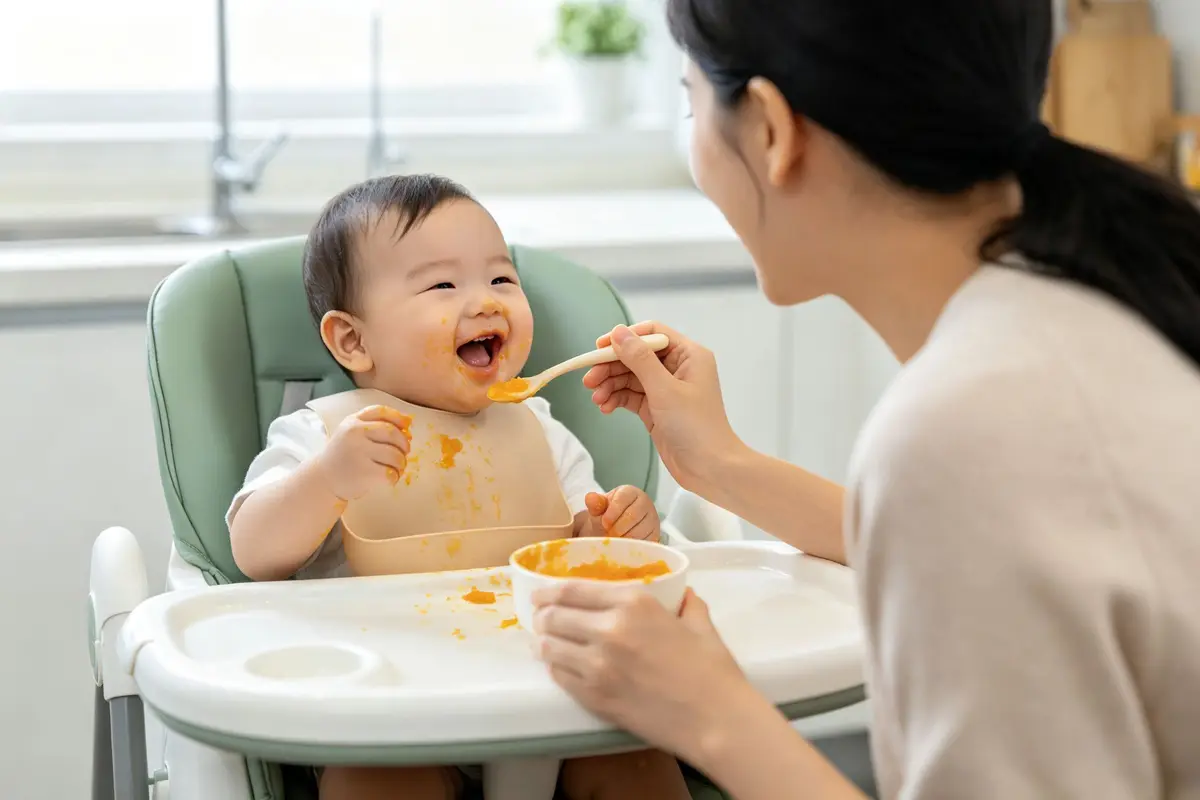
The day we started solids, I was equal parts excited and terrified. I'd read all the books, watched all the YouTube videos, and bought all the gear—silicone bibs, suction bowls, soft-tip spoons, a high chair, a food processor, tiny food storage containers. And then I put a tiny spoonful of rice cereal to my daughter's lips and she looked at me like I was trying to poison her. She pushed it out with her tongue, made a face like she'd eaten a lemon, and started crying. Welcome to solid foods, I thought. If you're gearing up to start your baby on solids and you're wondering where on earth to begin, here's everything I learned through the mess, the food flinging, and the eventual (surprising) joy of feeding my baby real food.
When is my baby ready for solids?
The old rule was "start at 4 months," but current guidelines from the WHO, AAP, and most pediatric authorities recommend starting solids around 6 months, when your baby shows signs of developmental readiness. The key word here is "readiness"—it's not just about age, it's about whether your baby has the physical and developmental skills to safely eat solid food. Here are the signs to look for:
- Good head and neck control: Your baby can hold their head steady and upright without support, both when held and when in a seated position. This is essential for safe swallowing—if their head is wobbly, they're not ready.
- Can sit with support: Your baby can sit in a high chair or infant seat with minimal support, with their back relatively straight. They don't need to sit completely independently yet, but they should be able to maintain an upright position while eating.
- Loss of the tongue-thrust reflex: Newborns have a reflex that pushes foreign objects out of their mouth with their tongue (this protects them from choking). This reflex usually fades around 4-6 months. If you put a spoon to your baby's lips and they immediately push everything out with their tongue, the reflex may still be present—wait a week or two and try again.
- Shows interest in food: Your baby watches you eat with curiosity, reaches for your food or your plate, opens their mouth when food comes near, or mimics chewing movements. This is a great sign—they're showing interest in participating in mealtime.
- Can pick up objects and bring them to mouth: Your baby can grab a toy or object and purposefully bring it to their mouth. This is a prerequisite for self-feeding (if you choose baby-led weaning) and for eventually eating finger foods.
- Doubled birth weight: Most babies have doubled their birth weight by around 5-6 months, which is another general indicator of readiness (though this is less important than the developmental signs above).
Most babies show all these signs around 6 months, but some may be ready closer to 5 months and others closer to 7 months. Don't start before 4 months (their digestive system and kidneys aren't mature enough, and early introduction may increase the risk of allergies and obesity), and don't wait much beyond 6-7 months without checking with your pediatrician (delaying beyond 6 months may increase the risk of iron deficiency, since stored iron from birth is running low and breastmilk/formula alone may not provide enough iron). If you're unsure whether your baby is ready, talk to your pediatrician at your next well-child visit.
Purees vs. baby-led weaning: which approach is right for us?
This was the biggest decision I faced before starting solids, and I drove myself crazy trying to choose between the two approaches. Here's the honest breakdown:
Puree-based feeding (traditional spoon-feeding): You start with smooth, thin purees (rice cereal, pureed fruits and vegetables) fed to your baby with a spoon, gradually increasing the thickness and texture over weeks and months, and eventually introducing finger foods. Pros: You have more control over how much your baby eats (easier to ensure they're getting enough calories and iron), it's less messy (at least at first), it's the approach most of our parents used (so you may get more support from family), and it can be easier for babies who have difficulty with textures or oral motor skills. Cons: It can be more time-consuming (making and freezing purees), your baby may be slower to develop self-feeding skills and oral motor coordination, there's some evidence that spoon-feeding may increase the risk of overfeeding (since the parent controls the pace), and some babies get bored with purees and resist transitioning to textures.
Baby-led weaning (BLW): You skip purees entirely and start with soft, finger-sized pieces of food that your baby can pick up and self-feed. The idea is that the baby sets the pace, explores textures and flavors, and learns to chew (or gum) food from the beginning. Pros: It encourages self-feeding and independence from the start, it exposes the baby to a variety of textures and flavors early, it may help with hand-eye coordination and oral motor development, it's less prep work (no pureeing—just cook and cut food into appropriate sizes), and there's some evidence that BLW babies may be better at self-regulating their food intake (less overfeeding). Cons: It can be very messy (food everywhere—hair, walls, floor, dog), it can be harder to tell how much your baby is actually eating (a lot gets squished and thrown), there's a slightly higher perceived risk of choking (though studies show no significant difference in choking rates between BLW and puree feeding, as long as foods are prepared safely), and it can be anxiety-inducing for parents who worry about their baby getting enough nutrition.
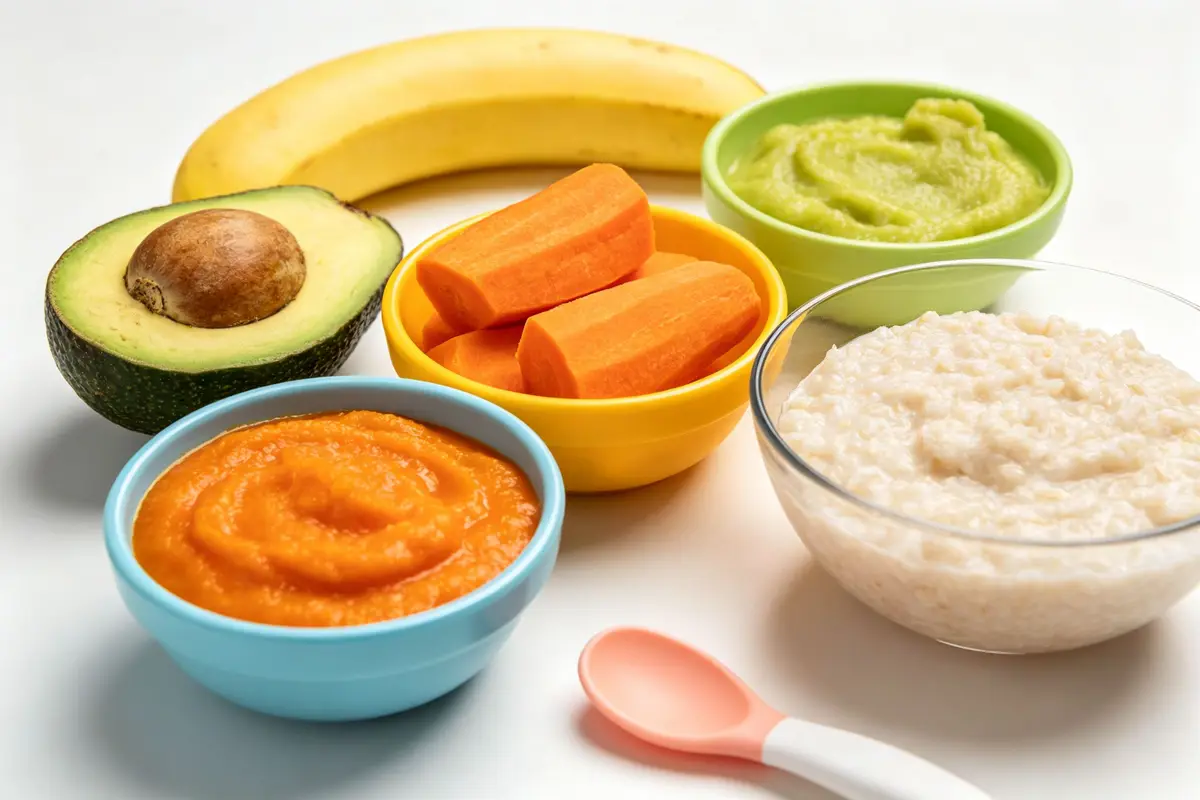
What we actually did: a hybrid approach. We started with purees for the first few weeks (to get her used to the idea of eating and to ensure she was getting iron-rich foods), but we also offered soft finger foods at most meals (steamed carrot sticks, avocado wedges, banana spears, soft toast strips) so she could practice self-feeding and explore textures. We called it "purees with a side of finger foods," and it worked well for us. She got the hang of swallowing purees quickly, and she also developed self-feeding skills early. By 8 months, she was eating mostly finger foods with some purees mixed in, and by 9 months she was completely self-feeding. The point is: you don't have to choose one or the other. Do what feels right for your family, and you can always adjust as you go. The most important thing is that your baby is getting a variety of nutritious foods, is learning to eat safely, and is enjoying mealtime.
What first foods should I offer?
Forget the old rule of "start with rice cereal, then only vegetables for a week, then only fruits..." Current guidelines say you can start with almost any food (as long as it's prepared safely and is age-appropriate), and you don't need to introduce foods one at a time with several days between each (unless your baby has a history of allergies or eczema, in which case your pediatrician may recommend a more cautious approach). Here's what to focus on:
Iron-rich foods first and often. This is the most important nutritional consideration when starting solids. Your baby's stored iron from birth is running low by 6 months, and breastmilk/formula alone may not provide enough iron. Iron deficiency in infancy can have long-term effects on cognitive development, so it's crucial to offer iron-rich foods regularly. Good first iron-rich foods: iron-fortified infant cereal (rice, oat, or barley—oat and barley are good alternatives if you're concerned about arsenic in rice cereal), pureed or finely shredded meats (chicken, turkey, beef, lamb—meat is one of the best sources of easily absorbable heme iron), pureed legumes (lentils, chickpeas, black beans—pair with vitamin C to enhance absorption), tofu (soft, silken tofu is a good plant-based iron source), and egg yolks (the yolk contains iron and choline—you can offer the whole egg once allergies are ruled out, but the yolk is a good starter).
Vitamin C to enhance iron absorption. Pair iron-rich foods with vitamin C-rich foods to enhance non-heme iron absorption (from plant sources). Good sources: pureed or soft-cooked fruits (strawberries, kiwi, oranges, mango, papaya—all abundant in Southeast Asia), pureed or soft-cooked vegetables (bell peppers, broccoli, tomatoes, cauliflower), and a small squeeze of lime or lemon juice on food.
A variety of fruits and vegetables. Offer a rainbow of colors to expose your baby to different flavors, textures, and nutrients. There's no need to avoid "allergenic" foods (see below)—in fact, current guidelines recommend introducing common allergens early and regularly. Good first fruits and vegetables: avocado (soft, nutrient-dense, easy to serve as a wedge or puree), banana (naturally sweet, soft, easy to serve as a spear or mashed), sweet potato (soft when steamed, nutrient-dense, can be served as a wedge or puree), carrot (steamed until very soft, served as a stick or puree), pear (steamed or raw if very ripe, pureed or as a soft wedge), apple (steamed until soft, pureed or as a soft wedge—raw apple is a choking hazard for babies), pumpkin (steamed, pureed or as a wedge—popular in Southeast Asia), broccoli (steamed until very soft, served as florets with a stem handle), and spinach or other leafy greens (pureed and mixed into cereals or other foods—can be bitter alone, so mix with fruit).
Healthy fats. Babies need healthy fats for brain development and growth. Good sources: avocado, full-fat yogurt (plain, unsweetened—wait until 6 months), breastmilk or formula (mix into purees), olive oil or other healthy oils (drizzle on food), nut butters (thinly spread on toast or mixed into food—see allergen note below), and egg yolks.
Common allergens: introduce early and regularly. This is a big change from the old advice (which said to delay allergens until 1-3 years). Current guidelines (AAP, WHO, and most allergy authorities) recommend introducing common allergenic foods early (around 6 months, but not before 4 months) and offering them regularly (at least 2-3 times per week) to reduce the risk of developing food allergies. The common allergens to introduce early: eggs (start with well-cooked egg yolk, then whole egg), peanut (thinly spread peanut butter, peanut powder mixed into food, or puffs—avoid whole peanuts due to choking), tree nuts (thinly spread nut butters or ground nuts—avoid whole nuts), dairy (yogurt, cheese—cow's milk as a drink should wait until 12 months, but dairy products like yogurt and cheese are fine from 6 months), wheat (bread, pasta, cereal), soy (tofu, soy yogurt), fish (soft, deboned fish—salmon, cod, tuna in moderation), and shellfish (shrimp, crab—cooked thoroughly, chopped finely). If your baby has severe eczema or a known egg allergy, talk to your pediatrician or an allergist before introducing peanut and other allergens—they may recommend supervised introduction in a medical setting. For most babies, you can introduce allergens at home, but do it in the morning (so you have the day to watch for reactions) and start with a small amount. Signs of an allergic reaction: hives, rash, swelling (especially of the face, lips, tongue), vomiting, diarrhea, coughing, wheezing, difficulty breathing, or lethargy. If you see any of these, stop the food and contact your pediatrician. If your baby has difficulty breathing, swelling of the face/lips/tongue, or seems very unwell, seek emergency medical attention immediately.
Foods to avoid in the first year: Honey (risk of infant botulism—wait until 12 months), cow's milk as a drink (wait until 12 months—dairy products like yogurt and cheese are fine), added sugar and salt (babies don't need added sugar or salt—their kidneys are still maturing, and early exposure to sweet/salty foods may affect taste preferences), choking hazards (whole grapes, cherry tomatoes, hot dogs, nuts, popcorn, hard candy, marshmallows, chunks of raw apple or carrot, peanut butter globs—cut foods into appropriate sizes and cook hard foods until soft), and unpasteurized foods (unpasteurized dairy, raw or undercooked eggs/meat/fish—cook all animal products thoroughly).
Practical tips for surviving (and enjoying) the first months of solids
Here's what I wish someone had told me before we started, and what made the whole experience easier and more enjoyable:
- Let baby play with food, even if they don't eat much at first. The first few weeks (or even months) of solids are about exploration, not consumption. Your baby is learning about textures, flavors, colors, and the concept of eating. Most of the food will end up on the floor, in their hair, on the walls, or in the dog's mouth. That's normal and okay. Breastmilk/formula is still their primary source of nutrition for the first year, so don't stress about how much they're actually eating.
- Invest in a good high chair and a splat mat. A high chair that's easy to clean (no fabric cushions—they get disgusting) is worth every penny. We had one with a removable tray that went in the dishwasher, and it was a lifesaver. A splat mat (or an old shower curtain) under the high chair protects your floor and makes cleanup much easier. We also stripped our daughter down to just a diaper (or nothing) for meals to avoid staining clothes—then straight into the bath afterward. We kept a dedicated bath towel by the high chair for quick cleanups.
- Eat together as a family when possible. Babies learn by watching. When we ate together, our daughter was much more interested in food because she saw us eating. She would watch us chew, reach for our plates, and eventually start mimicking eating. Family meals also make mealtime more enjoyable and less stressful—you're eating too, not just hovering over the baby with a spoon.
- Don't force it. If your baby turns away, clamps their mouth shut, or spits out food, don't force it. End the meal and try again later or the next day. Forcing food can create negative associations with eating and mealtime. It's normal for babies to need 10-15 (or more!) exposures to a new food before they accept it. Keep offering, but don't force.
- Offer a variety of flavors and textures, including bitter foods. Many parents only offer sweet foods (banana, sweet potato, apple) because babies tend to accept them more easily. But it's important to offer a variety of flavors, including bitter and savory foods (broccoli, spinach, kale, cabbage), so your baby learns to accept a wide range of flavors. If your baby makes a face at broccoli, that's normal—keep offering it (prepared in different ways: steamed, roasted, mixed into other foods) and they may eventually accept it.
- Keep portions small and offer more if wanted. Start with a small amount (1-2 tablespoons of puree, or 2-3 finger food pieces) and offer more if your baby seems interested. Large portions can be overwhelming and may encourage overfeeding (or food flinging).
- Continue breastfeeding or formula feeding. Solids are complementary (not replacement) for the first year. Continue breastfeeding or formula feeding on demand, and offer solids before or after milk feeds depending on your baby's age and appetite. For the first month or so of solids, you may want to offer milk first (so your baby isn't too hungry and frustrated) then solids. As your baby gets more experienced with eating, you can offer solids first then milk.
- Relax and enjoy the mess. This phase is temporary. One day your baby will be eating at the table like a (relatively) civilized human being, and you'll miss the days of food in their hair and puree on the walls. Take photos, laugh at the mess, and remember: this is how they learn. You're doing great.
Article Summary
Introducing solid foods is an exciting but often overwhelming milestone. Start around 6 months when your baby shows developmental readiness: good head/neck control, can sit with support, tongue-thrust reflex faded, shows interest in food, can bring objects to mouth, and generally doubled birth weight. Don't start before 4 months (immature digestive system/kidneys, increased allergy/obesity risk) and don't delay much beyond 6-7 months (iron deficiency risk). Choose a feeding approach that works for your family: puree-based spoon-feeding (more control, less messy initially, more prep), baby-led weaning (self-feeding finger foods from the start, encourages independence, less prep, messier), or a hybrid (what most families actually do—purees plus finger foods). Focus on iron-rich foods first and often (iron-fortified cereal, pureed meats, legumes, tofu, egg yolks), pair with vitamin C to enhance absorption, offer a variety of fruits/vegetables/healthy fats, and introduce common allergens early and regularly (eggs, peanut, tree nuts, dairy, wheat, soy, fish, shellfish—at least 2-3 times/week to reduce allergy risk). Avoid honey, cow's milk as a drink, added sugar/salt, choking hazards, and unpasteurized foods in the first year. Practical tips: let baby play/explore (most food won't be eaten at first—breastmilk/formula is primary nutrition for the first year), invest in an easy-to-clean high chair and splat mat, eat together as a family, don't force food (10-15 exposures may be needed), offer a variety including bitter/savory flavors, keep portions small, continue breastfeeding/formula, and relax and enjoy the mess—it's temporary. Mealtime is about learning, connection, and joy, not just nutrition.
Frequently Asked Questions
When should I start solid foods?
Most babies are ready for solids around 6 months, when they can sit up with support, show interest in food, and have lost the tongue-thrust reflex. Some babies show readiness as early as 4 months, but always check with your pediatrician before starting.
What are the best first foods for my baby?
Single-ingredient, iron-rich foods are ideal first foods — rice cereal, oatmeal, pureed sweet potato, avocado, banana, or pureed chicken. Introduce one new food at a time and wait 3-5 days to watch for allergic reactions. You can offer purees or try baby-led weaning with soft finger foods.
How do I introduce allergenic foods safely?
Current guidelines recommend introducing common allergens (peanut, egg, dairy, wheat, soy, fish, shellfish, tree nuts, sesame) early — around 6 months — and offering them regularly (2-3 times a week) to build tolerance. Start with a small amount in the morning so you can watch for reactions during the day.
How much solid food should my baby eat?
At 6 months, solids are mostly for practice — 1-2 tablespoons once a day is fine. By 8-9 months, aim for 2-3 meals a day with a variety of foods. By 12 months, your baby should be eating 3 meals plus snacks, with breast milk or formula still providing important nutrition. Let your baby's hunger and fullness cues guide you.
Frequently Asked Questions
When is my baby ready for solid foods and what are the signs?
Most babies are ready for solid foods around 6 months, but readiness is about developmental signs, not just age. The WHO, AAP, and most pediatric authorities recommend starting solids around 6 months, when your baby shows all or most of these signs: (1) Good head and neck control — Your baby can hold their head steady and upright without support, both when held and when seated. This is essential for safe swallowing—if their head is wobbly, they're not ready. (2) Can sit with support — Your baby can sit in a high chair or infant seat with minimal support, with their back relatively straight. They don't need to sit completely independently yet, but should maintain an upright position while eating. (3) Loss of the tongue-thrust reflex — Newborns have a reflex that pushes foreign objects out of the mouth with the tongue (protects from choking). This fades around 4-6 months. If you put a spoon to their lips and they immediately push everything out, the reflex may still be present—wait 1-2 weeks and try again. (4) Shows interest in food — Your baby watches you eat with curiosity, reaches for your food/plate, opens their mouth when food approaches, or mimics chewing. This is a great sign they want to participate. (5) Can pick up objects and bring to mouth — Your baby can grab a toy and purposefully bring it to their mouth. This is a prerequisite for self-feeding and eventually finger foods. (6) Generally doubled birth weight — Most babies double their birth weight by 5-6 months, another general indicator (though less important than the developmental signs). Most babies show all signs around 6 months, but some may be ready closer to 5 months and others closer to 7 months. Don't start before 4 months: their digestive system and kidneys aren't mature enough, and early introduction may increase the risk of allergies and obesity. Don't delay much beyond 6-7 months without checking with your pediatrician: stored iron from birth is running low, and breastmilk/formula alone may not provide enough iron—delaying increases iron deficiency risk, which can affect cognitive development. If you're unsure, discuss with your pediatrician at the next well-child visit. Note: 'showing interest' alone isn't enough—your baby needs the physical skills (head control, sitting, lost tongue-thrust reflex) to eat safely. A 4-month-old who stares at your food intently but can't hold their head steady is not ready.
Should I do purees or baby-led weaning, and can I do both?
You don't have to choose—many families use a hybrid approach, and there's no one 'right' way. Here's an honest comparison: Puree-based feeding (traditional spoon-feeding): You start with smooth, thin purees (rice cereal, pureed fruits/vegetables) fed with a spoon, gradually thickening texture over weeks, then introducing finger foods later. Pros: More control over how much baby eats (easier to ensure adequate calories/iron), less messy initially, the approach most parents/grandparents used (more family support), easier for babies with texture difficulties or oral motor delays. Cons: More time-consuming (making/freezing purees), slower development of self-feeding skills and oral motor coordination, possible increased overfeeding risk (parent controls pace), some babies resist transitioning from purees to textures. Baby-led weaning (BLW): Skip purees entirely—start with soft, finger-sized pieces of food that baby picks up and self-feeds. Baby sets the pace, explores textures/flavors, and learns to chew/gum from the start. Pros: Encourages self-feeding/independence from the start, exposes baby to varied textures/flavors early, may improve hand-eye coordination and oral motor skills, less prep (no pureeing—just cook and cut), may help with self-regulation of intake (less overfeeding). Cons: Very messy (food everywhere), harder to tell how much baby actually eats (much gets squished/thrown), slightly higher perceived choking risk (though studies show no significant difference in choking rates when foods are prepared safely), can be anxiety-inducing for parents worried about nutrition. The hybrid approach (what most families actually do): Start with purees for the first few weeks (to get baby used to eating and ensure iron intake), while also offering soft finger foods at most meals (steamed carrot sticks, avocado wedges, banana spears, soft toast strips) so baby practices self-feeding and explores textures. Gradually increase finger foods and decrease purees as baby gains skills. This combines the best of both: you ensure adequate iron/nutrition with purees while encouraging self-feeding and texture exposure with finger foods. By 8-9 months, many hybrid-fed babies are eating mostly finger foods. What matters most: Your baby gets a variety of nutritious foods, learns to eat safely, enjoys mealtime, and gets enough iron. The method is less important than these outcomes. If you start with one approach and it's not working, switch—there's no rule that you have to stick with one. If your baby has special needs (prematurity, oral motor delays, reflux, severe allergies), talk to your pediatrician or a pediatric dietitian/occupational therapist for personalized guidance. Also note: regardless of approach, always supervise mealtimes, learn infant CPR/choking first aid, and prepare foods safely (cook hard foods until soft, cut into appropriate sizes/shapes, avoid choking hazards).
What are the best first foods for my baby and what should I avoid?
The best first foods are nutrient-dense, iron-rich, and appropriately textured. Current guidelines say you can start with almost any food (prepared safely), but prioritize these: Iron-rich foods (most important): Your baby's stored iron from birth is running low by 6 months, and iron deficiency can affect cognitive development. Offer iron-rich foods daily: iron-fortified infant cereal (rice, oat, or barley—oat/barley are alternatives if concerned about arsenic in rice), pureed or finely shredded meats (chicken, turkey, beef, lamb—best source of absorbable heme iron), pureed legumes (lentils, chickpeas, black beans—pair with vitamin C), tofu (soft silken tofu), and egg yolks (iron and choline). Vitamin C foods (pair with iron to enhance absorption): Pureed/soft fruits (strawberries, kiwi, orange, mango, papaya), pureed/soft vegetables (bell pepper, broccoli, tomato, cauliflower), or a squeeze of lime/lemon. Variety of fruits and vegetables: Avocado (nutrient-dense, soft), banana (naturally sweet), sweet potato (steamed, nutrient-dense), carrot (steamed very soft), pear (steamed or very ripe), apple (steamed—raw is a choking hazard), pumpkin (steamed, popular in SE Asia), broccoli (steamed very soft, serve as florets with stem handle), and leafy greens (pureed and mixed into foods—can be bitter alone). Healthy fats (for brain development): Avocado, full-fat plain yogurt (6+ months), breastmilk/formula (mix into purees), olive oil (drizzle on food), thinly spread nut butters, egg yolks. Common allergens (introduce early and regularly, at least 2-3 times/week): Eggs (well-cooked yolk first, then whole egg), peanut (thinly spread peanut butter, peanut powder, or puffs—no whole peanuts), tree nuts (thinly spread butters or ground nuts—no whole nuts), dairy (yogurt, cheese—cow's milk as a drink waits until 12 months), wheat (bread, pasta, cereal), soy (tofu, soy yogurt), fish (soft, deboned—salmon, cod), shellfish (cooked, finely chopped). If baby has severe eczema or known egg allergy, consult pediatrician/allergyist before introducing peanut—may need supervised introduction. Introduce allergens in the morning (to watch for reactions) and start with a small amount. Signs of allergic reaction: hives, rash, swelling (face/lips/tongue), vomiting, diarrhea, coughing, wheezing, difficulty breathing, lethargy. Stop the food and contact pediatrician; for difficulty breathing, facial swelling, or severe illness, seek emergency care immediately. Foods to AVOID in the first year: Honey (infant botulism risk—wait until 12 months); cow's milk as a drink (wait until 12 months—yogurt/cheese are fine); added sugar and salt (kidneys still maturing, may affect taste preferences); choking hazards (whole grapes, cherry tomatoes, hot dogs, nuts, popcorn, hard candy, marshmallows, raw apple/carrot chunks, peanut butter globs—cook hard foods soft, cut appropriately); unpasteurized foods (unpasteurized dairy, raw/undercooked eggs/meat/fish—cook animal products thoroughly). General principle: Offer a rainbow of colors and flavors, including bitter/savory foods (not just sweet ones), and keep offering new foods even if baby initially rejects them—it can take 10-15 exposures before acceptance.
How much should my baby be eating and is it normal if they don't eat much at first?
It is completely normal for babies to eat very little (or nothing at all) in the first few weeks of solids. The first months of solids are about exploration and learning, not consumption. Here's what to expect: First few weeks (6-7 months): Most babies will only eat 1-2 teaspoons of food per meal, once or twice a day. A lot of the food will be played with, squished, thrown, or spat out. This is normal—they're learning about textures, flavors, and the concept of eating. Breastmilk or formula remains their primary source of nutrition (about 90-95% of their calories). 7-9 months: Gradually increase to 2-3 meals per day, with 2-4 tablespoons of food per meal (plus finger foods). They may start eating more noticeably, but there's a lot of day-to-day variation—some days they eat a lot, some days they refuse everything. This is normal. Breastmilk/formula still provides about 70-80% of calories. 9-12 months: 3 meals plus 1-2 snacks per day. They should be eating a wider variety of foods and larger portions, but appetite still varies. By 12 months, solids should provide about 40-50% of calories, with breastmilk/formula providing the rest. After 12 months, solids gradually become the primary source of nutrition. Important principles: (1) Follow your baby's cues — Let your baby decide how much to eat. If they turn away, clamp their mouth, or throw food, the meal is over. Don't force more. Babies are good at self-regulating their intake—they know when they're hungry and when they're full. (2) Division of responsibility — The parent decides WHAT food is offered, WHEN, and WHERE. The baby decides WHETHER to eat and HOW MUCH. This is the Ellyn Satter division of responsibility, and it works well for babies and children. You provide nutritious food at appropriate times in an appropriate setting; your baby decides how much to eat. (3) Don't compare to other babies — Some babies eat a lot from the start, some take weeks to get interested. Both are normal. What matters is that your baby is growing and developing appropriately (tracked on growth curves at pediatrician visits), not how much they eat at any given meal. (4) Watch for signs of adequate intake — Wet diapers (4-6+ per day), steady weight gain (tracked by pediatrician), meeting developmental milestones, and generally alert/healthy appearance. If you're concerned about intake, talk to your pediatrician. (5) Breastmilk/formula is still important — Continue breastfeeding or formula feeding on demand throughout the first year. Solids are complementary (not replacement) until 12 months. Don't drop milk feeds just because baby is eating solids. (6) Iron is the key nutrient to monitor — The one nutrient that's most likely to be insufficient is iron. Make sure you're offering iron-rich foods daily (iron-fortified cereal, meat, legumes, tofu, egg yolks), paired with vitamin C. If you're concerned about iron, your pediatrician can do a blood test (hemoglobin/ferritin) at the 9-12 month visit. (7) Some refusal is normal — It's normal for babies to go on 'food strikes' where they eat very little for a few days, especially during teething, illness, or developmental leaps. As long as they're drinking fluids (breastmilk/formula/water) and seem otherwise well, this is usually temporary. If food refusal lasts more than a few days, or if they're also not drinking fluids, lethargic, or losing weight, contact your pediatrician. The bottom line: In the first year, the goal is exposure and learning, not volume. Keep offering a variety of nutritious foods, follow your baby's cues, continue breastmilk/formula, and don't stress about how much they eat. Most babies gradually increase their intake over months, and by 12 months they're eating a substantial amount of solid food. If you have concerns about your baby's growth or intake, discuss with your pediatrician—they can assess growth curves and provide personalized guidance.