
2026-09-05 · Moni Happy Mom
Music for Babies: A Mom's Guide to Auditory Development, Musical Play & Bonding
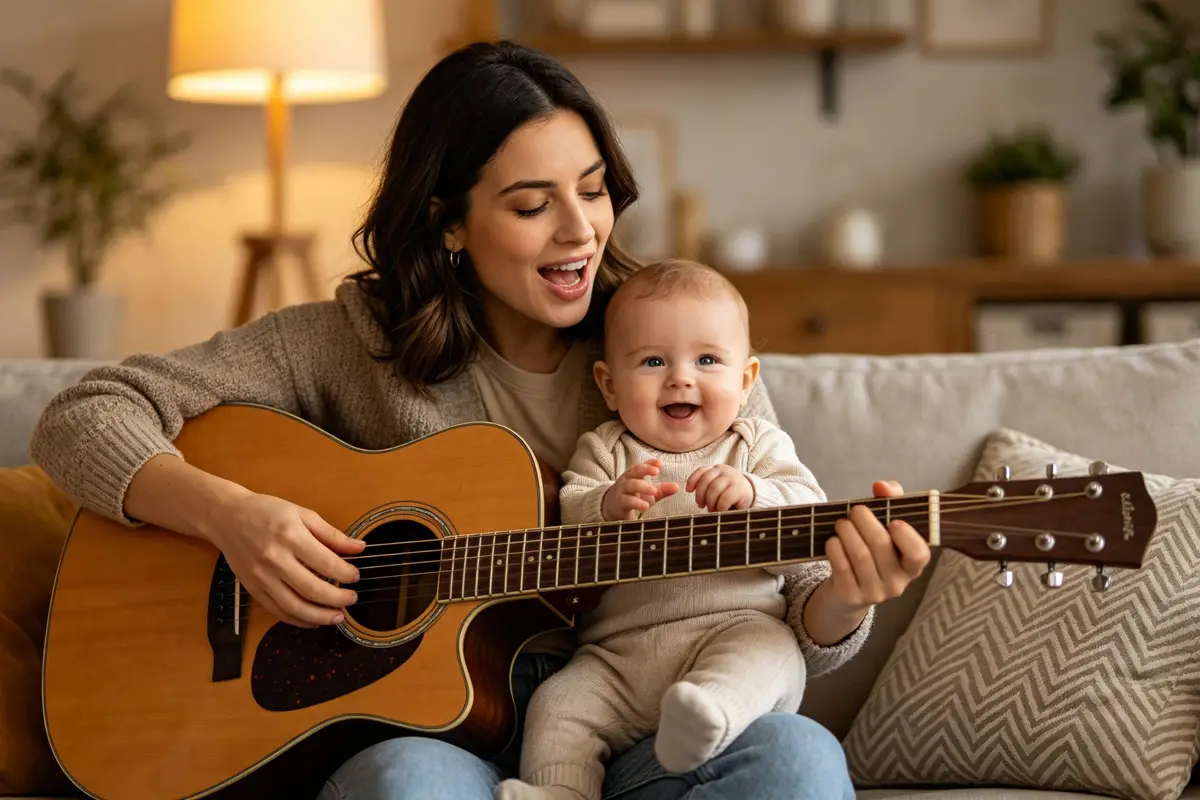
Summary: Music isn't just background noise for babies — it's a powerful tool for brain development, language, and emotional bonding. After singing to three babies (one of whom clearly had my terrible pitch), here's what I've learned about music for babies, auditory development, and the simple musical activities that make a difference.
How Does Music Affect a Baby's Developing Brain?
When I was pregnant with my first, I read that playing classical music to my belly would make my baby smarter. I'm not sure if it made him smarter (he's a normal, curious 5-year-old), but what I do know is that music has real, measurable effects on a baby's developing brain.
Research shows that music exposure helps develop the neural pathways used for language, reasoning, and spatial skills. When babies listen to music, their brains process patterns, rhythms, and tones — all of which are foundational for language development. A study at the University of Washington found that babies who participated in music classes before 12 months showed better brain processing of musical structure and speech sounds than babies who didn't.
But here's what matters most: the effect is strongest when the music is interactive — singing together, moving together, playing together. Passive listening (Mozart in the background) has some benefit, but active engagement is where the real magic happens. I sang to all three of my babies constantly, even though I can't carry a tune. They didn't care — they just loved the sound of my voice and the closeness.
What Does Auditory Development Look Like in the First Year?
0-3 months: Newborns can hear from birth (they've been hearing in the womb since about 24 weeks), but their hearing is still developing. They prefer high-pitched voices (which is why we naturally use "baby talk" — it's actually higher pitched and more engaging for babies). They startle at loud sounds and calm at familiar voices. My babies all recognized my voice and my husband's voice from the first week — they'd turn toward us when we spoke.
4-6 months: Babies start to localize sounds — they'll turn their head toward a sound they can't see. They start to babble and experiment with their own voice (cooing, gurgling, making raspberry sounds). They respond to their name and may show excitement when they hear a familiar song. My second baby would stop crying immediately when she heard the first few notes of "Twinkle Twinkle" — it was like magic.
7-9 months: Babies understand more words and start to respond to simple requests ("look here," "come here"). They babble with more variety — "ba ba ba," "ma ma ma," "da da da." They may start to imitate sounds and rhythms. My third baby started "singing" along with songs at 8 months — he'd make vowel sounds in time with the music, which was the cutest thing I'd ever heard.
10-12 months: Babies understand many words and may say their first words. They enjoy music with actions (like "The Wheels on the Bus" or "If You're Happy and You Know It"). They may start to dance or bounce to music. All three of my babies started bouncing to music around 10 months — it's like something clicks and they suddenly understand that music makes you want to move.
What Musical Activities Can I Do With My Baby?
You don't need to be a musician or have any special training. These are simple, everyday activities that all three of my babies loved:
Sing lullabies at bedtime. I sang the same lullabies to all three of my babies every night. They became sleep cues — when they heard those songs, their little bodies would start to relax. It didn't matter that I can't sing well; what mattered was the consistency and the closeness. I sang "You Are My Sunshine," "Somewhere Over the Rainbow," and a made-up song about each baby's day.
Sing action songs during playtime. "The Wheels on the Bus," "If You're Happy and You Know It," "Head, Shoulders, Knees, and Toes" — these songs teach body awareness, language, and rhythm. I did the actions with my babies' hands and feet when they were too little to do them themselves. By 10-12 months, they'd start doing some of the actions on their own.
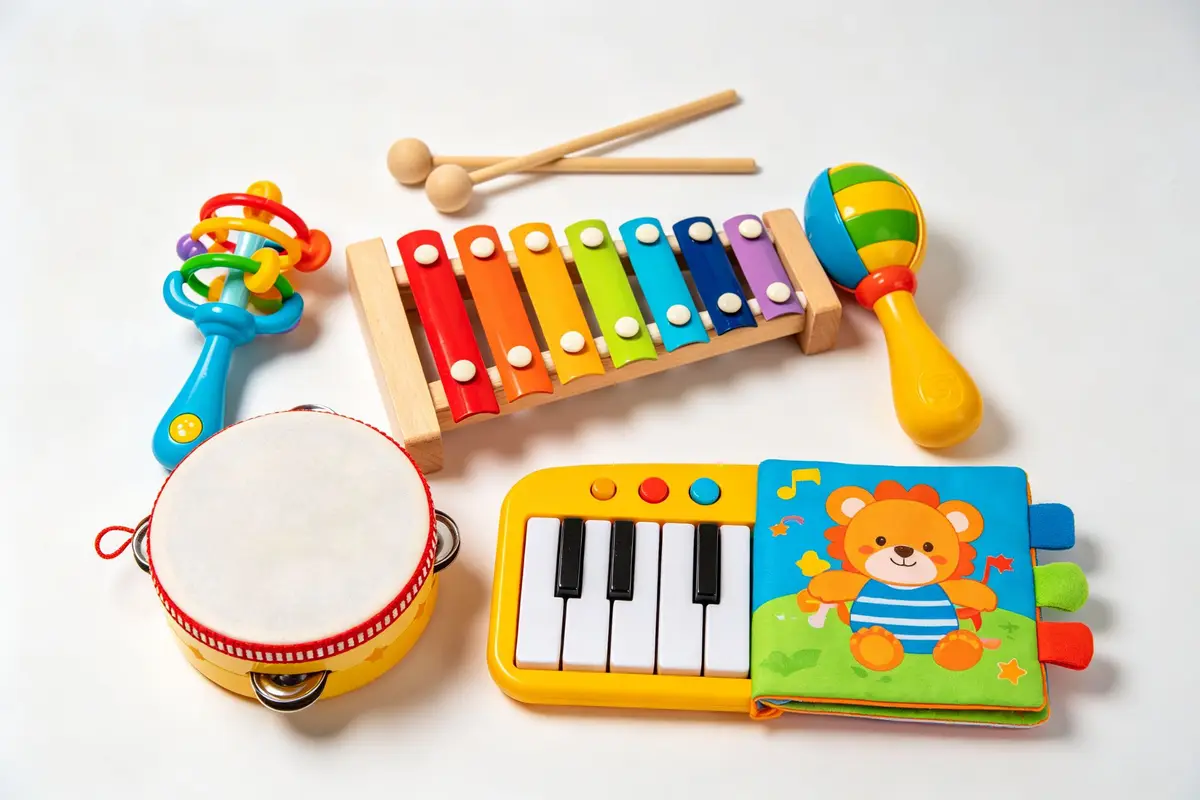
Make music with household items. Wooden spoons and pots make great drums. Empty water bottles with a few grains of rice inside make shakers. I kept a basket of musical "instruments" (all safe, non-chokable items) that the babies could explore. They loved banging, shaking, and making noise — and it was all musical exploration.
Use baby-safe musical toys. Xylophones, drums, shakers, toy pianos — these are great for exploring cause and effect (if I hit this, it makes sound) and for developing fine motor skills. I looked for toys that were made of safe materials and didn't have small parts. The Moni Happy baby products include soft toys that are great for musical play.
Listen to a variety of music. I played everything for my babies — classical, jazz, folk, pop, world music. Different genres expose them to different rhythms, instruments, and tonalities. I noticed that each baby had different preferences — my first loved classical, my second preferred upbeat pop, my third seems to like anything with a strong beat.
Dance together. Hold your baby and sway, bounce, or dance to music. This helps with rhythm, balance, and bonding. I danced with all three of my babies when they were fussy or when I needed a break. It's good for both of you — the movement releases endorphins, and the closeness is comforting.
Do I Need to Take My Baby to Music Classes?
Music classes (like Kindermusik or Music Together) can be fun and social, but they're not necessary. I took my first baby to a few classes and enjoyed them, but with my second and third, I didn't have the time or energy. We did musical activities at home instead, and they're all just as musical and developmentally on track.
If you enjoy classes and can afford them, go for it — they're a great way to meet other parents and get new ideas. But if you can't, don't feel guilty. Singing, dancing, and playing music at home is just as beneficial, if not more so (because it's more frequent and more personal).
FAQ
Q: Is it true that listening to Mozart makes babies smarter?
A: The "Mozart Effect" has been largely debunked. While music exposure does have cognitive benefits, there's no evidence that specifically listening to Mozart makes babies smarter. What matters is active, engaging musical experiences — singing, playing, moving — not passive listening to any particular composer.
Q: How loud is too loud for a baby's ears?
A: Babies' ears are more sensitive than adults'. Keep music at a conversational volume — you should be able to talk over it without raising your voice. Avoid loud concerts, fireworks, and other very loud environments. If you use white noise machines for sleep, keep them at a low volume and at least 6 feet away from the crib. I used a white noise app with all three of mine, and I always kept it on the lowest setting.
Q: My baby doesn't seem to respond to music. Should I be worried?
A: Every baby is different. Some babies are very responsive to music from birth, others take longer to show interest. If your baby doesn't startle at loud sounds or respond to your voice by 3 months, talk to your pediatrician — it could be a hearing issue. But if they respond to sounds generally and just don't seem interested in music specifically, that's probably just their personality. Keep exposing them to music, and don't force it.
Q: When can my baby start using musical instruments?
A: Babies can explore musical instruments from birth, as long as they're age-appropriate and safe. Newborns can listen to you play instruments. By 3-4 months, they can bat at instruments (like a baby piano or xylophone). By 6-9 months, they can hold and shake rattles and shakers. Always supervise and make sure instruments don't have small parts that could be a choking hazard. I waited until my babies could sit independently before giving them instruments to hold, and I always stayed right there with them.
Final Thoughts
Music is one of the simplest, most joyful ways to connect with your baby and support their development. You don't need a good voice, expensive instruments, or special classes — you just need to sing, play, and move with your baby. The sound of your voice is the most beautiful music to them, even if you're off-key. So sing loudly, dance badly, and make music together. Those moments will be some of your favorite memories, and they'll be building your baby's brain at the same time.