
2026-09-05 · Moni Happy Mom
Newborn Bath Safety: A Mom's Step-by-Step Guide to First Baths
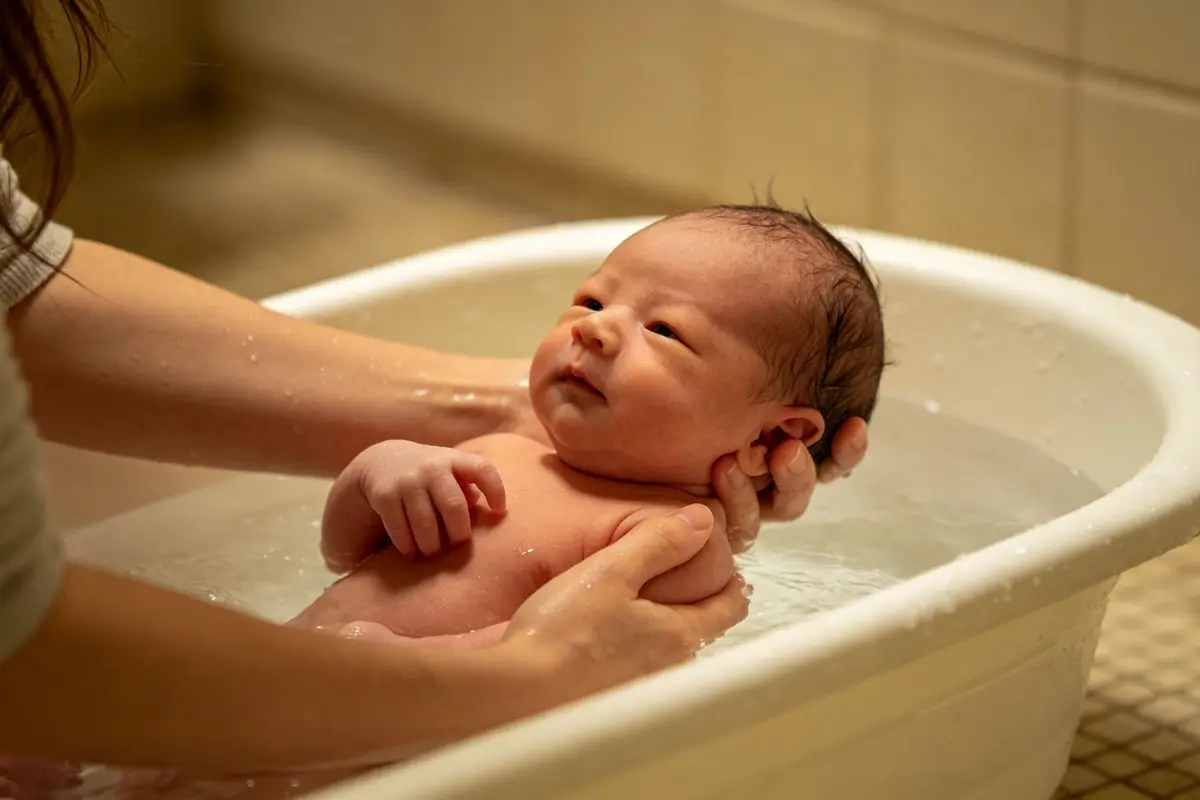
The first time I gave my newborn a bath, I was terrified. She was so tiny, so slippery, and I was convinced I was going to drop her or burn her or do something irreversibly wrong. My hands were shaking, my husband was hovering with a towel like a nervous referee, and the whole thing took about 90 seconds because I was so anxious. Looking back, it was actually fine—she was fine, I was fine—but I wish someone had given me a real, practical guide before that first bath instead of the vague "be careful" advice I got from the hospital. If you're gearing up for your baby's first bath and your heart is racing just thinking about it, take a deep breath. Here's everything I wish I'd known.
When can I give my newborn their first bath?
This was my first question, and the answer surprised me: you don't need to give your newborn a full bath right away. In fact, the World Health Organization (WHO) recommends waiting at least 24 hours after birth before the first bath, and some cultures wait up to a week or more. The vernix caseosa—that white, cheesy coating your baby is born with—is actually beneficial: it's a natural moisturizer, has antimicrobial properties, and helps regulate your baby's temperature. So don't rush to scrub it off.
Until the umbilical cord stump falls off (usually 1-2 weeks after birth), it's best to give your baby sponge baths instead of full immersion baths. Keeping the cord stump dry helps it heal and fall off faster, and reduces the risk of infection. You can gently clean your baby's body with a warm, damp washcloth, paying special attention to the diaper area, skin folds (neck, armpits, thighs), and face, while keeping the cord area dry. Once the stump falls off and the area is fully healed (no oozing, no redness, no tenderness), you can graduate to a proper tub bath.
If your baby was born in a hospital, the nurses may give them a first wash before you go home, but it's usually just a gentle wipe-down rather than a full bath. You can ask to delay the first bath if you'd prefer to do it at home, and many hospitals now support delayed bathing as part of family-centered care.
How often should I bathe my newborn?
Here's another surprise: newborns don't need a bath every day. In fact, bathing too often can dry out their delicate skin, which is thinner and more sensitive than adult skin. For the first month or two, 2-3 baths per week is plenty. On non-bath days, you can do "top and tail" cleaning—wiping your baby's face, neck, hands, and diaper area with a warm damp cloth. This keeps them clean without stripping their skin's natural oils.
As your baby gets older and more active (rolling, crawling, getting into messes), you can increase bath frequency to every other day or even daily if needed. But even then, many pediatric dermatologists recommend every other day for babies with dry skin or eczema, using a gentle, fragrance-free cleanser and moisturizing immediately after bathing.
In Southeast Asia's hot and humid climate, you may find your baby gets sweaty and sticky more quickly, especially in the neck folds and diaper area. On very hot days, a quick lukewarm rinse (without soap) can be refreshing and help prevent heat rash, but you don't need to use cleanser every time. A plain water rinse is gentler and sufficient for removing sweat.
What temperature should the bath water be?
This is the question that caused me the most anxiety. The ideal bath water temperature for a newborn is 37-38°C (98.6-100.4°F)—about body temperature. It should feel warm, not hot, when you dip your elbow or the inside of your wrist in it. Here's the thing: your hands are not reliable thermometers. I thought I had a good sense of temperature until I bought a bath thermometer and realized I was consistently making the water too hot (my "warm" was actually 41°C, which is too hot for a newborn).
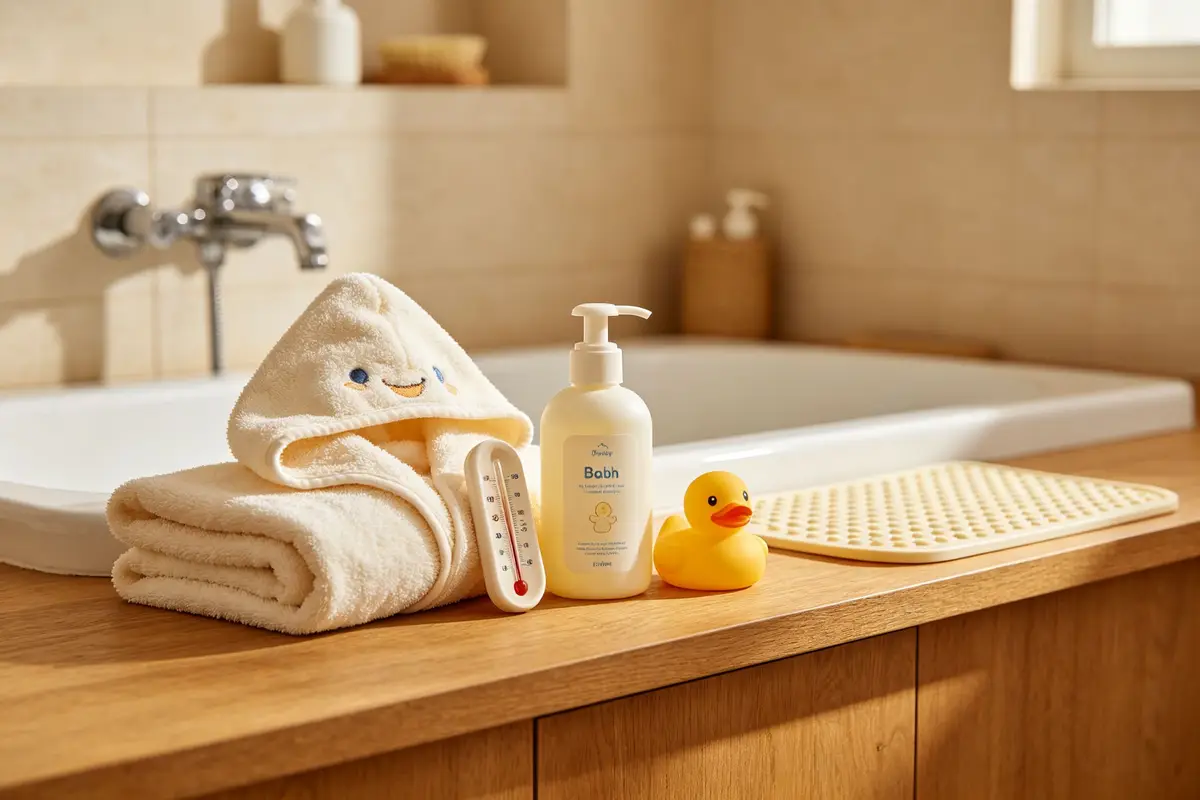
I highly recommend investing in a bath thermometer. They're cheap (about $5-15), and they take the guesswork out of it. Some are digital, some are analog (the kind that float in the water and change color), and some even double as bath toys. If you don't have a thermometer, use the elbow test: dip your elbow or the inside of your wrist (not your hand—hands are less sensitive) into the water. It should feel comfortably warm, not hot. If it feels even slightly hot to you, it's too hot for the baby. Add cool water and test again.
Also important: the room temperature should be warm too—about 24-26°C (75-79°F). A cold room can make your baby uncomfortable and increase the risk of chills after the bath. Close windows and doors to avoid drafts, and have everything ready before you start so you don't have to leave the baby unattended to grab something.
What do I need for a newborn bath?
Before you start, gather everything you need and keep it within arm's reach. The number one rule of baby bathing: never leave your baby unattended in the bath, even for a second, even if you think they're secure in a bath seat. Babies can drown in as little as 2-3 cm of water, and it happens silently and quickly. So have everything ready before you turn on the water.
Essentials:
- A baby bathtub or insert: For newborns, a small plastic baby tub or a sling/insert that fits in your regular bathtub works well. Some parents prefer bathing with their baby (skin-to-skin in the adult tub), which can be a lovely bonding experience once you're both comfortable. If using a baby tub, line it with a non-slip mat or a washcloth to prevent slipping.
- 2-3 soft washcloths: One for washing, one for rinsing, one for emergencies. Choose soft, cotton washcloths—avoid rough or scratchy materials. We loved using soft muslin squares as washcloths because they're gentle and absorbent.
- A gentle, fragrance-free baby wash: For newborns, you actually don't need soap at all for the first few weeks—plain water is sufficient for cleaning. When you do start using a cleanser, choose a gentle, pH-balanced, fragrance-free baby wash that's specifically formulated for newborns. Avoid adult body washes, antibacterial soaps, and products with strong fragrances, as these can irritate newborn skin. A small amount (a drop or two) is all you need—you don't need to create a bubble bath.
- A soft hooded towel: Hooded towels are great for newborns because the hood keeps their head warm after the bath. Choose a soft, absorbent cotton or bamboo towel. We had a hooded baby towel that we used for months—it got softer with every wash.
- A clean diaper and clothes: Have a fresh diaper, onesie, and sleeper ready to go. In a warm room, you can do a quick diaper-free air time after the bath before dressing, which is great for preventing diaper rash.
- A bath thermometer (recommended): As discussed above, takes the guesswork out of water temperature.
- A diaper and baby wipes or damp cloth: For cleaning the diaper area before the bath if needed.
Optional but nice to have: A rinse cup or pitcher for rinsing, a non-slip bath mat, a bath toy (for older babies—newborns don't need toys), a baby bath seat or support (use only with constant supervision and follow weight/age guidelines), and a moisturizer or lotion for after the bath (fragrance-free, hypoallergenic).
Step-by-step: How to bathe a newborn
Once you have everything ready and the water is the right temperature (fill the tub with about 5-8 cm / 2-3 inches of warm water—you don't need much for a newborn), here's the step-by-step process that worked for us:
Step 1: Undress your baby, keeping the diaper on until the last moment. Undress your baby in the warm bathroom, wrapping them in a towel to keep warm. Remove the diaper right before you put them in the water. If they have a dirty diaper, clean them with a wipe or damp cloth first.
Step 2: Lower your baby into the water slowly, feet first. Support your baby's head and neck with one hand (your forearm should support their back and shoulders, with your hand cradling the back of their head and neck). Use your other hand to guide their feet into the water first, then slowly lower their body. Keep talking to your baby in a calm, soothing voice—they can sense your anxiety, so if you're calm, they're more likely to be calm.
Step 3: Keep one hand on your baby at all times. Never let go. Your non-dominant hand stays supporting your baby's head and neck throughout the bath. Use your dominant hand to wash. If you need to reach for something, either keep one hand on the baby and stretch, or (better) have everything within reach so you don't need to.
Step 4: Wash from cleanest to dirtiest. Start with the face: use a damp washcloth (no soap) to gently wipe your baby's eyes (from inner corner to outer), face, neck folds, and behind the ears. Then wash the rest of the body: arms, chest, belly, back, legs, and skin folds. Use a tiny amount of gentle cleanser on the washcloth (not directly on the baby) for the body, but keep soap away from the face and genital area. Finally, wash the diaper area last (this is the "dirtiest" area, so you do it last to avoid spreading bacteria). For girls, wipe from front to back. For boys, be careful—they may surprise you with a stream of urine when the diaper comes off (keep a diaper or washcloth handy to cover them).
Step 5: Rinse (if needed). If you used a cleanser, you can rinse your baby with clean water using a rinse cup, or just lift them out—the small amount of cleanser on their skin will rinse off as you lift them through the water. You don't need a separate rinse for newborns unless you used a lot of soap.
Step 6: Lift your baby out and wrap immediately. Lift your baby out of the water, supporting their head and neck with one hand and their bottom with the other. Wrap them immediately in the hooded towel and pat dry gently—don't rub, especially if your baby has sensitive skin or eczema. Pay special attention to drying the skin folds (neck, armpits, elbows, thighs, diaper area) because moisture trapped in folds can cause irritation and rashes.
Step 7: Moisturize (optional) and dress. If your baby has dry skin, apply a gentle, fragrance-free moisturizer while their skin is still slightly damp (this locks in moisture). Then put on a fresh diaper and clothes. If the room is warm, you can do a few minutes of diaper-free time to let the skin air out, which helps prevent diaper rash.
The whole bath should take about 5-10 minutes for a newborn—they don't need a long soak, and prolonged water exposure can dry out their skin. If your baby seems to enjoy the bath, you can take a bit longer, but watch for signs of cold or fussiness.
Common mistakes to avoid
Here are the mistakes I made (or almost made) and the ones I see other parents make:
- Using too hot water: The most common mistake. Use a thermometer, not your hand. Water that feels "warm" to you may be too hot for a newborn.
- Leaving the baby unattended, even for a second: Don't do it. Not to grab a towel, not to answer the phone, not because the baby "seems secure" in a bath seat. If the doorbell rings, ignore it or take the baby with you.
- Using too much soap or harsh products: Newborns don't need much soap, and adult products are too harsh. A drop or two of gentle baby wash is plenty, and for the first few weeks, plain water is enough.
- Bathing too often: 2-3 times per week is enough for newborns. Daily bathing can dry out their skin.
- Not having everything ready: If you realize mid-bath that you forgot the towel, you're stuck. Gather everything before you start.
- Rubbing the skin dry instead of patting: Pat gently, especially in skin folds. Rubbing can irritate delicate skin.
- Not drying the skin folds: Moisture trapped in neck folds, armpits, and thigh folds can cause irritation and rashes. Dry thoroughly.
- Using a bath seat as a safety device: Bath seats and rings are aids, not safety devices. They can tip over or the baby can slip out. Always keep one hand on the baby.
- Bathing right after a feeding: Wait at least 30-60 minutes after a feed to bathe your baby, to reduce the risk of spitting up or discomfort.
- Anxiety: I'm including this because my own anxiety made the first few baths harder than they needed to be. Your baby can sense when you're tense. Take a deep breath, talk to your baby, and remember that you've got this. It gets easier with every bath—by the third or fourth bath, I was actually enjoying it.
Article Summary
Newborn bathing can be intimidating, but with preparation and knowledge, it becomes a lovely bonding ritual. Key points: Wait at least 24 hours after birth for the first bath, and use sponge baths until the umbilical cord stump falls off (1-2 weeks). Newborns only need 2-3 baths per week—daily bathing can dry delicate skin; use "top and tail" cleaning on non-bath days. Bath water should be 37-38°C (body temperature)—use a bath thermometer, not your hand, and test with your elbow. Room temperature should be 24-26°C, free of drafts. Gather everything before starting (baby tub, soft washcloths, gentle fragrance-free cleanser, hooded towel, clean diaper/clothes, thermometer) and never leave the baby unattended. Step-by-step: undress (keep diaper on until last), lower feet first with head/neck supported, keep one hand on baby at all times, wash cleanest to dirtiest (face first with plain water, then body with tiny amount of cleanser, diaper area last), lift out and wrap immediately, pat dry (especially skin folds), moisturize if needed, dress. Common mistakes: too hot water, leaving unattended, too much/harsh soap, bathing too often, not being prepared, rubbing instead of patting dry, not drying folds, using bath seats as safety devices, bathing right after feeding, and parental anxiety. Bath time gets easier with practice—by the third or fourth bath, most parents find it enjoyable. In hot climates, a quick lukewarm water rinse (no soap) on very hot days can be refreshing and prevent heat rash without drying the skin.
Frequently Asked Questions
What are the most important baby safety tips for the home?
Key home safety tips include: put your baby to sleep on their back in a crib with a firm mattress and no loose bedding, pillows, or stuffed animals; install smoke and carbon monoxide detectors; cover electrical outlets; secure heavy furniture and TVs to the wall; use safety gates at the top and bottom of stairs; keep small objects, choking hazards, and toxic substances out of reach; and never leave your baby unattended on a high surface like a changing table or bed.
How do I baby-proof each room?
In the nursery: secure the dresser, use cordless window coverings, and keep the crib bare. In the bathroom: set the water heater to 120°F (49°C), use toilet locks, and store medications and cleaning products out of reach. In the kitchen: use stove knob covers, keep sharp objects and hot items away from edges, and use cabinet locks. In the living room: anchor furniture, cover sharp corners, and secure window blind cords. Do a room-by-room crawl at your baby's eye level to spot hazards.
Is it safe to use secondhand baby gear?
Some secondhand gear is safe, but always check for recalls and expiration dates. Car seats should never be used if they're expired, were in a crash, or are missing parts — when in doubt, buy new. Cribs should meet current safety standards (no drop-side rails, slats no more than 2 3/8 inches apart). High chairs, strollers, and play yards are generally safe secondhand if they're clean, intact, and not recalled. Always clean secondhand items thoroughly before use.
What should be in my baby first aid kit?
A basic baby first aid kit should include: infant acetaminophen (and ibuprofen for 6 months+), digital thermometer, nasal aspirator, saline drops, tweezers, bandages in various sizes, antiseptic wipes, gauze pads, medical tape, scissors with rounded tips, a bulb syringe, oral medicine syringe, instant cold pack, and a first aid guide. Keep the kit in a designated place that's out of children's reach but easily accessible to adults. Check expiration dates regularly and replace items as needed.
Frequently Asked Questions
When can I give my newborn their first bath and how often should I bathe them?
You don't need to give your newborn a full bath right away. The World Health Organization (WHO) recommends waiting at least 24 hours after birth before the first bath, and some cultures wait up to a week or more. The vernix caseosa (the white, cheesy coating your baby is born with) is beneficial—it's a natural moisturizer with antimicrobial properties that helps regulate temperature, so don't rush to scrub it off. Until the umbilical cord stump falls off (usually 1-2 weeks after birth), give sponge baths instead of full immersion baths to keep the cord stump dry and help it heal. Once the stump falls off and the area is fully healed (no oozing, redness, or tenderness), you can graduate to a proper tub bath. Regarding frequency: newborns don't need a bath every day. Bathing too often can dry out their delicate skin, which is thinner and more sensitive than adult skin. For the first month or two, 2-3 baths per week is plenty. On non-bath days, do 'top and tail' cleaning—wiping the face, neck, hands, and diaper area with a warm damp cloth. As your baby becomes more active (rolling, crawling, getting into messes), you can increase to every other day or daily if needed, but many pediatric dermatologists recommend every other day for babies with dry skin or eczema. In Southeast Asia's hot, humid climate, your baby may get sweaty and sticky more quickly, especially in skin folds. On very hot days, a quick lukewarm rinse without soap can be refreshing and help prevent heat rash—plain water is gentler than soap for frequent rinsing. If your baby was born in a hospital, nurses may give a first wash before discharge, but you can ask to delay it if you prefer to do the first bath at home. Many hospitals now support delayed bathing as part of family-centered care.
What is the safest water temperature for a newborn bath and how do I check it?
The ideal bath water temperature for a newborn is 37-38°C (98.6-100.4°F), which is approximately body temperature. The water should feel comfortably warm, not hot, when you test it. The most reliable way to check is with a bath thermometer—they're inexpensive ($5-15) and eliminate guesswork. I highly recommend investing in one, because I consistently made the water too hot before I got a thermometer (my 'warm' was actually 41°C, which is too hot for a newborn). Bath thermometers come in digital, analog (floating color-changing), and even toy styles. If you don't have a thermometer, use the elbow test: dip your elbow or the inside of your wrist into the water (NOT your hand—hands are less sensitive to temperature and can give you a false reading). The water should feel comfortably warm, neither hot nor cool. If it feels even slightly hot to you, it's too hot for the baby—add cool water and test again. Additional temperature safety tips: (1) Always test the water before putting your baby in, even if you used a thermometer to fill it—temperatures can shift. (2) Fill the tub before bringing your baby in, so you can adjust the temperature without the baby in the water. (3) Never add hot water while the baby is in the tub—if the water cools, take the baby out before adding more hot water, or add warm (not hot) water and stir to mix before testing. (4) The room should also be warm—about 24-26°C (75-79°F)—to prevent chills after the bath. Close windows and doors to avoid drafts. (5) For the first few baths, err on the side of slightly cooler rather than hotter—cooler water is less dangerous than water that's too hot, and you can always warm it up. (6) Never rely on bath mats or tub spout covers as temperature safety devices—they don't prevent burns from hot water. (7) If you have a water heater, consider setting it to 49°C (120°F) or lower to prevent scalding from tap water, though you should still test bath water individually since mixing can vary. Remember: babies' skin is more sensitive to heat than adults, and they can't tell you if the water is too hot. When in doubt, make it cooler.
What supplies do I need for a newborn bath and what should I avoid?
Before starting a newborn bath, gather everything you need and keep it within arm's reach—the number one rule is never leave your baby unattended in the bath, even for a second. Essential supplies: (1) A baby bathtub or insert — A small plastic baby tub or a sling/insert that fits in a regular bathtub works well for newborns. Line it with a non-slip mat or washcloth to prevent slipping. Some parents prefer skin-to-skin bathing with the baby in the adult tub, which is a lovely bonding option once you're comfortable. (2) 2-3 soft washcloths — One for washing, one for rinsing, one for emergencies. Choose soft cotton or muslin cloths; avoid rough or scratchy materials. (3) A gentle, fragrance-free baby wash — For the first few weeks, plain water is sufficient; when you start using cleanser, choose a pH-balanced, fragrance-free, hypoallergenic baby wash formulated for newborns. Use only a drop or two—you don't need bubbles. (4) A soft hooded towel — The hood keeps the baby's head warm after bathing. Choose soft, absorbent cotton or bamboo. (5) A clean diaper and clothes — Have a fresh diaper, onesie, and sleeper ready. (6) A bath thermometer (highly recommended) — Takes the guesswork out of water temperature. (7) Baby wipes or a damp cloth — For cleaning the diaper area before the bath if needed. Optional but helpful: a rinse cup/pitcher, non-slip bath mat, fragrance-free moisturizer (for after bath, applied to slightly damp skin), and a changing mat. What to AVOID: (1) Adult body washes, antibacterial soaps, or products with strong fragrances — These are too harsh for newborn skin and can cause irritation, dryness, or allergic reactions. (2) Bubble bath — Not needed for newborns and can irritate sensitive skin or the urinary tract. (3) Bath seats/rings used as safety devices — These are aids, not safety devices; they can tip over or the baby can slip out. Always keep one hand on the baby. (4) Scented lotions or powders — Talcum powder is not recommended (inhalation risk), and scented products can irritate. If using lotion, choose fragrance-free, hypoallergenic. (5) Leaving supplies across the room — If you need to reach for something mid-bath, you're tempted to let go. Have everything within arm's reach. (6) Bathing right after a feeding — Wait 30-60 minutes after feeding to reduce spitting up and discomfort. (7) Using a sponge or loofah — Too abrasive for newborn skin; use your hand or a soft washcloth. (8) Overfilling the tub — Newborns only need 5-8 cm (2-3 inches) of water; too much water increases drowning risk and makes it harder to support the baby. Remember: the most important 'supply' is your full attention. Put your phone away, ignore the doorbell, and focus on your baby. Bath time is not just about cleanliness—it's a wonderful bonding opportunity.
How do I safely bathe a newborn step by step, and what are common mistakes?
Here is a safe, step-by-step newborn bathing process that many parents find works well: Preparation: (1) Warm the bathroom to 24-26°C (75-79°F), close windows/doors to avoid drafts. (2) Fill the baby tub with 5-8 cm (2-3 inches) of warm water (37-38°C), test with a thermometer or your elbow. (3) Lay out all supplies within arm's reach: washcloths, cleanser, hooded towel, clean diaper, clothes, thermometer. (4) Undress your baby in the bathroom, keeping them wrapped in a towel; remove the diaper right before putting them in the water. Bathing: (5) Support your baby's head and neck with your non-dominant hand (forearm supports back/shoulders, hand cradles head/neck). (6) Lower your baby in feet first, slowly, talking calmly throughout. (7) Keep one hand on your baby at all times—never let go, even for a second. (8) Wash cleanest to dirtiest: Face first with plain water (eyes inner to outer, face, neck folds, behind ears); then body (arms, chest, belly, back, legs, skin folds) with a tiny amount of gentle cleanser on the washcloth; diaper area last (girls: front to back; boys: keep a washcloth handy to cover). (9) Use your dominant hand to wash while the other supports the baby. (10) The bath should take 5-10 minutes—newborns don't need a long soak. After bath: (11) Lift baby out supporting head/neck with one hand and bottom with the other. (12) Wrap immediately in the hooded towel and pat dry gently (don't rub), paying special attention to skin folds (neck, armpits, thighs, diaper area). (13) Apply fragrance-free moisturizer if skin is dry (while slightly damp). (14) Put on a fresh diaper and clothes; optional diaper-free air time in a warm room. Common mistakes to avoid: (1) Water too hot — Use a thermometer, not your hand. (2) Leaving baby unattended — Even for a second; babies can drown in 2-3 cm of water silently. (3) Too much soap or harsh products — A drop or two of gentle baby wash is plenty; plain water suffices for the first few weeks. (4) Bathing too often — 2-3 times/week for newborns; daily bathing dries skin. (5) Not having supplies ready — Leads to the temptation to leave the baby. (6) Rubbing skin dry instead of patting — Irritates delicate skin, especially with eczema. (7) Not drying skin folds — Trapped moisture causes irritation and rashes. (8) Using bath seats as safety devices — They're aids, not substitutes for supervision. (9) Bathing right after feeding — Wait 30-60 minutes to reduce spitting up. (10) Parental anxiety — Your baby senses tension; take a deep breath, talk calmly, and remember it gets easier with every bath. By the third or fourth bath, most parents find it enjoyable rather than stressful.