
2026-11-01 · Moni Happy
How can a diaper wholesale buyer verify a Dermatest certificate?
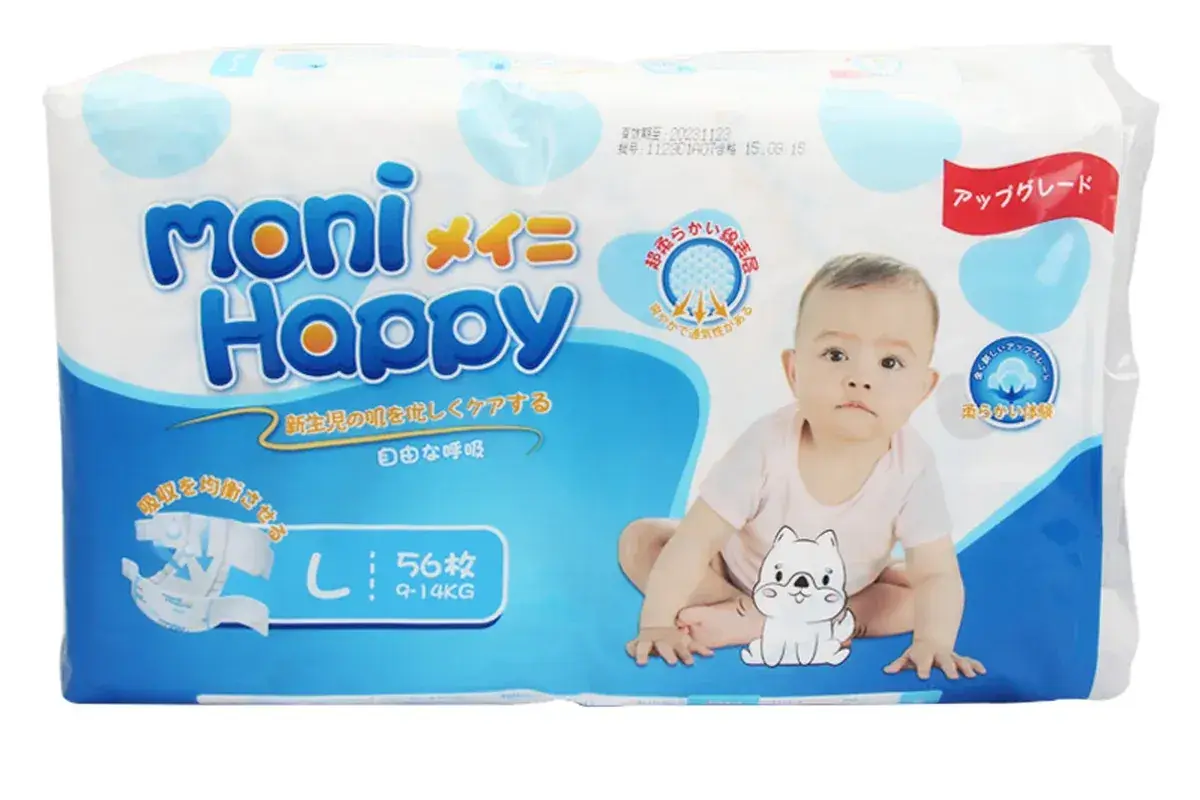
Ask for the report, not the seal. A Dermatest mark printed on a pack is a claim; the document behind it — subject count, skin type, patch protocol, assessment points, ingredient pre-screen and the exact product tested — is the evidence. A diaper wholesale buyer who verifies those five items can defend the claim to a retail account. A buyer who accepts the graphic is repeating an assertion they cannot support.
For a diaper wholesale buyer the verification takes about a week of email and costs nothing. It is worth doing before you print the claim on your own point-of-sale material, because that is the moment the assertion becomes yours.
What exactly does a Dermatest certificate attest to?
It attests that a defined product was patch-tested on a defined panel of human subjects under a defined protocol, and that no irritant reaction was observed at the stated assessment points. It is a test result for a specific article, not a general endorsement of a brand or a factory.
Dermatest is an independent dermatological research institute founded in 1978 by the dermatologist and allergist Dr. med. Werner Voss, and it is one of the reference points for sensitive-skin testing in Europe. Its value to a distributor is precisely that it is third-party: the conclusion does not depend on the supplier's own laboratory.
How many subjects should the report list, and why does it matter?
Look for a panel of sensitive skin subjects — thirty is the figure used in the standard patch test for a premium diaper line — because a panel selected for sensitive skin is a harder test than a general panel, and the sensitive skin segment is where a premium pack earns its price. An infant's skin barrier is not yet mature, so testing on the most reactive skin available is the closest available proxy.
If the report does not state the panel size and the selection criteria, ask. A certification check that stops at the seal is not a check, and a test described only as "dermatologically tested" without a number is not verifiable, and a retail buyer in pharmacy or modern trade will eventually ask you for the number.
Why do the assessment points matter as much as the result?
Because a patch test is a time series, not a single reading. The standard protocol applies an occlusive patch for twenty-four hours and then assesses the site at twenty-four, forty-eight and seventy-two hours. A reaction that appears on day three is exactly the kind of delayed response a single reading would miss.
- Twenty-four hours — the patch comes off and the site is scored.
- Forty-eight hours — the first delayed reading, catching reactions that develop after removal.
- Seventy-two hours — the final reading, and the one a serious report always includes.
Ask for all three. A certificate that summarises "no irritation" without the three time points is a summary of a test, not the test.
What happens before the patch goes on?
An ingredient review. Before testing, the institute examines the formulation to confirm it contains none of the substances prohibited under European cosmetics regulation and no known highly sensitising or highly irritant materials. That pre-screen is a substantive part of the assessment, not an administrative step.
For a buyer this is the most useful question you can ask a supplier, because it forces a conversation about the full formulation rather than the marketing ingredients. Ask which substances the review covered, and ask for the ingredient declaration that was submitted. If the supplier cannot produce it, the certificate may belong to a different formulation than the one you are buying.
How do you confirm your SKU is inside the tested scope?
Match the product name, the variant and the date on the report against the artwork you are about to print. Certification attaches to an article; a certificate for a premium series does not automatically extend to every pack size, every variant, or a later reformulation.
Three specific mismatches cause trouble in practice: a report covering one variant while the pack claims the whole range, a reformulation after the test date with no re-test, and a report issued for a different market's artwork. Each is easy to check and each is embarrassing to discover after a retail listing.
What should you do if the supplier will not share the report?
Any diaper wholesale buyer should treat the claim as unverified and either remove it from the material or replace the supplier. There is no legitimate commercial reason to withhold a test report from a distributor who is being asked to carry the claim into a retail account.
If the supplier shares a summary page only, ask for the pages showing the panel, the protocol and the assessment points. Confidentiality is a reasonable concern for formulation detail, but the test parameters are not confidential — they are the certificate.
How should the claim be used once it is verified?
Narrowly. State the product tested, the institute, the year and the finding, and keep the report on file for the account that asks. Avoid turning a patch test into a medical claim: a certification of no observed irritation is not a treatment for a skin condition, and regulators in the region take a dim view of the difference being blurred.
For a distributor, the commercial value of a verified certificate is that it supports a premium shelf position without a price war. It gives a pharmacy buyer a reason to place the product on the sensitive-skin fixture rather than in the value aisle. That argument only works if the paperwork is real and specific — which is what this checklist is for. If you are assembling the rest of the dossier, the supplier certification checklist covers the documents to collect alongside it, and the onboarding guide sets out the sequence for a first order.
Frequently asked questions
Is a Dermatest seal enough for a retail listing?
Not on its own. Most pharmacy and modern trade buyers will ask for the report or at least the test parameters once you claim a certification in the listing pack.
How long does a certificate stay valid?
Validity attaches to the tested formulation and the report date. A reformulation or a material change should trigger a new test, so ask for the date and compare it with the production timeline.
Does the certificate cover the factory as well as the product?
No. It covers a tested article. Factory-level assurance comes from quality-system certification and audits, which are separate documents answering a separate question.
Can a distributor quote the certificate in its own marketing?
Usually yes, if the wording stays factual and names the product tested. Route any consumer-facing claim through the brand owner and keep the wording aligned with the report.
Sources and further reading
- Dermatest, dermatest.de — the institute's published test methods and certificate verification route.
- European Union, Regulation (EC) No 1223/2009 — the prohibited and restricted substance lists referenced in a pre-test ingredient review.
- International Organization for Standardization, ISO catalogue — including ISO/IEC 17065 for the operation of product certification bodies.
Bottom line: a Dermatest claim is worth exactly as much as the report behind it. Ask for the panel size, the three assessment points, the ingredient pre-screen and the scope match against your SKU — then keep the file for the retail account that asks. If any of the four is missing, the claim is a graphic.
Moni Happy's premium series baby diapers were certified by Dermatest in June 2026 after a 72-hour patch test on 30 sensitive-skin subjects. Distributors in Malaysia, Singapore, Thailand, Vietnam and Laos can request the certification summary with a sample set, or review the premium diaper range before shortlisting. Order quantities and pricing are confirmed per market, subject to formal quotation.
Frequently Asked Questions
Is a Dermatest seal enough for a retail listing?
Not on its own. Most pharmacy and modern trade buyers will ask for the report, or at least the test parameters, once you claim a certification in the listing pack.
How long does a certificate stay valid?
Validity attaches to the tested formulation and the report date. A reformulation or material change should trigger a new test, so compare the date against your production timeline.
Does the certificate cover the factory as well as the product?
No. It covers a tested article. Factory-level assurance comes from quality-system certification and audits, which are separate documents answering a separate question.
Can a distributor quote the certificate in its own marketing?
Usually yes, if the wording stays factual and names the product tested. Route any consumer-facing claim through the brand owner and keep it aligned with the report.
Distributor resources
If you are evaluating suppliers for your market, these are the pages that answer the commercial questions — in the order buyers usually need them.