
2026-09-04 · Sarah Mitchell
Toddler Tantrums: A Mom's Guide to Surviving & Teaching Emotional Regulation

I was in the grocery store, mid-conversation with the produce guy, when my 2-year-old decided she wanted the entire display of cherry tomatoes. I said no. She dropped to the floor, screamed at a pitch I didn't know humans could reach, and started kicking the organic kale. Every person in the produce section turned to look. I wanted to disappear. If you've been there, you know: toddler tantrums are not a sign of bad parenting or a bad kid. They're a normal, brain-development phase. Here's what I've learned about surviving them—and actually helping my toddler learn from them.
Why do toddlers have tantrums?
Tantrums peak between ages 1-3, and they happen for a very specific developmental reason: your toddler's emotional brain (limbic system) is developing much faster than their logical brain (prefrontal cortex). The prefrontal cortex—the part that handles impulse control, emotional regulation, and rational decision-making—doesn't fully mature until the mid-20s. In toddlers, it's barely online.
So when your toddler wants something and can't have it, their emotional brain floods with frustration, anger, and disappointment, and their logical brain literally cannot step in to calm things down. They're not being "bratty" or "manipulative"—they're experiencing a neurological overwhelm that they don't yet have the brain wiring to manage.
Common tantrum triggers include: being told "no," wanting something they can't have, transitions (leaving the park, ending playtime, getting in the car seat), being tired or hungry, overstimulation (busy stores, loud environments), not being able to communicate what they want, feeling a lack of control, and simply being overwhelmed by big feelings they don't understand.
The average toddler has 1-3 tantrums per day, each lasting 1-15 minutes. Boys and girls have tantrums at equal rates. Tantrums are not a reflection of your parenting—they're a reflection of normal brain development.
What should I do DURING a tantrum?
This is the part everyone wants to know. Here's what works, based on pediatric psychology and what actually helped me in the trenches:
1. Stay calm (this is non-negotiable)
Your toddler's brain is in emotional flood mode. If you get angry, yell, or become visibly frustrated, you're adding more emotional intensity to an already overwhelmed system. Your calm is the anchor that helps their nervous system regulate. I know it's hard—especially in public. I used to take deep breaths and silently repeat "this is brain development, not personal" to myself. If you feel yourself losing it, it's okay to say "I need a minute" and step back briefly (as long as your toddler is safe).
2. Ensure safety
Move your toddler away from danger (sharp corners, hard floors, busy parking lots). If they're hitting, kicking, or throwing things, gently hold their wrists or create a safe space. You can say "I won't let you hurt yourself or others." Don't restrain them forcefully unless they're at risk of injury—gentle, calm holding is okay, but physical restraint can escalate things.
3. Stay nearby, but don't try to reason
During a full tantrum, your toddler literally cannot process logic or reason. Don't lecture, don't bargain, don't try to explain why they can't have the thing. Just stay close, use a calm, low voice, and offer simple phrases: "I'm here." "You're really upset." "I know this is hard." Your presence is more powerful than your words right now. Some toddlers want to be held during a tantrum; others need space. Follow their lead—offer a hug, but don't force it.
4. Don't give in to the demand
This is the hardest one, especially in public. If you give your toddler the thing they're tantrumming for (the candy, the toy, the extra 10 minutes at the park), you teach them that tantrums are an effective way to get what they want. This doesn't mean you can't ever compromise—it means you don't change your answer because of the tantrum. If you were going to say no, stick with no. You can acknowledge the feeling ("I know you really want the tomatoes") without giving in ("but we're not buying them today").
5. Wait it out
Most tantrums peak at 2-3 minutes and then start to wind down. The crying may shift from screaming to sobbing to sniffling. Once the intensity decreases, your toddler's logical brain is starting to come back online. This is when you can offer comfort, a hug, and start to reconnect.
What should I do AFTER a tantrum?
The aftermath is actually the most important part for learning. Here's what to do:
- Reconnect warmly. Offer a hug, say "I love you," and move on. Don't hold a grudge or give the cold shoulder—your toddler doesn't understand that. The tantrum is over; so is the conflict.
- Briefly name the feeling. Once they're calm, you can say something simple like "You were really mad when we had to leave the park." This helps them build emotional vocabulary. Keep it short—don't lecture.
- Praise calm behavior. When your toddler handles frustration without a tantrum (even a small win), point it out: "You asked nicely for more juice instead of yelling—that was great!" Positive reinforcement is more powerful than punishment.
- Don't punish the tantrum itself. Tantrums are not misbehavior—they're emotional overwhelm. Time-outs, scolding, or taking away privileges for having a tantrum can actually make them worse by adding shame and fear to the mix. Do set consequences for aggressive behavior (hitting, biting, throwing things) that happens during a tantrum, but the tantrum itself isn't punishable.
How can I PREVENT tantrums?
Prevention is way more effective than intervention. Here's what actually reduces tantrum frequency:
- Keep them rested and fed. This is the #1 prevention strategy. Tired and hungry toddlers have zero emotional reserves. Stick to consistent nap and meal schedules. Always carry snacks when you go out. I kept a small bag of tissues and snacks in my diaper bag at all times—hunger was my daughter's biggest tantrum trigger.
- Give choices (within limits). Toddlers crave autonomy. Instead of "put on your shoes" (which invites a power struggle), try "Do you want the blue shoes or the red shoes?" Giving two acceptable choices lets them feel in control without you giving up the limit.
- Use warnings for transitions. "We're leaving the park in 5 minutes" gives their brain time to process the upcoming change. Then "2 more minutes" and "time to go"—gradual warnings reduce the shock of sudden transitions.
- Acknowledge feelings before setting limits. "I know you want to keep playing (acknowledge), and it's time to go home (limit)." This validates their emotion while holding the boundary. Feeling understood reduces the intensity of the reaction.
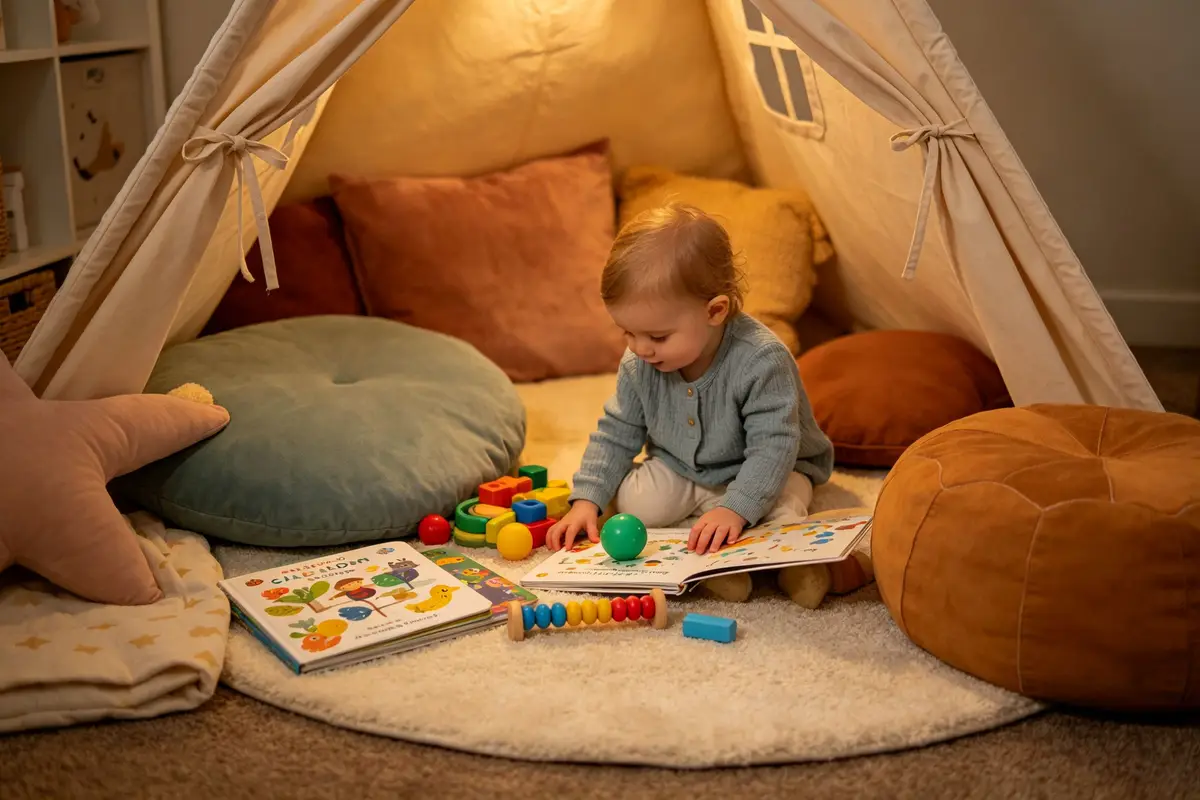
- Create a calm-down space. Set up a cozy corner with soft pillows, stuffed animals, books, and sensory toys. Teach your toddler to go there when they're upset—not as a punishment, but as a tool. "You look really mad—want to go squeeze the stress ball in your cozy corner?" This builds emotional regulation skills.
- Model calm behavior. Your toddler watches how YOU handle frustration. If you yell when you're upset, they'll yell too. If you take a deep breath and say "I'm frustrated, I need a minute," they learn that's how big people handle feelings. I had to learn this the hard way—my daughter started copying my "Ugh!" when she was frustrated, and I realized she was learning from me.
- Limit overstimulation. Busy stores, loud restaurants, crowded play spaces—these overwhelm a toddler's nervous system and lower their frustration threshold. Keep outings short, build in quiet time, and watch for signs of overstimulation (rubbing eyes, clinging, zoning out) before the tantrum hits.
What about public tantrums?
Public tantrums feel the worst because of the audience. Here's my honest advice: most people are not judging you. Many are parents who've been exactly where you are. The ones who do judge? They're not worth your energy. Practical tips for public tantrums:
- If safe, stay where you are and wait it out. Moving a screaming toddler often escalates things.
- If you're blocking traffic or in an unsafe spot, calmly pick them up (even if they're stiff as a board) and move to a quieter area—car, restroom, empty aisle.
- Don't try to reason or negotiate in public—same rules apply: stay calm, stay nearby, don't give in.
- Have a "tantrum exit plan"—know where you can go to wait it out (car, quiet corner, outside).
- Afterward, remind yourself: this is a phase. It will end. My daughter's grocery store tantrums stopped completely by age 3.5.
When should I worry?
Tantrums are normal, but consult your pediatrician if:
- Tantrums consistently last more than 15 minutes
- Your toddler regularly hurts themselves or others during tantrums (head-banging, hitting, biting that causes injury)
- Tantrums are getting worse after age 4 instead of better
- Your toddler seems aggressive or destructive most of the time, not just during tantrums
- You're feeling overwhelmed, depressed, or unable to cope—parenting toddlers is hard, and asking for help is a sign of strength, not weakness
Article Summary
Toddler tantrums are a normal developmental phase (ages 1-3) caused by the emotional brain developing faster than the logical prefrontal cortex. During a tantrum: stay calm, ensure safety, stay nearby without reasoning, don't give in to the demand, and wait it out (most peak at 2-3 minutes). Afterward: reconnect warmly, briefly name the feeling, praise calm behavior, and don't punish the tantrum itself. Prevention is most effective: keep toddlers rested and fed, offer limited choices, warn before transitions, acknowledge feelings before setting limits, create a calm-down space, model calm behavior, and limit overstimulation. Public tantrums are embarrassing but most bystanders are sympathetic or fellow parents. Consult your pediatrician if tantrums last over 15 minutes, involve regular self-harm, worsen after age 4, or if you're feeling overwhelmed. This phase is temporary—your toddler is learning emotional regulation skills that will serve them for life.
Frequently Asked Questions
Why does my baby get separation anxiety?
Separation anxiety is a normal developmental stage that typically begins around 8-10 months, when babies develop object permanence — the understanding that people and things continue to exist even when they can't see them. Before this, babies don't fully understand that you still exist when you leave the room. Separation anxiety peaks around 10-18 months and usually fades by age 2-3, though it can resurface during times of stress or change. It's a sign that your baby has formed a healthy attachment to you.
How can I help my baby through separation anxiety?
Practical strategies include: establish a consistent, short goodbye routine (a kiss, a wave, a special phrase) and then leave without lingering or coming back — coming back can make it harder; practice short separations at home first, gradually increasing the time; always say goodbye rather than sneaking out (sneaking out can increase anxiety because your baby doesn't know if you'll come back); leave your baby with familiar caregivers; and acknowledge your baby's feelings with empathy — 'I know it's hard when I leave, but I'll come back.' Reassure yourself that your baby will usually calm down within minutes of you leaving.
How do I handle toddler tantrums?
Tantrums are a normal part of toddler development, happening because toddlers have strong emotions but limited language skills to express them. During a tantrum: stay calm (your calm helps them regulate), ensure your child is safe (move them away from danger if needed), don't reason or negotiate during the peak (they can't process it), and don't give in to the demand that triggered the tantrum (this teaches them tantrums work). After the tantrum, offer comfort and connection, then briefly talk about what happened and better ways to express feelings. Prevent tantrums by ensuring your child is well-rested and fed, offering choices within limits, and giving advance warnings before transitions.
How can I support my baby's emotional development?
Support emotional development by: responding consistently and warmly to your baby's needs — this builds secure attachment and emotional security; naming emotions from an early age ('I see you're feeling frustrated,' 'You seem happy') helps babies learn to identify and understand feelings; validating all emotions (it's okay to be sad, angry, or scared) while setting limits on behavior; modeling healthy emotional expression yourself — babies learn by watching how you handle stress and strong emotions; reading books about feelings; and giving your baby plenty of love, attention, and secure physical contact. A strong emotional foundation in infancy supports mental health and social skills for life.
Frequently Asked Questions
At what age do tantrums peak and when do they stop?
Tantrums typically begin around 12-18 months, peak between ages 2-3 (hence the 'terrible twos,' though they often start before age 2), and gradually decrease by age 3-4 as language skills and emotional regulation improve. The average toddler has 1-3 tantrums per day, each lasting 1-15 minutes. By age 4, most children have developed enough language and self-regulation skills that tantrums become less frequent and intense. However, some children continue to have occasional meltdowns through age 5-6, especially when tired, hungry, or overwhelmed. If tantrums are getting worse after age 4 instead of better, or consistently last more than 15 minutes, consult your pediatrician.
Should I give my toddler what they want to stop the tantrum?
No—giving in during a tantrum teaches your toddler that tantrums are an effective strategy to get what they want, which increases future tantrum frequency and intensity. This doesn't mean you can never compromise or change your mind—it means you shouldn't change your answer specifically because of the tantrum. If you said no to candy at the store, stick with no through the tantrum. You can acknowledge the feeling ('I know you really want the candy and you're upset') without giving in ('but we're not buying candy today'). After the tantrum is over and your toddler is calm, you can offer an alternative or discuss the situation, but never reward the tantrum itself with the desired object or activity.
Is it okay to hug or hold my toddler during a tantrum?
It depends on your toddler's preference. Some toddlers want physical comfort during a tantrum and will calm down with a gentle hug or being held. Others need space and will resist or escalate if you try to touch them. Follow their lead: offer a hug by opening your arms and saying 'want a hug?' but don't force physical contact. If your toddler is hitting, kicking, or at risk of hurting themselves, gentle holding (sitting behind them, wrapping your arms loosely around their torso, holding their wrists gently) can be appropriate to keep everyone safe—use a calm voice and say 'I'm holding you to keep you safe.' Never restrain forcefully or hold a child face-down.
How do I handle a tantrum in public without feeling embarrassed?
Public tantrums are stressful because of the perceived audience, but most bystanders are either fellow parents who've been there or people who don't care. Practical strategies: if safe, stay where you are and wait it out calmly—moving a screaming toddler often escalates things. If blocking traffic or in an unsafe spot, calmly pick them up and move to a quieter area (car, restroom, empty aisle). Don't try to reason or negotiate—same rules as at home: stay calm, stay nearby, don't give in. Have an exit plan (know where you can wait it out). Remind yourself this is a temporary phase and not a reflection of your parenting. If a stranger offers a sympathetic smile or comment, it's usually from a parent who understands. Take deep breaths and focus on your toddler, not the audience.