
2026-11-11 · Moni Happy
What makes Malaysia's kedai runcit owners stock a new diaper distributor brand?
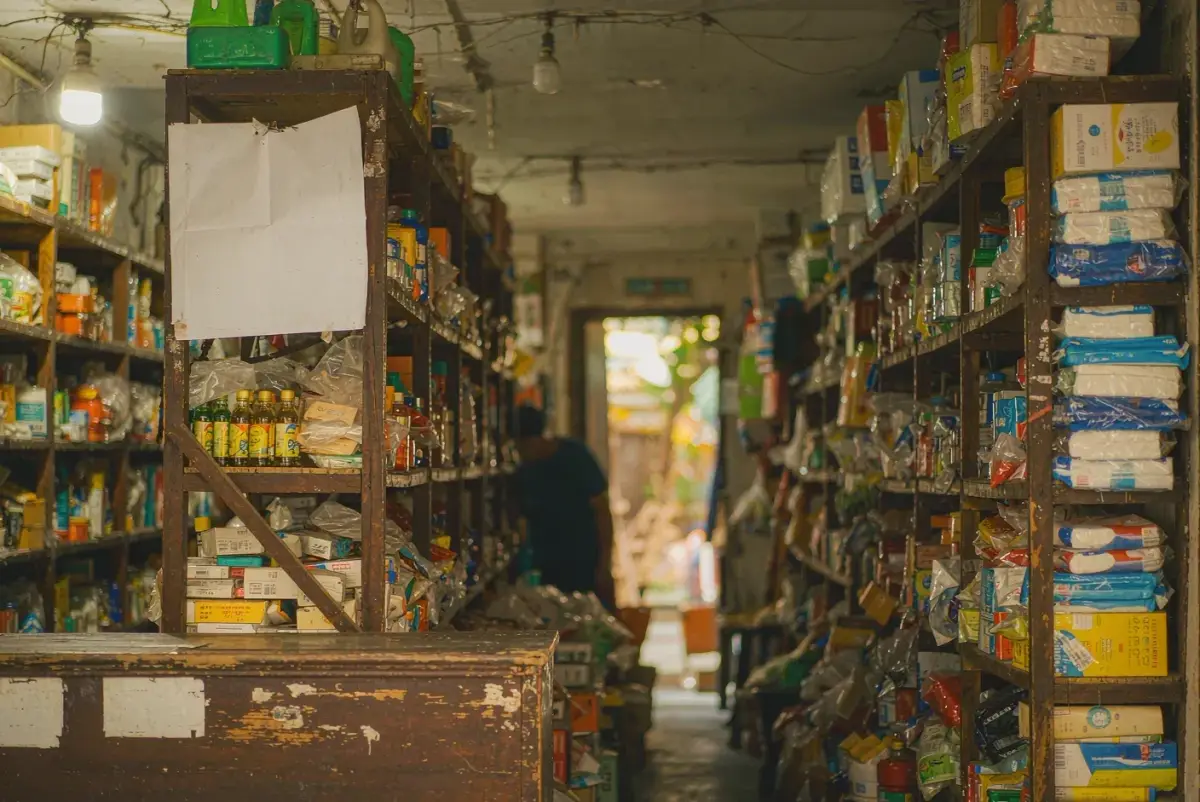
A kedai runcit owner stocks a new diaper brand on four conditions, in this order: the pack sells out in under a week, the distributor drops weekly, the credit is short and predictable, and the sales representative comes back. Brand story comes fifth, if at all. The shop is not buying a brand; it is buying shelf space that has to earn its rent, and cash that has to come back before the next wholesale trip.
This is the channel that most new diaper distributor operations misunderstand, because the numbers look unimpressive one shop at a time and the mechanics are completely different from a modern trade listing. A supermarket buyer negotiates a listing fee and a planogram. A kedai runcit owner decides in a six-minute conversation at the counter, often with a customer waiting, and the decision is made on pack size, price point and whether the rep will be back next week.
What is a kedai runcit, and why does it buy differently from a baby store?
It is a one or two door neighbourhood shop selling a narrow range of fast-moving groceries, and it buys for cash flow rather than for range. The channel is usually described as traditional trade, and it behaves nothing like the modern trade accounts that most brand plans are written for.
A baby store buys depth: several brands, several sizes, a category story. A kedai runcit buys breadth in tiny quantities: one or two packs of a size, a small pack of wipes, a single carton of tissue, because the shelf space is measured in hand-widths and the cash is needed for the next delivery of rice or cooking oil. The owner's real question is not "will this sell" but "will it sell before I need the money".
That single difference changes the whole sales argument. Features that matter to a baby store - the full size ladder, the premium tier, the promotional calendar - are noise here. What matters is the unit price the customer sees, the pack's physical footprint, and the drop size that keeps the shelf full without tying up cash.
Which pack format actually moves in a kedai runcit?
The smallest pack that still carries a credible unit price, usually a single small pack or a sachet pack rather than a multipack, and never the premium three-pack.
The shopper in this channel is frequently buying for a day or two, sometimes for a single night, and is often not the household's main grocery decision-maker. A pack that costs the price of a meal is a hard sell at a counter where the customer is already buying several things. A smaller pack at a higher price per piece is easier to sell because the absolute number on the price tag is smaller, and the owner knows this from experience with every other category in the shop.
- Pack footprint: the pack has to stand on a shelf 200 mm deep without being crushed by the next product.
- Price tag: the owner writes the price by hand. Round numbers sell; odd numbers get rounded anyway.
- Carton size: a carton the owner can carry and open alone, because there is no stockroom and no trolley.
- Pack strength: a soft pack that scuffs in a lorry will be rejected at the door, and the rejection is remembered.
The sachet pack is the format that fits this shelf best, which is why traditional trade often carries a format that modern trade does not list at all.
The practical consequence for a diaper distributor is that the same brand usually needs a different pack architecture for this channel than for a pharmacy or a modern trade listing. A range built only for the supermarket will be listed by the supermarket and refused by the route.
Work the pack maths before you work the shop. A 20GP of tape diapers carries roughly 48,000 pieces; split that across three sizes and two pack counts, and the owner is choosing between a 24-piece pack that clears inside a week and a 48-piece pack that ties up cash for a fortnight. The formats that move in one-door shops cluster at the small end: 20 to 30 pieces, priced so the owner can quote it from memory without checking the shelf label.
How many shops does a diaper distributor need before the route pays?
Enough that the lorry fills its day with drops, which in most Malaysian urban and semi-urban routes means roughly 25 to 40 stops a day rather than 60. A route built on sachet pack orders needs more stops than one built on cartons, because the average drop value is lower.
The arithmetic is unforgiving and worth doing before the first lorry leaves. A route day costs the same whether it makes eight drops or thirty: fuel, driver, rep, lorry time, and the depreciation that does not care about the load. Below a certain number of stops, the cost per drop exceeds the gross margin per drop, and no amount of brand enthusiasm fixes it. Above that number, the same route becomes profitable quite suddenly, because the fixed day cost is spread across more orders.
That is why route density beats route ambition in this channel. Twenty shops in one corridor are worth more than forty spread across three towns, even if the forty look better on a coverage list. It also explains why a new diaper distributor should not open a second state until the first route is dense: a thin route in a new area consumes the cash that the dense route needs.
What credit terms does the channel actually expect?
Cash on delivery at the start, then a short term of one to two weeks, and nothing longer for a shop that has not proved its payment record.
Owners in this channel are skilled negotiators about terms because cash is their scarcest resource, and a new supplier who offers thirty days on the first visit is not being generous, they are being marked as inexperienced. Credit terms in traditional trade are read as a signal of how well the distributor knows the channel. The sequence that works is unglamorous: cash for the first four to six visits, then a short term once the drop has repeated, then a review after three months of clean payment.
Two rules protect the route. Never let a shop's outstanding balance exceed the value of one drop, and stop the drop when it does. And never accept stock back in place of payment without inspecting it, because a returned carton that has been stored in a hot back room is not the carton you sold.
How do you get the first order from a shop that has never heard of the brand?
By making the decision small enough to take at the counter: one pack to try, one facing, and a phone number that answers.
The six-minute call that works has a predictable shape. Name the brand and the price in the first sentence, because the owner's first question is the price. Put one pack on the counter and let the owner hold it, because the hand decides more often than the ear in this channel. Offer a single pack on the first visit rather than a carton, since a refusal is cheaper for both sides than a return. Then leave a shelf talker or a price card that the owner does not have to write, and a phone number for the next order.
What not to do is equally predictable. Do not open with a brand story. Do not present a size ladder the shop cannot stock. Do not offer a promotional price that will expire in two weeks, because the owner will wait rather than buy. And do not promise a visit that you cannot make, because the second visit is the entire sales strategy in this channel.
Why do kedai runcit orders collapse in the second month?
Because the visit stopped, not because the product failed, and the shelf was reallocated to whoever came back.
The pattern is common enough to be a rule: month one shows a good strike rate, month two shows reorders on half the stores, month three shows the brand in a corner behind a competitor. The cause is almost always coverage frequency, and the symptom is blamed on price or on consumer demand. In a one-door shop a facing is not owned, it is borrowed, and it is reclaimed the moment the shop needs the space for something that arrives more reliably.
The fix is structural rather than motivational. Build the route so that every active shop sits on a fixed day, publish the day to the owner, and measure visits per store per month as a headline number alongside sales. A distributor that tracks drops, strike rate and visit frequency will see the collapse coming three weeks before it shows in revenue.
When should a diaper distributor stop calling on one-door shops?
When the route density falls below the level that covers a lorry day, or when the cash cycle in the channel is longer than the margin can carry.
Small-format trade is the cheapest place to build a brand's first hundred doors and the most expensive place to run a national business. It rewards a distributor with local knowledge, own vans and patient cash; it punishes one that treats it as a smaller version of modern trade. The honest test is arithmetic: cost per drop, margin per drop, credit terms expressed as days outstanding, and returns as a share of sales. When two of those four go the wrong way for two consecutive months, the answer is to tighten the route rather than to add shops.
If you are mapping a first route in Malaysia and want the pack architecture and the drop economics to line up before you hire a rep, our partner team works through it with distributors market by market: Malaysia partner programme or apply for a territory.
Frequently asked questions
Do kedai runcit owners buy from a wholesaler instead of a distributor?
Many buy from both. The wholesale market is convenient for a mixed basket, while a distributor wins on a specific category, a reliable drop day and credit. A new diaper distributor competes on reliability and on a pack the wholesale market does not carry, not on price against a mixed wholesaler.
Is a fridge or a display unit worth placing in a one-door shop?
For diapers, no. The category does not need cooling and the unit takes space the shop would rather use for something else. Spend the equivalent on a price card, a shelf strip and a second visit.
How do I handle a shop that wants to return unsold stock?
Agree the rule before the first drop: returns only on unopened cartons in original condition within a stated window, and credit against the next order rather than cash. Exceptions build trust once; policies stated up front prevent the argument every month.
Does the same rep need to cover the shop every visit?
Ideally yes for the first three months, because the relationship is the route. After that, a named backup who has been introduced in person is enough, provided the drop day never moves without a call.
Sources and further reading
- Department of Statistics Malaysia, Wholesale and Retail Trade statistics - the official series for retail trade performance by sub-sector. dosm.gov.my (monthly releases)
- SME Corporation Malaysia, SME definitions and micro and small enterprise guidance - the sizing bands that most one-door retailers fall inside. smecorp.gov.my
- Ministry of Domestic Trade and Cost of Living (KPDN), consumer and trade regulation guidance for retailers in Malaysia. kpdn.gov.my
Bottom line: the one-door shop buys a pack it can sell in a week, a drop it can plan around and credit it can repay, and it reorders because a rep came back. Build the route around density and frequency first; the brand follows the shelf, it does not lead it. When you are ready to test a corridor, the partner programme starts with the drop economics rather than the price list.
Frequently Asked Questions
Why do kedai runcit owners refuse a brand that sells well in supermarkets?
Because the shop is not competing with the supermarket on the same pack. A shopper in a kedai runcit is buying for tonight, often in a smaller pack at a higher price per piece, and a supermarket multipack at a lower unit price simply does not fit the shelf or the wallet. The brand can be strong and the pack still be wrong.
How much credit does a kedai runcit expect from a new diaper distributor?
Cash on delivery for the first several visits, then a short term of a week or two once the relationship is established. Longer terms are usually a sign that the shop is using the distributor as a bank, and in this channel that is how a route loses its working capital.
How often does a diaper distributor need to visit to keep the shelf?
Weekly for the first two months on any new store, then every two weeks if the drop holds. The order usually collapses not because the product failed but because the visit stopped, and by the time the rep returns the facing has been taken by a competitor who came back.
Is a branded shelf or a planogram worth it in a one-door shop?
Rarely in a one-door shop. What works is a single facing at eye level for an adult, a price tag the owner did not have to write, and a pack the owner can hold in one hand. Anything that requires the owner to rearrange the shop is a favour, and favours are not repeatable across a route.
Distributor resources
If you are evaluating suppliers for your market, these are the pages that answer the commercial questions — in the order buyers usually need them.
