
2026-11-08 · Moni Happy
What must a diaper distributor prove in the first 90 days of a Thai listing?
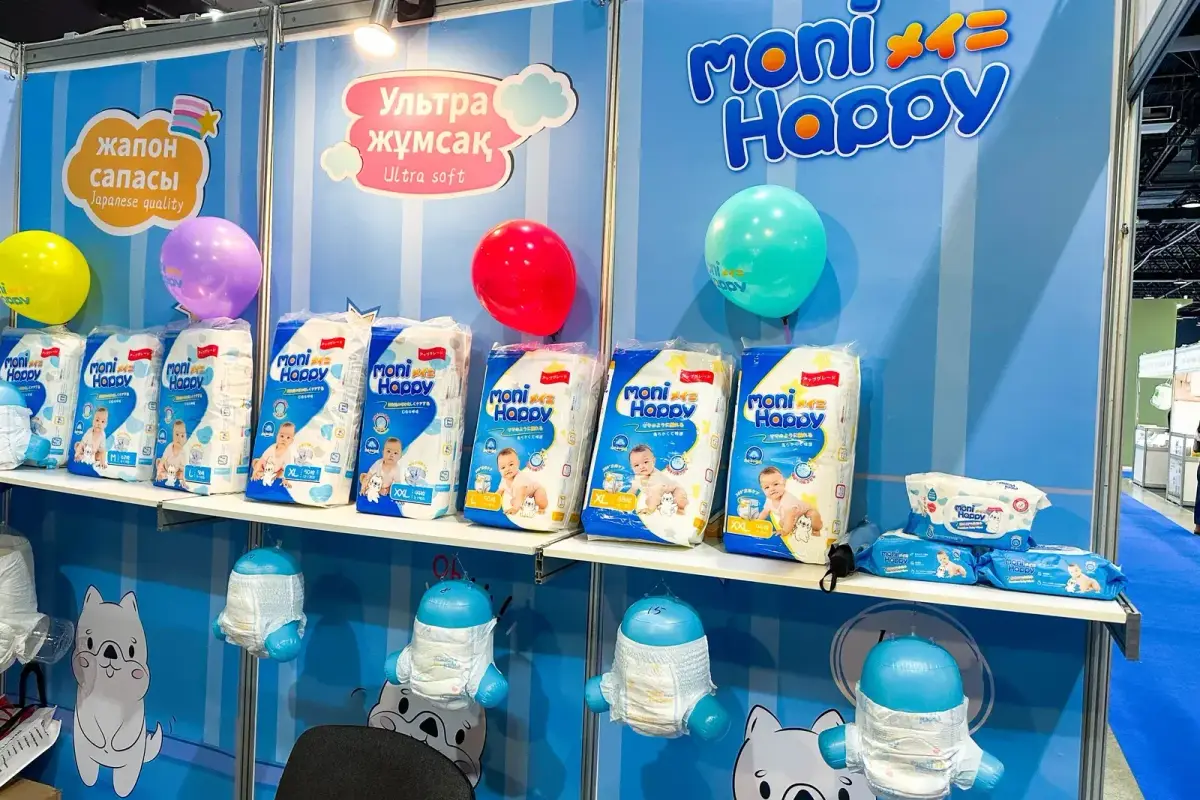
A Thai listing goes through its first shelf review about 90 days after first delivery, and three numbers decide it: sell-through per store per week, out-of-stock days, and the share of volume coming from your top two SKUs. Price is rarely what ends a listing. An empty facing is.
Most diaper distributors treat the first 90 days as a delivery problem and discover at day 85 that it was a reporting problem. The chain has been watching a dashboard the whole time, and the distributor has been watching a purchase order. That gap is what the Thai listing review exposes, and it is why a distributor who prepares the numbers from week four keeps the shelf while a distributor who prepares a discount request usually does not.
Why do Thai chains set a review date at all?
Because shelf space is the chain's scarcest asset and a new brand is a bet against an existing one. A review date converts that bet into a decision with an evidence base, and it protects the buyer internally.
Thai modern trade and baby specialist chains manage category space on a formal cycle, and a new listing enters that cycle as a trial allocation rather than a permanent position. The review date is where the trial converts or ends. Buyers use it for two purposes: to justify the allocation they already made, and to free space from brands that did not perform.
That gives a diaper distributor a clear target. The buyer is not looking for a reason to remove you; the buyer is looking for a document that lets them keep you. Your job in the first 90 days is to hand them that document. Ask for the review date in the first meeting, because a listing without one is a listing nobody owns and it will be reallocated by default.
Which three numbers actually decide the shelf review?
Sell-through per store per week, out-of-stock days, and SKU concentration. Each answers a different question the buyer will be asked, and all three are numbers you can produce yourself.
- Sell-through per store per week. Not total sell-in, and not national average. The buyer needs to know whether the brand moves in an average outlet, because that is what the space is being compared against.
- Out-of-stock days. Days where a listed size was unavailable on shelf, per store. This is the number that explains a weak sell-through figure, and it is the only acceptable reason for one.
- SKU concentration. The share of volume in your top two SKUs. High concentration is not a failure; it is a mix signal, and it gives you a defensible proposal to reallocate depth.
Add one qualitative input: the number of stores that reordered without being prompted. A reorder placed by the store rather than by your salesperson is the strongest evidence that the product works, and it is the one figure a buyer cannot generate internally.
How do I hit sell-through without funding it myself?
Fix the mix and the facings before you spend on promotion. Most weak first-quarter sell-through in this category is a depth problem in two sizes, not a demand problem across the range.
New listings usually launch with a broad range because the buyer wants to see the full offer and the distributor wants to show it. Ninety days later the data shows two sizes carrying most of the volume and four sizes carrying almost none, each occupying a facing that could be working. The correction is mechanical:
- Move depth, not just space. Reallocate the case pack from the slow sizes into the two that turn, within the same total order value.
- Protect the size the parent actually needs. A gap in the middle of the range costs more sales than a gap at either end, because it breaks the repeat purchase.
- Spend on the switch, not on the price. A trial pack at the entry size, placed at the shelf edge, converts better than a percentage off a core pack and does not reset the price expectation.
- Keep one promotional slot per quarter. Chains plan promotions in advance; arriving without a slot means the brand has no visible activity in the review period.
If the mix correction is not enough, the second lever is distribution rather than discount: fewer stores with full depth usually produce a better sell-through figure than more stores with gaps, and the review reads the average either way.

Why do out-of-stock days matter more than price in a Thai listing?
Because a lost sale is invisible and a short facing is not. A store that runs out of the size a parent needs records nothing, while the buyer sees a facing that is not working and reallocates it.
In a repeat-purchase category the cost of a stock-out is not the lost pack; it is the substitution. A parent who cannot find the size buys a competitor's pack, and if that pack performs reasonably the next purchase goes there too. Two stock-out weeks in a 90-day window can remove a family from the brand permanently, and none of it appears in the sell-through number the chain is reading.
Three practical controls reduce it without extra cost:
- Set a minimum presentation level per store and track it weekly. The number that matters is days below the level, not average stock.
- Hold a buffer of the two fast sizes locally. A small in-country buffer against the two sizes that carry volume costs less than the substitution it prevents.
- Report stock-outs yourself. A diaper distributor who brings the stock-out figure to the shelf review controls the explanation; one who waits to be asked does not.
What should a diaper distributor bring to the shelf review?
Three pages: the numbers, a mix proposal and the activity record. A shelf review that starts with a slide deck starts badly. Anything longer is not read in the meeting, and anything shorter invites the buyer to fill the gaps.
- The numbers page. Sell-through per store per week, out-of-stock days, SKU concentration, unprompted reorder count, and the trend across the three months rather than a single average.
- The mix page. What you propose to move, from which size to which size, and what you expect it to do to the average. Specific enough that the buyer can approve it in the meeting.
- The activity page. What ran, in how many stores, and what it produced. A promotion with no measured result is worse than no promotion, because it used a slot.
Bring the physical product too. A buyer who has spent three months looking at a spreadsheet responds differently to the pack in hand, and the review is one of the few moments where the product is in the room.
What happens if the numbers miss?
You get a smaller allocation, not an immediate delisting, in most cases. The exception is a safety or labelling issue, which ends a listing regardless of sell-through.
Thai chains usually reduce space before they remove a brand from a listing, because removal requires a replacement and a replacement requires a buyer to run the same process again. That gives the distributor a second window, and the way to use it is to arrive with the cause rather than the excuse. If sell-through missed because of stock-outs, show the stock-out data. If it missed because two sizes absorbed the depth, show the mix proposal. If it missed because the price step is wrong at the shelf, say so and propose a pack size change rather than a discount.
What ends a Thai listing fastest is a diaper distributor who cannot explain the number. A buyer can defend a mix problem; a buyer cannot defend "we do not know".
Product registration and labelling sit outside the commercial review and can quietly decide it. Confirm the classification for the specific product with the Thai Food and Drug Administration through a local adviser before the first shipment, and keep the registration documents in the review file. Thai labelling requirements for imported consumer goods are specific about language and importer details, and a rework at the border costs more than the review is worth. The clearance document checklist covers the equivalent paperwork sequence, and the Thailand partner page sets out what a territory arrangement covers.
How does the second review differ from the first?
The first review asks whether the brand deserves the space. The second asks whether the distributor deserves the territory, so the evidence base shifts from sell-through to coverage.
By the second shelf review the buyer assumes the product works and starts asking different questions: how many stores in the territory are covered, how often the salesperson visits, whether the shelf is being merchandised or just filled, and whether the promotional calendar is being executed. Those are distribution questions, and they are answered with coverage and visit data rather than with unit sales.
That is also the point where the conversation moves from a listing to a territory plan, which is a different document. The application route explains how territory scope is agreed, and the distributor onboarding guide sets out the sequence from first listing to a covered territory. If the range is being built alongside wipes or tissue, the wet wipes range shows what can be added to the same delivery without a new listing process.
Frequently asked questions
Who produces the sell-through data, me or the chain?
Both, and they rarely match. Produce your own from store-level delivery and returns, and reconcile with the chain's figure before the meeting rather than during it.
Is 90 days long enough to judge a new brand?
It is long enough to judge availability and mix, which is what the review actually tests. Judging brand strength takes longer, which is why the second review looks at coverage instead.
Should I accept a smaller allocation to keep the listing?
Yes, if the sizes you keep are the ones that turn. A smaller allocation in the right two sizes outperforms a broad allocation that is thin everywhere, and it gives you a defensible base for the next review.
What if the chain asks for a listing fee at the review?
Treat it as a commercial term to be negotiated against volume and duration, and get the review date and the exit terms in writing at the same time. A fee paid without a defined term is a recurring cost with no security attached.
Sources and further reading
- Thai Food and Drug Administration, product classification and registration reference - en.fda.moph.go.th
- Department of Business Development, Thailand, company and commercial registration - dbd.go.th
- ASEAN Tariff Finder, duty and origin rules for shipments into Thailand - tariff-finder.asean.org
Bottom line: Thai chains review a listing about 90 days after first delivery, and they decide on availability and mix rather than on price. Track sell-through per store, out-of-stock days and SKU concentration from week four, correct the depth before the review, and bring the numbers as a document the buyer can defend upward. That is what keeps the shelf.
Frequently Asked Questions
When does the first listing review happen in Thailand?
About 90 days after first delivery for most modern-trade and baby specialist chains, and it is usually written into the listing agreement rather than left to chance. Ask for the date before you sign.
Which number matters most?
Out-of-stock days. A store that is out of the size a parent needs does not record a lost sale; it records nothing, and the shelf space is reallocated at the review without any evidence that demand existed.
What if sell-through misses the target?
Bring a mix correction rather than a price cut. Reallocating depth from slow sizes to fast ones usually recovers more than a discount, and it does not reset the price expectation for the next review.
Do I need a Thai entity to hold the listing?
Not necessarily, but the importer of record has to be correctly established and the product registration position has to be confirmed with the Thai FDA for the specific product. Confirm the route with a local adviser before the first shipment.
Distributor resources
If you are evaluating suppliers for your market, these are the pages that answer the commercial questions — in the order buyers usually need them.
