
2026-11-18 · Moni Happy
Which base-sheet GSM should a tissue distributor lock for a 2-ply carton?
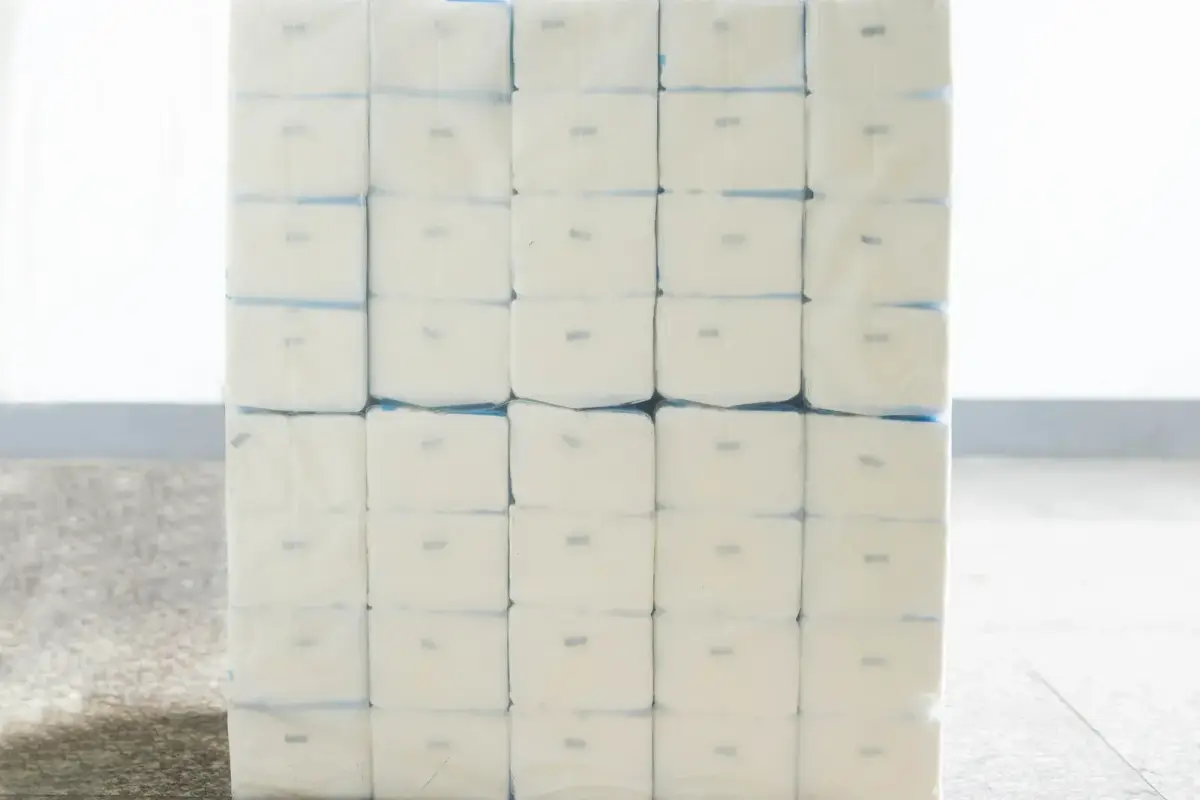
Lock 15 to 16 gsm per ply on a 2-ply facial tissue, which gives a 30 to 32 gsm sheet. Below 14 gsm the sheet tears at the perforation once it takes moisture, and a tissue distributor in Vietnam, Thailand or Malaysia will hear about that from the shelf long before any lab does. Above 18 gsm the sheet stiffens, the softness story stops working, and the buyer is paying freight for paper the customer cannot feel. The window is narrow, and it is the single line in a purchase specification that decides whether a carton feels premium or cheap.
Why does base sheet GSM matter more than ply count?
Because ply count is a construction detail and GSM is the sheet.
Two plies of 13 gsm and two plies of 17 gsm are both sold as 2-ply, and they behave nothing alike. The first is 26 gsm of paper and the second is 34 gsm, a 30% difference in material that shows up in wet strength, in how the sheet drapes across a hand, and in the cost per carton. A tissue distributor comparing quotes on ply count alone is comparing two products with the same label and different contents. Total sheet weight is what the customer feels, and per-ply weight is what the machine runs, so the spec needs both numbers written down.
What happens between 13 gsm and 18 gsm per ply?
The sheet goes from fragile to firm, and the useful band sits in the middle.
- 13 to 14 gsm per ply: cheap, light, tears wet, and the perforation opens before the sheet does. Workable for a value line in a dry market, not for a humid one.
- 15 to 16 gsm per ply: 30 to 32 gsm total, holds together wet, still reads soft. This is where most premium 2-ply facial tissue sits.
- 17 to 18 gsm per ply: 34 to 36 gsm total, firmer hand, better for a lotion or a wet-strength claim, and 10% to 15% more material per carton.
- Above 18 gsm per ply: the sheet reads stiff, and buyers start asking why a 2-ply feels like a 3-ply that costs less.
How does humidity change the number a buyer should hold?
It lowers the floor by about 1 gsm and raises the risk of the low end.
Tissue equilibrates with the air around it. At 80% relative humidity, which is an ordinary afternoon in Bangkok or Ho Chi Minh City, a sheet picks up moisture and loses tensile strength. The loss matters most at the perforation, where the fibre bonds are already cut. A 13 gsm sheet that passes a lab test at 50% humidity can fail on a shop counter in July. Two practical responses exist: hold the 15 to 16 gsm band, or specify a wet-strength additive and accept a higher price. What does not work is buying 13 gsm for a humid market and blaming the converter when consumers complain about tearing.
How much does 3 gsm per ply cost across a container?
More than the paper, because tissue pays for volume and the weight rides along.
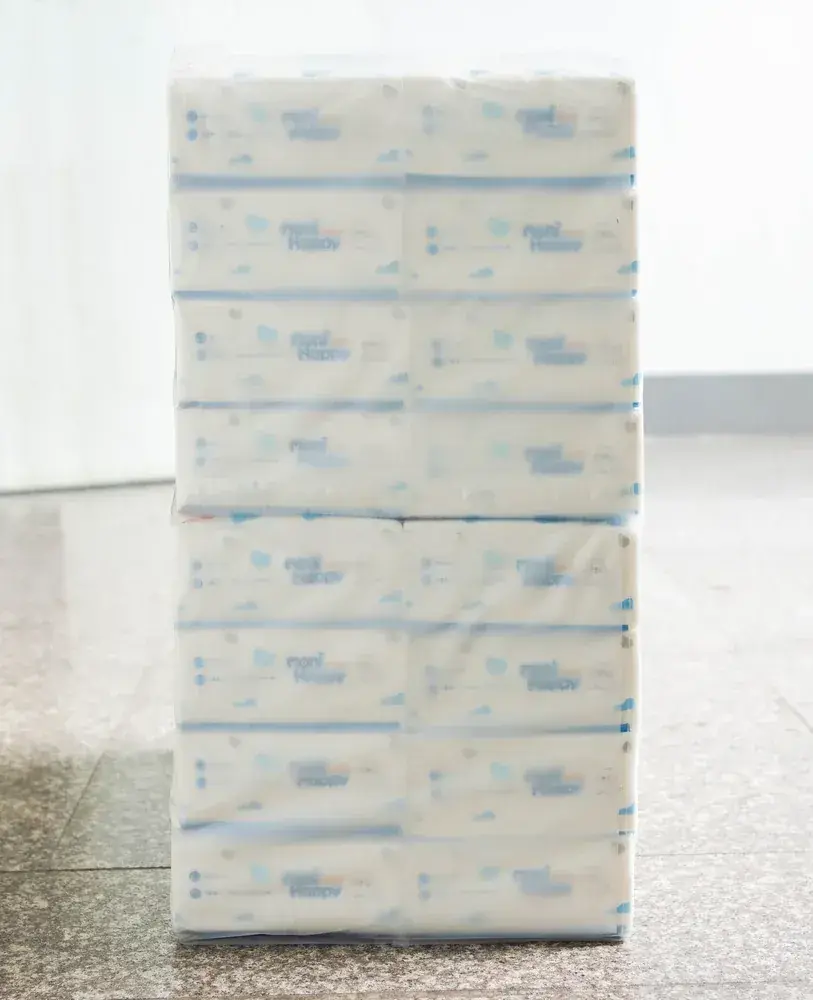
Take a 400-sheet carton, which is the format most Southeast Asian retail calls stock. Moving from 14 gsm to 17 gsm per ply adds 6 gsm to the sheet, roughly 23% more fibre. On an illustrative $9.80 per carton that is about $2.25, so a 5,000-carton order carries $11,250 of extra material. Some of that is real value if the market wants a firmer sheet. None of it is value if the buyer specified 17 gsm because a competitor's carton weighed more. Tissue ships at 0.10 to 0.14 grams per cubic centimetre in the bale, so the container fills before it weighs out, and the extra grams are carried for free on the freight line while still being paid for on the material line. That asymmetry is why the GSM decision belongs to the buyer and not to the mill's standard run.
How should caliper be checked after arrival?
Measure it, do not judge it by hand, and measure the same way every time.
Caliper is thickness under a fixed load, and it moves with moisture, so a bale tested straight off the truck reads differently from one rested overnight in the warehouse. Rest the sample, then test ten sheets from three positions in the bale with a micrometer at a defined pressure. Compare against the figure in the purchase order, not against a competitor's carton. Two things usually surface: a sheet that meets GSM but not caliper, which means the furnish changed, and a sheet that meets caliper but tears wet, which means the wet-strength chemistry was cut. Either finding is worth a conversation with the supplier before the next order, and both are invisible to the buyer who only checks the print on the carton. For the freight side of the same carton, our note on carton cube and tissue freight runs the numbers.
How should the figure be written into the purchase spec?
As a per-ply range with a test method, not as a single number.
Write it as 15 to 16 gsm per ply, 30 to 32 gsm total, measured to the agreed standard, with the ply-bonding method named and the sheet count fixed. Add a clause for the tolerance, because no mill holds a figure to the decimal across a run. Then tie the range to the price: a supplier who delivers 13 gsm against a 15 to 16 gsm spec has not given a discount, he has changed the product, and the clause is what makes that visible. A tissue distributor who writes this once stops arguing about it on every reorder. The same logic applies to the packaging film and the carton count, which is where the wrap decision starts to interact with the sheet spec. If you are building a facial tissue range for a humid market, request the sample box and the current spec sheet before the GSM is fixed.
Frequently asked questions
Does a heavier base sheet always feel softer?
No. Softness comes from the furnish and the embossing, not from weight. Above 18 gsm per ply the sheet starts to feel stiff and the softness claim weakens.
Can a buyer specify 2-ply and leave the GSM open?
Not if the price is to hold. Ply count without base sheet weight lets a supplier deliver 13 gsm on one run and 17 gsm on the next at the same quote.
Why does low GSM show up as a complaint and not as a defect?
Because the sheet breaks when wet, and that reads as normal use to the consumer. Nobody files a claim on a tissue that tore at the perforation.
Does higher GSM raise freight cost?
Yes, in proportion. Tissue ships on volume, so a 3 gsm lift per ply on 400-sheet cartons adds weight without adding cartons per pallet.
Sources and further reading
- TAPPI, standard test methods for tissue basis weight and caliper, tappi.org.
- ISO, ISO 12625 series on tissue paper products, including thickness and tensile strength test methods, iso.org.
- ASEAN Tariff Finder, duty treatment for paper products under the ASEAN Trade in Goods Agreement, tariff-finder.asean.org.
Bottom line: 15 to 16 gsm per ply is the band that survives a humid shop counter without paying for stiffness nobody asked for. Write it into the spec as a per-ply range with a test method, check caliper after the bale rests, and treat any supplier who ships below the range as a changed product rather than a better price.
Frequently Asked Questions
Does a heavier base sheet always feel softer?
No. Softness comes from the furnish and the embossing, not from weight. Above 18 gsm per ply the sheet starts to feel stiff and the softness claim weakens.
Can a buyer specify 2-ply and leave the GSM open?
Not if the price is to hold. Ply count without base sheet weight lets a supplier deliver 13 gsm on one run and 17 gsm on the next at the same quote.
Why does low GSM show up as a complaint and not as a defect?
Because the sheet breaks when wet, and that reads as normal use to the consumer. Nobody files a claim on a tissue that tore at the perforation.
Does higher GSM raise freight cost?
Yes, in proportion. Tissue ships on volume, so a 3 gsm lift per ply on 400-sheet cartons adds weight without adding cartons per pallet.
Distributor resources
If you are evaluating suppliers for your market, these are the pages that answer the commercial questions — in the order buyers usually need them.
