
2026-10-26 · Moni Happy
Which facial tissue ply and sheet count sells best in Southeast Asia?
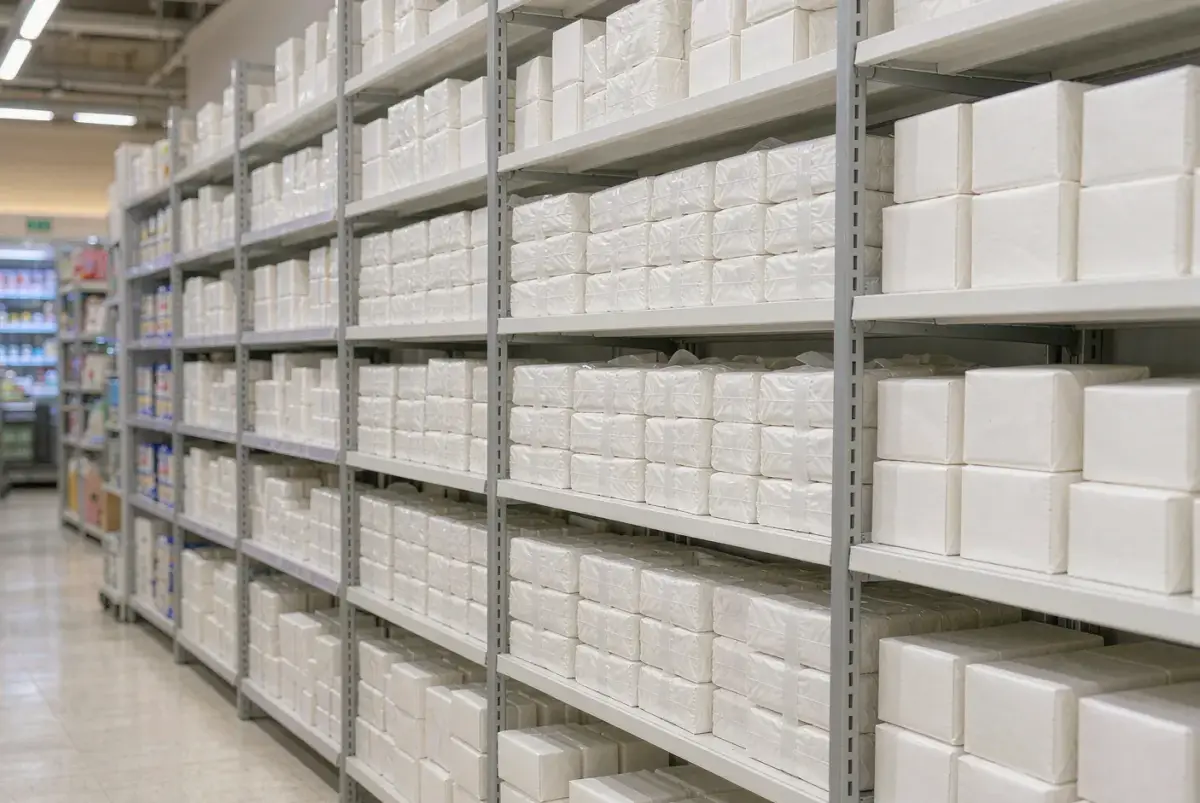
Which facial tissue specification sells fastest in Southeast Asian retail?
Two-ply, 200-sheet soft packs sell fastest in modern trade and minimarts, with a 3-ply box line carried for gifting and hotel-style premium. Build the first container around that core rather than around the widest possible assortment.
Facial tissue ply decides cost, softness and shelf price at the same time, while facial tissue sheet count decides how substantial the pack feels in the hand. Choose those two badly and the SKU dies on the shelf no matter how much brand support sits behind it.
What does facial tissue ply actually change for the buyer?
Ply is the number of layers bonded into a single sheet. Two-ply is the regional default: soft enough for face use and cheap enough to retail as an everyday purchase. Three-ply adds softness and wet strength and supports a premium price, but raises cost per pack and slows rotation outside urban modern trade.
One-ply is a washroom and HoReCa product. Pushing it into consumer retail usually produces tearing complaints and returns. If you want a single-line range, stay at 2-ply and put the differentiation into embossing, sheet dimensions and pack design instead.
Which facial tissue pack size fits which channel?
Match pack size to the shopper's trip, not to the factory's most efficient run.
- Modern trade and minimarts: 200-sheet soft pack, the volume anchor.
- Convenience, travel and car: 100-120 sheet pocket or cube pack.
- Family and bulk shoppers: 300-sheet pack or a 4-6 pack bundle.
- HoReCa and offices: 1-ply bulk cartons sold on cost per sheet.
- Premium gifting: 3-ply rigid box tissue.
How many SKUs should the first facial tissue container carry?
Three, occasionally four. A workable split for a first facial tissue wholesale order is 60% the 200-sheet 2-ply core, 25% a 150-sheet cube or 300-sheet family pack, and 15% a premium 3-ply box. Past four SKUs you fragment shelf space and slow every code's rotation.
Each additional SKU also multiplies the carton configuration problem, and that is where small importers quietly lose money: more codes, more half-pallets, more mixed-pallet handling at the distributor warehouse.
What carton configuration keeps freight and handling under control?
Tissue is bulky and light, so you pay for air. In a clearly-labelled hypothetical, 24 packs per carton at 200 sheets gives a sensible balance of handling weight and pallet utilisation; the exact carton configuration for your order is subject to formal quotation, because sheet size, embossing and compression all change it.
Two levers matter more than the carton count. Compression decides how many packs fit a container cube, and pallet pattern (TI/HI) decides whether the 20GP or 40HQ is filled to the roof or only across the floor.
Before you sign, ask for packed volume per carton and pieces per 20GP - not pieces per carton on its own. A supplier who cannot answer the first number cannot quote freight honestly.
Which facial tissue pack size drives basket value best?
Multipacks. A 4-pack or 6-pack of 200-sheet packs lifts average basket value and reduces pick frequency for the retailer, while the single pack stays the trial unit. Merchandising both is normal; stocking only singles caps revenue per facing.
For a distributor, multipacks also improve drop economics: the same delivery trip carries more retail value, which matters when a minimart orders below a full pallet.
How does facial tissue margin compare with diapers?
Unit margin is usually thinner, but rotation is faster and the cash cycle shorter, which is why tissue works as a basket builder beside a diaper range rather than as a standalone business. In any category margin comparison across diapers, wipes and tissue, tissue typically earns less per pack and turns more often per year.
That mix changes portfolio economics. A 15-25% band on the diaper line plus a faster-turning tissue line produces a better return on working capital than diapers alone, and it gives the sales team something to open a buyer conversation with.
Where does facial tissue fit in a diaper-led portfolio?
On the shelf next to diapers, sold to the same buyer, and included in the same first order. Retailers buy categories, not brands, and a distributor who can supply diapers, wipes and tissue from one container is simpler to deal with than three separate suppliers.
Start from the facial tissue range, then check the assortment against the Southeast Asian channel map so the SKU count matches the channels you can actually service.
Frequently asked questions
- Is 3-ply always better than 2-ply?
Not commercially. Three-ply is softer and supports a premium price, but in value channels it slows rotation and raises cost per pack. Two-ply wins wherever the shopper buys tissue as an everyday item. - How many sheets per pack is standard in Southeast Asia?
200 sheets in a soft pack is the modern trade standard, with 150-sheet cubes and 300-sheet family packs as the usual variants. Pocket packs sit at 100-120 sheets. - Can I mix tissue and diapers in one container?
Yes, and many first orders do, but tissue consumes cube quickly. Model the mixed load by volume rather than by carton count, then confirm the mix with your supplier before booking. - Does ply change the duty rate?
No. Duty follows the HS heading and origin, not the ply count. Confirm the heading with your broker and check the current rate in the ASEAN Tariff Finder.
Sources and further reading
- Euromonitor International - tissue and hygiene research
- Statista - paper tissue market data
- ASEAN Tariff Finder (ATIGA rates by HS heading)
Get pricing and free samples across the tissue, wipes and diaper lines, or ask for the packed-volume sheet so you can model a mixed container before you commit.
Get pricing & free samples, or start your distributor application with Moni Happy.
Frequently Asked Questions
Is 3-ply always better than 2-ply?
Not commercially. Three-ply is softer and supports a premium price, but in value channels it slows rotation and raises cost per pack. Two-ply wins wherever the shopper buys tissue as an everyday item.
How many sheets per pack is standard in Southeast Asia?
200 sheets in a soft pack is the modern trade standard, with 150-sheet cubes and 300-sheet family packs as the usual variants. Pocket packs sit at 100-120 sheets.
Can I mix tissue and diapers in one container?
Yes, and many first orders do, but tissue consumes cube quickly. Model the mixed load by volume rather than by carton count, then confirm the mix with your supplier before booking.
Does ply change the duty rate?
No. Duty follows the HS heading and origin, not the ply count. Confirm the heading with your broker and check the current rate in the ASEAN Tariff Finder.