
2026-11-12 · Moni Happy
Who carries product liability cover when a diaper wholesale container fails at retail?

The claim lands on the importer of record, and in a diaper wholesale arrangement that is normally the distributor. The retailer acts against the entity it bought from inside its own jurisdiction, and the regulator acts against the entity responsible for placing the product on the local market. Recourse to the supplier runs on the supply contract and, more importantly, on the insurance standing behind that contract.
This is the clause most first-time distributors read past. They collect the certificates, the test reports and the declaration of conformity, and assume the paperwork transfers the risk. It does not. A test report proves a batch met a specification on a date. It does not fund a recall, and it does not answer a letter from a retailer's lawyer.
Who does the retailer claim against first?
The party it has a contract with, which is you. Retail chains do not chase an overseas manufacturer for a shelf problem; they issue a credit note, remove the stock, and send the claim to the supplier of record. In a diaper wholesale chain that party holds your purchase order, and it is you.
Three things happen in the first week, usually in this order. The chain pulls the affected lot from shelf and invoices the withdrawal cost back to you. The consumer complaint, if there is one, is routed to the same place. And the local authority, if it is involved, addresses the entity that imported and placed the product on the market.
Your position in that chain is defined by documents rather than by intent. If you are the importer of record on the customs declaration, you are the party the system sees, and the argument that the defect happened upstream is a recovery argument, not a defence.
What must the supply contract say about indemnity?
Four things, and a clause missing any of them is decoration: a clear indemnity for defective product, defence costs on top of the indemnity rather than inside it, a notification window, and evidence of insurance. Read it as a distributor indemnity test: if any one of the four is missing, the clause will not survive the first claim.
- The indemnity itself. The supplier indemnifies you for third party claims arising from a defect in the product as supplied, including the cost of recall and withdrawal. Watch for wording that limits the indemnity to the invoice value; a recall costs multiples of the invoice value.
- Defence costs. State that legal defence costs are paid in addition to any indemnity limit, not eroded by it. Otherwise the first year of lawyers consumes the cover.
- A notification window. A defined number of working days for the supplier to respond after you notify a defect, with a deemed acceptance if they do not. Without a deadline, the notification disappears into an inbox.
- Insurance evidence. A certificate of insurance, renewed annually, naming your company as an additional insured for the markets you sell into, with the policy currency and limit stated. Ask for the certificate at signature and at each renewal, and diarise the renewal date.
None of this is adversarial. A supplier who carries proper cover produces these documents in a day, because its own customers ask for them. A supplier who cannot is telling you something about how a claim would actually be handled.
What should the insurance cover actually include?
Product liability as the base, recall and contamination as an extension, territorial scope covering every market you sell into, and a claims basis you understand. The distributor indemnity in the supply contract and the insurance cover on your own policy have to match line for line, or the gap becomes yours.
- Product liability. Third party bodily injury and property damage arising from your product. Confirm the limit is per occurrence and in the aggregate, and check which currency the limit is written in.
- Recall and contamination. A separate extension that funds withdrawal, disposal and, in some policies, the cost of restoring the brand. Sub-limits here are usually much lower than the liability limit.
- Territorial and jurisdictional scope. A policy written for one country does not respond to a claim in another, and insurance cover that stops at the border is the most common gap in a five-market programme. If you ship to five markets, the scope has to say five markets.
- Claims made or occurrence. A claims made policy responds to claims notified during the policy period, which means you need run-off cover when you change insurer. An occurrence policy responds to incidents that happened while it was in force. Know which one you bought.
What does a recall actually cost, line by line?
More lines than most distributors budget for, and the largest recall cost is usually not the product itself.
Take a hypothetical case, clearly illustrative: one size of one brand, 3,000 packs, spread across 40 stores. Price every line with your own numbers before you rely on the shape.
- Retrieval. Collection from 40 stores, often as a dedicated run rather than on the normal delivery. Cost is per stop, not per carton.
- Shelf labour. Staff time to find, pull and record the lot in each store. Chains invoice this.
- Credit notes. The value of the withdrawn stock at the price the retailer paid, not at your cost.
- Disposal. Controlled destruction with a certificate, which is not free and is not optional if the defect is a safety issue.
- Testing. Third party analysis of retained samples to establish whether the defect is batch-wide or isolated. This determines whether you recall one lot or the whole code.
- Replacement freight. A replacement shipment, frequently a part container, at the per-unit rates described in our container loading analysis.
- Lost margin and shelf position. The position is reallocated during the gap, and getting it back is a new listing conversation.
Add those lines and the recall cost routinely exceeds the value of the product withdrawn by a wide margin. That gap is exactly what recall cover is for, and it is why the sub-limit is the number to read rather than the headline liability limit.
Why is a test report not a liability shield?
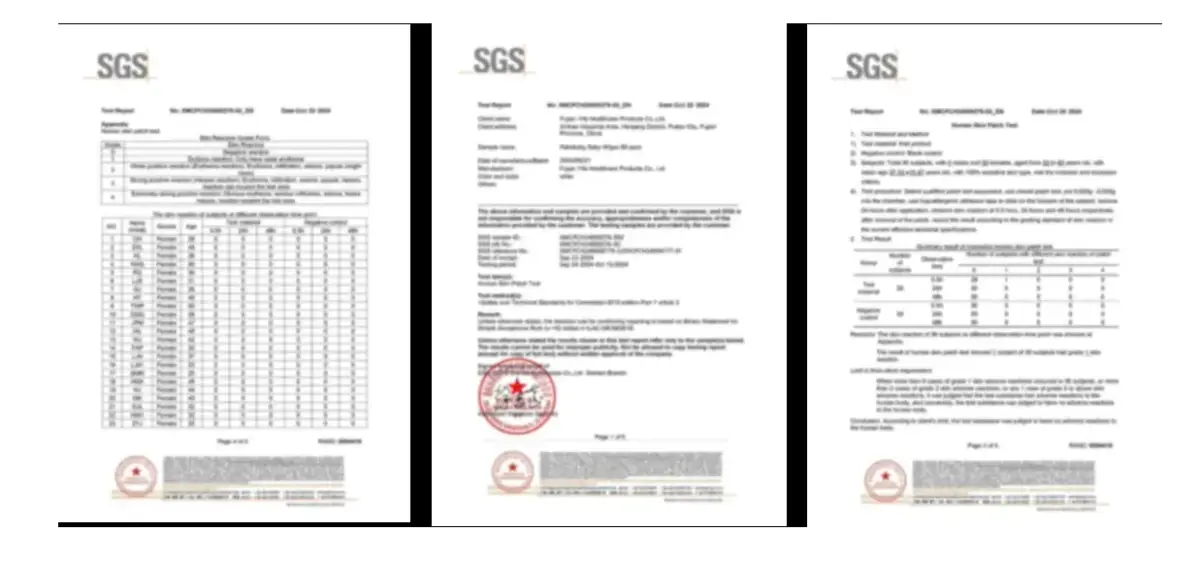
Because it answers a different question. A test report says a sample met a specification at a point in time. A product liability claim asks whether the product as supplied was safe, whether the warning was adequate, and whether you knew or should have known.
Certification from a recognised laboratory is genuinely valuable, and it is the first document a chain asks for at listing. It shortens the listing conversation and it supports your defence. What it does not do is pay for a withdrawal, and it does not stop a claim being made. Treat certification as a commercial asset and insurance as the financial one; a distributor needs both and they are not substitutes.
If you are at the stage of checking what a supplier can actually evidence, the onboarding guide lists the documents to request before a first container books. Our partner programme supplies certification, batch records and insurance evidence as one package, and the application page sets out what is required from your side.
What evidence do I need in the first 48 hours?
Four things, gathered before anyone discusses liability, because a product liability claim is decided on records rather than on arguments: the lot trace, the retained samples, the quarantine record and an independent test.
- Lot trace. Which production lot is in the affected packs, which container it arrived on, which stores received it and how many packs remain. Without this the recall scope is guesswork and the insurer will not price it.
- Retained samples. Sealed packs from the same lot, held since arrival. These decide whether the defect is in the product or in the storage.
- Quarantine record. When the stock was frozen, where it was held and who had access. This is what stops the exposure spreading while the analysis runs.
- Independent test. A third party laboratory result on both the complaint sample and a retained control. A supplier's own test is not evidence in a dispute.
Build the file before a claim exists. Distributors who can produce these four items within two days settle claims at a fraction of the cost of those who cannot, because the argument moves from whether something happened to how much it is worth.
Frequently asked questions
Who is legally responsible if a diaper pack injures a baby?
In practice the importer of record first, because that is the entity the retailer and the regulator can act against inside the jurisdiction. Liability may be shared upstream, but the first claim lands locally.
Is a supplier indemnity clause enough protection?
Only if it is funded. Require a certificate of insurance naming your company as an additional insured, with territorial scope covering every market you sell into.
Does product liability cover include a recall?
Not automatically. Recall and contamination cover is usually a separate extension with its own sub-limit, and many policies exclude withdrawal costs unless bought explicitly.
How long do I have to notify the insurer?
As soon as practicable, and within the policy's notification window once you are aware of a circumstance that could give rise to a claim. Late notification is the most common reason a claim is reduced.
Sources and further reading
- ASEAN Secretariat (current): the regional consumer protection framework that sets the baseline expectations member states apply to imported consumer products.
- Competition and Consumer Commission of Singapore (current): the unfair practice and product safety provisions a distributor faces when a retail claim escalates.
- International Association of Insurance Supervisors (current): the supervisory principles behind the insurer solvency and policy wording standards referenced above.
Bottom line
The claim arrives at the importer of record, which in a diaper wholesale arrangement is the distributor, and a test report does not change that. Product liability follows the entity inside the jurisdiction. Fix three things before the first container: a distributor indemnity with defence costs on top, a certificate of insurance naming you as an additional insured across every market you sell into, and a 48-hour evidence file built from lot records and retained samples. Recall cover is the extension that pays, and its sub-limit is the number that decides whether a claim is survivable.
Frequently Asked Questions
Who is legally responsible if a diaper pack injures a baby?
In practice, the importer of record first, because that is the entity the retailer and the regulator can act against inside the jurisdiction. Liability may ultimately be shared with the brand owner or the manufacturer, but the first claim lands locally.
Is a supplier indemnity clause enough protection?
Only if it is funded. An indemnity from a company with no insurance behind it is a promise to litigate in another country. Require a certificate of insurance naming your company as an additional insured, with the territorial scope covering every market you sell into.
Does product liability cover include a recall?
Not automatically. Recall and contamination cover is usually a separate extension with its own sub-limit, and many policies exclude the cost of withdrawing product unless it is bought explicitly. Check the sub-limit before you assume it is there.
How long do I have to notify the insurer?
Typically as soon as practicable, and almost always within the policy's notification window once you are aware of a circumstance that could give rise to a claim. Late notification is the most common reason a valid claim is reduced.
Distributor resources
If you are evaluating suppliers for your market, these are the pages that answer the commercial questions — in the order buyers usually need them.
