
2026-11-10 · Moni Happy
Why do pull up pants waistbands relax in storage before the shelf date?
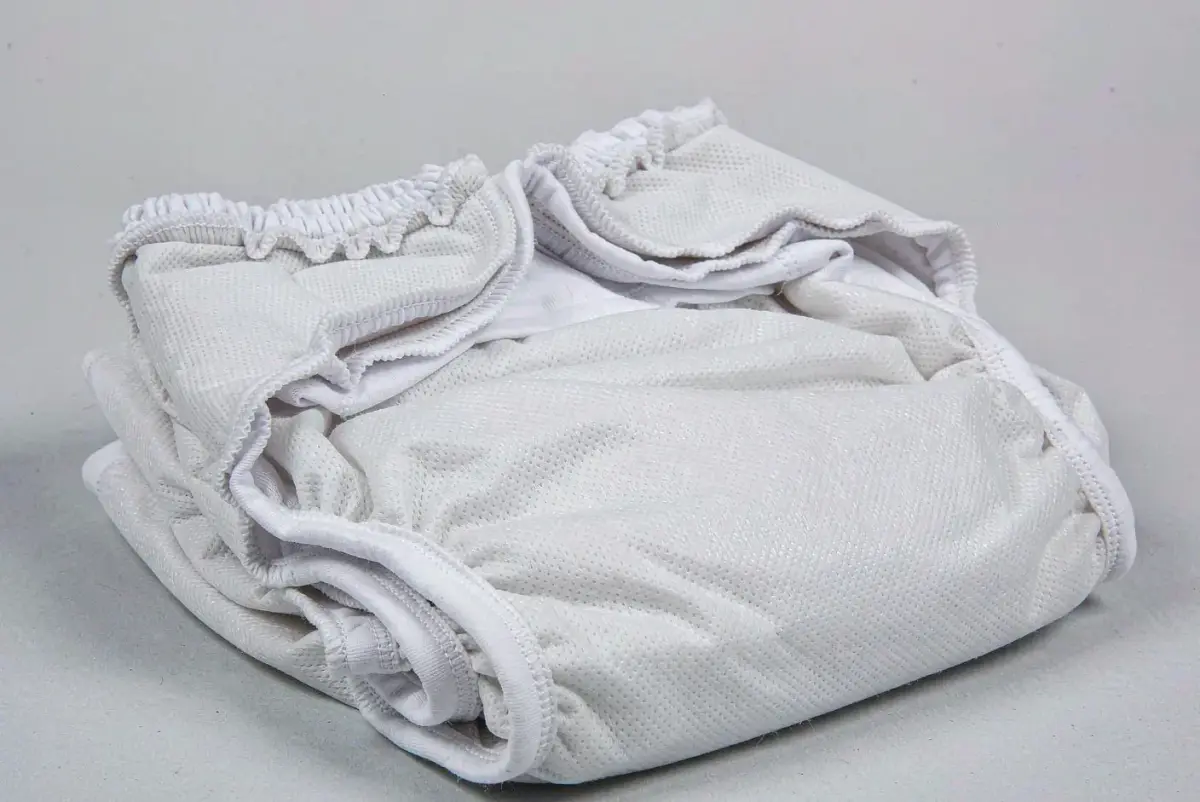
Because the waistband is already stretched when it is packed. Elastane in a pair of pull up pants starts losing tension from the day the pants are folded into the bag, and heat accelerates it, so a carton of pull up pants packed in March can fit differently by September in an un-airconditioned warehouse. The waistband grows a centimetre or two, the gap at the back opens, and the complaint arrives six months after the batch passed inspection.
This is one of the few quality issues in this category that no arrival inspection can catch. At goods-in the pants are new, the elastic is at full tension and the fit is exactly as specified. The defect develops in storage, which means it lands on the distributor rather than on the supplier unless the specification was written before the order was placed.
Why does the waistband change in storage rather than in use?
Because storage is when the elastic spends the longest continuous period under tension without being exercised.
A waistband on a child is stretched and released hundreds of times a day, and elastane is designed for that cycle. A waistband in a sealed pack is held at a near-constant extension for months, which is a different mechanical problem: the polymer chains gradually slide and settle into the stretched position. Engineers call it stress relaxation and suppliers sometimes call it waistband creep; measured properly it is a loss of force at a fixed extension rather than a change in length. Buyers see it as a waistband that has gone slack. The same pants that felt firm on a fitting hand in the warehouse feel loose on a child in a shop nine months later.
For pull up pants the effect is more visible than for tape diapers, because the whole product depends on the waistband holding the pants up. A tape diaper can lose a little side panel tension and still fasten; a diaper pants product with a relaxed waistband simply slides down, and the parent reads that as a sizing failure rather than a material one.
What actually happens to elastane in a hot warehouse?
It loses a measurable share of its tension, and the loss is driven by temperature far more than by humidity.
Elastane is a segmented polyurethane. The soft segments stretch and recover; the hard segments hold the structure together. At room temperature the recovery is good for years. Above roughly 30 degrees Celsius the soft segments mobilise more freely, and every additional few degrees shortens the time needed for a given loss of tension. A warehouse roof space in this region regularly reaches 40 to 45 degrees in the afternoon while the floor sits at 30, which is why the top layer of a stack ages differently from the bottom layer of the same pallet.
Humidity matters less for the elastic and more for everything around it. Moisture softens the carton board, the stack compresses, and the packs at the bottom of the pallet sit under load for months. That does not relax the waistband, but it does flatten the pack and leave a fold line that a buyer will notice on the shelf. Treat heat as the cause of the fit problem and moisture as the cause of the presentation problem.
How do I measure tension retention without a lab?
Mark a fixed length, extend it to a fixed point, and record the force three times, on the same pants, at three points in time.
The practical version takes an afternoon and a spring gauge. Take three pants from the top layer, three from the middle and three from the bottom of a carton. Lay each one flat and mark 100 mm of waistband with a pen, centred on the back. Clamp one end, hook the gauge to the other, and extend to 140 mm, which is the 40 percent extension used for this type of measurement. Read the force, release, repeat three times, and record the third reading. Do the same on a reference sample kept in a cool place.
- Report two numbers: force at 40 percent extension, and relaxed waistband circumference. The second one is what the parent actually feels.
- Repeat at 0, 3 and 6 months: three time points tell you the shape of the curve, not just the endpoint.
- Test across positions in the carton: a difference between top and bottom of more than a few percent means the storage condition, not the batch, is doing the damage.
- Ask for the accelerated version: four weeks at 40 degrees and 75 percent relative humidity approximates a long tropical storage period, and a supplier who can run it will usually share the result.
Accredited methods exist and are worth referencing when you write the specification. ASTM D2731 covers elastic properties of yarns, and ISO 13934-1 covers tensile properties of fabrics by the strip method; neither is written for a finished diaper pants waistband, but both give a supplier a language to answer in. The test you run in your own warehouse is not there to replace a laboratory report. It is there to prove that two batches are not the same, which is the only fact you need in a claim.

Which storage conditions make it worse?
Heat first, stacking second, and direct sun on the carton a distant third.
- Top of the stack under a metal roof. Radiant heat pushes the carton surface well above air temperature for hours a day. Store pallets at least half a metre away from the roof line and rotate the top layer.
- Against an east or west wall. A metal wall in the afternoon is a radiator. Leave an air gap and keep the elastic-bearing cartons out of the first row.
- Long dwell time in a container yard. A container sitting in the sun before unstuffing reaches internal temperatures that no warehouse matches. Book the delivery slot before the vessel berths rather than after.
- Deep stacking. Load compresses packs and deforms the waistband area. Cap the stack height at what the carton is rated for and put the oldest pallets on top, not underneath.
None of this requires refrigeration. It requires a warehouse manager who knows that the back corner near the roof is not the same storage location as the shaded rack, and a rotation rule that sends the oldest cartons out first.
What should the purchase order say about elastic?
One measurable sentence, plus the traceability that makes it enforceable.
Ask for a named elastic tension retention figure expressed as a percentage of the goods-in baseline after a defined accelerated condition, and name the condition. Ask for the test to be reported per batch, with the elastic lot number recorded on the carton. Ask for a stated shelf life in months for the pull up pants, and ask what the elastic tension retention figure is at the end of it. A supplier who cannot answer those four questions is telling you that nobody has measured the pull up pants after they left the line.
Put the same sentence into the quality annex of the supply agreement rather than only into the purchase order, because the purchase order is a one-off and the annex survives the next three orders. If a batch fails the figure at the three-month check, the conversation is then about a number both sides agreed, which is a commercial conversation rather than an argument about whether a waistband feels loose.
How does relaxation show up at the shelf?
As leaks, as returns, and as a retailer who concludes the brand has a sizing problem.
The first signal is usually a night leak complaint from a parent whose child has not changed size. The second is a store return of a pack that has been on the shelf since the previous season. The third, and the expensive one, is a category review where the buyer compares sell-through of a slow size against a competitor and delists the line without ever hearing about elastic.
A distributor can defend against the third only with data. Keep the tension readings with the batch records, note the storage location and the dwell time, and when a complaint arrives you can say which batch, which storage position and which month. That is the difference between a supplier credit and a write-off. If you are building a first order and want the specification annex reviewed before you commit, apply as a partner and we will go through the retention test and the pack specification with you. Partners in Thailand and Singapore usually run the accelerated test once, on a single carton, before the first container.
Frequently asked questions
Does the pack format affect how fast the waistband relaxes?
Indirectly. A tighter pack holds the waistband at a higher extension, which increases the relaxation rate, while a looser pack protects the shape but costs cube. Ask the supplier what extension the pack imposes.
Should I reject a batch that fails at three months?
Not automatically. Check whether the failure is batch-wide or limited to the top layer of one pallet, because a storage effect and a material effect look the same in a single measurement and very different across positions.
Do diaper pants bought in winter markets behave differently?
Yes, and that is a useful control. The same SKU stored cool retains tension better, which is why a supplier may genuinely believe the product is fine when the complaints are coming from a tropical warehouse.
Is the waistband the only elastic part to watch?
No. Side panels and the leg cuff elastic on both pull up pants and tape diapers relax on the same curve, and leg cuff relaxation shows up as leaks at the thigh rather than at the waist.
Sources and further reading
- ASTM D2731 - Standard Test Method for Elastic Properties of Elastomeric Yarns (ASTM International): the reference method for stretch and tension behaviour that a retention specification is built on.
- ISO 13934-1 - Tensile properties of fabrics, strip method (ISO): the fabric-level tensile method used alongside a waistband measurement.
- EDANA - absorbent hygiene product standards and test guidance (EDANA, current): category reference for diaper and diaper pants performance testing.
Bottom line
Pull up pants lose waistband tension because the elastic is stored stretched, and a tropical warehouse accelerates the loss in a way no arrival inspection can detect. The fix is not a different product but a written number: measure force at 40 percent extension across positions in the carton, repeat at three and six months, and put a retention figure in the supply agreement rather than in a single purchase order. A relaxed waistband costs a batch; an unmeasured one costs the listing.
Frequently Asked Questions
How much tension loss is normal for pull up pants?
There is no single industry figure, which is exactly why the number should come from your own test rather than from a supplier reassurance. Measure a baseline at goods-in and repeat at three and six months, then set the specification from the retention your market accepts.
Is the problem the elastic or the carton?
The elastic. Carton compression deforms the pack and can leave a crease, but it does not relax the elastane. The waistband loses tension because it is stored stretched, and heat accelerates it.
Can I test this without a laboratory?
Yes, at a basic level. A fixed jig, a spring gauge and a marker pen will tell you whether one batch retains tension better than another, which is enough to hold a supplier to a number even without an accredited report.
Does a longer shelf life claim protect me?
Only if the claim is tied to a measured retention figure. A 36-month shelf life with no elastic tension retention specification means the pants are still legally saleable when they no longer fit well, which is why the shelf life claim and the retention figure belong in the same sentence.
