
2026-11-14 · Moni Happy
Why does a diaper wholesale buyer in Laos still route through Thai middlemen?
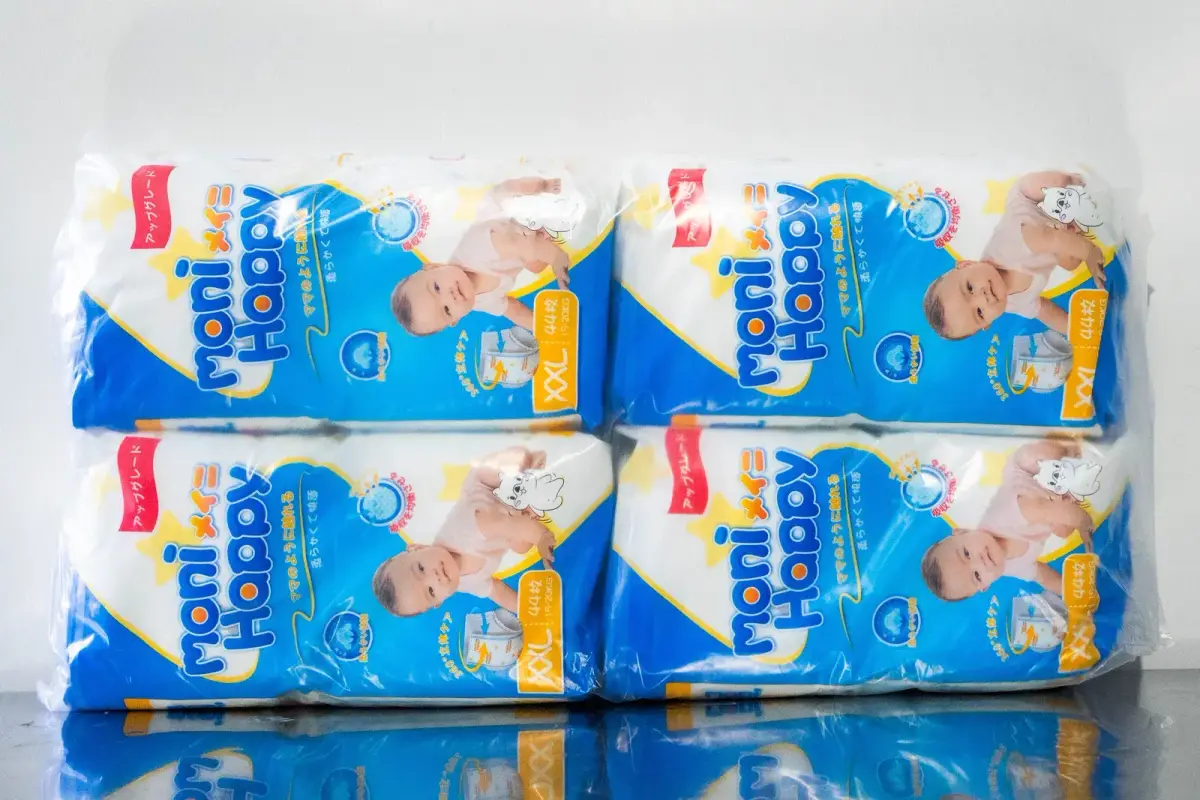
A Lao buyer pays 8 to 15 percent over the odds on a diaper wholesale order bought through a Thai middleman, and is usually right to do so. The middleman removes three things a first-time importer cannot carry: a full container commitment of about 48,000 pieces, six to eight weeks of transit, and the currency exposure between a baht purchase and a kip sale.
That calculation flips at a specific volume. Above roughly one 20 foot container every eight to ten weeks, direct importing from the plant beats the middleman on landed cost even after the licence, the clearance and the working capital are counted. Below it, the middleman is cheaper than the arithmetic suggests, which is why he has not been displaced.
Why does a Lao buyer still buy through a Thai middleman?
Because the middleman sells in units the market can absorb. Two hundred to four hundred cartons, delivered in three days, on thirty days of baht credit, with no minimum that requires a bank guarantee.
Vientiane is a city of roughly a million people and the modern trade there is a handful of stores plus a long tail of provincial wholesalers. A distributor serving that market might move 150 to 250 packs of diapers a week. One 20 foot container is 1,600 packs at 30 pieces, which is eight to ten weeks of stock for the whole business in a single delivery, paid for up front.
That is the real barrier, and it is financial rather than regulatory. A Lao company can hold an import licence without difficulty. What it cannot easily do is fund ten weeks of inventory, clear a container through a border post, and absorb a two week delay without running out of the stock it needs to keep selling. The middleman carries all three risks for a margin that is smaller than the cost of carrying them yourself at low volume.
What does the physical transit route look like?
Two routes, both by truck, and the choice usually follows the currency rather than the map.
The Thai route runs from Laem Chabang or Bangkok, about 740 kilometres by road to Nong Khai, then across the First Thai-Lao Friendship Bridge and 20 kilometres into Vientiane. Transit from the Thai port to a Vientiane warehouse is typically two to four days once the truck is loaded, with customs at the bridge.
The Vietnamese route runs from Da Nang or Hue over the Lao Bao crossing into Savannakhet, then north to Vientiane on Route 13. It is longer in distance and often faster in clearance, and it suits a buyer whose customers sit in the southern provinces.
Add the sea leg from a Chinese port at five to seven days to Laem Chabang, three to five days for import clearance in Thailand if the goods are being transhipped rather than imported, and three weeks of production. Door to door, a direct order is six to eight weeks. A middleman order is three days.
What does the Thai middleman add, and what does it cost per piece?
He adds stock, credit, customs handling and a baht price. He charges 8 to 15 percent over his own landed cost, which on the volumes in question is real money per piece.
Worked as a planning example, clearly hypothetical: a middleman lands a container at USD 0.20 per piece and sells at USD 0.22 to USD 0.23, which is 10 to 15 percent. On 30 piece packs that is USD 6.60 to USD 6.90 per pack against USD 6.00 of landed cost.
Now price what he replaces. Ten weeks of stock for a business moving 200 packs a week is 2,000 packs, or USD 12,000 tied up at landed cost. At a funding cost of ten percent a year that is USD 1,200 a year, before storage, insurance and the cost of the odd container that sits three weeks at the bridge. On this volume the middleman's margin is roughly the same as the carrying cost he saves you, which is exactly why the relationship persists.
At what volume does direct importing beat the middleman?
Around one container every eight to ten weeks, which for a 30 piece pack means about 160 to 200 packs a week of consistent demand.
The test is not total annual volume but rhythm. Two containers a year ordered when cash allows will cost more than four ordered on a schedule, because each order carries a fixed clearance and documentation cost that does not fall with size. Count the fixed cost per shipment first: broker fees, border charges, inland trucking, and the days your own staff spend on it.
Run the comparison on landed cost per pack, not on invoice price. The middleman's invoice is higher and his landed cost is the same number, because his price already includes delivery to your door. The direct diaper wholesale order's invoice is lower and its landed cost includes freight, clearance, border charges and the financing on eight weeks of stock. Distributors who compare invoice prices conclude direct is cheaper long before it is.
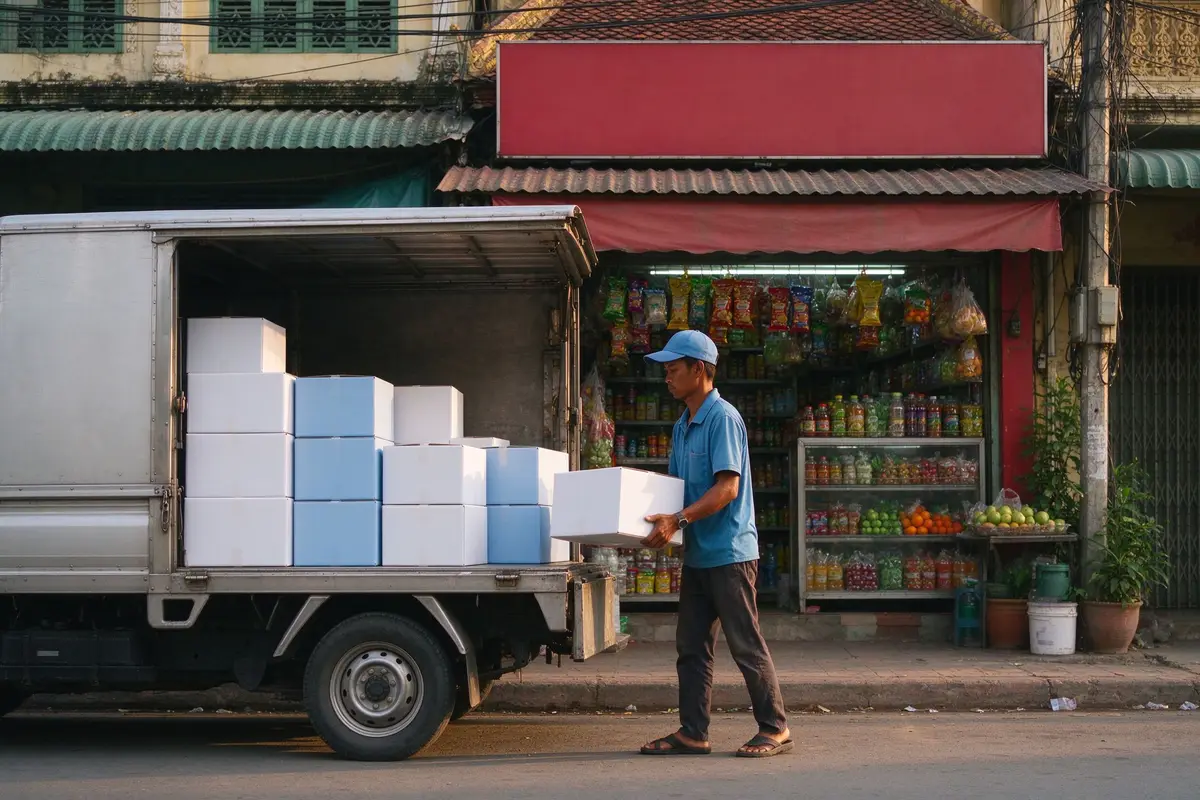
Which documents change when you buy direct instead of through Bangkok?
Four change, and one of them is the reason first-time importers give up.
- Import licence and enterprise registration. The Lao importer of record must be registered for the goods being imported. Confirm the scope before the first order, not after.
- Certificate of origin. A Chinese origin container into Laos travels under the ASEAN-China arrangement, so ask for the Form E rather than assuming a Form D applies. The two are not interchangeable and the wrong one costs duty.
- Label. A Lao language label is expected on consumer goods. Get the exact requirement from your importer of record and print it before the container leaves, because relabelling in Vientiane costs more than the print run.
- Tax and duty declaration. Value added tax at the standard rate applies at import and is recovered later, which means it is a cash item before it is a cost item. Confirm the current rate and the recovery mechanics with a Lao broker.
Through a middleman, none of this is your problem, and that is a large part of what the 8 to 15 percent buys.
What breaks first when a Lao distributor goes direct?
Cash, not customs. The first container lands, the tax is paid, the stock sits, and the second order is due before the first has sold through.
The pattern is predictable. A distributor moves from 200 packs a week through a middleman to a direct diaper wholesale container of 1,600 packs, which is eight weeks of cover. Sales do not double because the stock arrived. So the next order goes in at week eight against cash that has only just come back from the first, and the second container arrives into a warehouse still holding four weeks of the first.
Two ways out, and both are cheaper than the third. Either start direct at half a container through a consolidator, or keep the middleman for the slow sizes and go direct only on the two sizes that carry 70 percent of the volume. The second option usually works best in Laos, because it keeps the range complete while the direct container turns on the fast lines alone.
If you are at the point of running that comparison, the Laos partner page sets out territory and support terms, and the wipes shipping note covers the transit mechanics that apply across the range. The partner programme will price a first container against your own drop profile.
Frequently asked questions
Can a Lao company import diapers directly from a Chinese plant?
Yes, with a registered import licence covering the goods. The constraint is cash and time rather than legal capacity: a direct order means a full container, a letter of credit or 30/70 transfer, and six to eight weeks before the first pack lands.
Which border do Lao importers actually use?
Two dominate. Nong Khai on the Thai border carries the route into Vientiane. Lao Bao on the Vietnamese border carries the route from Da Nang into Savannakhet. The choice tends to follow the settlement currency more than the distance.
Is baht pricing better or worse for a Lao distributor?
Better for planning, worse for margin. Selling in kip while buying in baht turns a kip depreciation into an immediate cost increase. Pricing in baht converts a product business into a currency position you did not choose.
Does a Lao label have to be in Lao script?
Expect a Lao language label on consumer goods and confirm the wording and font size with your importer of record before printing. English-only packaging narrows what a provincial wholesaler can resell even where the rule is met.
Sources and further reading
- Logistics Performance Index (World Bank, current edition): customs, infrastructure and international shipment scores for Laos, Thailand and Vietnam.
- ASEAN Trade in Goods Agreement (ASEAN Secretariat, current): the tariff arrangements and certificate of origin rules that apply to intra-ASEAN and ASEAN-China trade.
- Asian Development Bank (current): regional transport corridor studies covering the Thai-Lao and Lao-Vietnamese border crossings.
Bottom line
A Thai middleman costs 8 to 15 percent and saves a container commitment, six to eight weeks of transit and a currency position. Below one container every eight to ten weeks he is the cheaper route, and the arithmetic says so once you count the carrying cost he removes. Go direct on the two sizes that carry most of the volume, keep the middleman for the tail, and compare landed cost per pack rather than invoice price.
Frequently Asked Questions
Can a Lao company import diapers directly from a Chinese plant?
Yes, provided it holds a registered import licence and an enterprise registration that covers the goods. The constraint is not legal capacity but cash and time: a direct order means a full container, a letter of credit or a 30/70 telegraphic transfer, and six to eight weeks before the first pack reaches your warehouse.
Which border do Lao importers actually use?
Two dominate. The First Thai-Lao Friendship Bridge at Nong Khai carries the Thai route into Vientiane. The Lao Bao crossing on the Vietnamese border carries the route from Da Nang and Hue into Savannakhet. Which one an importer uses tends to follow the currency they settle in rather than the distance.
Is baht pricing better or worse for a Lao distributor?
Better for planning and worse for margin, and the answer depends on where your revenue sits. If you sell in kip and buy in baht, a kip depreciation widens your cost overnight. Pricing in baht converts a product business into a currency position you did not choose.
Does a Lao label have to be in Lao script?
Expect a Lao language label for consumer goods and confirm the exact wording and font size with your importer of record before the print run. English-only packaging narrows what a provincial wholesaler can resell, even where the regulation is met.
Distributor resources
If you are evaluating suppliers for your market, these are the pages that answer the commercial questions — in the order buyers usually need them.
