
2026-08-06 · Moni Happy Editorial Team
Traveling with Baby in Southeast Asia: Sun Protection, Mosquito Safety & Packing List
Let me tell you about my first trip with a baby—I almost lost it
When my first baby was four months old, I confidently took him to a beach resort near Bangkok for two days. How did it go? On the first afternoon, he got five mosquito bites. That night, because I hadn't brought enough changes of clothes, his clothes got wet and there was nothing to change into. The next day, his little face got sunburned. For those two days I barely rested, constantly dealing with one emergency after another—it was more exhausting than going to work.
After we got back, I reflected seriously and started researching baby travel gear. Later, with my second baby, we traveled to Singapore, Kuala Lumpur, Bali, and Chiang Mai, and gradually developed a "survival gear list" for traveling with a baby in Southeast Asia. Today I'm sharing these experiences with you, hoping you can avoid the mistakes I made.
Let me start with a big principle: when going out with a baby in Southeast Asia, sun protection and mosquito protection are the top priorities. Everything else is negotiable, but these two absolutely cannot be skipped.
Sun protection: don't wait until your baby is sunburned to regret it
How brutal the sun is in Southeast Asia, I don't need to tell you. My first baby's first sunburn happened because I took a chance—I thought the sun at 4 PM shouldn't be too strong, so we played at the beach for less than half an hour, and his little face and ears turned red. That night blisters even formed. It broke my heart.
Physical sun protection comes first, especially for young babies.
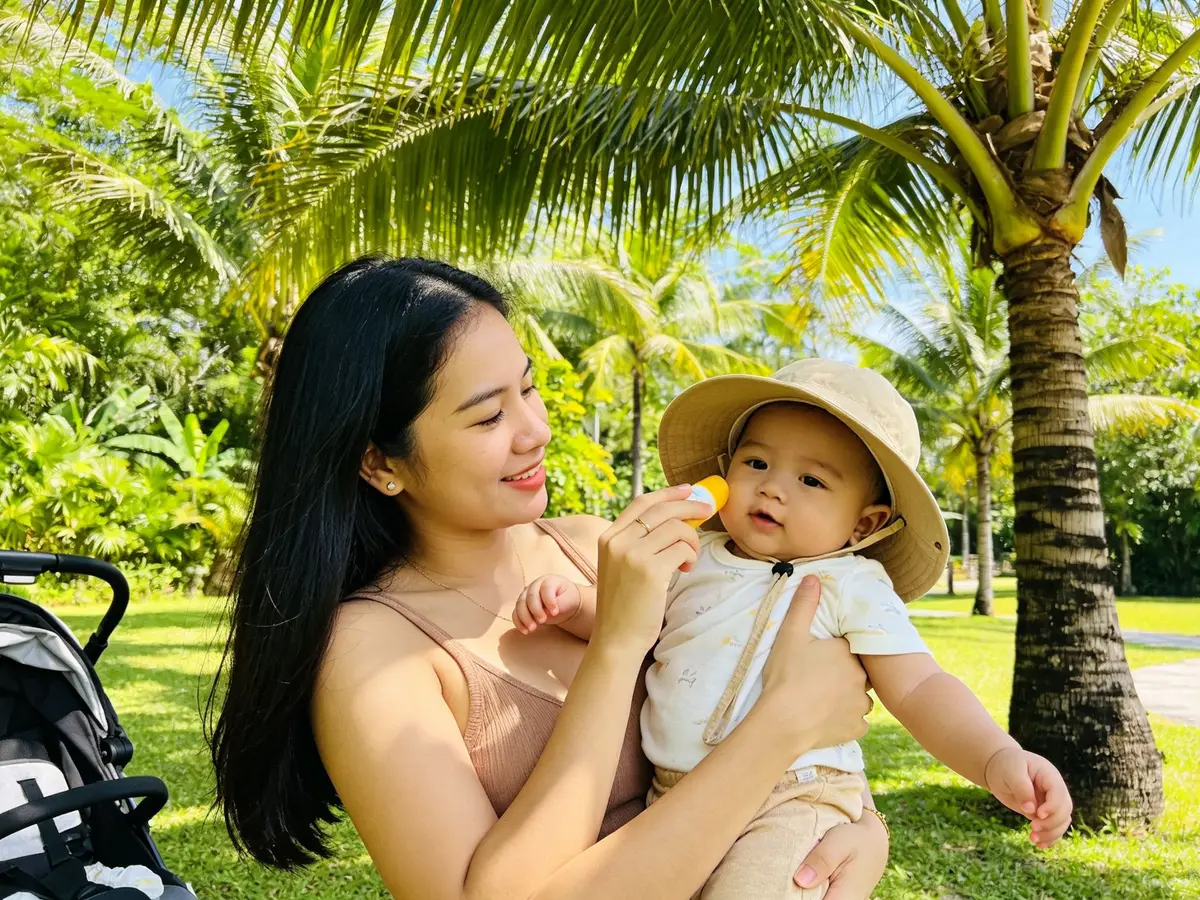
For babies under six months, dermatologists don't recommend sunscreen—rely purely on physical protection. When going out, I dress my baby in UPF50+ sun-protective clothing, long-sleeve and long-pants style. Although it looks hot, breathable sun-protective clothing is actually cooler than direct sun exposure, and it also protects against mosquitoes. On the head, a wide-brimmed sun hat—one that covers the face, ears, and back of the neck, with a chin strap so it doesn't get pulled off by the baby.
The stroller definitely needs a sun canopy, or buy a universal sun shade that blocks sunlight from all directions. I also clip a small fan onto the stroller—it's a real lifesaver in stuffy outdoor heat, and the baby won't fuss from being too hot.
For babies over six months, you can use sunscreen, but choose the right one.
Choose physical sunscreen, meaning it contains zinc oxide or titanium dioxide—it's gentler than chemical sunscreen and less irritating to baby skin. SPF30 or higher, PA+++ or higher, water and sweat resistant. Apply 15-20 minutes before going out, reapply every two hours, and reapply promptly after heavy sweating or water play.
When applying, be careful not to get it near the eyes or mouth. Don't forget easily overlooked areas like behind the ears, neck, and tops of feet. I usually rub it between my hands first, then gently pat it onto the baby's face to avoid direct application irritating the skin.
One more detail: try to avoid taking your baby out in direct sun between 10 AM and 4 PM. If you have to go out, try to stay in shaded areas or plan indoor activities. When I travel with my kids, we're usually outdoors in the morning, rest at the mall or hotel during the hottest midday and afternoon hours, and go out again in the evening.
Mosquito protection: in Southeast Asia, this is literally life-saving level
How aggressive mosquitoes are in Southeast Asia, anyone who's lived here knows. And mosquito bites aren't just itchy—dengue, Zika, and chikungunya all circulate in Southeast Asia, and babies are at higher risk after being bitten. My second baby got three mosquito bites before he was even three months old, and that's when I completely upgraded our mosquito protection setup.
Physical mosquito protection remains the first choice, especially for young babies.
When going out, dress your baby in long sleeves and long pants to cover as much skin as possible. Light-colored clothing attracts fewer mosquitoes than dark-colored. The stroller definitely needs a mosquito net—the fully enclosed type is most practical, so you don't have to worry about bites even when the baby is sleeping inside. I also hang a mosquito-repellent charm on the stroller handle, choosing one with natural plant ingredients. Although it's not as effective as chemical repellent, every little bit helps.
For babies over two months, you can use mosquito repellent, but choose the right ingredients.
I've done a lot of research and asked our pediatrician. Ingredients suitable for babies include: Picaridin (concentration under 20%), IR3535, and Oil of Lemon Eucalyptus (OLE, suitable for over three years old). DEET is not recommended for young babies as it's more irritating.
When using, note: spray on clothes rather than directly on skin. If you must spray skin, spray it on your hands first and then apply to exposed areas, avoiding eyes, mouth, and wounds. Wash off with soap promptly when you get home—don't let repellent stay on the skin too long. Use no more than three times a day.
One little habit of mine: before going out, when bathing the baby, I add a few drops of natural mosquito-repellent essential oil to the bathwater (like lemongrass or citronella, at a very low concentration). Although it doesn't last long, it's somewhat effective for the first hour or two after going out. This method is purely personal experience and may not work for every baby—use with caution for babies with sensitive skin.
If your baby still gets bitten, how to handle it? First, wash the bite area with soap and water, then apply a cold compress for a few minutes to reduce swelling and itching. You can apply a little calamine lotion to relieve itching. Keep your baby's nails short to prevent scratching and infection. If the bite becomes very swollen, pus-filled, or your baby develops a fever, seems unwell, or is vomiting, seek medical attention right away to rule out dengue and other diseases.
Portable gear: these things can really save the day
Besides sun and mosquito protection, there's some portable gear I always bring when going out with my baby—it can really help in critical moments.
Portable wipes and cotton towels—need I say more? A must-have for going out with a baby. Gentle, non-irritating baby wipes for wiping hands, face, and butt. Dry cotton towels can be used as towels—just add water to wipe, more convenient than a small towel, and you throw them away after use, no washing needed. I usually bring a large pack of wipes and a small pack of cotton towels, basically enough for a day.
Portable tableware and bib—once your baby starts eating solids, eating out becomes a big project. I bring a set of portable tableware (spoon, fork, small bowl) and a silicone bib—just wipe it clean after eating and pack it away, no washing needed. I also bring a few sealed bags for cut fruit or small snacks, so the baby can eat whenever hungry.
Thermos and water cup—Southeast Asia is hot, babies get dehydrated easily, so always keep them hydrated. I bring a thermos with warm water and a baby water cup, offering water to the baby regularly. If your baby is formula-fed, also bring a divided formula container for convenient bottle preparation.
Changes of clothes—this is so important. My first trip with the baby failed because I didn't bring enough changes of clothes, and when his clothes got wet there was nothing to change into. Now when I go out, I bring at least two changes of clothes, including underwear, outerwear, socks, and a hat, plus a waterproof bag for dirty clothes. If the baby sweats, spits up, or gets food on clothes, I can change anytime.
Basic first-aid kit—I prepare a small medicine bag with these things: fever reducer (acetaminophen or ibuprofen, dose calculated by baby's weight), thermometer, calamine lotion (for itching), band-aids, iodine swabs, oral rehydration salts (to prevent dehydration from diarrhea), mosquito repellent, sunscreen. These things may not all be needed, but when you need one and don't have it, you'll really panic.
Other small items—pacifier (if your baby uses one), comfort toy, small blanket (for aircon rooms), trash bags (for dirty diapers and garbage), hand sanitizer. These small things seem insignificant, but they can really come in handy when needed.
A few final words
Going out with a baby is indeed tiring, but seeing your baby curiously looking around, smiling happily, makes it all worth it. When you're well-prepared, going out won't be so chaotic, and both adults and baby can have a good time.
This list is based on my own experience. Every baby is different, so you can adjust based on your baby's age, needs, and destination. The most important thing is: don't find it troublesome—bring what you should bring, it's better to be prepared.
Wishing you all happy travels with your babies in Southeast Asia—fewer pitfalls, more beautiful memories.
Frequently Asked Questions
When is it safe to travel with a baby?
Most healthy full-term babies can travel safely after the first 2-4 weeks, but many pediatricians recommend waiting until your baby is 2-3 months old, especially for air travel. This gives their immune system time to develop and reduces the risk of catching illnesses in crowded spaces. Always check with your pediatrician before traveling, especially if your baby was premature or has health concerns. Make sure your baby has had any necessary vaccinations before traveling.
How do I handle flying with a baby?
Key tips for flying with a baby: book a direct flight if possible, feed your baby during takeoff and landing to help with ear pressure (breastfeeding, bottle, or pacifier all work), bring more supplies than you think you'll need (diapers, wipes, formula, clothes), use a baby carrier for hands-free movement through the airport, and try to time flights around your baby's sleep schedule. Most airlines allow you to check a stroller and car seat for free, and babies under 2 usually fly free on your lap (though buying a separate seat is safer for long flights).
What should I pack for traveling with a baby?
Essentials include: diapers and wipes (pack 2-3 times what you think you'll need), changing pad, diaper rash cream, formula or breastfeeding supplies, bottles and sterilizing supplies, baby food and snacks (for older babies), bibs and burp cloths, several changes of clothes, sleep sack or swaddle, favorite toy or comfort item, baby first aid kit, thermometer, infant sunscreen (for babies 6 months+), sun hat, and any medications. Pack a separate carry-on bag with enough supplies for 24 hours in case your luggage is delayed.
How do I keep my baby safe and healthy while traveling?
To keep your baby healthy while traveling: wash your hands frequently and use hand sanitizer, avoid crowded spaces during peak illness seasons, keep your baby's vaccinations up to date, bring any necessary medical records and your pediatrician's contact information, be careful about food and water safety (use bottled or boiled water for formula and drinking), protect your baby from sun and insects with appropriate clothing and baby-safe repellent, and stick to your baby's routine as much as possible to minimize stress. If your baby gets sick while traveling, seek medical care promptly.
Frequently Asked Questions
What sun protection is safe for babies under 6 months in Southeast Asia?
For babies under 6 months in Southeast Asia, the safest sun protection is to avoid direct sun exposure entirely, especially during peak hours (10am-4pm). Use physical barriers such as: a wide-brimmed hat that shades the face, neck, and ears; UV-protective clothing (UPF 50+) that covers the arms and legs; a stroller with a UV-protective canopy or sunshade; and seek shade whenever possible. For babies under 6 months, the American Academy of Pediatrics (AAP) recommends avoiding sunscreen if possible, but if adequate shade and clothing are not available, you can apply a small amount of mineral-based sunscreen (zinc oxide or titanium dioxide) to exposed areas such as the face, ears, and hands. Always test a small amount on the baby's skin first to check for reactions.
How can I protect my baby from mosquito bites in Southeast Asia?
To protect your baby from mosquito bites in Southeast Asia: use mosquito nets over the crib, stroller, and baby carrier; dress your baby in light-colored, long-sleeved shirts and long pants that cover the skin; use baby-safe insect repellent (for babies over 2 months, use repellents containing up to 30% DEET or 10-20% picaridin; for babies under 2 months, avoid chemical repellents and use physical barriers only); avoid going outdoors during peak mosquito activity times (dawn and dusk); use mosquito coils or plug-in insect repellents in the room (ensure good ventilation and keep them out of reach of the baby); ensure accommodations have screens on windows and doors or use air conditioning; and remove standing water around the living area where mosquitoes breed. If your baby is bitten, clean the area with soap and water, apply a cold compress to reduce swelling, and use a mild anti-itch cream (calamine or hydrocortisone 1%)—avoid scratching to prevent infection.
What are the essential items to pack when traveling with a baby in Southeast Asia?
Essential items to pack when traveling with a baby in Southeast Asia include: diapers and wipes (pack enough for the trip plus extra, as brands may differ); diaper rash cream and baby skincare products; formula, bottles, and feeding supplies (if bottle-feeding); baby food and snacks (for older babies); a portable baby bathtub or inflatable tub; lightweight, breathable clothing and sun protection (hat, UV clothing, sunscreen); insect repellent and mosquito net; a lightweight stroller or baby carrier; a travel crib or portable bed; a first-aid kit (thermometer, fever reducer, band-aids, antiseptic, any prescription medications); travel documents (passport, birth certificate, vaccination records, travel insurance); reusable water bottles and a water purifier (for formula preparation); and entertainment items (toys, books, teething toys). Pack these items in your carry-on luggage for easy access during travel, and consider shipping bulky items ahead or purchasing them at your destination to reduce luggage weight.
Is the tap water safe for babies in Southeast Asia, and how should I prepare formula?
In most parts of Southeast Asia, tap water is not safe for babies to drink or use for formula preparation without treatment. To prepare formula safely: use bottled water that is labeled as safe for drinking (check the seal is intact); or boil tap water for at least 1-2 minutes (at altitudes above 2000m, boil for at least 3 minutes) and let it cool to the recommended temperature (70°C/158°F for formula preparation to kill bacteria in the formula powder, then cool to feeding temperature); or use a portable water purifier with a 0.1-micron filter plus chemical disinfection. Always wash your hands thoroughly before preparing formula, and clean and sterilize bottles and feeding equipment. Avoid using water from hotel kettles (which may not be clean or may not reach boiling temperature), and avoid using mineral water with high mineral content for formula preparation, as this can be hard on the baby's kidneys. If you are unsure about water safety, use bottled water or boil the water.