
2026-08-28 · Moni Happy Editorial Team
Diaper Size Transition Distributor Southeast Asia | Moni Happy
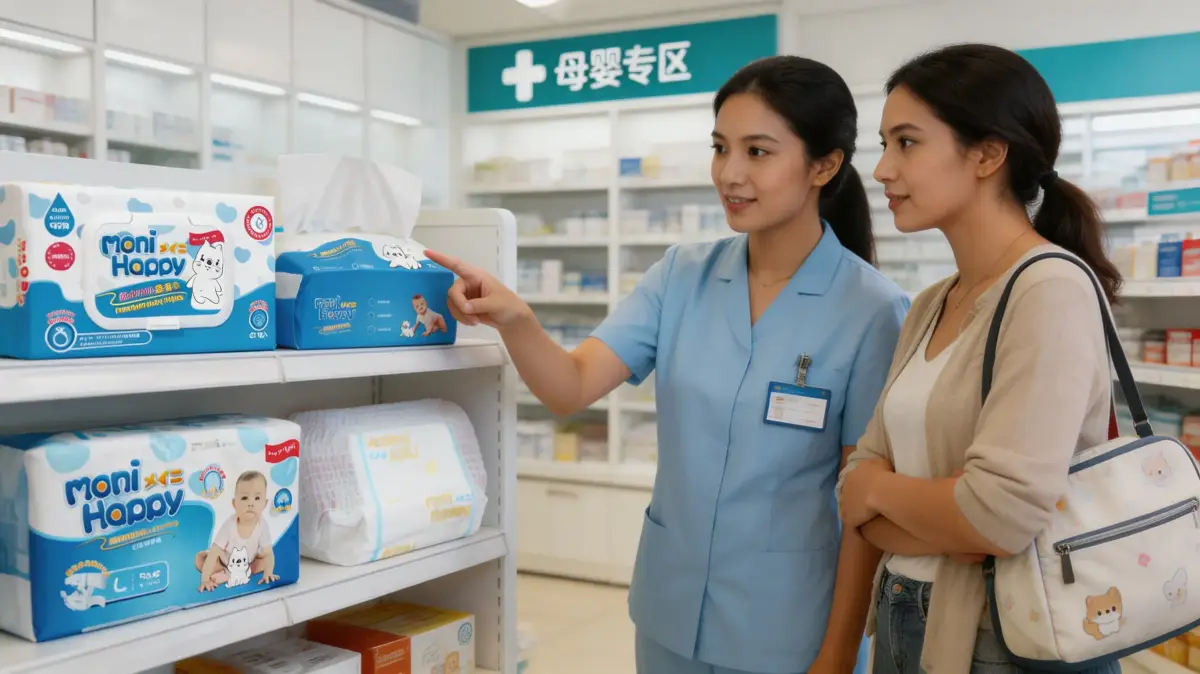
Moni Happy, the Japanese premium baby-care brand behind the Akita mascot, is expanding its authorized partner network across Southeast Asia. Today we are opening applications for a new kind of partner - a diaper size transition distributor Southeast Asia parents and retailers can trust to advise them through every growth stage. This is not a commodity supply arrangement. It is a knowledge-led partnership built around helping families move children smoothly from newborn tape diapers to pull-up pants and on to training-stage products without friction or doubt.
Why the size conversation is the real sales moment
Walk into any pharmacy, mini-market, or mother-and-baby store from Manila to Kuala Lumpur and you will hear the same anxious question: "Is my baby on the right size?" A capable diaper size transition distributor Southeast Asia turns that moment of uncertainty into a loyal, long-term relationship. Parents almost never switch brands once they trust a retailer's sizing advice, because the cost of getting it wrong is a sleepless night and an uncomfortable rash. Distributors who train frontline staff to read weight bands, observe real fit, and recommend the next size at exactly the right moment consistently out-sell competitors who simply stack cartons and wait.
The Southeast Asian nursery market is young and still expanding. Rising birth rates in several parts of the region, growing urban dual-income households, and a strong cultural preference for branded, dermatologically tested products all create steady, repeat demand that does not depend on fashion cycles. At the same time the category is genuinely confusing for new parents: tape diapers, pull-up pants, and training-stage products overlap in purpose, and size charts differ from one brand to another. That confusion is an opening for an educated partner, not a hurdle to clear.
Building loyalty through education, not discounts
A trusted diaper size transition distributor Southeast Asia wins the shelf by teaching, not by cutting price. When a store clerk can confidently explain why a seven-kilogram infant should move from an L tape to an XL, or when a pants product becomes easier than a tape at night, the parent leaves feeling advised rather than sold. That feeling is what brings them back week after week for consumable repurchase. Moni Happy encourages every partner to treat the size chart as a customer-service tool first and a merchandising aid second.
What every authorized partner receives
Moni Happy gives every diaper size transition distributor Southeast Asia a practical enablement package, not just a price list. The starter kit includes a laminated size-and-weight chart for each of the five core categories - tape diapers, pull-up pants, baby wipes, baby towels, and facial tissue - plus a digital sizing quiz retailers can show parents in store. New partners join a monthly product clinic where our regional team walks through fit troubleshooting, the most common parent objections, and the clear signals that indicate a child is ready to step up a size.
Beyond the tools, partners receive protected territory, consolidated regional shipping, and marketing assets localized for their market. Co-branded shelf talkers, social-media templates, and a short parent-education video series help partners position themselves as the local authority on baby-care sizing rather than another anonymous wholesaler competing only on margin.
Target markets and rollout plan
We are prioritizing partners in our six established Southeast Asian markets - Cambodia, Laos, Malaysia, Singapore, Thailand, and Vietnam - where localized partner pages and hreflang-supported content already help parents find authorized sellers quickly. Expansion discussions are also open for Indonesia and the Philippines, two large, fast-moving care markets where we are actively building the next phase of the network.
Within each market we welcome several partner profiles: pharmacy and mother-and-baby retail chains, modern-trade distributors with straightforward logistics, and online marketplace sellers who can pair sizing content with fast local delivery. The common thread across all profiles is a willingness to invest in staff training and parent education rather than pure price competition.
How to become a partner
To become a diaper size transition distributor Southeast Asia for Moni Happy, the first step is a short introduction through our partner page. Tell us your market, your existing retail or distribution footprint, and how you currently serve parents. Our regional team reviews every application within five business days and schedules a discovery call to map your territory and training needs.
There is no large upfront production commitment, because Moni Happy develops and promotes its own branded range exclusively. We supply finished, branded goods and the knowledge to sell them; partners supply local reach, retail relationships, and the human advice parents value. Qualified partners typically begin with a starter assortment, then expand SKUs as local demand data comes in.
Moni Happy believes the distributor who educates parents earns the sale that follows. If your team is ready to lead the sizing conversation in your market, we would like to hear from you.
Diaper Comfort Features: What Makes a Diaper Comfortable?
A comfortable diaper is more than just a luxury - it's essential for your baby's well-being. An uncomfortable diaper can cause fussiness, poor sleep, skin irritation, and even affect your baby's development. Here are the key comfort features to look for when choosing a diaper:
- Soft topsheet: The layer that touches your baby's skin should be ultra-soft and smooth. Look for a 3D or embossed topsheet that reduces friction and allows air circulation. Moni Happy diapers feature a 3D cloud-soft topsheet that feels like cotton against the skin.
- Breathable backsheet: A breathable outer layer allows hot air and moisture to escape, keeping your baby's skin dry and comfortable. Look for diapers with micro-pore technology that lets air in but keeps moisture out.
- Stretchy waistband: A flexible, stretchy waistband moves with your baby and provides a comfortable fit without being too tight. Look for a 360° stretch waistband that adapts to your baby's body shape.
- Soft leg cuffs: The leg openings should be soft and stretchy, not tight or restrictive. Double leg cuffs provide better leak protection without digging into your baby's thighs.
- Ultra-thin core: A thin, flexible core is more comfortable than a bulky, stiff one. Modern high-absorbency polymers (SAP) can hold large amounts of liquid in a very thin core - look for a core that's 0.1-0.3cm thick.
- Wetness indicator: A yellow line that turns blue when wet lets you know when it's time for a change without having to peek inside. This helps prevent your baby from sitting in a wet diaper for too long.
- pH-balanced: A mildly acidic diaper (pH 4.5-5.5) helps maintain the skin's natural barrier and prevents irritation. This is especially important for newborns with sensitive skin.
For more tips on newborn skin care and preventing diaper rash, read our complete newborn care guide. And for a calming bath time routine that soothes irritated skin, check out our newborn bathing guide.
Frequently Asked Questions
How do I know if my baby's diaper is uncomfortable?
Signs that your baby's diaper may be uncomfortable include: fussiness or crying that seems unrelated to hunger or tiredness, pulling or tugging at the diaper, red marks on the skin around the waist or thighs, frequent diaper leaks, your baby trying to remove the diaper, or poor sleep. If you notice any of these signs, try a different size or brand of diaper.
Are thicker diapers more absorbent?
Not necessarily. Modern diaper technology uses super-absorbent polymers (SAP) that can hold many times their weight in liquid. A thin diaper with high-quality SAP can be just as absorbent - or more so - than a thick, bulky diaper. In fact, thinner diapers are often more comfortable and allow better air circulation. The key is the quality of the absorbent core, not the thickness.
Can a diaper be too tight?
Yes. A diaper that's too tight can cause discomfort, restrict movement, leave red marks on the skin, and even affect digestion. A properly fitting diaper should be snug enough to prevent leaks but loose enough that you can comfortably slide two fingers between the waistband and your baby's skin. If you see red marks after removing the diaper, it's likely too tight - try the next size up.
How does climate affect diaper comfort?
In hot and humid climates like Southeast Asia, breathability is even more important. A diaper that traps heat and moisture can cause discomfort, sweating, and diaper rash. Look for diapers with ultra-breathable backsheets, moisture-wicking topsheets, and thin, flexible cores. Change diapers more frequently in hot weather, and consider giving your baby some diaper-free time each day to let the skin breathe.
Experience Ultimate Comfort with Moni Happy Diapers
Discover the difference of Moni Happy premium baby diapers - designed with 3D cloud-soft topsheet, ultra-thin 0.1cm breathable core, 360° stretch waistband, and mildly acidic pH balance for maximum comfort. Perfect for Southeast Asia's hot and humid climate. Try our comfort trial pack today and see why parents across the region trust Moni Happy for their baby's comfort.
Related Reading
Frequently Asked Questions
How do I know if my baby's diaper is uncomfortable?
Signs that your baby's diaper may be uncomfortable include: fussiness or crying that seems unrelated to hunger or tiredness, pulling or tugging at the diaper, red marks on the skin around the waist or thighs, frequent diaper leaks, your baby trying to remove the diaper, or poor sleep. If you notice any of these signs, try a different size or brand of diaper.
Are thicker diapers more absorbent?
Not necessarily. Modern diaper technology uses super-absorbent polymers (SAP) that can hold many times their weight in liquid. A thin diaper with high-quality SAP can be just as absorbent, or more so, than a thick, bulky diaper. In fact, thinner diapers are often more comfortable and allow better air circulation. The key is the quality of the absorbent core, not the thickness.
Can a diaper be too tight?
Yes. A diaper that's too tight can cause discomfort, restrict movement, leave red marks on the skin, and even affect digestion. A properly fitting diaper should be snug enough to prevent leaks but loose enough that you can comfortably slide two fingers between the waistband and your baby's skin. If you see red marks after removing the diaper, it's likely too tight, try the next size up.
How does climate affect diaper comfort?
In hot and humid climates like Southeast Asia, breathability is even more important. A diaper that traps heat and moisture can cause discomfort, sweating, and diaper rash. Look for diapers with ultra-breathable backsheets, moisture-wicking topsheets, and thin, flexible cores. Change diapers more frequently in hot weather, and consider giving your baby some diaper-free time each day to let the skin breathe.