
2026-10-07 · Moni Happy Editorial Team
Is the Baby Diaper Business Profitable in Indonesia in 2026?
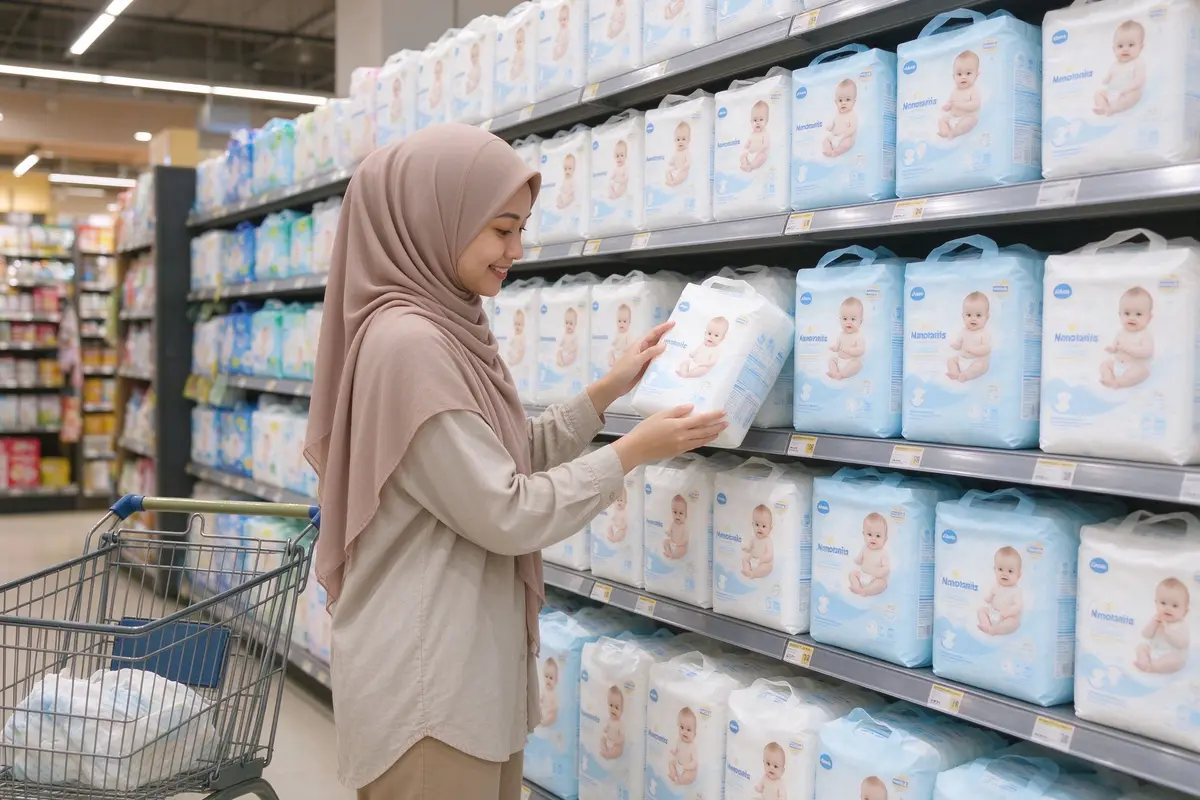
Yes, the baby diaper market in Indonesia is profitable for well-run distributors in 2026, but it is competitive and capital-intensive.Public estimates for this market differ widely by source and by scope, so we do not quote a market size or a growth rate here. What we can speak to is the direction, and we would rather help you size one market from figures you can verify than publish a number we cannot source.Public estimates for this market differ widely by source and by scope, so we do not quote a market size or a growth rate here. What we can speak to is the direction, and we would rather help you size one market from figures you can verify than publish a number we cannot source.1, and modern retail, e-commerce and live commerce are all expanding. The catch is 11% value-added tax, HS 9619 import duty and strong local incumbents, which typically leave distributors gross margins of about 15-25% (net 5-12%).
- Indonesia baby diaper market sits inside a baby care market of about US$7.9B (2026) to US$10.Public estimates for this market differ widely by source and by scope, so we do not quote a market size or a growth rate here. What we can speak to is the direction, and we would rather help you size one market from figures you can verify than publish a number we cannot source.
- Total fertility rate near 2.1 (World Bank, recent), supporting a large newborn and toddler base.
- Diapers are imported under HS 9619; Indonesia PPN (VAT) is 11%, with import duty and preferential trade-agreement rates to verify.
- Typical distributor gross margin about 15-25%, net about 5-12%; premium and dermatologically tested lines are the clearest gap.
- Explore the Indonesia distributor allocation at moni-happy.com/partner.
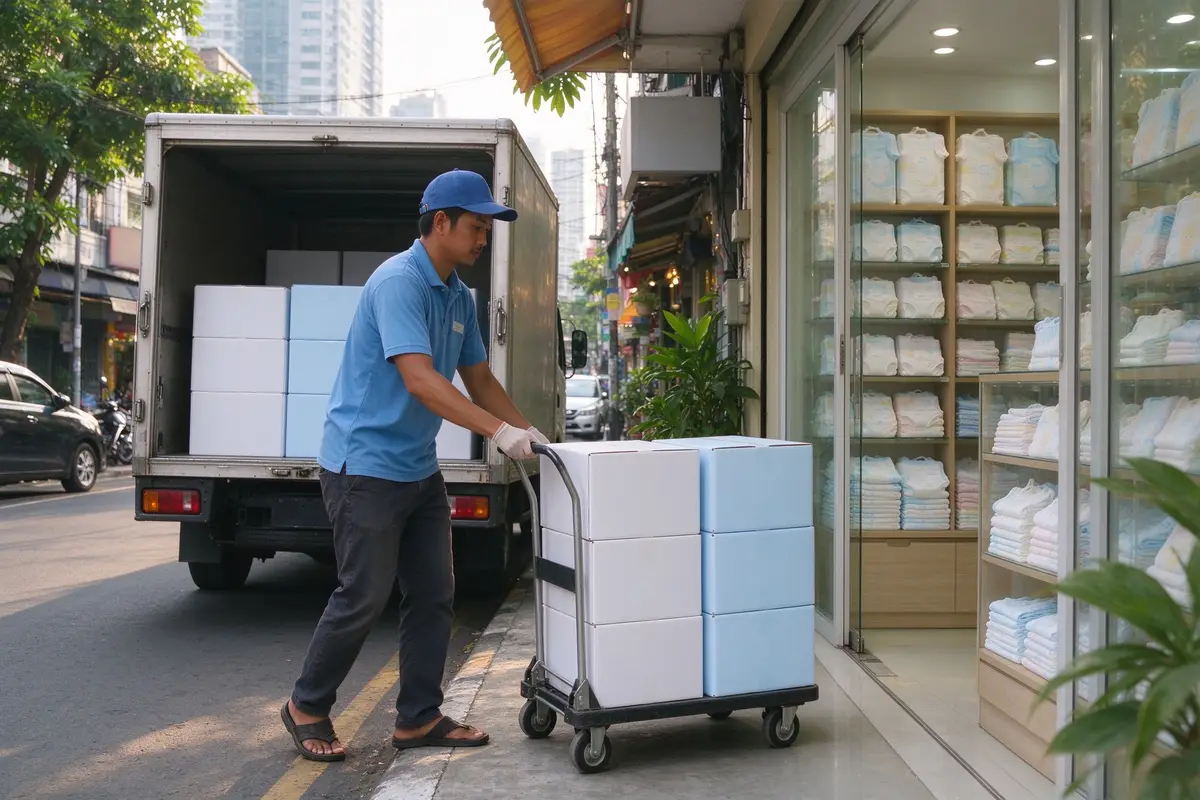
This country analysis applies the framework from the master Southeast Asia distribution-channel guide to Indonesia and uses the same indicative economics as the wholesale price, MOQ and margin hub. All commercial figures are ranges subject to a formal quotation.
Is the baby diaper market in Indonesia growing?
Yes.Public estimates for this market differ widely by source and by scope, so we do not quote a market size or a growth rate here. What we can speak to is the direction, and we would rather help you size one market from figures you can verify than publish a number we cannot source.8 billion by 2031 at roughly 6.5% a year, with the narrower baby and child-specific segment growing faster still (about 7.8% in one tracker). These are third-party estimates with differing calibers, so treat them as directional; the demographic signal is independently confirmed by World Bank fertility near 2.1, among the highest in major ASEAN economies.
A young population of more than 270 million, rising urbanisation and a growing middle class keep the baby diaper market on a structural upswing even as birth rates gradually ease.
How big is the diaper opportunity versus other baby categories?
The baby diaper market is the highest-frequency repeat purchase in baby care, which makes it an anchor category for distribution: they drive store traffic every week, while wipes, tissue and cotton towels attach to each diaper sale and lift blended margin. The trade-off is that diapers are bulky and low-margin per piece, so profitability depends on container efficiency and fast turnover rather than high markups; the five-category margin comparison quantifies this.
What duty and PPN apply to imported diapers (HS 9619)?
Baby diapers are classified under HS code 9619. Imported containers face customs duty plus Indonesia's value-added tax, PPN, currently 11%; verify the current applied rate and any preferential rate under Indonesia's trade agreements (including agreements covering Japanese origin) with the customs authority, Bea Cukai, the tax authority pajak.go.id, and the official ASEAN Tariff Finder before pricing an order.
Our landed-cost guide shows how duty and PPN compound: in a worked 48,000-piece container, taxes and clearance add roughly 10-15% to CIF value, which is why accurate customs planning is central to making the baby diaper market profitable.
What margins can Indonesian diaper distributors expect?
Indicative distributor gross margins run about 15-25%, with net margins around 5-12% after warehouse rent, delivery, modern-trade listing fees, promotions and working capital. Local incumbents compete aggressively on value packs, so the realistic opening for an imported premium Japanese line is the quality and skin-safety segment, where parents pay more for softness and dermatological assurance. The per-container math (about US$2,442 gross profit on a worked 20GP at a 20% margin) is in the per-pack margin analysis.
Which channels win for diapers in Indonesia?
A hybrid route reaches the market fastest:
- Modern trade (hypermarkets, baby specialty chains) for credibility and premium positioning.
- E-commerce and live commerce on leading marketplaces for rapid trial and reviews, especially in Java; our live-commerce analysis covers the channel.
- Traditional trade, the vast network of warung and independent baby shops, for national reach and cash turnover.
Channel strategy, distributor types and entry sequencing are mapped in the distribution-channel guide.
How do you enter Indonesia as a diaper distributor?
Start with one 20GP across a focused size mix, secure a handful of modern-trade and online listings, and use a licensed local importer or customs broker to handle HS 9619 clearance and any applicable product-standard (SNI) or registration requirements, which you should confirm for the specific SKU. Cross-border trade resources, including an Indonesia-focused export white paper, are available from Alibaba's seller resources (broad market caliber). Brands expanding into Indonesia, such as Moni Happy, offer documented onboarding, indicative pricing and territory allocation through the partner program.
Frequently asked questions
Sources and further reading
- World Bank — Fertility rate, total (births per woman), indicator SP.DYN.TFRT.IN
- Directorate General of Customs and Excise (Bea Cukai), Indonesia
- Directorate General of Taxes (Pajak), Indonesia — PPN/VAT
- ASEAN Tariff Finder — applied and preferential tariffs for HS 9619
- Alibaba.com — Southeast Asia diapers export strategy white paper
Commercial figures are indicative planning ranges and subject to a formal quotation; statutory rates must be confirmed with a licensed customs broker.
Bottom line: Indonesia's baby diaper market is large, young and growing about 6.5% a year, but 11% PPN, duties and strong local rivals make it a 15-25% gross-margin, volume-driven business. Win with a differentiated premium line, disciplined landed-cost planning and a hybrid modern-trade, online and warung channel strategy.
Frequently Asked Questions
Is the baby diaper market in Indonesia growing?
Yes.Public estimates for this market differ widely by source and by scope, so we do not quote a market size or a growth rate here. What we can speak to is the direction, and we would rather help you size one market from figures you can verify than publish a number we cannot source.5% annually, with fertility near 2.1.
What margin do diaper distributors make in Indonesia?
Distributor gross margins are typically about 15-25%, with net margins around 5-12% after logistics, shelf fees and working capital.
What tax and duty apply to imported diapers in Indonesia?
Diapers enter under HS 9619, incur import duty and 11% PPN (VAT); preferential origin agreements may reduce duty, so check customs.
Which sales channel is best for new diaper brands in Indonesia?
A hybrid of modern trade, e-commerce/live commerce and traditional warung wholesale gives the fastest national coverage.
Distributor resources
If you are evaluating suppliers for your market, these are the pages that answer the commercial questions — in the order buyers usually need them.