
2026-10-31 · Moni Happy
Which diapers Malaysia retailers reorder most, and how do I build the first order mix?
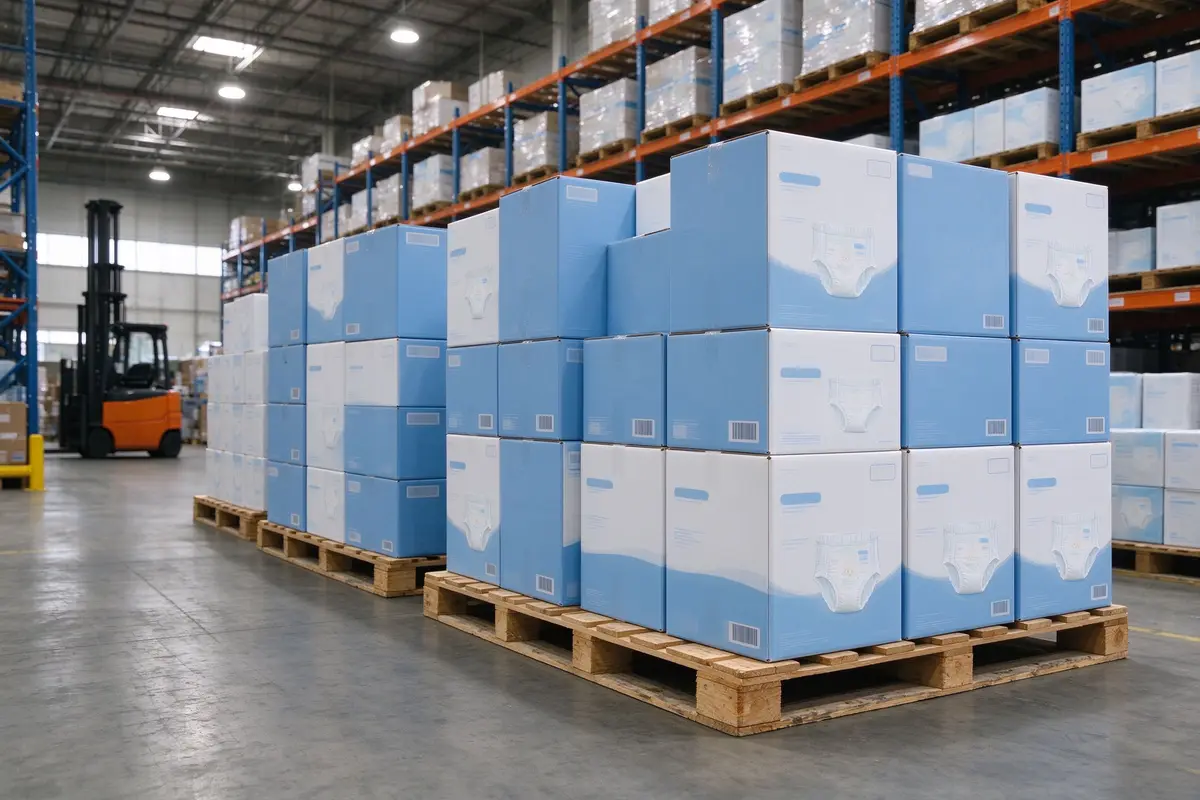
Across the diapers Malaysia retailers reorder most, two sizes carry the volume: M and L. Newborn and small sizes sell once and then sit, so a first 20GP container of roughly 48,000 baby diapers should sit close to 60% in M and L combined, with pull-up pants taking the urban share from size L upward. Build the first order around that curve rather than around an even split across six sizes, which is the most common and most expensive mistake in a first container.
The size curve is the single decision a new distributor cannot correct cheaply. Stock in the wrong size does not spoil quickly, but it occupies working capital and warehouse space for a year, and it makes the second order smaller than it should be. Getting the curve approximately right matters more than getting the price exactly right.
Which sizes actually generate reorders in Malaysia?
M and L, followed by XL. Those three sizes account for the bulk of repeat purchasing because they cover the months a baby spends longest in a single size, and because parents who find a fit they trust stop experimenting.
The practical signal is what retailers ask for on the second order, not the first. A first order is a ranging decision made by a buyer; the second order is a replenishment decision made by sell-out. When a store reorders only M and L, that is the curve speaking, and it should override whatever the launch plan assumed.
Why do newborn and small sizes stall on shelf?
Because the window is short and the purchase is often made before the baby arrives. Newborn fits last a matter of weeks, parents frequently receive packs as gifts, and the size is bought in small quantities at a time when the household is not yet brand loyal.
That does not mean dropping them. Newborn and small are the sizes that recruit a first-time buyer into the brand, and a retailer that cannot offer them looks incomplete to a new parent. Carry them as a service line in modest depth, and measure them on recruitment rather than on rate of sale.
Tape or pants for a Malaysian first order?
Both, weighted to tape. Tape diapers remain the volume format for younger babies, while pull-up pants take a growing share from around size L upward, especially in urban accounts where both parents work and changing speed matters.
An all-tape container leaves the fastest-growing segment unserved, and an all-pants container is too narrow for general trade. A workable first split puts roughly three quarters of the pieces in tape and one quarter in pants, then adjusts on the first reorder based on what the accounts actually ask for.
How should a 48,000-piece container be split across sizes?
Start from a curve close to this, then adjust for the accounts you have actually signed. The percentages are a planning starting point for a general trade mix, not a rule.
- Newborn — 5%, about 2,400 pieces.
- S — 15%, about 7,200 pieces.
- M — 30%, about 14,400 pieces.
- L — 30%, about 14,400 pieces.
- XL — 15%, about 7,200 pieces.
- XXL — 5%, about 2,400 pieces.
Two adjustments usually follow. If your accounts are pharmacies and specialist baby stores, shift two or three points from newborn into L. If they are urban minimarkets, shift points from S into XL and pants, because the shopper there is buying for an older baby and buying convenience.
What sell-out data should you ask the retailer for?
Units sold by size, by store, by week, for the last eight weeks — and out-of-stock days for the same period. Without the second number you cannot tell a size that sells slowly from a size that sold out and was never replenished.
In the diapers Malaysia market, most independent accounts will not have that data, which is why the first quarter should include a manual stock count at two or three representative stores. A monthly count of what is on shelf and what is in the back room is crude, but it gives you a working reorder rate per store, which is far better than guessing the size mix from your own shipment records.
How often should the size mix be revised?
Quarterly in the first year, then twice a year. Birth rates, competitor promotions, a new pack count and the arrival of a value tier all move the curve, and a mix frozen at launch is typically wrong within two quarters.
Revise on evidence, not on instinct. A rising reorder rate in M and L is the only signal that justifies adding depth; a falling one means the pack, the price or the account has changed. If a size has not reordered in two cycles while out-of-stock days were zero, it is over-stocked; if a size reorders every cycle and still records out-of-stock days, it is under-stocked. Both signals come from the same two numbers you asked the retailer for, and neither can be read from a diaper wholesale invoice.
What changes when you add wipes and tissue to the same order?
The container arithmetic changes completely, because wipes and tissue do not share the diaper size curve and they cube out differently. Mixing categories into one container is a legitimate way to test several lines, but it reduces the pieces of each and can push you below the volume that earns a better price break.
A cleaner approach for a first order is one container of baby diapers on the size curve above, and wipes or tissue on a separate, smaller shipment once the diaper sell-out is visible. If you do want to test a mixed container, our guide to mixing diapers, wipes and tissue in one 20ft container walks through the cubing. For pricing and samples against your own size mix, start at the Malaysia partner page.
Frequently asked questions
These four questions come up in nearly every first-order review with a Malaysian account.
Sources and further reading
- Department of Statistics Malaysia, live births and population estimates by state (2024–2025): dosm.gov.my
- Royal Malaysian Customs Department, import procedures and classification (accessed 2026): customs.gov.my
- Statista, Malaysia baby care market and diaper retail data (2025–2026): statista.com
Bottom line: in Malaysia the size curve, not the price list, decides whether the first container works. Weight it to M and L, carry the small sizes as a recruitment line, and let retailer sell-out rather than your shipment records set the second order. Piece counts and container loads here are planning figures; the size mix and diaper wholesale terms are confirmed per order.
Frequently Asked Questions
Which sizes sell fastest in Malaysia?
M and L. They sit in the middle of the size curve where babies spend the longest time, so a retailer that stocks only two sizes usually stocks these. Newborn and small sizes sell steadily but slowly, and they earn their shelf space as a service to new parents rather than as a volume line.
Should the first container be tape diapers or pants?
Both, weighted to tape. Tape remains the volume format for younger babies in Malaysia, while pull-up pants take a growing share from around size L upward in urban accounts. A first order that is all tape leaves the fastest-growing segment unserved; an all-pants order is too narrow for a general trade account.
How many pieces fit in a 20GP?
Roughly 48,000 pieces of tape diapers, and somewhat fewer for pull-up pants because the pack compresses less efficiently. Treat those as planning figures and confirm the loading plan per carton configuration, since pack count and carton size move the number more than most buyers expect.
How often should I change the size mix?
Every quarter for the first year, then twice a year. Birth rates, competitor promotions and the arrival of a new pack size all shift the curve, and a mix set once at launch is usually wrong within two quarters. Retailer sell-out by size is the only input that matters.