
2026-10-19 · Moni Happy
Why Are Pull-Up Pants Becoming More Popular Than Tape Diapers?

Pull-up pants are the fastest-growing part of the diaper market, and the structural shift from tape to pants is one of the clearest opportunities a baby diaper distributor can stock into. Parents of crawling and walking babies choose pants because they pull on and off in seconds, move with an active child, and carry a small premium; in many emerging Southeast Asian markets pants penetration is still well below the level seen in mature markets, which leaves room for growth. A phased launch, led by the active sizes M through XL, captures the trend without over-ordering.
- Pants are the fastest-growing diaper segment, driven by active crawling and walking babies.
- Pants pull on and off quickly and generally carry a small price premium over tape.
- Penetration in emerging Southeast Asia is still below mature markets, leaving growth space.
- Indicative distributor gross margin for pants runs around 18-25% versus roughly 15-22% for tape.
- Phase the launch from active sizes and request the trend brief at the partner program.
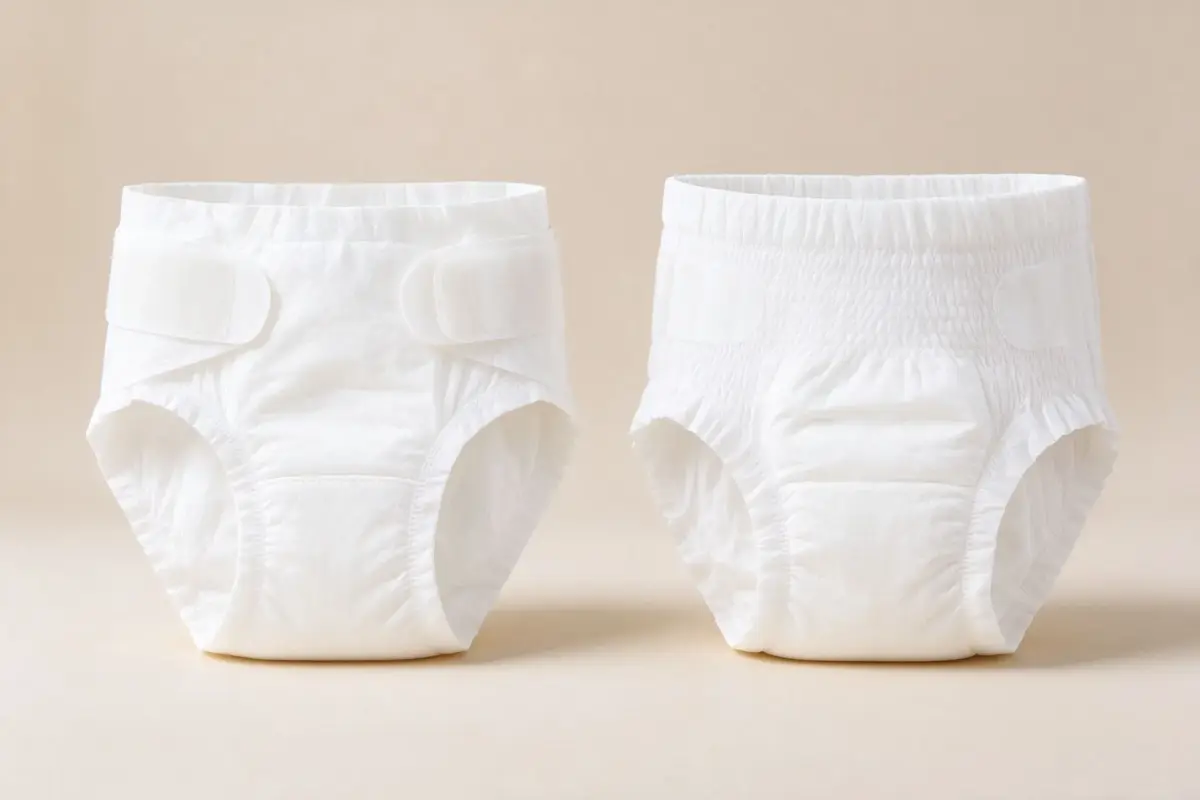
The diaper category upgrades along a predictable path: newborns start in tape, then families switch to pants as the baby becomes mobile. Markets with higher birth rates and a growing middle class tend to repeat this shift quickly. For a baby diaper distributor, the move is not just a demand story; pants usually support a slightly better margin and encourage repeat purchases through the toddler sizes, which extends the value of every customer.
Why are parents switching from tape diapers to pull-up pants?
Three reasons dominate. Pants are easy to put on an active, rolling or standing baby, often without a full lie-down change; they fit more like underwear and move with the child; and many parents see them as the next developmental step after the newborn stage. For wiggly toddlers and changes on the go, the convenience is strong enough to justify a small premium. A baby diaper distributor should expect the switch to accelerate around the crawling and early-walking months.
How much room for growth is there in Southeast Asia?
Considerable. In mature markets, pants make up a large share of diaper sales for active babies, while across much of emerging Southeast Asia tape still dominates and pants are treated as a newer, premium format. As urbanisation and disposable incomes rise, more families trade up. The region's younger, higher-fertility populations, with total fertility rates around 1.9 to 2.5 in markets such as Cambodia, Laos, Indonesia and the Philippines, keep feeding a steady flow of babies reaching the mobile age, giving the baby diaper distributor a constant new wave of pants buyers.
What margin does a baby diaper distributor make on pants?
Pants generally support a slightly higher gross margin than tape, with indicative distributor ranges around 18-25% for pants versus roughly 15-22% for tape, subject to channel, mix and a formal quotation. The premium format and stronger pull from active sizes help hold price, while the narrower pack sizes keep shelf space manageable. Wipes and dry towels can be merchandised alongside pants for an add-on sale. Confirm the current figures with the brand before modelling.
Which sizes and packs should lead a pants launch?
Lead with the active sizes M, L and XL, where crawling and walking babies concentrate, and keep a smaller share of the smaller and larger sizes. Medium packs suit pharmacies and baby stores, while small packs and travel pants fit convenience and impulse purchases near the counter. A baby diaper distributor should avoid loading the first order with the smallest sizes, which are more naturally served by tape, and phase the larger sizes in as repeat demand builds.
How should I phase inventory through the tape-to-pants shift?
Start with a focused pants range in the active sizes, prove sell-through over one or two cycles, then widen both the size ladder and the pack formats. Keep tape stocked for newborns and for price-sensitive shoppers, and use pants to lift the average sale rather than to replace tape entirely. Review the category wholesale detail in the price and margin hub, see how the trend fits each channel in the distribution guide, and request the current pants plan at https://moni-happy.com/partner/.
Frequently asked questions
Why are pull-up pants growing faster than tape diapers?
Active crawling and walking babies need quick changes, and pants pull on like underwear and carry a small premium.
What margin do pants give a distributor?
Indicative gross margin is around 18-25% for pants versus roughly 15-22% for tape, subject to a formal quotation.
Which pants sizes should I order first?
Lead with the active sizes M, L and XL, with fewer smallest sizes that are better served by tape.
Should pants replace tape in my range?
No; keep tape for newborns and value shoppers, and use pants to lift the average sale.
Sources and further reading
Commercial figures are indicative planning ranges and subject to a formal quotation; statutory rates must be confirmed with a licensed customs broker.
Bottom line: Pull-up pants are the fastest-growing diaper segment because active-baby convenience and a small premium drive the switch from tape, and emerging Southeast Asian markets still have low pants penetration. A baby diaper distributor should lead with active sizes M to XL, expect indicative gross margin around 18-25%, and phase the range in while keeping tape for newborns. Request the current pants trend brief and figures through the partner program.
Frequently Asked Questions
Why are pull-up pants growing faster than tape diapers?
Active crawling and walking babies need quick changes, and pants pull on like underwear and carry a small premium.
What margin do pull-up pants give a distributor?
Indicative gross margin is around 18-25% for pants versus roughly 15-22% for tape, subject to a formal quotation.
Which pull-up pants sizes should a baby diaper distributor order first?
Lead with the active sizes M, L, and XL, with fewer smallest sizes that are better served by tape.
Should pull-up pants replace tape diapers in the range?
No; keep tape for newborns and value shoppers, and use pants to lift the average sale.
