
2026-09-13 · Moni Happy Editorial
Best Baby Activity Center 2026: Exersaucer vs Jumperoo Guide
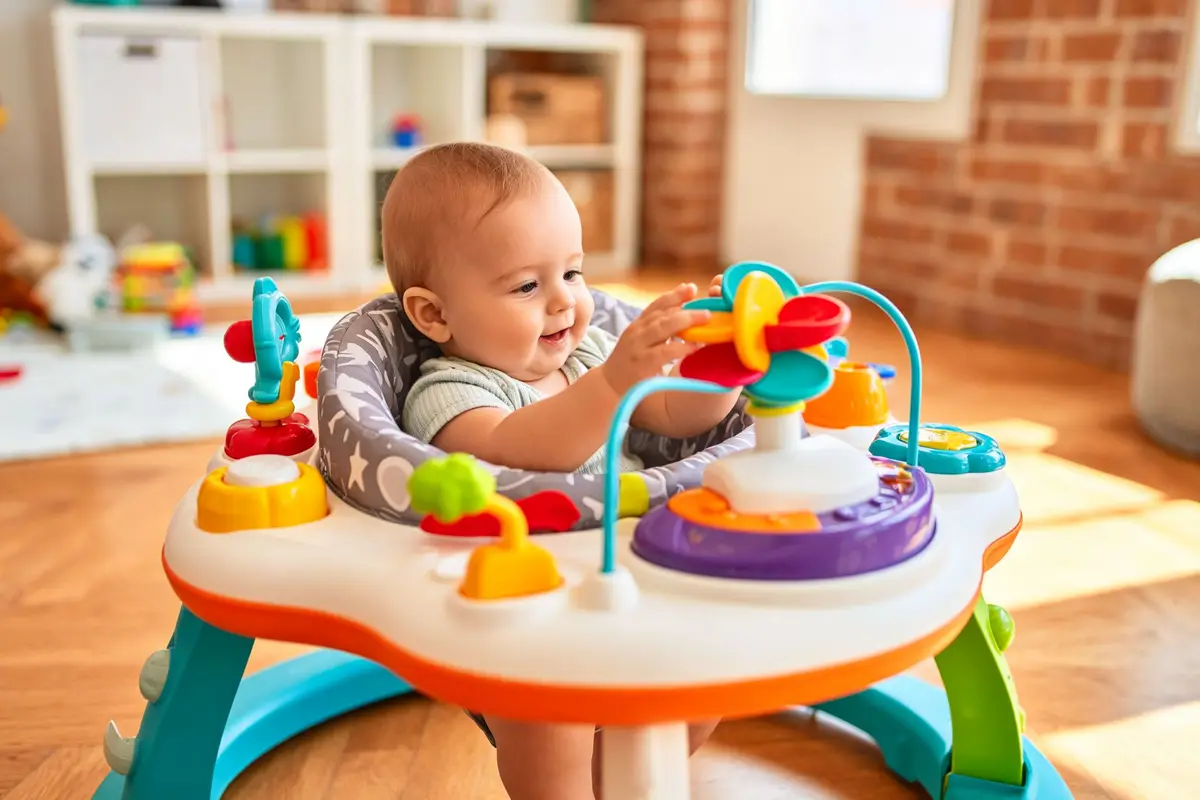
The baby activity center market is growing as parents increasingly seek engaging, safe, and developmentally appropriate play options for their babies before they are mobile. Market research projects the baby activity center market to grow at a CAGR of 6.8% through 2026, with interactive, music-focused models and convertible designs leading innovation. For parents, an activity center provides a safe, contained space where a baby can play, explore, and practice standing and bouncing while parents get a few hands-free moments. This article examines the market landscape, product types, key features, leading brands, and what parents should consider when looking for the best baby activity center in 2026.
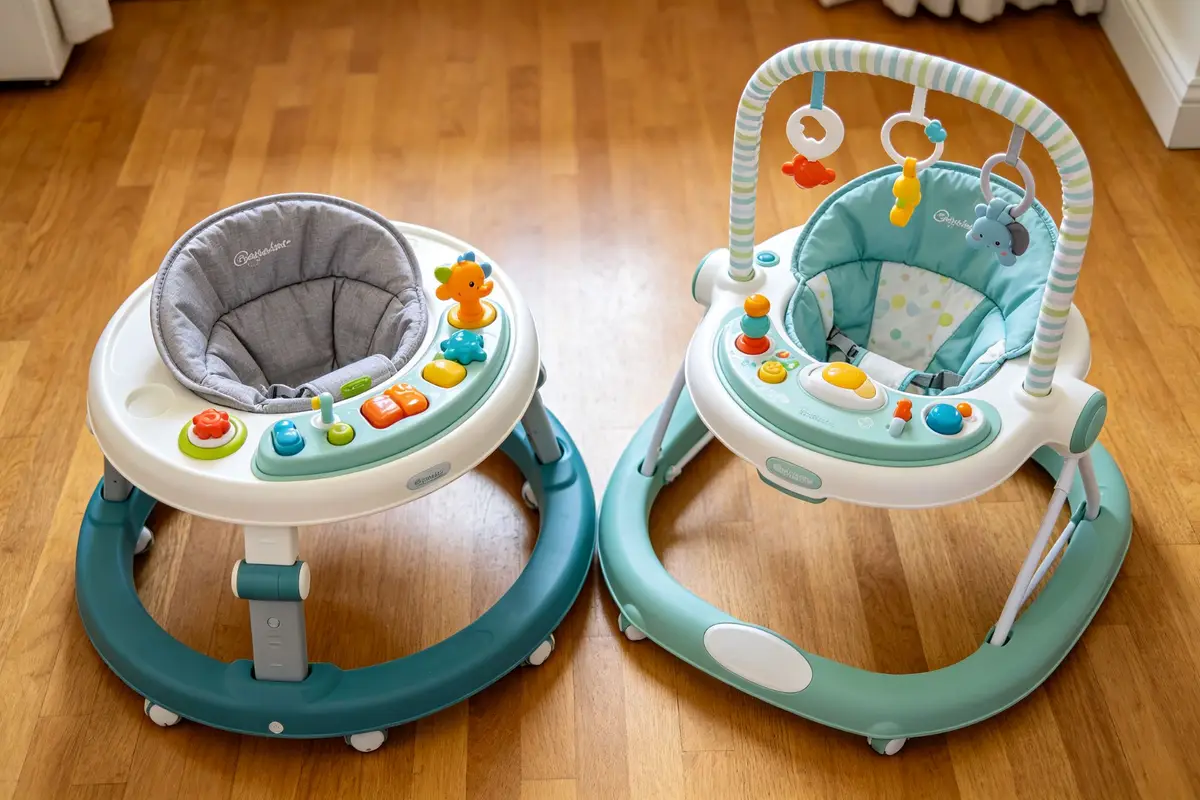
Market Overview: Engaging Play Before Mobility
A baby activity center (also called an exersaucer, activity jumper, or play gym) is a stationary or semi-stationary play station designed for babies who can hold their head up but are not yet crawling or walking. Unlike a traditional seated baby walker (which has wheels and is associated with safety risks), activity centers are stationary — the baby sits or stands in place and plays with surrounding toys. The market is being driven by: the growing emphasis on early childhood development and sensory stimulation; the desire for safe, contained play options that give parents a short break; the increasing availability of interactive, educational features (music, lights, language learning, cause-and-effect toys); and the trend toward multi-functional, convertible products that grow with the baby. In Southeast Asia, where many homes have open-plan living spaces and parents work from home, activity centers are popular for providing a safe, engaging place for babies while parents attend to other tasks. The market is also being shaped by safety awareness — parents are increasingly looking for activity centers with stable bases, secure seats, and appropriate weight limits, and are avoiding products with wheels (traditional walkers) due to safety concerns. E-commerce platforms have made a wide range of activity centers accessible, from budget basic models to premium interactive systems.
Product Types: Exersaucer, Jumperoo, Sit-to-Stand, and Activity Table
The baby activity center market includes four main product types. Exersaucers (stationary activity centers) are the most popular type, consisting of a round or oval tray with a swiveling seat in the center and surrounding toys. The baby sits in the seat and can rotate 360 degrees to reach different toys, and many models have a bouncing feature. Exersaucers are suitable for babies who can hold their head up (typically 4 months) until they can walk (typically 12 months). They are safe (no wheels), engaging, and come in a wide range of prices and features. Prices range from $40-150. Jumperoos (activity jumpers) are similar to exersaucers but feature a suspended seat (using elastic straps or springs) that allows the baby to bounce up and down while playing with surrounding toys. Many have an overhead toy bar with hanging toys. Jumperoos are popular because babies love the bouncing motion, but there are some concerns about prolonged use in suspended seats (pediatricians recommend limiting use to 15-20 minutes at a time). Prices range from $50-130. Sit-to-stand activity centers are the fastest-growing segment, with year-over-year growth of approximately 11%. These are convertible products that can be used in multiple modes: as a floor activity panel for sitting babies (4-6 months), as a push-along walker for standing babies (8-12 months), and sometimes as a play table for toddlers (12+ months). They offer long-term value by adapting as the baby grows, and they encourage natural standing and walking development. Popular models include the VTech Sit-to-Stand Learning Walker and the Fisher-Price Laugh & Learn Smart Stages Learn with Puppy Walker. Prices range from $25-80. Activity tables are standing play tables designed for babies who can pull up to standing (typically 8-12 months). They feature interactive toys, music, lights, and activities on the tabletop, and some have adjustable height settings. Activity tables encourage standing, cruising, and fine motor skills, and they can be used well into toddlerhood. Prices range from $30-100. When choosing an activity center type, consider your baby's age and developmental stage, whether you want a product that grows with your baby (convertible models offer the best value), and your space and budget.
Key Features, Brands, and Buying Guide
Key features to look for when buying a baby activity center include: Age and weight range — check the minimum and maximum weight and age recommendations. Most activity centers are suitable from 4 months (when baby can hold head up) to 12 months (when baby can walk). Some convertible models can be used beyond 12 months. Never use an activity center before your baby can hold their head up independently. Seat comfort and support — look for a padded, supportive seat with a 3-point or 5-point harness. The seat should be at a height that allows the baby's feet to touch the floor flat (not just tiptoes) — this is important for proper leg development. Some models have adjustable seat heights. Stable, wide base — the activity center should have a wide, stable base that does not tip when the baby bounces or pulls on toys. Look for non-slip feet. Toys and activities — look for a variety of age-appropriate toys that encourage different skills: cause-and-effect toys (buttons that make sounds), tactile toys (different textures), fine motor toys (spinners, sliders, beads), and musical toys. Toys should be securely attached (no small parts that could be a choking hazard). Some models have removable toy trays that can be used separately. Music and sounds — many activity centers include music, sounds, and lights. Look for volume control (to protect little ears and your sanity), a variety of sounds (not just one annoying tune), and an off switch. Some models have educational content (letters, numbers, languages). 360-degree rotation — for exersaucers, a seat that rotates 360 degrees allows the baby to reach all the toys and prevents them from getting bored with one side. Bouncing feature — some models have a bouncing feature that allows the baby to bounce while seated. This can be fun for babies, but pediatricians recommend limiting bouncing time to 15-20 minutes at a time to avoid strain on developing legs. Easy assembly and storage — look for models that are easy to assemble (ideally without tools) and fold or disassemble for storage. Some models have a compact fold for travel. Easy to clean — babies are messy, so look for a seat cover that is removable and machine-washable, and a toy tray that can be wiped clean. Avoid models with fabric that cannot be removed for cleaning. Convertibility — if you want long-term value, look for a model that converts to a push-along walker or activity table as your baby grows. Safety tips: always use the activity center on a flat, level surface, never leave your baby unattended, limit use to 15-20 minutes at a time (especially for jumpers), follow weight and age limits, and discontinue use when your baby can walk or climb out. Leading brands include: Evenflo (known for its Exersaucer series, the original and best-selling activity center), Fisher-Price (known for its Rainforest Jumperoo and Laugh & Learn series), Baby Einstein (known for its activity centers with music, language, and sensory activities, including the popular Journey of Discovery Jumper), VTech (known for its Sit-to-Stand Learning Walker, a best-selling convertible activity center), Skip Hop (known for its stylish Explore & More activity centers with modern designs), and Joovy (known for its sturdy, no-frills activity centers). In Southeast Asia, Fisher-Price, VTech, and Baby Einstein are widely available on Shopee and Lazada, while premium brands like Skip Hop are available through baby stores or international shipping. For parents looking to buy a baby activity center online, prioritize safety (stable base, secure harness, appropriate weight limits), choose a type that matches your baby's developmental stage, and consider a convertible model for long-term value. For premium baby care products, parents can explore Moni Happy's product range, and businesses interested in distribution can learn more at Moni Happy's partner page.