
2026-11-24 · Moni Happy
What should a diaper wholesale sample request contain before a first order?
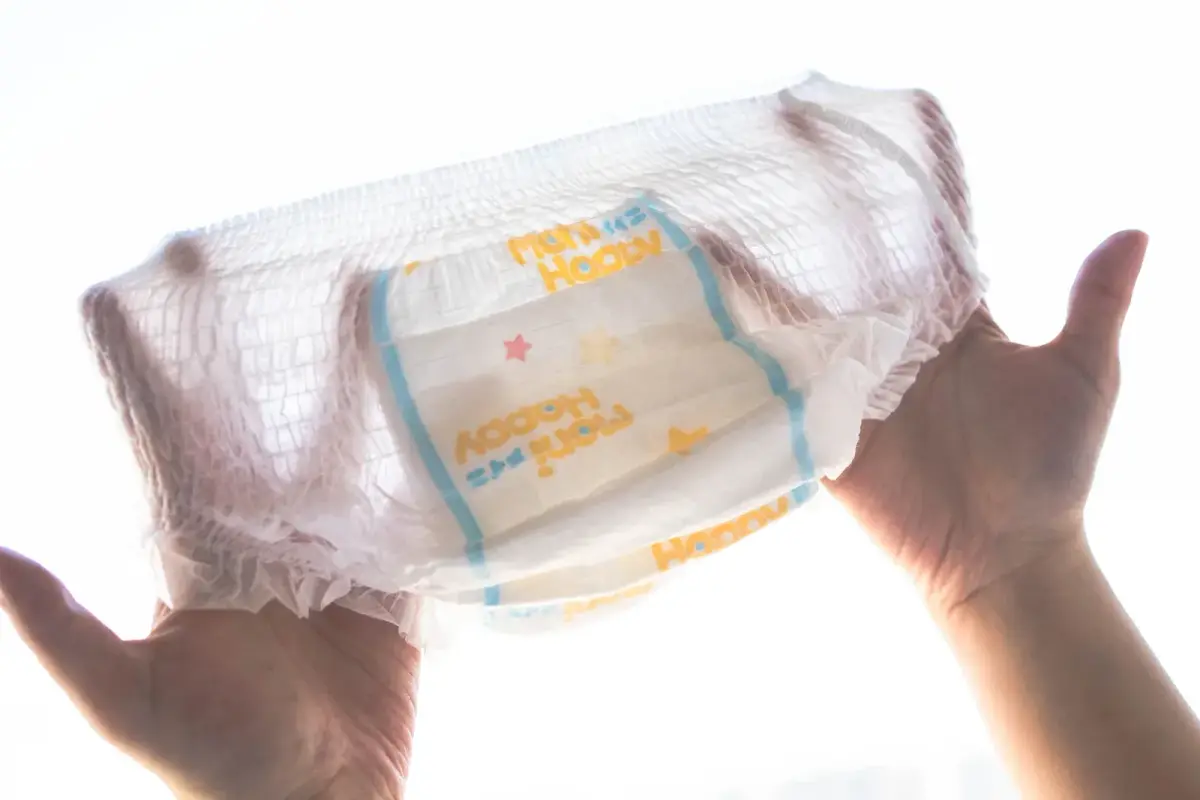
A diaper wholesale sample request should ask for one full pack per size, five loose pieces per size, a specification sheet, a certificate of analysis, the skin test report and the artwork proof. That is a 5 to 8 kg box, it costs USD 45 to 90 to courier from China to Southeast Asia, and it arrives in 3 to 7 days if the sizes are in stock. A request without the documents produces a box of nappies and no decision.
Buyers who compare three suppliers usually end up comparing three different things, because each sample arrives with different paperwork. Fixing the contents of the request is the cheapest way to make the comparison honest.
What should a diaper sample request contain?
Physical samples in two forms, plus four documents.
- One full pack per size. Newborn, S, M, L and XL at minimum. The pack shows print quality, the reseal tape, the pack geometry and the printed piece count, none of which a loose piece reveals.
- Five loose pieces per size. For cutting open, weighing and testing. Five allows three destructive checks and leaves two intact for a fit review.
- A specification sheet. Topsheet weight in gsm, backsheet type and weight, SAP load in grams, core construction, whether an ADL layer is present, and the pack count per size.
- A certificate of analysis for the batch. Not the factory certificate, the batch one. It should carry a lot number that matches the pack.
- The skin compatibility test report. A named institute and a test date, not a logo on the pack.
- The artwork proof and the carton dieline. So the buyer can check the language panel, the barcode position and the carton cube before approving a first order.
A diaper wholesale buyer should also ask for the pack's shelf life statement with the basis behind it, which is the item suppliers rarely volunteer and buyers rarely think to request. A three-year claim with no stability data behind it is a marketing line, and it becomes the buyer's problem when the stock reaches eighteen months in a tropical warehouse.
Why does the size ladder matter more than the sample count?
Because the gaps in a ladder decide which customers a distributor can serve.
A range that runs newborn to XL covers most of the market. A range that stops at L leaves the toddler segment to a competitor, and in most Southeast Asian markets the L and XL packs are where the volume sits once a child passes nine months. Ask for the full ladder even if the first order will only carry three sizes, because the missing sizes tell the buyer what the supplier cannot do.
Pull-up pants are a separate ladder and a separate request. A pants range numbered by the same weight bands as tape diapers will confuse a retailer's planogram, and the pack geometry differs enough that the carton cube changes. If pants are part of the plan, ask for them in the same box so the cube comparison is made once.
Which documents turn a sample into a decision?
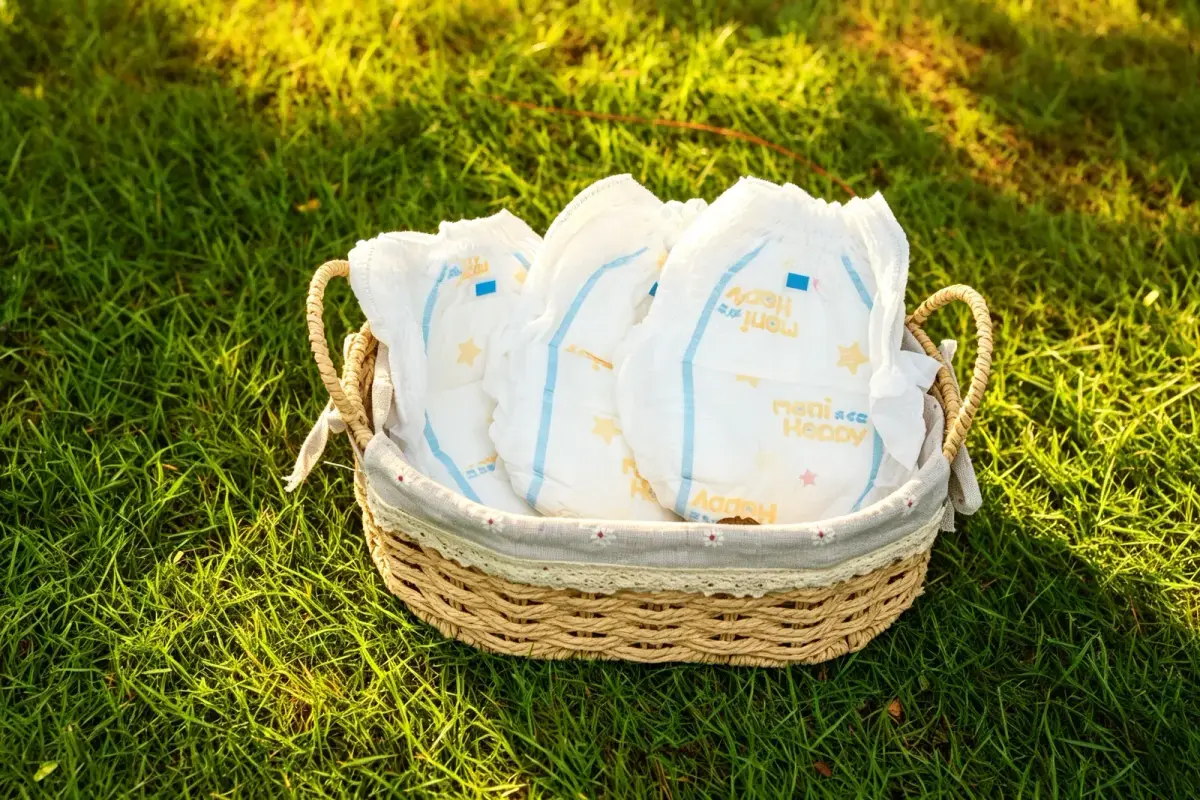
The specification sheet and the batch COA, in that order.
A specification sheet lets two suppliers be compared line by line. Topsheet at 18 gsm against 15 gsm, SAP at 12 g against 9 g, an ADL layer present or absent. Those three differences explain most of the price gap between quotes, and a buyer who cannot see them will choose on price and discover the difference at the first complaint.
The batch COA is what a retailer asks for when a customer complains. It carries the lot number, the production date, the results for absorbency under load and the microbiological checks. A supplier who can produce one for the exact batch in the box is telling the buyer that traceability exists; one who sends a generic certificate is telling the buyer the opposite. On a diaper wholesale first order the COA also anchors the price: two quotes for the same pack can differ by 20 percent because one core carries 12 g of SAP and the other carries 9 g.
How do you test a sample without a laboratory?
Four checks in an afternoon, with a kitchen scale, a measuring jug and a stopwatch.
Run the same absorbency test on all three suppliers on the same day, with the saline at the same temperature, or the numbers will not compare. A test done on Monday against one sample and on Friday against another measures the weather as much as the product.
- Pour test. 100 ml of saline at body temperature onto the centre of the piece, timed to full absorption. Under 10 seconds is fast; over 25 seconds feels wet to a parent. This is the simplest absorbency test that still separates a good core from a thin one.
- Rewet test. Wait two minutes, place a stack of dry tissue on the surface, press with a 5 kg weight for one minute, then weigh the tissue. A gain above 1 g means the surface stays damp under pressure.
- Backsheet strike-through. The same test on the outside of the backsheet after 5 minutes of wear. Any moisture is a film problem, not a pulp problem.
- Fit and stretch. Measure the relaxed waist and the stretched waist, then stretch and release ten times. A waistband that loses more than 10 percent of its recovery will leak at night within a month of shelf life.
These are not a substitute for a lab, and they are enough to eliminate two of three suppliers. Recording the numbers on the same sheet for each sample is what makes the result comparable. When a supplier sends a lab report as well, check whether the absorbency test in the report used the same load and the same saline concentration as the one you ran at home.
How long does a sample box take to arrive?
Three to seven days by express if the sizes are in stock, and two to three weeks if artwork has to be approved first.
An express box of 5 to 8 kg from a factory in Fujian to Kuala Lumpur, Singapore or Ho Chi Minh City clears customs as a low-value consignment and rarely needs more than a day at the destination airport. The variable is the supplier's own preparation: stock sizes are picked the same week, while a sample with new artwork waits for a print proof, and a sample from a new pack format waits for a plate.
Ask for a tracking number and for the packing list to be emailed on dispatch. A sample request that goes quiet for ten days is usually sitting behind a container in the production queue, and the buyer can only find that out by asking.
What sample mistakes delay a first order?
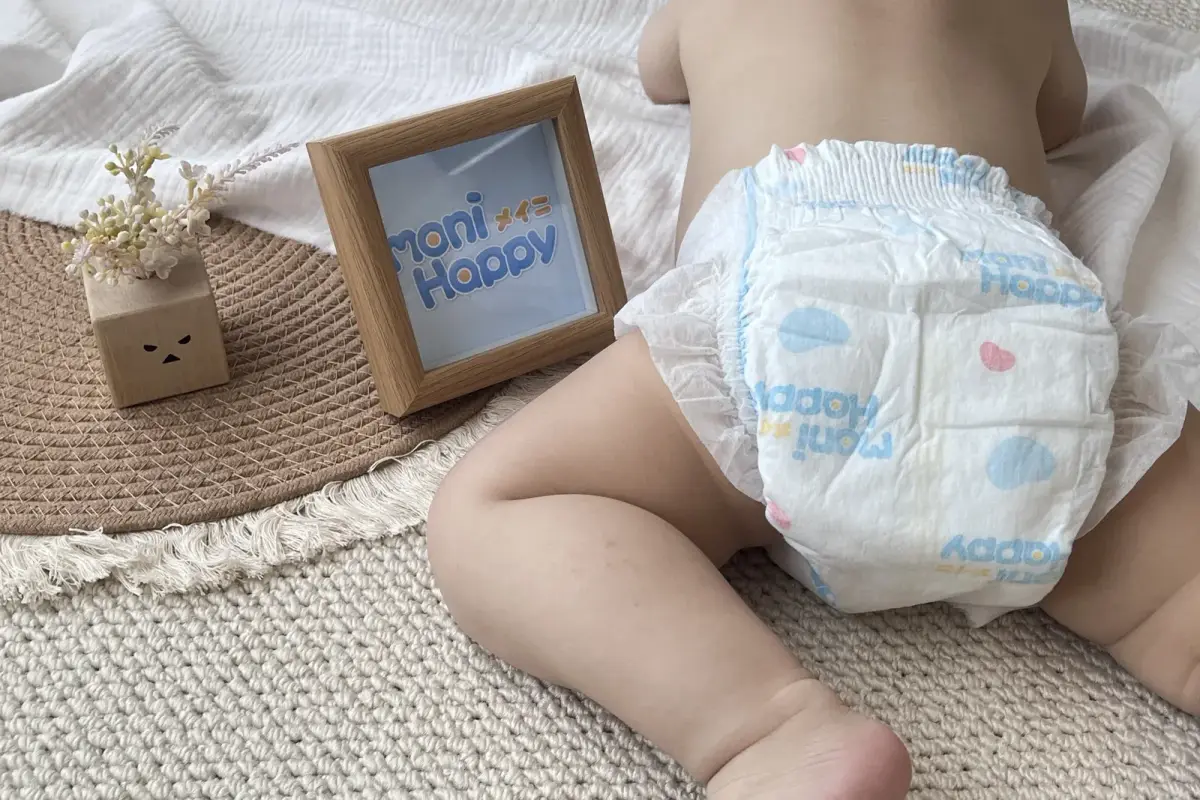
Four, and each one costs a week or more.
- Sample from a different line than the quotation. The sample comes from the premium line and the quote is for the standard one. Check that the specification sheet matches the quoted product code.
- Artwork not included. The buyer approves a sample, then sees the pack artwork three weeks later and finds the language panel is wrong for the market.
- No carton. A sample box of loose packs says nothing about the carton cube, and the cube decides the freight per piece. Ask for one flat-packed carton in the same shipment.
- Sizes that will not be ordered. A box of newborn samples for a market where the volume is in L wastes the courier and the review.
The fourth mistake is the most common and the easiest to avoid. State the target sizes and the target retail price band in the request, and the supplier will send the range that fits. A supplier who sends newborn packs to a buyer planning a toddler line has not read the brief, which is itself useful information. Keep the sample request to one page with six numbered items, and send the same one page to every supplier being compared, because a request that changes shape between suppliers produces a comparison that means nothing. Our partner page takes the size ladder, the market and the target price band in one form, and the diaper range page lists the specifications that the sample box will arrive with.
Frequently asked questions
How many samples should a first request ask for?
One full pack per size plus five loose pieces per size. The pack shows print, reseal and pack geometry; the loose pieces are for cutting, weighing and testing three times without running out.
Should the buyer pay for samples?
The courier, usually. A 5 to 8 kg express box from China to the region costs USD 45 to 90, and most suppliers credit a sample fee against the first order. Paying the courier keeps the request small enough to be handled quickly.
What is the most important document in the box?
The specification sheet. Topsheet and backsheet weight, SAP load, core construction and pack count are what explain a price difference, and without them two quotes cannot be compared.
Can a sample predict shelf performance?
Only partly. Rewet, absorbency speed and fit can be measured in a day. Pack behaviour after eight weeks in a hot warehouse needs a stability report, so ask for one alongside the sample.
Sources and further reading
- ISO 13485:2016, Medical devices — Quality management systems — the standard behind the quality certificate a supplier should send with a sample box.
- Dermatest GmbH — the institute behind the five-star skin compatibility rating carried on Moni Happy packs, including its published test protocol.
- ASEAN Tariff Finder — duty rates to model landed cost once a sample has passed and a first order is being priced.
Bottom line. A sample request is a specification exercise dressed as a courier parcel. Ask for the full size ladder, loose pieces, the specification sheet, the batch COA and the artwork in one shipment, then test all three suppliers on the same sheet. The box costs USD 45 to 90; a first order placed on a feeling costs considerably more.
Frequently Asked Questions
How many samples should a first request ask for?
One full pack per size plus five loose pieces per size. The full pack shows the print, the reseal, the pack geometry and the piece count; the loose pieces are for cutting open and testing, and five is enough to run a re-wet check three times and still keep two intact.
Should the buyer pay for samples?
Usually the courier, not the goods. A 5 to 8 kg box from China to Kuala Lumpur or Ho Chi Minh City costs USD 45 to 90 by express, and most suppliers credit a sample fee against the first order. Paying the courier keeps the request small enough that the supplier does not queue it behind a container.
What is the most important document in the box?
The specification sheet. It states topsheet and backsheet weight, SAP load, core construction, ADL presence and the pack count, and it is the only document that lets a buyer compare two suppliers on the same terms. Without it, a sample is a feeling rather than a shortlist.
Can a sample test predict shelf performance?
Partly. Rewet, absorbency speed and fit can be checked in a day. What a sample cannot show is how the pack behaves after eight weeks in a hot warehouse or how the adhesive holds through a monsoon season, which is why a shelf life statement and a stability report belong in the same request.
Distributor resources
If you are evaluating suppliers for your market, these are the pages that answer the commercial questions — in the order buyers usually need them.
