
2026-10-09 · Moni Happy Editorial Team
Best Baby Bottle Sterilizer 2026: Steam vs UV-C Market Guide
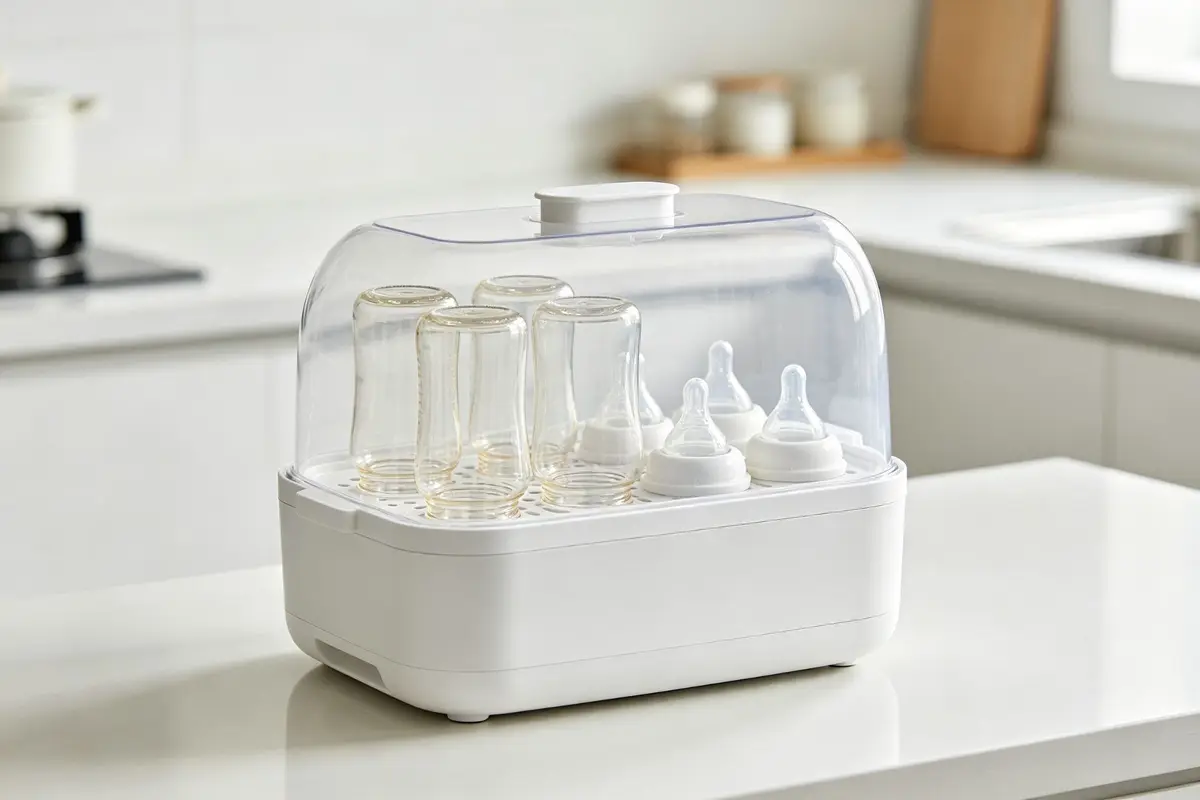
The global baby bottle sterilizer market is experiencing robust growth as parents across Southeast Asia increasingly prioritize infant feeding hygiene.Public estimates for this market differ widely by source and by scope, so we do not quote a market size or a growth rate here. What we can speak to is the direction, and we would rather help you size one market from figures you can verify than publish a number we cannot source.8% through 2026, with the Asia-Pacific region accounting for the largest share of global revenue. For parents searching for the best baby bottle sterilizer 2026 has to offer, the market now presents a wider range of options than ever before — from traditional steam sterilizers to advanced UV-C light sanitizers, and from compact countertop models to multi-function appliances that combine sterilization, drying, and storage.
Market Overview: Why Bottle Sterilizers Are Essential
In tropical climates across Southeast Asia — where high temperatures and humidity create ideal conditions for bacterial growth — baby bottle sterilization is not merely a convenience but a critical hygiene practice. A 2025 pediatric health survey conducted across six Southeast Asian countries found that 78% of parents with infants under 12 months reported using a dedicated bottle sterilizer, up from 62% in 2022. This growing adoption is driven by increasing awareness of gastrointestinal infections in infants, rising disposable incomes among urban middle-class families, and the proliferation of online shopping platforms that make specialized baby care products more accessible.
The market is segmented by technology type: steam sterilizers (which use boiling water vapor to kill bacteria and viruses), UV-C sterilizers (which use ultraviolet light to sanitize without heat or water), microwave sterilizer bags (a budget-friendly option that uses microwave-generated steam), and cold water sterilization systems (which use sterilizing tablets or solution). Steam sterilizers currently dominate the market with approximately 55% market share, but UV-C sterilizers are the fastest-growing segment, with year-over-year growth exceeding 18% as consumers seek faster, dryer, and more convenient sterilization solutions.
Steam vs UV-C: Which Technology Wins in 2026?
The debate between steam and UV-C sterilization has become the central conversation in the baby bottle sterilizer market. Steam sterilizers, the traditional choice, work by heating water to produce steam that reaches temperatures of 100C or higher, effectively killing 99.9% of bacteria, viruses, and fungi. The advantages of steam sterilization include proven effectiveness, no need for replacement parts (other than occasional descaling), and the ability to sterilize items that may not be UV-compatible. However, steam sterilizers typically require 8-15 minutes per cycle, produce moisture that means items need to be dried before storage, and require regular descaling in areas with hard water.
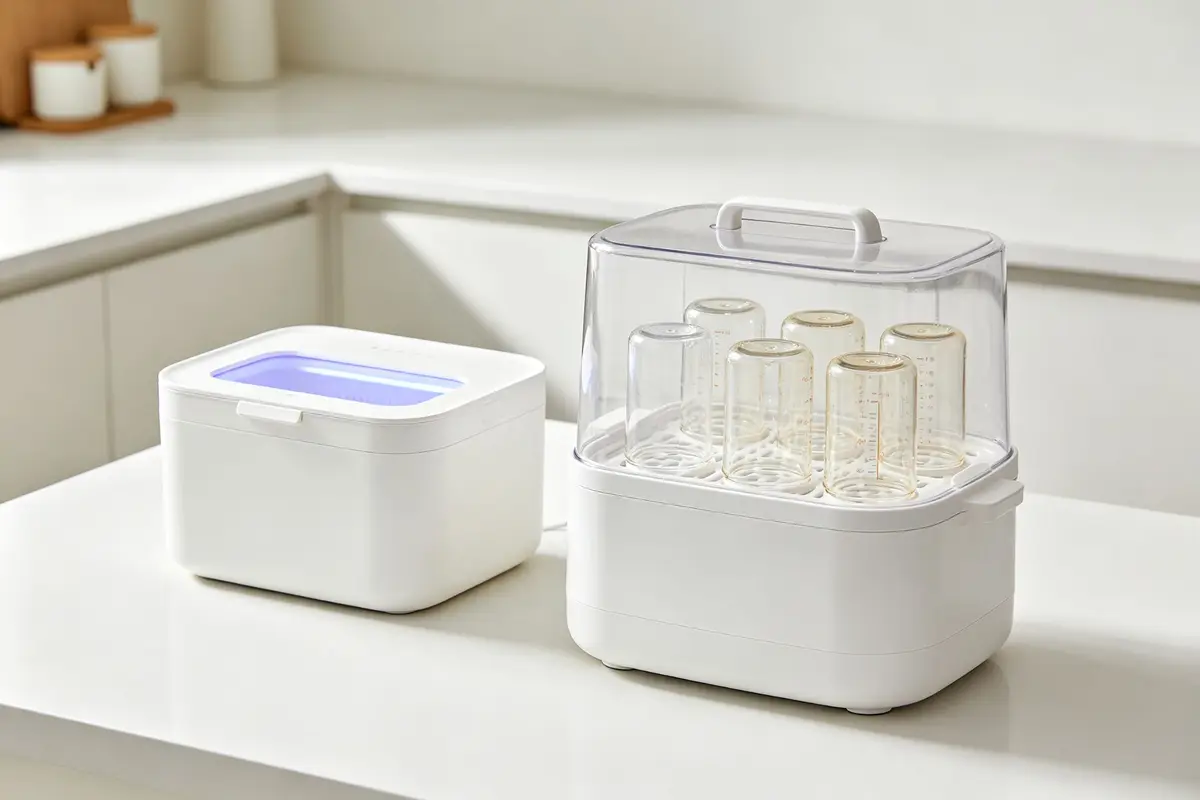
UV-C sterilizers, by contrast, use ultraviolet light at a wavelength of 253.7nm to destroy the DNA of microorganisms, rendering them unable to reproduce. The advantages of UV-C sterilization include shorter cycle times (typically 3-8 minutes), completely dry sterilization (no moisture or drying needed), no water or descaling required, and the ability to sterilize a wider range of items including toys, pacifiers, remote controls, and mobile phones. However, UV-C light requires direct line-of-sight to be effective — items that are shadowed or stacked may not be fully sterilized — and the UV lamp needs to be replaced periodically (typically after 6,000-10,000 hours of use). Many 2026 models now combine UV-C light with a drying function and rotating turntable to ensure all surfaces are exposed, addressing the line-of-sight limitation. For parents comparing the best baby bottle sterilizer 2026 options, the choice often comes down to lifestyle: steam for proven, no-maintenance effectiveness, or UV-C for speed, convenience, and versatility.
Key Features to Look for in a 2026 Bottle Sterilizer
As the market matures, manufacturers are differentiating their products with advanced features that go beyond basic sterilization. The most sought-after features in 2026 models include: integrated drying functions (which use warm air circulation to dry bottles after sterilization, eliminating the need for a separate drying rack and reducing the risk of recontamination), large capacity (enough to hold 6-8 bottles plus nipples, pacifiers, and breast pump parts in a single cycle), smart connectivity (Wi-Fi or Bluetooth-enabled models that allow parents to control cycles, receive notifications, and track usage via a smartphone app), HEPA filtration (which filters the air used for drying to ensure no airborne contaminants are introduced), and eco-friendly modes (energy-saving cycles and auto-shutoff functions that reduce electricity consumption).
Another important consideration for Southeast Asian consumers is voltage compatibility and build quality suitable for humid environments. Parents should look for sterilizers with BPA-free materials, stainless steel interiors (which resist corrosion and are easy to clean), and safety certifications from recognized testing bodies. For families who travel frequently, compact and portable sterilizer options — including travel-sized UV-C sanitizers and microwave sterilizer bags — are increasingly popular. Retailers and distributors looking to capitalize on this growing market should ensure their product offerings cover a range of price points, from entry-level steam sterilizers (priced between $25-$50) to premium UV-C models with drying and smart features (priced between $80-$200). For businesses interested in carrying premium baby care products, becoming a Moni Happy distribution partner provides access to a curated range of high-quality baby care essentials.
Brand Landscape and Competitive Analysis
The baby bottle sterilizer market features a mix of established baby care brands, specialized appliance manufacturers, and emerging direct-to-consumer startups. Leading global brands include Philips Avent (whose 3-in-1 electric steam sterilizer remains one of the best-selling models worldwide), Dr. Brown's (known for its sterilizer designed to accommodate its vented bottle system), Tommee Tippee (popular for its compact and affordable electric sterilizers), and Baby Brezza (which has gained market share with its one-step sterilizer-dryer combo). In the UV-C segment, brands like Wabi Baby, Papablic, and GROWNSY have established strong positions, while newer entrants are competing on design, smart features, and price.
In Southeast Asia, the market is increasingly fragmented, with both international brands and local manufacturers competing for market share. Japanese and Korean brands are particularly strong in the premium segment, valued for their quality, design, and safety standards. Chinese manufacturers are gaining ground in the mid-range and budget segments, offering feature-rich products at competitive prices, particularly on e-commerce platforms like Shopee and Lazada. For consumers looking to shop baby care products online, the abundance of options can be overwhelming — which is why expert buying guides, comparison reviews, and verified customer ratings have become increasingly influential in purchasing decisions. Brands that invest in educational content, product demonstrations, and after-sales support are likely to capture greater market share in this competitive landscape.
Future Outlook: What's Next for Bottle Sterilizers?
Looking ahead, several trends are expected to shape the baby bottle sterilizer market through 2026 and beyond. First, the integration of multiple functions into a single appliance — sterilization, drying, storage, and even bottle warming — will continue, as parents seek to minimize countertop clutter and simplify their feeding routines. Second, smart connectivity and app integration will become more common, even in mid-range models, as consumers increasingly expect IoT functionality in household appliances. Third, sustainability will become a key differentiator, with manufacturers focusing on energy efficiency, recyclable materials, and longer product lifespans to reduce environmental impact. Fourth, the UV-C segment is expected to continue its rapid growth, potentially overtaking steam sterilizers in market share by 2028 as the technology improves and prices become more accessible.
For distributors and retailers in Southeast Asia, the growing demand for baby bottle sterilizers represents a significant revenue opportunity. The combination of high birth rates, increasing urbanization, rising disposable incomes, and growing hygiene awareness creates a favorable market environment. Success in this market will require: a well-curated product portfolio that covers multiple price points and technology types, strong online presence on major e-commerce platforms, educational content that helps parents make informed purchasing decisions, competitive pricing and promotions, and reliable after-sales service including warranty support and replacement parts. For parents, the message is clear: investing in a quality bottle sterilizer is one of the most effective ways to protect your baby from gastrointestinal infections, and the 2026 market offers more options — and better technology — than ever before. Whether you choose a proven steam sterilizer or a cutting-edge UV-C model, the most important thing is to use it consistently and correctly, following the manufacturer's instructions for cycle time, loading capacity, and maintenance.