
2026-10-09 · Moni Happy Editorial Team
Best Baby Food Feeder Pacifier 2026: Silicone vs Mesh Market Guide
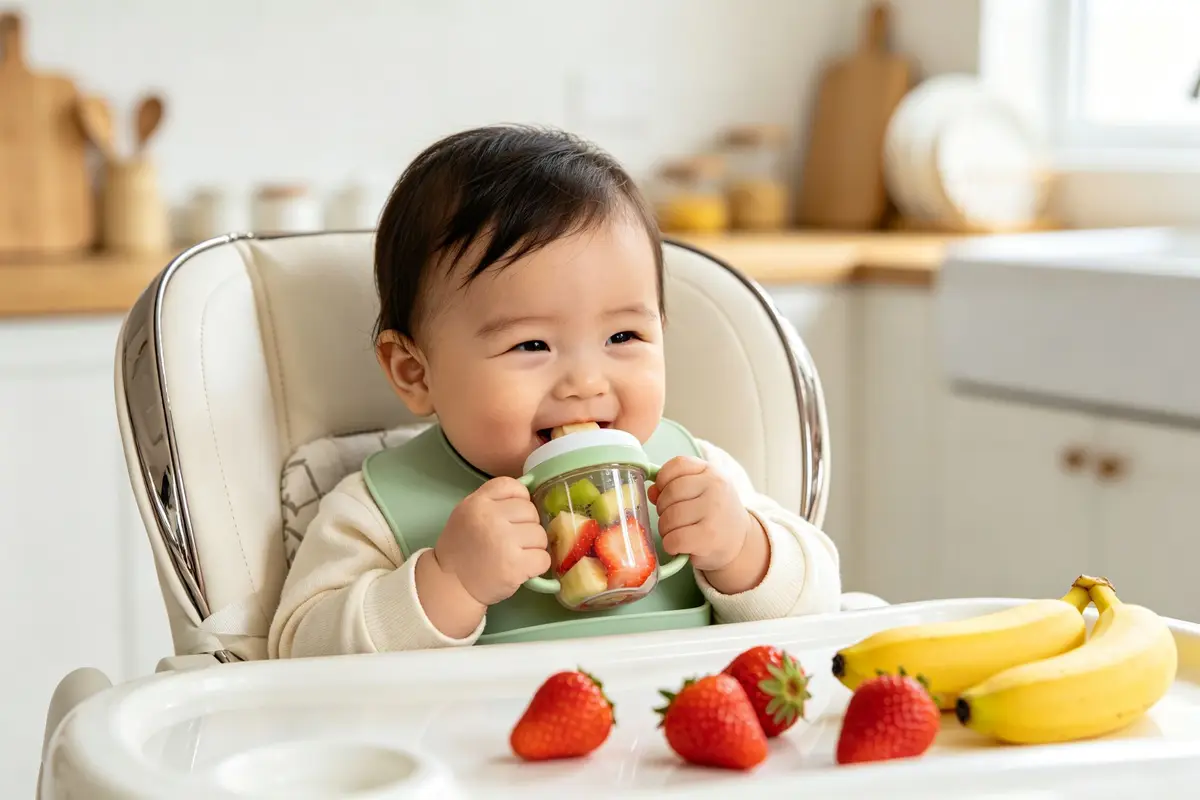
The baby food feeder pacifier — also known as a fresh food feeder, fruit feeder, or food teether — has emerged as one of the most popular baby feeding accessories of the past decade, combining the soothing properties of a teether with the nutritional benefits of introducing fresh foods. For parents searching for the best baby food feeder pacifier 2026 has to offer, the market now presents a wide range of options, from traditional mesh feeders to modern silicone feeders with replaceable pouches, from simple single-piece designs to multi-functional feeders that double as teethers and sensory toys.Public estimates for this market differ widely by source and by scope, so we do not quote a market size or a growth rate here. What we can speak to is the direction, and we would rather help you size one market from figures you can verify than publish a number we cannot source.5% through 2027, making it one of the fastest-growing segments in the baby feeding accessories category, driven by the rising popularity of baby-led weaning, growing awareness of the importance of introducing diverse flavors and textures early, and the dual function of food feeders as both feeding tools and teething aids.
Market Overview: What Is a Baby Food Feeder Pacifier?
A baby food feeder pacifier is a feeding device consisting of a handle or ring attached to a perforated pouch or mesh bag into which parents place small pieces of fresh food — such as fruits, vegetables, or even frozen breast milk or purees. The baby chews or sucks on the feeder, and the food's juices and small particles pass through the perforations, allowing the baby to taste and experience different flavors and textures without the risk of choking on large pieces of food. Food feeders are typically introduced when babies begin showing interest in solid foods, usually around 4-6 months of age, and they can be used throughout the weaning stage and beyond. They are particularly popular for introducing allergenic foods (such as strawberries, mango, or cooked egg) in a controlled, low-risk manner, and for soothing teething discomfort — many parents freeze fruits or breast milk in the feeder to provide a cool, soothing sensation for sore gums.
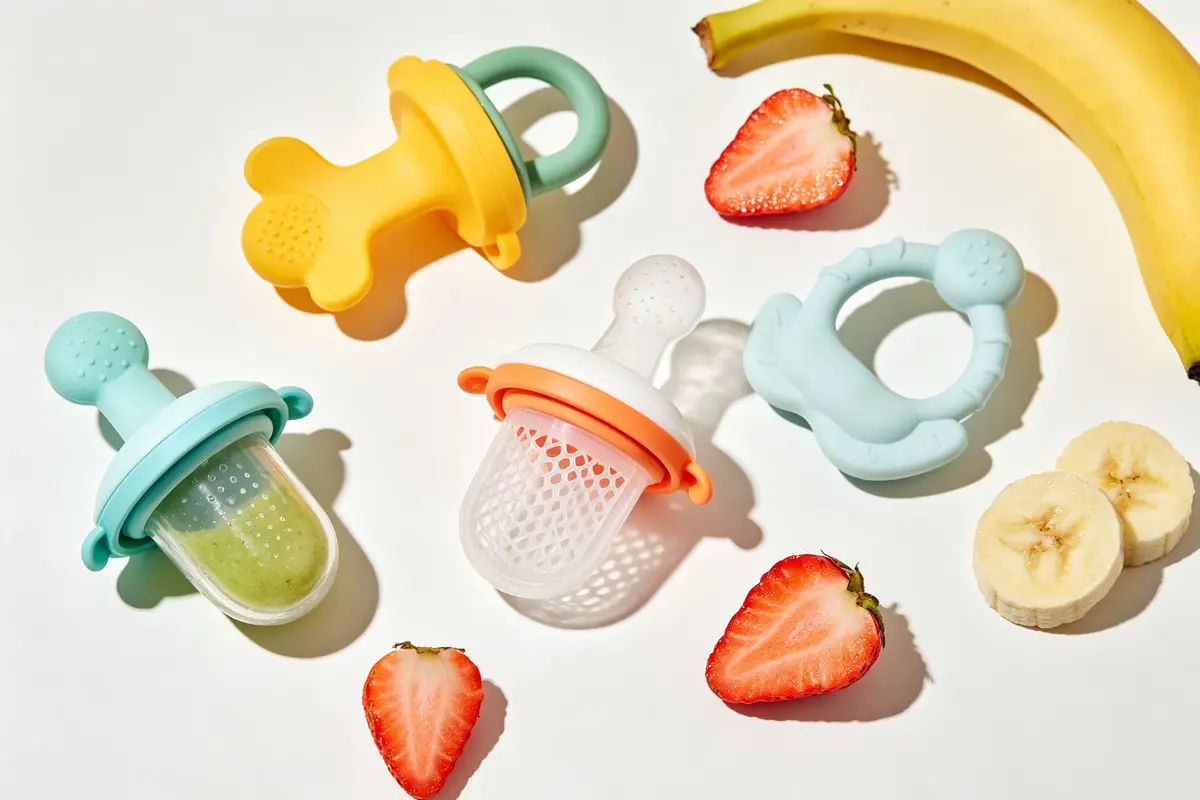
The baby food feeder market is segmented by material type: silicone feeders (the dominant and fastest-growing segment, valued for their durability, ease of cleaning, and food-grade safety), mesh feeders (the traditional option, typically made from nylon or polyester mesh, which allows more food particles to pass through but can be harder to clean and may retain odors and stains), and hybrid feeders (which combine a silicone outer frame with a mesh or silicone inner pouch, offering the best of both worlds). The market is also segmented by design: single-piece feeders (simple, one-piece designs with no removable parts, valued for their simplicity and safety), multi-piece feeders with replaceable pouches (which allow parents to replace worn or stained pouches without buying an entirely new feeder), and multi-functional feeders (which combine the food feeder function with other features such as teething surfaces, sensory textures, or the ability to convert into a regular pacifier or teether). In Southeast Asia, the baby food feeder market is growing rapidly, driven by the region's large baby population, rising disposable incomes, growing awareness of baby-led weaning and early flavor introduction, and the expansion of e-commerce channels that make specialized feeding accessories accessible to parents across the region. For parents looking to buy baby feeding products online, food feeders are a category where online shopping offers particular advantages, including access to a wide range of brands, designs, and price points, as well as the ability to read detailed customer reviews and compare features.
Silicone vs Mesh: Which Food Feeder Is Best in 2026?
The choice between silicone and mesh food feeders is the primary decision parents face, and each material has distinct advantages and limitations. Silicone food feeders are made from food-grade, BPA-free silicone and feature a perforated silicone pouch attached to a handle or ring. Their key advantages include: durability (silicone feeders are highly durable and can last for years, resisting tears, punctures, and degradation from repeated use and washing), ease of cleaning (silicone is non-porous, meaning it does not retain food particles, odors, or stains, and can be easily rinsed, washed with soap and water, or placed in the dishwasher — many are also sterilizer-safe), safety (food-grade silicone is a safe, non-toxic material that does not leach chemicals, and the smooth, non-fraying surface eliminates the risk of loose mesh threads that could pose a choking hazard), and temperature resistance (silicone feeders can be used with both warm and frozen foods, and can withstand boiling water for sterilization without deforming or releasing chemicals). The main disadvantage of silicone feeders is that the perforations are typically smaller than mesh holes, which means less food passes through — some parents find that silicone feeders are better for juices and very soft foods, while mesh feeders are better for chunkier foods that release more flavor and texture.
Mesh food feeders, the traditional option, consist of a fine nylon or polyester mesh bag attached to a plastic or silicone handle. Their key advantages include: better flavor release (the fine mesh allows more food particles and juices to pass through, giving babies a more intense flavor experience — many parents find that mesh feeders are more effective for introducing strong flavors like citrus, berries, or aromatic vegetables), softer texture (mesh is softer and more flexible than silicone, which some babies find more comfortable, particularly for younger babies who are just beginning to use feeders), and lower cost (mesh feeders are typically less expensive than premium silicone feeders, making them a good option for budget-conscious parents or for parents who want to try a feeder before investing in a more expensive model). The main disadvantages of mesh feeders are: difficulty cleaning (mesh can trap food particles in the fine holes, requiring thorough scrubbing and soaking to remove — food residue can also lead to odors and staining over time), durability concerns (mesh can tear, fray, or develop holes with repeated use, and loose threads from frayed mesh can pose a choking hazard), and the need for more frequent replacement (most mesh feeders need to be replaced every 1-3 months, depending on frequency of use, while silicone feeders can last for years). For many parents, the best approach is to own both types — a silicone feeder for everyday use, travel, and frozen teething relief (where durability and ease of cleaning are paramount), and a mesh feeder for introducing new flavors and chunkier foods at home (where better flavor release is desired and thorough cleaning is possible). Parents looking for quality baby feeding and teething products can find options designed for safety, durability, and ease of use.
Key Features to Look for in a 2026 Baby Food Feeder
As the baby food feeder market matures, manufacturers are differentiating their products with advanced features designed for safety, convenience, and effectiveness. The most sought-after features in 2026 models include: food-grade, BPA-free materials (the most important safety consideration — parents should look for feeders made from FDA-approved, food-grade silicone or BPA-free, phthalate-free plastics, and should avoid feeders with unknown or questionable material composition), easy-to-clean design (feeders that can be fully disassembled for thorough cleaning, with smooth, non-porous surfaces that do not trap food particles — dishwasher-safe and sterilizer-safe designs are particularly popular), replaceable pouches (for multi-piece feeders, the ability to replace worn or stained pouches without buying an entirely new feeder reduces long-term cost and waste — many 2026 models come with 2-3 extra pouches in different sizes), secure closure mechanism (a reliable, child-proof closure that prevents the feeder from opening during use and spilling food — common mechanisms include screw-on tops, snap-lock closures, and twist-lock designs, with twist-lock designs generally considered the most secure and easiest for parents to operate one-handed), and ergonomic handle or ring (a handle that is easy for babies to grasp and hold independently, promoting self-feeding skills — many 2026 feeders feature textured, non-slip handles or rings that are designed for small hands to grip).
Another important trend in the 2026 baby food feeder market is the integration of multi-functional design elements that go beyond basic food feeding. Many 2026 models feature: teething surfaces (raised bumps, ridges, or textured surfaces on the handle or frame that provide additional teething relief for sore gums — some feeders even have different textures on different parts of the feeder to provide varied sensory input), frozen food compatibility (feeders specifically designed to be used with frozen fruits, frozen breast milk popsicles, or chilled purees, providing a cool, soothing sensation for teething babies — these feeders typically feature insulated handles or double-walled designs that keep the food cold longer), size-adjustable pouches (feeders with pouches that can be adjusted to different sizes or that come in multiple sizes to accommodate different amounts of food and different ages of babies — smaller pouches for younger babies just starting solids, larger pouches for older babies who can handle more food), and travel-friendly design (feeders that come with protective caps or travel cases to keep the feeder clean when not in use, and that are compact enough to fit in a diaper bag — some models even feature a built-in cap that doubles as a measuring cup or food storage container). For parents, the most important factors in choosing a food feeder are: safety (food-grade materials, secure closure, no small parts or choking hazards), ease of cleaning (the feeder should be easy to disassemble and clean thoroughly, as trapped food can lead to bacterial growth), age appropriateness (the feeder should be suitable for the baby's age and developmental stage — younger babies may do better with softer mesh feeders, while older babies can handle more durable silicone feeders), and ease of use (the feeder should be easy for parents to fill and close, and easy for babies to hold and use independently). For retailers and distributors, offering a comprehensive range of food feeders — including both silicone and mesh options, multiple sizes and designs, and a range of price points — is key to meeting the diverse needs of parents navigating the weaning journey. Businesses interested in carrying premium baby feeding and teething products should explore distribution partnership opportunities with established baby care brands.
Baby-Led Weaning and the Rise of Food Feeders
The growing popularity of baby-led weaning (BLW) — an approach to introducing solid foods where babies self-feed finger foods rather than being spoon-fed purees — has been a major driver of the baby food feeder market. BLW, which has gained significant traction among millennial and Gen Z parents over the past decade, emphasizes allowing babies to explore foods at their own pace, develop hand-eye coordination and self-feeding skills, and be exposed to a wide variety of flavors and textures from an early age. However, BLW also raises concerns about choking, particularly for younger babies who are just beginning to explore solid foods and who may not yet have developed the oral motor skills to safely manage certain textures. Baby food feeders address this concern by allowing babies to safely explore the flavors and textures of a wide range of foods — including fruits, vegetables, meats, and even allergenic foods like peanut butter or cooked egg — without the risk of choking on large pieces. This has made food feeders a popular tool among BLW parents, who use them to introduce new flavors and textures in a controlled, low-risk manner while still allowing babies to self-feed and explore independently.
In addition to BLW, several other trends are driving the growth of the baby food feeder market. First, the growing emphasis on early flavor introduction — pediatric research suggests that exposing babies to a wide variety of flavors and textures during the critical window of 4-12 months may help reduce food neophobia (fear of new foods) and encourage healthier eating habits later in childhood. Food feeders make it easy to introduce a wide range of flavors — from sweet fruits like mango and strawberry to savory vegetables like roasted sweet potato and broccoli to aromatic herbs and spices — in a safe, controlled manner. Second, the dual function of food feeders as teething aids has increased their appeal, particularly for parents of babies in the 4-12 month age range when teething is most intense. Freezing fruits or breast milk in a food feeder creates a cool, soothing teething toy that also provides nutritional benefit — a combination that has proven highly popular among parents. Third, the growing focus on food safety and transparency has led parents to seek out feeding products made from safe, non-toxic materials, and food-grade silicone feeders have benefited from this trend, as silicone is widely recognized as a safe, inert material that does not leach chemicals. In Southeast Asia, the baby food feeder market is also being driven by the region's rich culinary diversity — parents in countries like Thailand, Vietnam, Malaysia, and Indonesia are increasingly interested in introducing their babies to the flavors of their local cuisines from an early age, and food feeders provide a safe, convenient way to do so. For parents looking to buy the best baby food feeder pacifier in 2026, the key is to choose a feeder that is made from safe, food-grade materials, is easy to clean, has a secure closure, is appropriate for the baby's age and developmental stage, and suits the family's feeding philosophy and lifestyle. Whether you opt for the durability and easy cleaning of a silicone feeder, the better flavor release of a mesh feeder, or a combination of both, a food feeder can be a valuable tool in your baby's weaning journey, helping to introduce new flavors, soothe teething discomfort, and encourage independent self-feeding skills.
Future Outlook and Growth Opportunities
Looking ahead, the baby food feeder market is expected to continue its strong growth trajectory through 2026 and beyond, driven by several structural factors. The continued rise of baby-led weaning and self-feeding approaches is expected to sustain demand for products that support safe, independent food exploration, including food feeders. Growing awareness of the importance of early flavor introduction and diverse diet in infancy — supported by pediatric research and public health initiatives — is expected to encourage more parents to invest in feeding tools that facilitate the introduction of a wide range of foods. The large and growing baby population in emerging markets, particularly in Southeast Asia, Africa, and Latin America, provides a substantial and expanding customer base. Rising disposable incomes and urbanization in these markets are increasing demand for premium, specialized baby feeding products. And continued product innovation — including improved materials, better designs, multi-functional features, and smart technology integration — is expected to create new market segments and drive premiumization of the category. The silicone feeder segment is expected to continue its dominance and growth, as parents increasingly prioritize durability, ease of cleaning, and material safety, while the mesh feeder segment is expected to maintain a stable niche among parents who value better flavor release and lower cost.
For brands, retailers, and distributors, the key opportunities in this market include: developing innovative food feeder designs that address unmet needs (such as improved flavor release in silicone feeders, better cleaning access in mesh feeders, insulated designs for frozen food, and integrated teething and sensory features); leveraging digital marketing, social media, and influencer partnerships to provide educational content about baby-led weaning, early flavor introduction, teething relief, and food feeder usage — content that builds trust and demonstrates product value; offering bundle deals and multi-packs (such as a set of 2-3 feeders in different colors or with different pouch sizes, or a starter kit that includes a feeder, extra pouches, and a cleaning brush) to increase average order value and provide parents with everything they need to get started; building partnerships with pediatricians, lactation consultants, and child development experts to provide credible, expert-backed guidance on feeding and weaning; and ensuring product availability across multiple channels — including supermarkets, pharmacies, baby specialty stores, and e-commerce platforms — to meet parents wherever they prefer to shop. For parents, the growing market means there has never been a better time to find a food feeder that suits their baby's age, developmental stage, feeding style, and personal preferences. Whether you're just beginning the weaning journey and looking for a safe way to introduce new flavors, or you have an older baby who is already an experienced self-feeder and looking for a teething relief tool, the right food feeder can be a valuable addition to your baby feeding toolkit. The best baby food feeder pacifier is the one that is safe, easy to clean, comfortable for your baby to use, and that fits seamlessly into your family's feeding routine — and with the wide range of options available in 2026, there has never been a better time to find the perfect feeder for your baby.