
2026-10-09 · Moni Happy Editorial Team
Best Baby High Chair 2026: Convertible vs Portable Market Guide
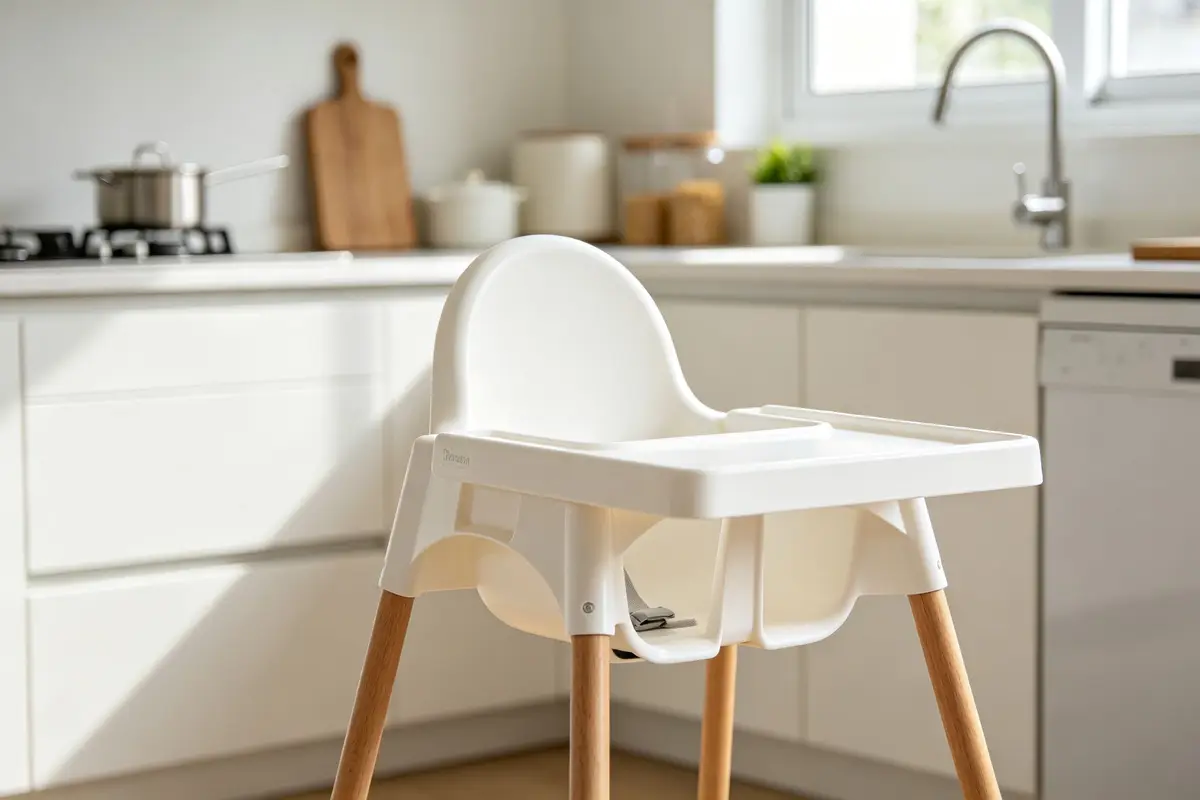
The global baby high chair market is experiencing steady growth, driven by increasing focus on safe and ergonomic feeding solutions, the rise of minimalist nursery design, and growing demand for multi-functional furniture that adapts as children grow.Public estimates for this market differ widely by source and by scope, so we do not quote a market size or a growth rate here. What we can speak to is the direction: demand for biodegradable and plastic-free wipe formats is rising across the region, and we would rather help you size one market from figures you can verify than publish a number we cannot source. For parents, a high chair is one of the most important nursery purchases — it provides a safe, dedicated space for feeding, supports proper posture during meals, and can be used from infancy through toddlerhood and beyond. This article examines the market landscape, product categories, key features, leading brands, and what parents should consider when looking for the best baby high chair.
Market Overview: Why Every Family Needs a High Chair
A baby high chair is a raised seat designed to safely hold a baby or toddler at adult table height during mealtimes. The market is being driven by several factors: increasing awareness of the importance of safe, ergonomic seating for feeding (a properly designed high chair supports the baby's back, hips, and legs, reducing the risk of choking and promoting healthy eating habits); the trend toward family-style dining, where parents want their baby at the table with the rest of the family rather than in a separate bouncer or swing; the rise of minimalist and Scandinavian-inspired nursery design, which has popularized sleek, wooden high chairs that double as furniture; and the growing availability of multi-functional high chairs that convert from infant seats to toddler chairs to adult stools, offering long-term value. In Southeast Asia, where many homes have open-plan living and dining areas, a high chair that is both functional and aesthetically pleasing is particularly desirable. The market is also being shaped by safety regulations — most countries now require high chairs to meet specific safety standards (including stability, harness systems, and crotch posts to prevent slipping), and parents are increasingly looking for certified products. E-commerce platforms like Shopee, Lazada, and TikTok Shop have made a wide range of high chairs accessible to parents across the region, with prices ranging from budget-friendly to premium designer models.
Product Categories: Traditional, Convertible, Portable, and Hook-On
The baby high chair market can be divided into four main product categories, each serving different needs and lifestyles. Traditional high chairs are the classic design — a raised seat with a tray, four legs, and a harness. They are typically the most affordable option ($20-60), easy to clean, and widely available. However, they are bulky, not portable, and may not offer as many adjustments as other types. Convertible or grow-with-me high chairs are the fastest-growing segment, with year-over-year growth of approximately 12%. These high chairs are designed to adapt as the child grows — they can be used as infant high chairs (with recline and infant inserts), toddler high chairs, booster seats, and even adult stools or desk chairs. Premium models like the Stokke Tripp Trapp can be used from infancy through adulthood. While more expensive upfront ($100-300+), they offer long-term value by eliminating the need to buy multiple seating products. Portable and foldable high chairs are designed for families who travel frequently, have limited storage space, or need a high chair that can be moved between rooms. These fold flat for storage and transport, and some come with carrying bags. They are popular for travel, visits to grandparents' homes, and small apartments. Hook-on or clip-on high chairs attach directly to the edge of a table (rather than standing on the floor), making them extremely compact and portable. They are ideal for travel, small spaces, and restaurants, but they require a sturdy table with a thick enough edge and are not suitable for all table types. When choosing a high chair type, consider: your available space (do you have room for a full-size chair, or do you need something compact?), your lifestyle (do you travel frequently, eat out often, or need to move the chair between rooms?), your budget (traditional chairs are most affordable, convertible chairs offer long-term value), and how long you want to use it (convertible chairs can last for years, while traditional chairs are typically used for 1-3 years).
Key Features to Look for in 2026
As the market matures, manufacturers are competing on features, safety, and design. The most important features to consider when buying a baby high chair include: Safety harness — a 5-point harness (shoulder, waist, and crotch straps) is the gold standard for safety, preventing the baby from climbing out or slipping. Some budget models only offer a 3-point harness (waist and crotch), which is less secure. Look for adjustable harness straps that grow with your baby. Crotch post — a fixed post between the baby's legs prevents them from sliding down and out of the chair. This is a critical safety feature — never use a high chair without a crotch post or harness. Stability and wide base — a wide, stable base reduces the risk of tipping. Look for chairs with a broad footprint and non-slip feet. Avoid chairs that are top-heavy or have narrow bases. Adjustable seat and footrest — an adjustable seat height (so the chair can be pulled up to different table heights) and an adjustable footrest (so the baby's feet are supported, not dangling) are important for comfort and proper posture. A footrest is particularly important — dangling feet can make it harder for babies to sit still and can affect their posture. Recline function — for younger babies (under 6 months) who are not yet sitting independently, a reclining seat allows the chair to be used for bottle feeding or as a lounger. However, babies should always be in an upright position for solid food feeding to reduce choking risk. Easy-to-clean design — mealtimes are messy, so a high chair that is easy to clean is essential. Look for: a dishwasher-safe tray, a smooth, non-porous seat (avoid fabric cushions that absorb food and are hard to clean), minimal crevices where food can get trapped, and a seat that can be wiped down quickly. Some premium chairs have seamless, one-piece seats that are extremely easy to clean. Removable and adjustable tray — a tray that can be removed with one hand (for getting the baby in and out) and adjusted to different positions (as the baby grows) is very convenient. Some trays have a dishwasher-safe insert or a cup holder. Wheels — some high chairs have wheels (with locks) that make it easy to move the chair between rooms. This is a nice-to-have feature, not essential. Foldability — for families with limited space or who travel, a chair that folds flat for storage is a major advantage. For parents in Southeast Asia, where homes may be smaller and humidity can make cleaning more challenging, a high chair with a smooth, easy-to-clean surface and a compact footprint is particularly valuable.
Brand Landscape and Pricing
The baby high chair market features a mix of established baby product brands, furniture companies, and direct-to-consumer startups. Leading global brands include: Stokke — the premium market leader, known for its iconic Tripp Trapp chair (a convertible wooden chair that can be used from infancy to adulthood, with a sleek Scandinavian design). Stokke chairs are expensive ($200-300+) but are considered investment pieces that last for years. Graco — a popular mid-range brand known for affordable, practical high chairs with features like easy folding, dishwasher-safe trays, and multiple recline positions. Graco chairs typically cost $40-80. Chicco — known for its Polly high chair line, which offers multiple height and recline adjustments, foldability, and easy-clean surfaces. Chicco chairs typically cost $60-120. Inglesina — known for its Fast Table Chair (a hook-on design that clips to tables) and its premium high chairs. Joie — an affordable brand popular in Southeast Asia, known for compact, foldable high chairs with good safety features. IKEA — known for its Antilop high chair, an extremely affordable ($20-25), lightweight, easy-to-clean plastic high chair that has become a favorite among budget-conscious parents and Montessori families. While basic, it is safe, functional, and extremely easy to clean. Cyber and other direct-to-consumer brands — offering mid-range convertible high chairs with modern designs at competitive prices, often sold through e-commerce platforms. In Southeast Asia, local and regional brands on Shopee and Lazada offer affordable options ($15-40), while premium imported brands like Stokke are available through authorized resellers or international shipping. Pricing ranges widely: budget traditional chairs $15-40, mid-range traditional or portable chairs $40-100, premium convertible chairs $100-300+, and designer/investment pieces $300+. For parents looking to buy a baby high chair online, e-commerce platforms offer the widest selection, with detailed product descriptions, customer reviews, and competitive pricing. Parents should also consider the total cost of ownership — a $200 convertible chair that lasts 10 years may be better value than a $40 chair that needs to be replaced every 2 years. For premium baby care products, parents can explore Moni Happy's product range, and businesses interested in distribution can learn more at Moni Happy's partner page.
Buying Guide and Future Outlook
Choosing the right high chair depends on your family's specific needs, space, budget, and lifestyle. Here is a step-by-step guide: First, assess your space. If you have a small apartment or limited dining area, a compact, foldable, or hook-on chair may be best. If you have a dedicated dining space, a full-size traditional or convertible chair can work. Second, consider your lifestyle. If you travel frequently or eat out often, a portable or hook-on chair is essential. If you eat at home most of the time, a traditional or convertible chair is fine. Third, set a budget. Determine how much you want to spend, and remember that a more expensive convertible chair may offer better long-term value. Fourth, prioritize safety. Always look for a 5-point harness, crotch post, wide stable base, and safety certifications (like JPMA, ASTM, or EN 14988). Fifth, consider ease of cleaning. Look for smooth, non-porous surfaces, dishwasher-safe trays, and minimal crevices. In humid tropical climates, easy cleaning is especially important to prevent mold and bacteria buildup. Sixth, read reviews. Look for feedback from real parents about stability, ease of assembly, durability, and how easy the chair is to clean. Seventh, think long-term. If you plan to have more children, a durable convertible chair can be used by multiple children. If you want a chair that grows with your child from infancy to school age, a convertible model is worth the investment. Looking ahead, the baby high chair market is expected to continue growing, with several trends shaping the future: convertible and multi-functional designs will continue to gain popularity as parents seek long-term value and reduce consumption. Sustainable materials — FSC-certified wood, recycled plastics, and non-toxic finishes — are becoming more important to eco-conscious parents. Smart features — some premium chairs are integrating features like weight sensors, feeding trackers, and even built-in speakers, though these remain niche. Minimalist and aesthetic design — high chairs that look like adult furniture rather than baby gear will continue to be popular, especially in urban homes with open-plan living. The Southeast Asian market is expected to outpace global growth, driven by rising disposable incomes, urbanization, and growing e-commerce penetration. For distributors and retailers, the high chair category offers strong growth potential, with high average order values for premium models and significant accessory revenue (trays, cushions, inserts). Businesses interested in premium baby product distribution can explore partnership opportunities with Moni Happy.