
2026-09-12 · Moni Happy Editorial
Best Baby Play Mat 2026: Foam vs One-Piece Market Guide
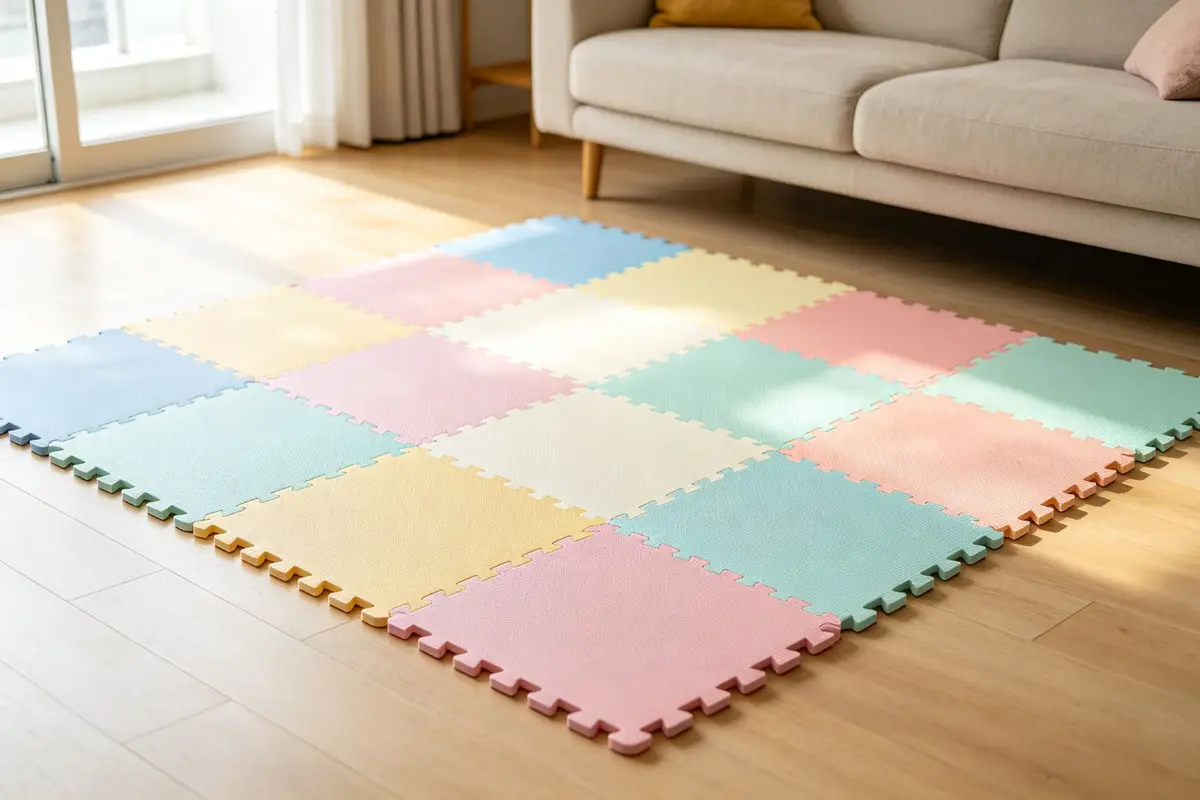
The global baby play mat market is growing steadily, driven by increasing focus on early childhood development, the popularity of floor-based play (tummy time, crawling, sitting), and growing demand for safe, non-toxic, and aesthetically pleasing nursery products. Market research projects the baby play mat market to grow at a CAGR of 7.8% through 2026, with foam puzzle mats and padded activity mats leading the category. For parents, a good play mat provides a clean, safe, and comfortable surface for babies to play, roll, crawl, and practice motor skills — protecting them from hard floors and providing a designated play space. This article examines the market landscape, product types, key features, leading brands, and what parents should consider when looking for the best baby play mat.
Market Overview: Why a Play Mat Is a Nursery Essential
A baby play mat is a padded or cushioned surface designed to provide a safe, comfortable area for babies to play on the floor. The market is being driven by: increasing awareness of the importance of floor play for motor development (tummy time, rolling, sitting, crawling all require a safe, comfortable surface); the trend toward minimalist and Montessori-inspired nurseries, where a low, accessible play mat is a central feature; growing concern about hard flooring (tile, hardwood, concrete) that can be uncomfortable or dangerous for babies learning to sit and crawl; and the availability of attractive, stylish play mats that complement home decor rather than looking like obvious baby gear. In Southeast Asia, where many homes have tile or hardwood floors and living spaces are multi-functional, a play mat that can be easily folded and stored is particularly valuable. The market is also being shaped by safety concerns — parents are increasingly looking for play mats made from non-toxic materials (free of BPA, phthalates, PVC, and formaldehyde) with third-party safety certifications. E-commerce platforms have made a wide range of play mats accessible, from budget foam puzzle mats to premium one-piece padded mats.
Product Types: Foam Puzzle, One-Piece Padded, Activity Gym, and Travel
The baby play mat market includes four main product types. Foam puzzle mats are the most popular and affordable option ($15-40), consisting of interlocking foam tiles (typically EVA foam) that can be arranged in various sizes and shapes. They are lightweight, easy to clean, and can be expanded or reduced as needed. However, they can have gaps between tiles where crumbs and dirt collect, and some cheaper versions may have a strong chemical smell (look for odorless, certified options). One-piece padded mats are the fastest-growing segment, with year-over-year growth of approximately 15%. These are single, large, padded mats (typically made from PU leather, PVC, or memory foam) that provide a seamless, easy-to-clean surface. Many are reversible (with different colors or patterns on each side), foldable for storage, and have a sleek, modern look that blends with home decor. Premium brands like Little Bot and Baby Care offer high-quality one-piece mats. Prices range from $50-200+. Activity gym mats combine a padded play mat with an attached toy bar or arch (with hanging toys, mirrors, and music) for younger babies. They are designed for tummy time and overhead play, typically used from birth to 6 months. Many are foldable and portable. Prices range from $30-80. Travel and portable mats are lightweight, foldable, or roll-up mats designed for use outside the home — at the park, beach, grandparents' house, or while traveling. They are typically thinner than home mats but provide a clean barrier between the baby and the ground. Some are waterproof or water-resistant. When choosing a play mat type, consider: your available space (do you need a large permanent mat or a compact foldable one?), your baby's age (activity gyms for newborns, larger mats for crawlers), your flooring (thicker mats for hard tile or concrete), ease of cleaning (one-piece mats are easiest, foam puzzle mats have gaps), and whether you need portability.
Key Features, Brands, and Buying Guide
Key features to look for when buying a baby play mat include: Material safety — this is the most important factor. Look for mats made from non-toxic materials free of BPA, phthalates, PVC, lead, and formaldehyde. Third-party certifications like OEKO-TEX Standard 100, CPSIA (US), or EN 71 (EU) provide assurance. Avoid mats with a strong chemical smell — this can indicate off-gassing of harmful substances. Thickness and cushioning — thicker mats (at least 0.4 inches / 1 cm, preferably 0.6-1 inch / 1.5-2.5 cm) provide better cushioning for falls and are more comfortable for babies learning to sit and crawl. However, very thick foam puzzle mats can be a tripping hazard for toddlers. Size — consider the size of your play area. Standard play mats range from 4x6 feet to 6x8 feet or larger. Foam puzzle mats can be expanded by adding tiles. One-piece mats come in fixed sizes — measure your space before buying. Ease of cleaning — babies are messy, so a mat that wipes clean easily is essential. One-piece mats with smooth, non-porous surfaces (PU leather, PVC) are the easiest to clean — simply wipe with a damp cloth. Foam puzzle mats can be wiped but may need to be taken apart for deep cleaning, and gaps can trap dirt. Avoid fabric-covered mats that cannot be wiped clean. Reversibility — many one-piece mats are reversible, with different colors or patterns on each side, allowing you to change the look or match different rooms. Foldability and storage — if you do not have a permanent play space, look for a mat that folds compactly for storage. Some one-piece mats fold like an accordion, while others roll up. Non-slip bottom — a non-slip backing prevents the mat from sliding on smooth floors (tile, hardwood), which is important for safety as babies become more mobile. Design and aesthetics — since play mats are often in the main living area, many parents prefer mats with neutral colors or subtle patterns that blend with home decor rather than bright primary colors or cartoon characters. Leading brands include: Baby Care (premium one-piece reversible PU mats, popular for their sleek design and quality), Little Bot (known for its non-toxic, reversible one-piece mats with modern designs), Skip Hop (popular activity gyms and play mats with cute designs), Baby Einstein (activity gyms with music and lights), Gathre (premium leather-like mats that are stylish and easy to clean), and budget brands available on Shopee and Lazada. In Southeast Asia, foam puzzle mats from local brands are very affordable ($10-25), while premium one-piece mats are available through international shipping or authorized resellers. For parents looking to buy a baby play mat online, prioritize material safety and ease of cleaning, then consider size, thickness, and design based on your space and needs. For premium baby care products, parents can explore Moni Happy's product range, and businesses interested in distribution can learn more at Moni Happy's partner page.