
2026-10-09 · Moni Happy Editorial Team
Best Baby Thermometers 2026: Southeast Asia Market & Buying Guide
The global baby thermometer market is undergoing a rapid transformation as digital health technology advances and parents increasingly seek fast, accurate, and non-invasive ways to monitor their baby's temperature. In Southeast Asia, where pediatric healthcare access varies widely and parental health consciousness is rising, the search for the best baby thermometers 2026 has become a priority for expectant and new parents building their baby healthcare kits.Public estimates for this market differ widely by source, so we do not quote a market size or a growth rate here. We would rather help you size one market from figures you can verify.Public estimates for this market differ widely by source and by scope, so we do not quote a market size or a growth rate here. What we can speak to is the direction, and we would rather help you size one market from figures you can verify than publish a number we cannot source.
Market Overview: The Shift to Digital and Non-Contact Thermometers
The baby thermometer market in Southeast Asia is being reshaped by several converging trends. First, the phase-out of mercury thermometers — driven by global environmental regulations and consumer safety concerns — has accelerated the transition to digital alternatives. Many Southeast Asian governments have banned or restricted mercury thermometer sales, creating a large replacement market as households and healthcare facilities upgrade. Second, the COVID-19 pandemic dramatically increased awareness of fever monitoring and drove a surge in thermometer purchases, with non-contact infrared forehead thermometers becoming particularly popular due to their hygienic, no-touch operation. While pandemic-driven demand has normalized, the habit of regular temperature monitoring has persisted, especially among families with young children.
Third, rising disposable incomes and urbanization across the region are enabling parents to invest in premium healthcare products, including multi-function thermometers that can measure temperature via forehead, ear, and even ambient room modes. Fourth, e-commerce has made a wider range of thermometer brands and models accessible to consumers across the region, including international premium brands like Braun, Omron, and iProven, as well as value-oriented regional and Chinese manufacturers. Shopee, Lazada, and TikTok Shop collectively account for approximately 52% of baby thermometer sales in Southeast Asia, with COD (cash on delivery) remaining the dominant payment method in Indonesia, Vietnam, and the Philippines. Social commerce, particularly through parenting influencer reviews and "what's in my baby healthcare kit" content on TikTok and Instagram, is a powerful driver of product discovery and conversion in this category.
What Makes the Best Baby Thermometers 2026?
Based on pediatrician recommendations, consumer testing data, and analysis of top-rated products, here are the key features that distinguish the best baby thermometers in 2026:
- Accuracy: The most important feature of any thermometer is accuracy. Rectal thermometers are considered the gold standard for accuracy in infants under 3 months, while ear and forehead thermometers are generally accurate for older babies and toddlers when used correctly. Look for thermometers that have been clinically validated for accuracy and meet international standards (like ASTM or EN standards).
- Speed: A fast reading time is essential for wiggly, fussy babies. The best digital thermometers provide readings in 1-10 seconds. Rectal and oral digital thermometers typically take 10-30 seconds, while ear and forehead thermometers provide instant readings (1-3 seconds). For babies who don't sit still, a fast thermometer is a game-changer.
- Ease of use: The thermometer should be easy to operate with one hand (while holding the baby with the other), with clear buttons, a large, backlit display that's easy to read in the dark, and simple mode switching. A fever alert (color-coded display or audible beep when a fever is detected) is a useful feature, especially for sleep-deprived parents taking temperatures at 3 a.m.
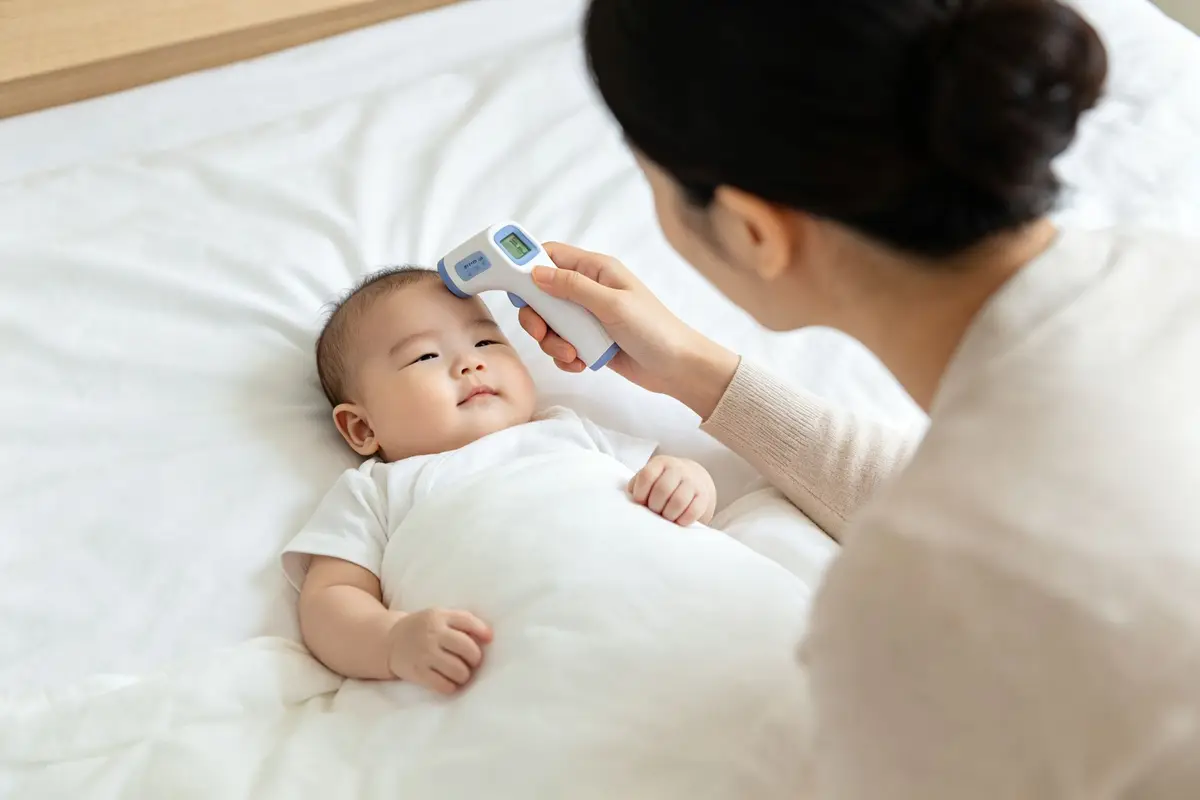
- Non-invasive options: For babies who resist rectal or oral temperature taking, non-contact forehead thermometers and ear thermometers offer a less invasive alternative. Non-contact infrared forehead thermometers are particularly popular because they can measure temperature without touching the baby, even while they're sleeping, and are hygienic (no probe covers needed).
- Memory function: A thermometer that stores previous readings allows parents to track temperature trends over time, which is useful for monitoring whether a fever is rising or falling, and for sharing information with the pediatrician. The best models store 10-30 readings with timestamps.
- Hygiene and safety: For rectal and oral thermometers, disposable probe covers are essential for hygiene. For ear thermometers, disposable lens filters prevent cross-contamination. The thermometer should have a durable, easy-to-clean design and should be BPA-free. A fever alert that doesn't rely on mercury (all digital thermometers are mercury-free) is a given in 2026.
- Multi-functionality: Many premium thermometers offer multiple measurement modes — forehead, ear, oral, rectal, and even ambient room or liquid temperature — making them versatile for the whole family. Some also include additional features like a clock, timer, or Bluetooth connectivity to sync readings with a smartphone app for tracking and sharing with healthcare providers.
Product Segments and Competitive Landscape
The baby thermometer market can be divided into several product segments, each with distinct competitive dynamics:
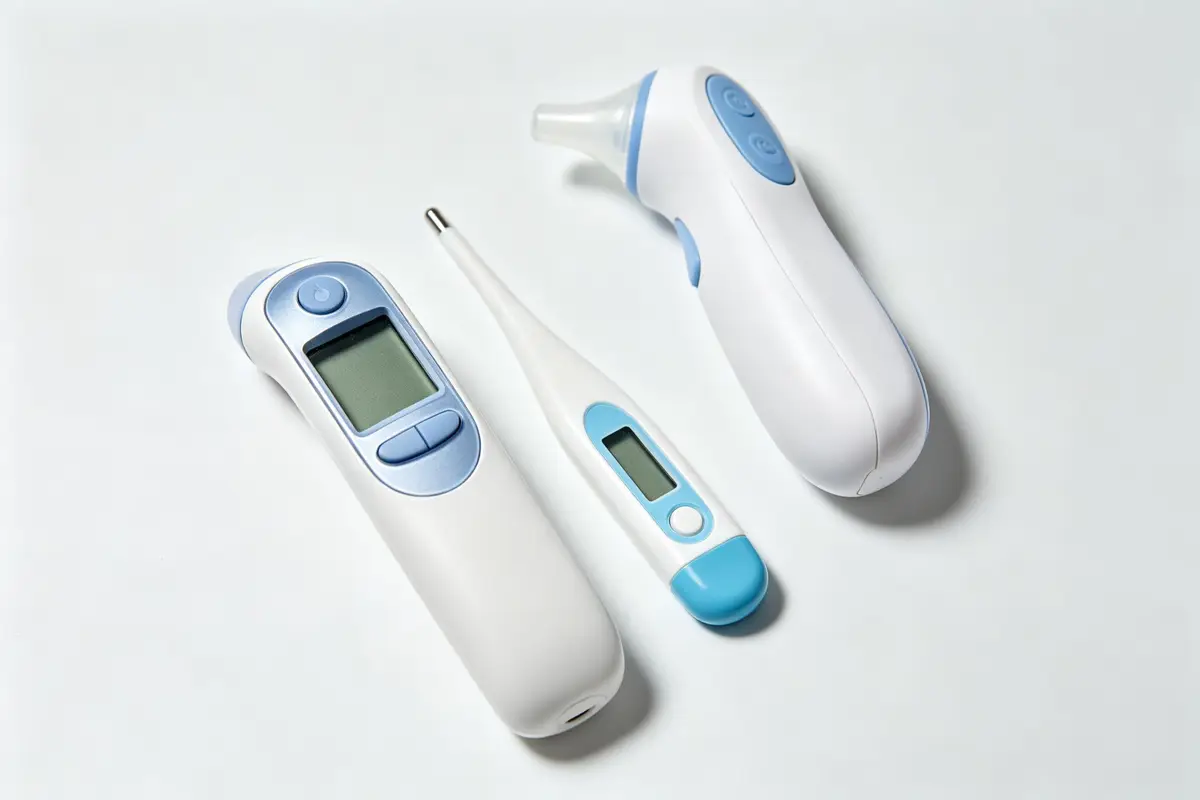
- Digital rectal/oral thermometers (under $10): The most basic and affordable segment, these thermometers are accurate but slower (10-30 seconds) and more invasive. They remain popular in value-oriented markets and are often recommended by pediatricians as the most accurate option for newborns. Brands like Rossmax, Microlife, and regional manufacturers compete in this space.
- Ear thermometers ($15-40): Ear thermometers use infrared technology to measure temperature in the ear canal, providing fast (1-2 second) readings. They are less invasive than rectal thermometers but require correct positioning (pulling the ear back and inserting the probe gently) for accuracy, and they use disposable lens filters for hygiene. Braun's ThermoScan is the market leader in this segment, known for its accuracy and ease of use, though it is at a premium price point.
- Non-contact forehead thermometers ($20-60): The fastest-growing segment, these thermometers use infrared technology to measure temperature from the forehead without touching the skin. They are hygienic, fast (1-3 seconds), and can be used on sleeping babies, making them extremely popular. However, accuracy can be affected by external factors like sweating, direct sunlight, or improper distance from the forehead. Premium models from brands like iProven, GoodBaby, and Viproud offer features like fever alerts, memory functions, and dual-mode (forehead + ear) operation.
- Smart/Bluetooth thermometers ($40-100): A niche but growing segment, these thermometers connect to smartphone apps via Bluetooth, allowing parents to track temperature trends, set medication reminders, and share data with healthcare providers. Brands like Kinsa and Withings lead this segment, though adoption in Southeast Asia has been slower due to higher price points and varying smartphone compatibility.
For parents looking for the best baby thermometers 2026, the choice depends on the baby's age, the parent's comfort level with different measurement methods, and budget. Many parents find that having two thermometers — a rectal one for accuracy with newborns and a non-contact forehead one for quick checks and for use on sleeping babies — is the most practical approach. Moni Happy's baby healthcare product range includes accurate, easy-to-use digital thermometers suitable for babies of all ages, available for direct online purchase across Southeast Asia with COD support.
Distribution and Brand Strategy
For brands looking to enter or expand in the Southeast Asian baby thermometer market, several strategic considerations are critical. First, accuracy certification and clinical validation are essential — parents and healthcare providers trust thermometers that have been independently tested for accuracy and meet international standards. Brands that can display accuracy certifications and pediatrician endorsements on their packaging and e-commerce listings command a significant price premium and higher conversion rates. Second, pricing must be localized — while premium brands like Braun can command higher prices in Singapore and Malaysia, brands targeting Indonesia, Vietnam, and the Philippines need to offer value-oriented models in the $10-25 range to be accessible to the mass market. A tiered product lineup, with a basic digital model, a mid-range ear or forehead model, and a premium multi-function model, allows brands to capture consumers across income segments.
Third, e-commerce content excellence is critical in this category. Parents researching thermometers want to see accuracy data, comparison charts, video demonstrations (especially of non-contact forehead thermometers in use), and clear explanations of how to use each type correctly. Product listings should include high-quality images, detailed specifications, user manuals, and frequently asked questions. Influencer partnerships with parenting content creators — particularly "what's in my baby first aid kit" and "baby fever must-haves" content — are highly effective for driving awareness and conversion. Fourth, pharmacy and modern trade channels remain important for thermometer sales, as parents often purchase thermometers alongside other healthcare products during pharmacy visits, and pharmacists are trusted sources of product recommendations. For brands and distributors interested in expanding their Southeast Asian footprint, Moni Happy's distributor partnership program provides access to established retail channels, logistics infrastructure, and localized marketing support across the region.
Future Outlook
Looking ahead, the baby thermometer market in Southeast Asia is expected to continue its steady growth, driven by the ongoing transition from mercury to digital thermometers, rising health consciousness, and increasing e-commerce penetration. Innovation will focus on several areas: improved accuracy in non-contact thermometers (addressing current limitations with external factors), integration with smart home and health tracking ecosystems, wearable thermometers that provide continuous temperature monitoring (particularly useful for sick children overnight), and AI-powered fever analysis that can provide guidance on when to seek medical attention based on temperature trends and the baby's age. Sustainability will also become a factor, with brands exploring rechargeable batteries (instead of disposable button cells) and recyclable materials. As the market evolves, the brands that combine clinical accuracy, ease of use, compelling digital content, and localized pricing and distribution will be best positioned to capture share in this growing and increasingly competitive category. For parents, the proliferation of options means that finding the best baby thermometers 2026 requires careful evaluation of accuracy, speed, ease of use, and suitability for their baby's age — but the payoff is peace of mind and the ability to monitor their baby's health quickly and accurately when it matters most.