
2026-10-09 · Moni Happy Editorial Team
Buy Baby Bibs Online Southeast Asia: 2026 Market & Buying Guide
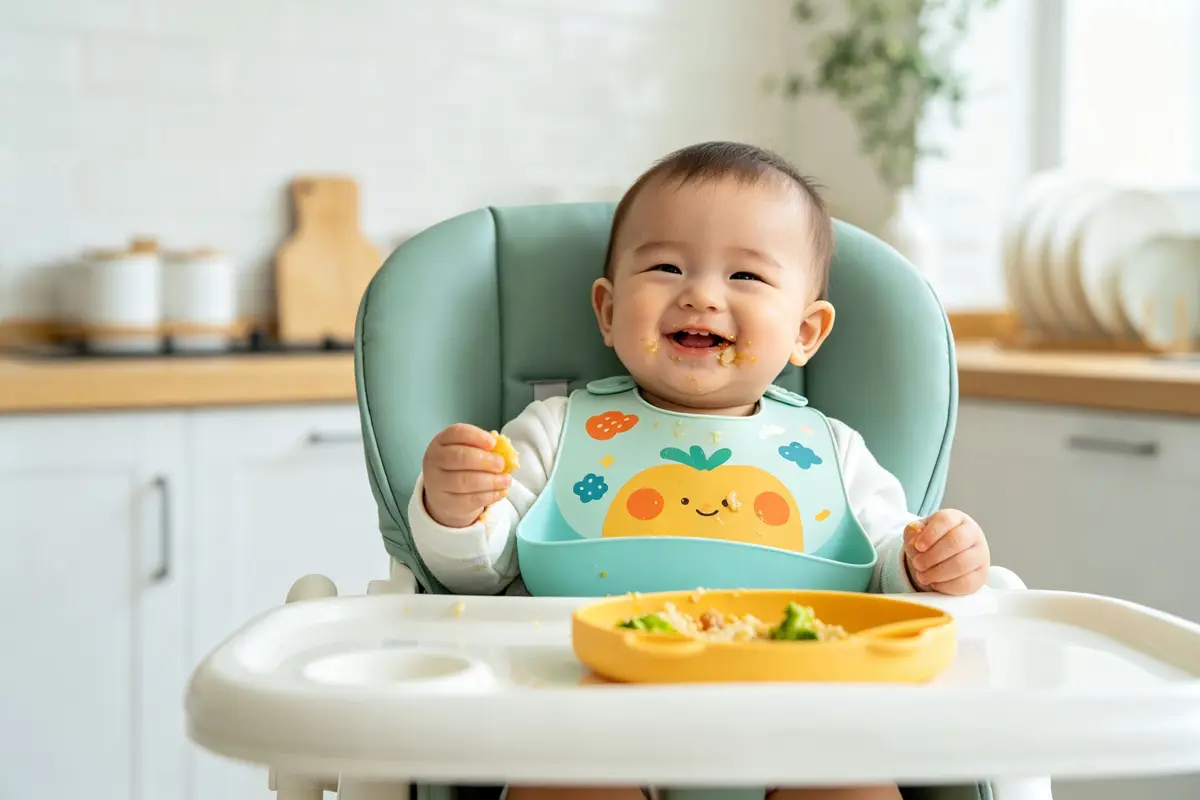
The baby bibs market in Southeast Asia is undergoing a significant transformation as parents increasingly seek functional, stylish, and easy-to-clean feeding accessories. For parents looking to buy baby bibs online, the Southeast Asian e-commerce landscape now offers an unprecedented variety of options — from traditional cloth bibs to modern silicone bibs with built-in food catchers, from disposable travel bibs to premium organic cotton designs.Public estimates for this market differ widely by source and by scope, so we do not quote a market size or a growth rate here. What we can speak to is the direction, and we would rather help you size one market from figures you can verify than publish a number we cannot source.2 billion by 2027, with the Asia-Pacific region driving much of this growth, fueled by high birth rates, rising disposable incomes, and the rapid expansion of online retail across Southeast Asia.
Market Overview: The Evolution of Baby Bibs
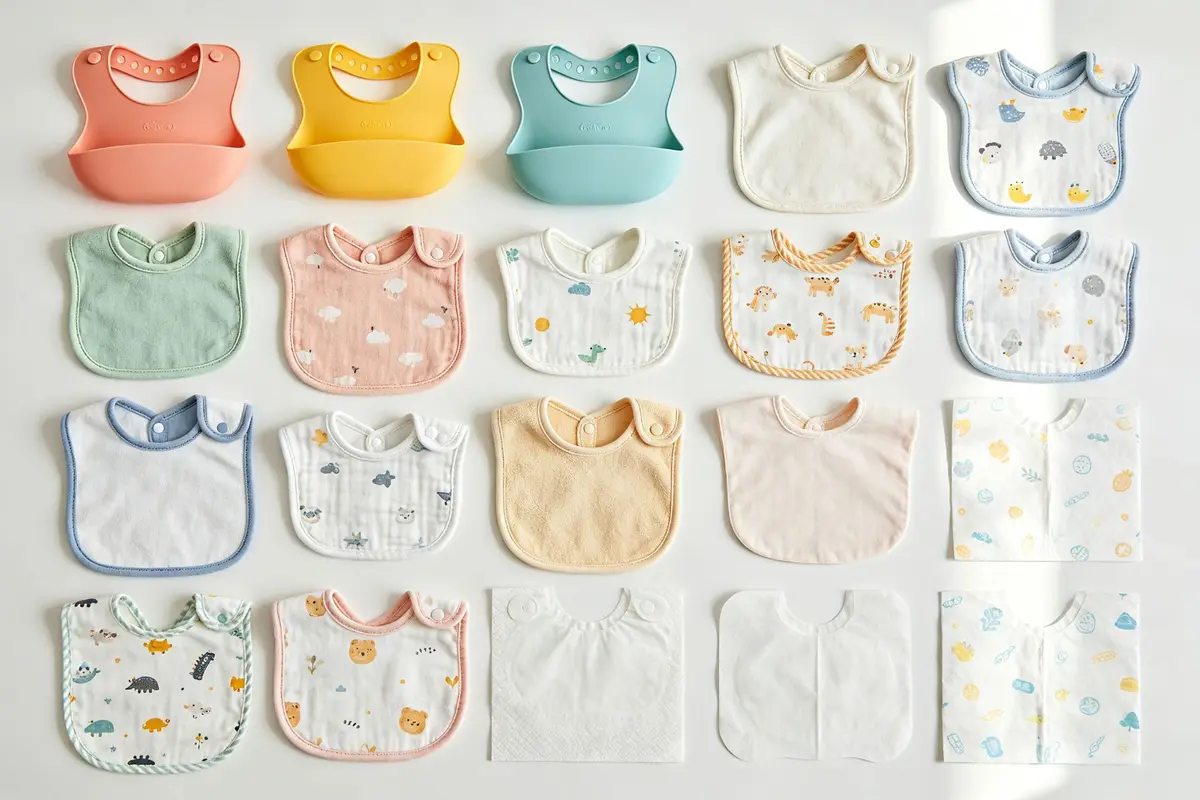
Baby bibs have evolved far beyond their original function as simple cloth protectors. Today's bib market is segmented by material type: silicone bibs (the fastest-growing segment, valued for their waterproof, easy-to-clean properties and built-in food catchers), cloth bibs (including cotton, muslin, and organic varieties, popular for newborns and for their softness and breathability), disposable bibs (convenient for travel and on-the-go use, with adhesive strips for easy attachment), and plastic or PEVA bibs (a budget-friendly waterproof option). Silicone bibs have seen explosive growth in Southeast Asia, with sales increasing by more than 35% year-over-year in 2025, as parents discover their practical advantages for the messy weaning stage — typically when babies begin solid foods around 6 months.
The shift toward baby-led weaning (BLW) — a feeding approach where babies self-feed finger foods rather than being spoon-fed purees — has been a major driver of bib innovation. BLW tends to be messier than traditional spoon-feeding, creating demand for bibs with larger coverage areas, deep food-catcher pockets, and waterproof materials. A 2025 survey of parents in Singapore, Malaysia, and Thailand found that 68% of parents practicing baby-led weaning owned at least three different types of bibs, compared to 42% of parents using traditional spoon-feeding. This multi-bib ownership trend — where parents have different bibs for different occasions (silicone for messy meals, cloth for newborn dribble, disposable for travel) — is expanding the overall market size and creating opportunities for brands that offer comprehensive bib collections.
Silicone vs Cloth vs Disposable: A 2026 Buying Guide
For parents navigating the decision of which bibs to buy, understanding the strengths and weaknesses of each type is essential. Silicone bibs, typically made from food-grade BPA-free silicone, are the gold standard for the weaning stage. Their key advantages include: complete waterproofing (food and liquids wipe right off), a deep pocket at the bottom that catches falling food (reducing mess on the floor and baby's clothes), easy cleaning (simply rinse under the tap or wipe with a damp cloth — many are also dishwasher-safe), durability (silicone bibs can last for years and be handed down to younger siblings), and adjustability (most feature multiple snap settings to grow with the baby from 6 months to 3 years). The main drawbacks are that silicone bibs can be bulkier to pack for travel, and some babies may find them less comfortable than soft cloth bibs, especially for newborns who dribble frequently.
Cloth bibs remain the preferred choice for newborns and younger infants, primarily for their softness against delicate skin and their absorbency for milk dribble and spit-up. Within the cloth category, muslin bibs (made from lightweight, breathable cotton muslin) are particularly popular in tropical Southeast Asian climates because they are thin, quick-drying, and gentle on baby's skin. Organic cotton bibs appeal to eco-conscious parents who prioritize natural, chemical-free materials. The main disadvantage of cloth bibs is that they require frequent laundering — a baby may go through 3-5 cloth bibs per day during the drooling and weaning stages — and they are not waterproof, meaning food and liquids can soak through to baby's clothes. Disposable bibs, typically made from paper or lightweight plastic with adhesive neck strips, are ideal for travel, restaurants, and occasions where washing is not convenient. They are lightweight, compact, and require no cleanup — simply throw them away after use. However, they are less environmentally friendly and can be more expensive long-term than reusable options. For parents who want to buy baby care products online, a well-rounded bib collection typically includes 2-3 silicone bibs for mealtime, 4-6 cloth or muslin bibs for everyday dribble, and a pack of disposable bibs for travel and outings.
Key Features and Trends Shaping the 2026 Bib Market
As the baby bibs market matures, several key features and trends are shaping consumer preferences and product innovation. First, the food-catcher pocket has become a must-have feature for silicone bibs, with manufacturers competing on pocket depth, width, and rigidity — a deeper, more rigid pocket catches more food and stays open rather than collapsing against the baby's chest. Second, adjustable sizing is increasingly important, with many bibs now offering 4-6 snap settings or adjustable Velcro closures to accommodate babies from newborn to toddler (ages 0-3 years). Third, aesthetic design has become a major differentiator, with parents seeking bibs in stylish colors, patterns, and prints that coordinate with their baby's outfits and their home decor — minimalist Scandinavian designs, tropical prints, and gender-neutral color palettes are particularly popular in 2026. Fourth, eco-friendly and sustainable materials are gaining traction, including food-grade silicone (which is recyclable and durable), organic cotton, and biodegradable disposable bib options.
Another significant trend is the rise of multi-functional bib designs that go beyond basic food protection. Some 2026 bib models integrate teething toys (silicone bibs with attached teething corners or detachable teething toys), convert into tote bags or storage pouches for travel, or feature built-in sleeves for full-arm coverage during particularly messy art or food activities. The premium segment of the market is also seeing innovation in materials, with silicone-cotton hybrid bibs that combine the waterproofing of silicone with the softness of cotton, and antimicrobial-treated cloth bibs that inhibit bacterial growth — a particularly appealing feature in humid Southeast Asian climates where damp bibs can develop odors. For retailers and distributors, staying ahead of these trends requires careful curation of product assortments that balance functionality, design, and price point. Businesses interested in curating premium baby feeding accessories should consider partnering with established baby care brands that offer quality, design-forward products with strong sell-through rates.
Southeast Asia E-Commerce Landscape and Buying Channels
The Southeast Asian baby bibs market is increasingly dominated by e-commerce, with online sales accounting for approximately 62% of total baby bib sales in the region in 2025, up from 48% in 2022. Shopee and Lazada remain the dominant platforms, with TikTok Shop emerging as a fast-growing channel, particularly for visually-driven products like stylish silicone bibs that perform well in short-form video demonstrations. Live commerce — where sellers demonstrate products in real-time during live streams — has proven particularly effective for baby bibs, as parents can see the bib's size, coverage, food-catcher functionality, and ease of cleaning demonstrated live. A 2025 e-commerce analysis found that baby bibs sold via live commerce had a 2.3x higher conversion rate than those sold through standard product listings, attributed to the ability to demonstrate the product's practical benefits in real-time.
For parents looking to buy baby bibs online in Southeast Asia, the key purchasing factors identified in consumer surveys are: material safety (BPA-free, food-grade silicone, organic cotton — cited by 89% of respondents as the most important factor), ease of cleaning (82%), price value (76%), design and aesthetics (68%), adjustability and sizing (61%), and brand reputation (54%). Price points vary widely across the region: basic cloth bibs can be purchased for $1-$3 each, mid-range silicone bibs typically cost $5-$12 each, and premium designer or organic bib sets can range from $15-$35. Bulk purchasing is also popular, with many parents buying multi-packs of 5-10 cloth bibs or sets of 2-4 silicone bibs to ensure they always have a clean one available. For retailers, offering bundle deals, multi-packs, and subscription replenishment options (for disposable bibs) can increase average order value and customer lifetime value. Brands that invest in high-quality product photography, video demonstrations, customer reviews, and detailed size guides are likely to outperform competitors in the crowded online marketplace.
Future Outlook and Growth Opportunities
Looking ahead to 2026 and beyond, the baby bibs market in Southeast Asia is poised for continued growth, driven by several structural factors. Demographically, Southeast Asia has one of the highest birth rates in the world, with approximately 10 million births annually across the region's six major economies (Indonesia, Philippines, Vietnam, Thailand, Malaysia, and Singapore), ensuring a steady stream of new customers.Public estimates for this market differ widely by source and by scope, so we do not quote a market size or a growth rate here. What we can speak to is the direction, and we would rather help you size one market from figures you can verify than publish a number we cannot source. Technologically, the continued growth of e-commerce, live commerce, and social media marketing is making it easier for brands to reach parents with educational content and product demonstrations. And culturally, the growing influence of parenting blogs, social media influencers, and online parenting communities is raising awareness about best practices in baby feeding and hygiene, driving demand for specialized products like silicone weaning bibs.
For brands, retailers, and distributors, the key growth opportunities in this market include: developing innovative multi-functional bib designs that address unmet needs (such as full-coverage sleeves, integrated teething, or travel-friendly convertible designs); leveraging live commerce and short-form video to demonstrate product benefits; building strong brand identities around safety, quality, and design; offering sustainable and eco-friendly options for environmentally conscious parents; and establishing partnerships with pediatricians, lactation consultants, and parenting influencers to build trust and credibility. For parents, the abundance of options means there has never been a better time to find bibs that fit their baby's age, feeding stage, lifestyle, and personal style. Whether you opt for easy-clean silicone bibs for messy mealtimes, soft muslin bibs for newborn dribble, or disposable bibs for travel, the most important thing is to choose bibs made from safe, non-toxic materials that are appropriate for your baby's developmental stage — and to have enough of them on hand that you're never scrambling for a clean one when mealtime arrives.