
2026-10-09 · Moni Happy Editorial Team
Buy Baby Diaper Pail Online: Southeast Asia Market & Odor Control Guide
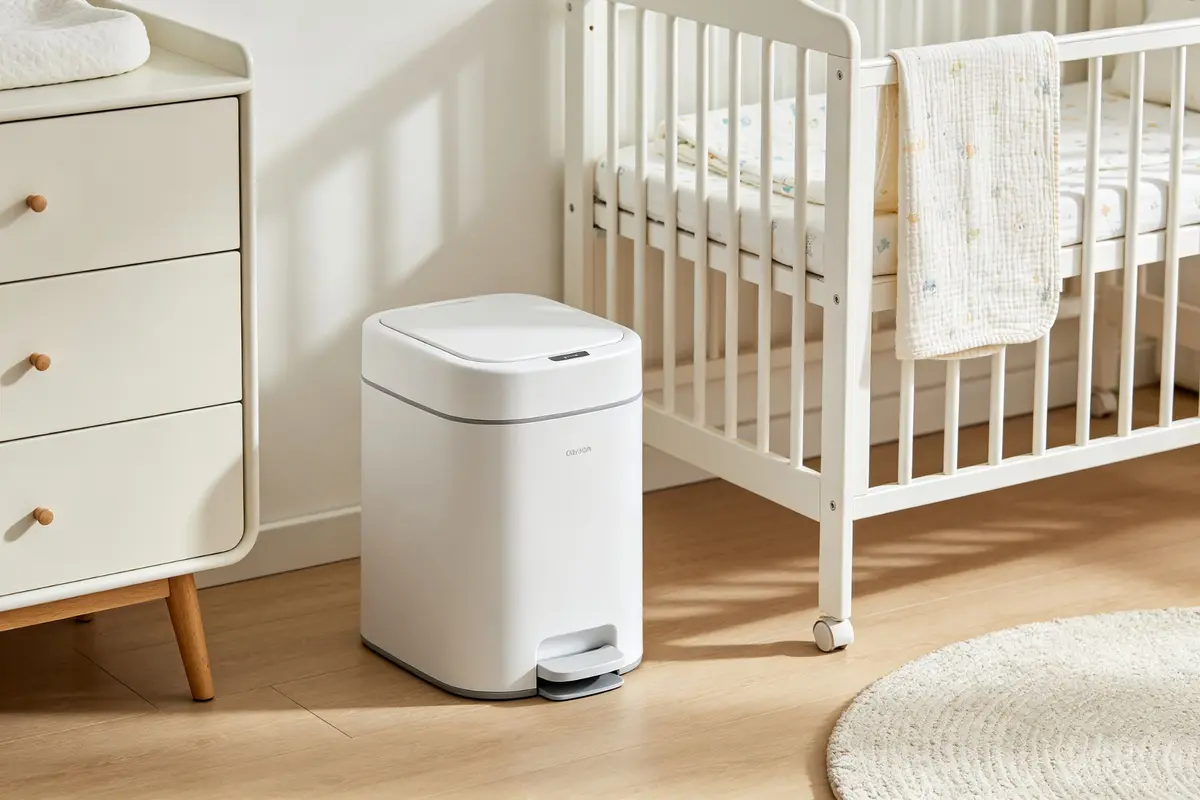
For any parent who has walked into a nursery and been greeted by the unmistakable scent of a day's worth of soiled diapers, the value of a quality diaper pail is self-evident. As nursery hygiene standards rise across Southeast Asia and urban living spaces become more compact, the decision to buy baby diaper pail online has become a standard line item on nearly every newborn registry.Public estimates for this market differ widely by source and by scope, so we do not quote a market size or a growth rate here. What we can speak to is the direction, and we would rather help you size one market from figures you can verify than publish a number we cannot source.9% through 2030, with Southeast Asia emerging as one of the fastest-growing regional markets — driven by rising disposable incomes, increasing awareness of nursery hygiene, and the rapid expansion of e-commerce channels that make specialized nursery products accessible to a broader consumer base.
Market Overview: Why Diaper Pails Are Gaining Traction
The diaper pail category in Southeast Asia is being shaped by several converging demographic and lifestyle trends. Urbanization is a key driver: as more families move into apartments and condominiums with limited ventilation and shared living spaces, the need for effective odor containment becomes more acute. In traditional homes with separate laundry areas and outdoor trash bins, diaper disposal was less of a concern; in compact urban apartments, a diaper pail that seals in odors is practically a necessity.
Another driver is the increasing prevalence of disposable diaper usage across the region. As cloth diapering declines and disposable diaper penetration rises — particularly in Indonesia, Vietnam, and the Philippines, where disposable diaper usage has grown 15-20% annually — the volume of soiled diapers requiring disposal has increased proportionally. Parents are also more educated about hygiene and odor control, thanks in part to parenting content on social media and the influence of Western nursery practices. The result is a market where a basic trash can no longer suffices — parents are actively seeking specialized diaper disposal systems that combine odor sealing, antimicrobial protection, and convenient, hands-free operation.
E-commerce has been instrumental in making diaper pails accessible to Southeast Asian consumers. Before the e-commerce boom, specialized diaper pails were largely unavailable outside of major city baby boutiques and imported at premium prices. Today, parents can buy baby diaper pail online through Shopee, Lazada, and TikTok Shop, with access to international brands like Ubbi, Munchkin, and Playtex, as well as a growing number of regional and local manufacturers offering competitive alternatives. COD (cash on delivery) remains the dominant payment method in many Southeast Asian markets, lowering the barrier for first-time online purchases of nursery products. Free shipping promotions and bundle deals — pairing a diaper pail with refills, diapers, and wipes — have further accelerated e-commerce adoption in the category.
Key Features to Evaluate When You Buy Baby Diaper Pail Online
With a growing number of options available, parents should evaluate the following key features when selecting a diaper pail:
- Odor sealing mechanism: The most important feature is how effectively the pail contains odors. The best systems use a combination of airtight lids, rubber gaskets, and specialized bagging systems that individually wrap each diaper (like the Munchkin Step and Playtex Diaper Genie) to seal in odors. Some pails use carbon filters or antimicrobial materials to further reduce odors and bacteria.
- Hands-free operation: A foot pedal that opens the lid with a step is highly desirable, as it allows parents to dispose of diapers while holding the baby or a dirty diaper with both hands. Some premium models also feature motion-activated lids for completely hands-free operation.
- Bag system: refillable vs. proprietary: Diaper pails use either proprietary refill rings (which must be purchased from the manufacturer) or standard kitchen trash bags. Proprietary systems typically offer better odor sealing but have ongoing refill costs. Standard bag systems are more economical and eco-friendly but may not seal odors as effectively. Some models — like the Ubbi — are designed to work with standard bags while maintaining good odor control through a robust lid seal.
- Capacity: A good diaper pail should hold at least 2-3 days' worth of diapers (approximately 30-50 newborn diapers) before needing to be emptied. Larger capacity means fewer trips to the outdoor trash, but also a larger footprint in the nursery.
- Material and durability: Stainless steel pails (like the Ubbi) are durable, easy to clean, and less likely to retain odors over time compared to plastic pails. However, they are typically more expensive. High-quality plastic pails with antimicrobial finishes offer a more affordable alternative.
- Ease of cleaning: A diaper pail should be easy to empty and clean. Removable inner buckets, smooth surfaces without crevices where bacteria can accumulate, and dishwasher-safe components are all desirable features.
- Safety features: A childproof lid is important once babies become toddlers and start exploring the nursery. Some pails also feature a safety lock to prevent children from opening the lid and accessing the contents.
- Aesthetics: Since the diaper pail is typically kept in the nursery, many parents prefer a sleek, modern design that complements the nursery decor rather than looking like a medical waste container. A range of colors and finishes is now available to suit different nursery styles.
Competitive Landscape and Brand Strategy
The diaper pail market in Southeast Asia features a mix of international and regional brands competing across price tiers. At the premium end ($40-80 USD), Ubbi (stainless steel, standard bag compatible) and Munchkin Step (self-sealing bag system, foot pedal) dominate, appealing to design-conscious and hygiene-focused urban parents. At the mid-tier ($20-40 USD), Playtex Diaper Genie and regional brands like Farlin and Pigeon offer proprietary bag systems with good odor control at more accessible price points. At the value tier (under $20 USD), local manufacturers and generic brands offer basic plastic pails with foot pedals, primarily sold through modern trade and traditional retail channels.
For brands looking to enter or expand in the Southeast Asian market, several strategic considerations are critical. First, pricing must be localized — while premium international brands can command higher prices in Singapore and Malaysia, brands targeting Indonesia, Vietnam, and the Philippines need to offer more accessible price points or introduce value-oriented product lines. Second, the refill model is a key competitive differentiator: brands that offer proprietary refills generate recurring revenue but may face price resistance from cost-conscious consumers, while brands that work with standard bags appeal to eco-conscious and budget-focused parents but sacrifice recurring revenue. Third, e-commerce content — including video demonstrations of odor sealing, comparison reviews, and nursery setup tutorials — is essential for driving conversion in a category where consumers cannot experience the product in person before purchasing.
For distributors and retailers, diaper pails offer attractive margins, strong cross-selling potential with diapers, wipes, and other nursery essentials, and high repeat purchase rates for proprietary refills. Brands and distributors interested in expanding their Southeast Asian footprint can explore partnership opportunities through Moni Happy's distributor network, which provides access to established retail channels, logistics infrastructure, and localized marketing support. For parents, Moni Happy's diaper and nursery product range includes odor-sealing diaper pails and complementary diapering essentials, available for direct online purchase across Southeast Asia with COD support.
Future Outlook
The diaper pail market in Southeast Asia is poised for sustained growth, driven by ongoing urbanization, rising disposable incomes, and increasing awareness of nursery hygiene. Innovation will focus on smart features — including pails with built-in odor sensors, UV-C sanitization, and app-connected refill level monitoring — and on sustainability, with brands introducing compostable bags, recycled materials, and refill-free designs to appeal to environmentally conscious consumers. As e-commerce continues to dominate and social commerce drives discovery, the brands that combine effective odor control, convenient operation, compelling digital content, and localized pricing will be best positioned to capture share in this growing category. For parents, the decision to buy baby diaper pail online has never been easier — with a wider range of options, more transparent information, and the convenience of home delivery, finding the right diaper pail for your nursery is just a few clicks away.