
2026-10-09 · Moni Happy Editorial Team
Buy Baby Monitor Online 2026: Video vs WiFi Smart Monitor Guide
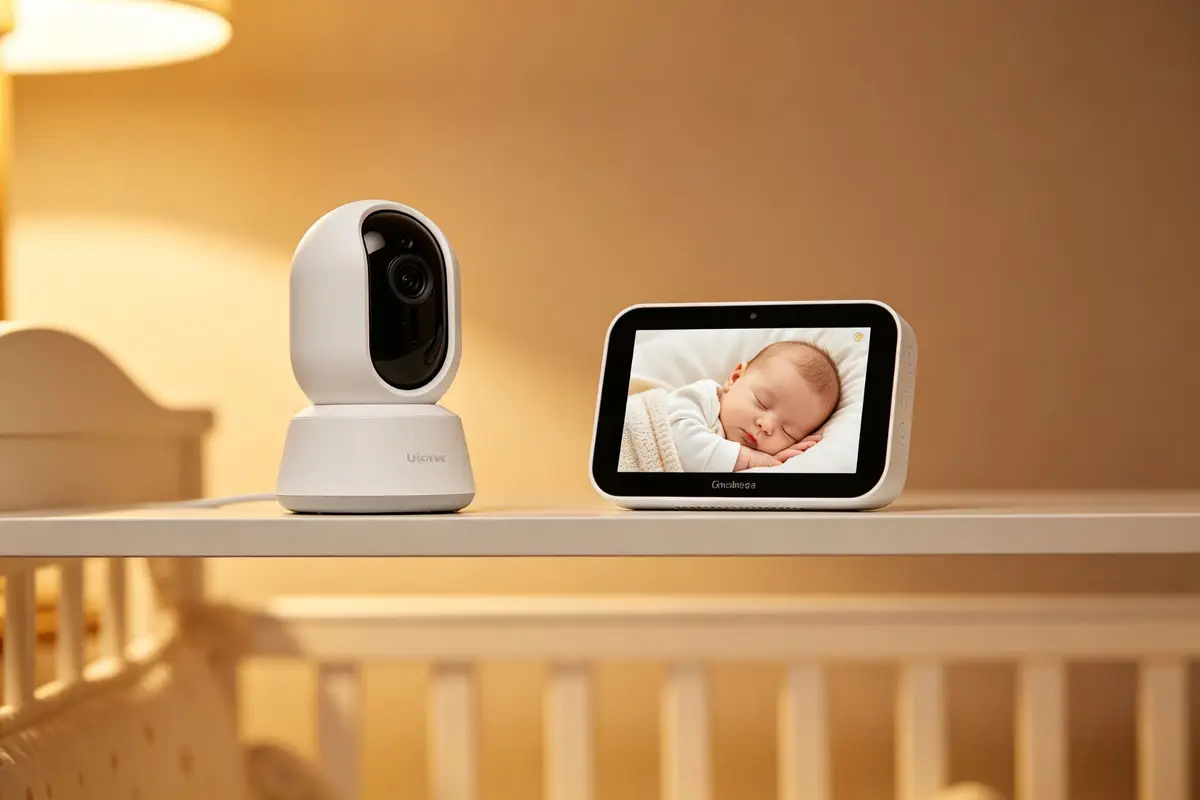
The global baby monitor market is experiencing rapid growth, driven by increasing parental awareness of infant safety, the rise of nuclear families with less in-home childcare support, and technological advancements that have transformed basic audio monitors into sophisticated smart home devices.Public estimates for this market differ widely by source and by scope, so we do not quote a market size or a growth rate here. What we can speak to is the direction: demand for biodegradable and plastic-free wipe formats is rising across the region, and we would rather help you size one market from figures you can verify than publish a number we cannot source. For parents, a baby monitor provides peace of mind — allowing them to check on their sleeping baby from another room, hear every sound, and even see their baby in real time, day or night. This article examines the market landscape, product categories, key features, leading brands, and what parents should consider when looking to buy a baby monitor online.
Market Overview: From Audio to Smart Video Monitors
The baby monitor market has evolved dramatically over the past decade. What began as simple one-way audio monitors (allowing parents to hear sounds from the baby's room) has expanded into a sophisticated category that includes high-definition video, night vision, two-way talk, temperature and humidity sensors, motion detection, lullabies, and even smartphone connectivity. The market is being driven by: increasing parental concern about SIDS (sudden infant death syndrome) and the desire to monitor babies continuously; the trend toward babies sleeping in separate rooms earlier (many parents move babies to their own nursery by 3-6 months); technological advancements that have made high-quality video monitors affordable (HD cameras, infrared night vision, and Wi-Fi connectivity are now standard even in mid-range models); and the rise of smart home integration, with monitors that work with Alexa, Google Home, and Apple HomeKit. In Southeast Asia, where many homes have open-plan layouts but parents still want to monitor babies during naps or bedtime, baby monitors are increasingly considered essential rather than luxury. The market is also being shaped by the entry of smart home companies (like Amazon and Google) and security camera manufacturers, who are offering baby-specific features on their general-purpose cameras. However, dedicated baby monitor brands continue to dominate due to specialized features like lullabies, night lights, and parent units that do not require Wi-Fi.
Product Categories: Audio, Video, Wi-Fi, and Wearable
The baby monitor market includes four main product types. Audio monitors are the most basic and affordable option ($15-40), transmitting only sound from the baby's room to a parent unit. They are simple, reliable, and have long battery life, but they do not allow parents to see the baby. Audio monitors are still popular for travel, as a backup, or for parents who prefer simplicity. Video monitors with dedicated parent unit are the most popular segment, accounting for approximately 55% of market share. These include a camera unit in the baby's room and a portable parent unit with a screen (typically 2.5-5 inches). They offer features like night vision, two-way talk, pan-tilt-zoom cameras, temperature sensors, and lullabies. They do not require Wi-Fi, which some parents prefer for privacy and reliability. Prices range from $40-150. Wi-Fi / smart video monitors are the fastest-growing segment, with year-over-year growth of approximately 18%. These connect to your home Wi-Fi network and stream video to your smartphone or tablet via an app, allowing you to check on your baby from anywhere with an internet connection. Many also offer cloud storage for recorded video, motion and sound alerts, and integration with smart home systems. Popular models include the Nanit, Owlet, and Motorola Halo. Prices range from $80-300+. The main concern with Wi-Fi monitors is privacy and security — parents should choose monitors with strong encryption and regularly update firmware. Wearable / smart sock monitors are a niche but growing segment, using a wearable sensor (typically a sock or clip) to track the baby's heart rate, oxygen levels, and sleep patterns, sending alerts to a smartphone if readings are abnormal. Popular brands include Owlet and Snuza. These are not technically video or audio monitors but are often grouped with baby monitoring products. They are controversial — the FDA has not cleared some as medical devices, and false alarms can cause anxiety. When choosing a monitor type, consider: do you want to see your baby or just hear them? Do you need to check on your baby when away from home (Wi-Fi)? Do you have reliable Wi-Fi? Are you concerned about privacy? What is your budget?
Key Features, Brands, and Buying Guide
Key features to look for when buying a baby monitor include: Video quality and night vision — look for at least 720p HD resolution, with clear infrared night vision that works in complete darkness. Some premium models offer 1080p or even 4K resolution. Range — for non-Wi-Fi monitors, check the maximum range (typically 500-1000 feet in open areas, less in homes with walls). If you have a large home or want to use the monitor in the yard, look for a long-range model. Two-way talk — allows you to speak to your baby through the monitor (to soothe them without entering the room). This is a standard feature on most video monitors. Pan-tilt-zoom (PTZ) camera — allows you to remotely move the camera to see different parts of the room and zoom in. This is very useful as babies grow and move around the crib. Temperature and humidity sensors — monitors the nursery temperature and alerts you if it is too hot or too cold (ideal room temperature for babies is 20-22°C / 68-72°F). This is particularly useful in tropical climates where air conditioning may make rooms too cold. Sound activation (VOX) — the parent unit stays silent until the baby makes a sound, saving battery and preventing background noise from disturbing parents. Lullabies and white noise — many monitors include built-in lullabies or white noise sounds that can be played remotely to soothe the baby. Multiple camera support — if you have more than one child or want cameras in multiple rooms, look for a monitor that supports up to 4 cameras. Battery life — for portable parent units, look for at least 8-12 hours of battery life in normal use (with sound activation) and at least 4-6 hours with the screen on continuously. Security and encryption — for Wi-Fi monitors, ensure the monitor uses strong encryption (WPA2/WPA3), has a secure app login, and receives regular firmware updates. Change the default password immediately after setup. Leading brands include: Motorola (a long-time market leader, offering a wide range of audio and video monitors with parent units and Wi-Fi options), Infant Optics (known for its popular DXR-8 video monitor with interchangeable lenses and strong range), VTech (affordable, reliable audio and video monitors with good battery life), Nanit (premium Wi-Fi smart monitor with computer vision sleep tracking and breathing monitoring), Owlet (known for its Smart Sock wearable monitor and Cam smart camera), Eufy Security (Anker's brand, offering affordable Wi-Fi baby monitors with good video quality), and Philips Avent (known for its DECT audio monitors with clear sound and long range). In Southeast Asia, VTech, Motorola, and Eufy are widely available on Shopee and Lazada, while premium brands like Nanit and Owlet may require international shipping. For parents looking to buy a baby monitor online, consider your specific needs: if you want simplicity and reliability, a dedicated video monitor with parent unit (like the Infant Optics DXR-8 or Motorola VM series) is a great choice. If you want to check on your baby from anywhere and integrate with your smart home, a Wi-Fi monitor (like Nanit or Eufy) may be better. Always read reviews about range, battery life, video quality, and customer service. For premium baby care products, parents can explore Moni Happy's product range, and businesses interested in distribution can learn more at Moni Happy's partner page.