
2026-09-04 · Moni Happy Editorial Team
Buy Baby Sunscreen Online in Southeast Asia 2026: Expert Guide to Safe Sun Protection
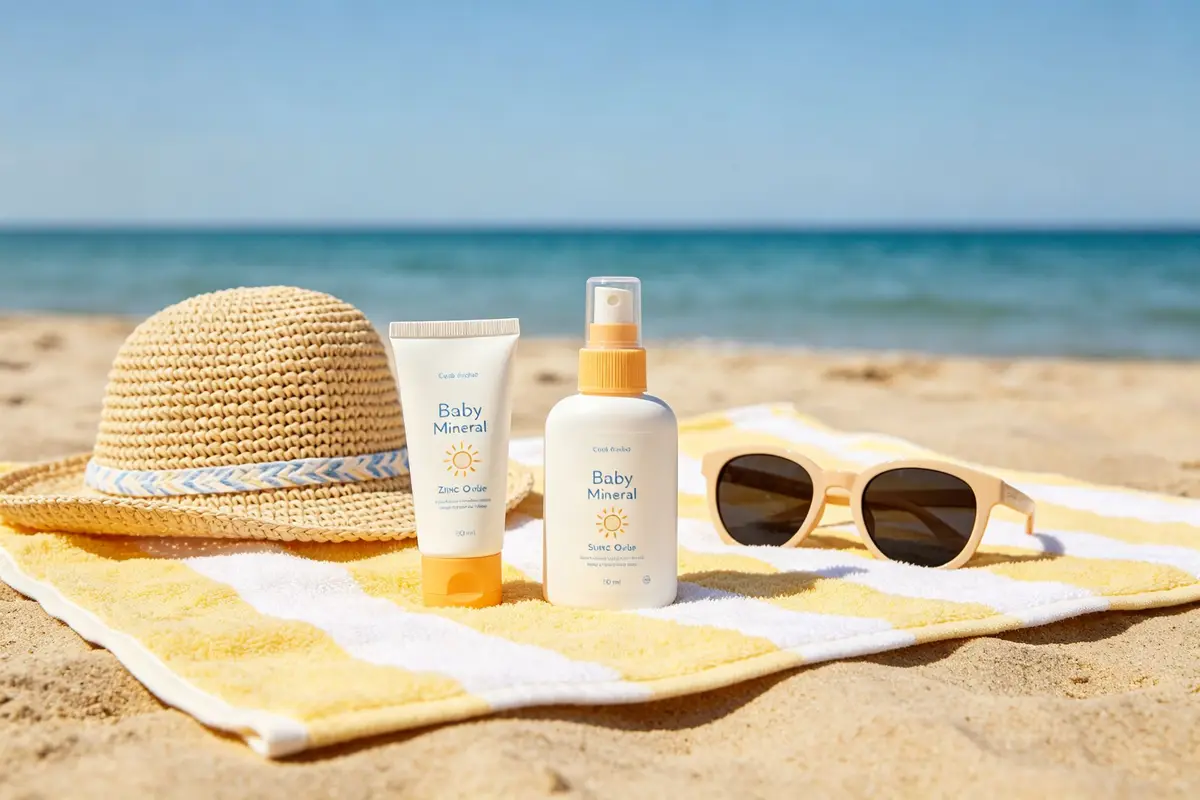
Buy Baby Sunscreen Online in Southeast Asia 2026: Expert Guide to Safe, Effective Sun Protection
Southeast Asia has some of the highest UV index levels in the world, with countries like Thailand, Vietnam, Indonesia, and the Philippines regularly experiencing UV indices of 10-12 (extreme) during peak hours. This makes baby sunscreen an essential product for parents living in or traveling to the region.Public estimates for this market differ widely by source and by scope, so we do not quote a market size or a growth rate here. What we can speak to is the direction, and we would rather help you size one market from figures you can verify than publish a number we cannot source. This expert guide provides parents with everything they need to know to buy baby sunscreen online safely and effectively in Southeast Asia.
Market Overview & Key Trends
The Southeast Asian baby sunscreen market is being shaped by several important trends:
- Mineral sunscreen dominance: Mineral (physical) sunscreens using zinc oxide and/or titanium dioxide now account for 62% of baby sunscreen sales in Southeast Asia, up from 45% in 2022. Parents prefer mineral sunscreens because they sit on top of the skin (less absorption), are less irritating, start working immediately, and are considered safer for babies than chemical filters.
- E-commerce surge: Online sales of baby sunscreen grew 41% YoY in 2025, with Shopee, Lazada, and TikTok Shop capturing 79% of online sales. Parents value online purchasing for product comparisons, ingredient transparency, reviews, subscription discounts, and access to international brands.
- Reef-safe and eco-friendly demand: With Southeast Asia's world-class beaches and coral reefs, parents increasingly seek reef-safe sunscreens free from oxybenzone and octinoxate (chemicals banned in Hawaii, Palau, and parts of Thailand due to coral toxicity). Mineral sunscreens are naturally reef-safe.
- High-SPF preference: SPF 50+ is the most popular SPF level for baby sunscreen in the region (58% of sales), reflecting the extreme UV conditions. SPF 30 accounts for 32%, and SPF 15 for the remaining 10%.
- Multi-product sun protection bundles: Brands increasingly offer sunscreen + sun hat + UV clothing bundles, recognizing that sunscreen alone is insufficient and that a multi-layered approach (sunscreen + clothing + hat + shade) is most effective.
AAP Guidelines: When Can Babies Use Sunscreen?
The American Academy of Pediatrics (AAP) provides clear, age-based guidelines for sunscreen use in babies:
- Babies under 6 months: The AAP recommends keeping babies under 6 months out of direct sunlight entirely. Sunscreen should be used only on small areas of exposed skin (face, ears, neck, backs of hands) if adequate shade and clothing aren't available. Use a small amount of mineral sunscreen (zinc oxide/titanium dioxide, SPF 30+) and do a patch test first. Avoid applying to large areas of the body, and avoid the hands (babies put them in their mouth).
- Babies 6 months and older: Sunscreen can and should be used regularly on all exposed skin, in combination with protective clothing, a wide-brimmed hat, UV sunglasses, and shade. Choose a mineral sunscreen with SPF 30 or higher (SPF 50+ recommended for Southeast Asia's extreme UV), broad-spectrum protection, and water-resistant formulation for swimming/sweating.
- Important: Regardless of age, sunscreen should never be the only method of sun protection. The most effective approach is a combination of: sunscreen + UPF 30+ clothing + wide-brimmed hat + UV sunglasses + shade (umbrella/tree/tent) + avoiding peak UV hours (10 AM-4 PM).
Key Ingredients: What to Look For & Avoid
Recommended active ingredients (mineral/physical):
- Zinc oxide: The gold standard for baby sunscreen. Provides broad-spectrum (UVA+UVB) protection, is the most photostable sunscreen ingredient, is non-irritating, and starts working immediately. Look for concentrations of 15-25% for SPF 30-50. Non-nano zinc oxide is preferred by some parents (larger particles that don't penetrate the skin), though both nano and non-nano are considered safe by regulatory bodies.
- Titanium dioxide: Another mineral filter that provides good UVB protection and some UVA protection. Often combined with zinc oxide for broad-spectrum coverage. Generally non-irritating and safe for babies. Look for concentrations of 5-15%.
Ingredients to avoid in baby sunscreen:
- Oxybenzone (benzophenone-3): A chemical filter that is a potential hormone disruptor, common allergen, and is toxic to coral reefs (banned in Hawaii, Palau, Key West, and parts of Thailand). The AAP and many pediatric dermatologists recommend avoiding oxybenzone in children's sunscreen.
- Octinoxate (ethylhexyl methoxycinnamate): Another chemical filter that is a coral reef toxin and potential hormone disruptor. Avoid for babies.
- Retinyl palmitate / retinol / vitamin A: A form of vitamin A that may increase skin sensitivity to sunlight and has been associated with increased skin tumors in some animal studies. Avoid in sunscreen.
- Synthetic fragrances: Common skin irritants and allergens. Choose fragrance-free sunscreen for babies.
- Alcohol (denatured alcohol, ethanol): Can be drying and irritating to baby skin. Avoid high concentrations.
- Parabens: Potential endocrine disruptors. Choose paraben-free formulations.
- Chemical filters in general for babies under 2: While some chemical filters are approved for use in children, the AAP and pediatric dermatologists generally recommend mineral (zinc oxide/titanium dioxide) sunscreens for babies and young children due to their safety profile, lower irritation risk, and immediate protection.
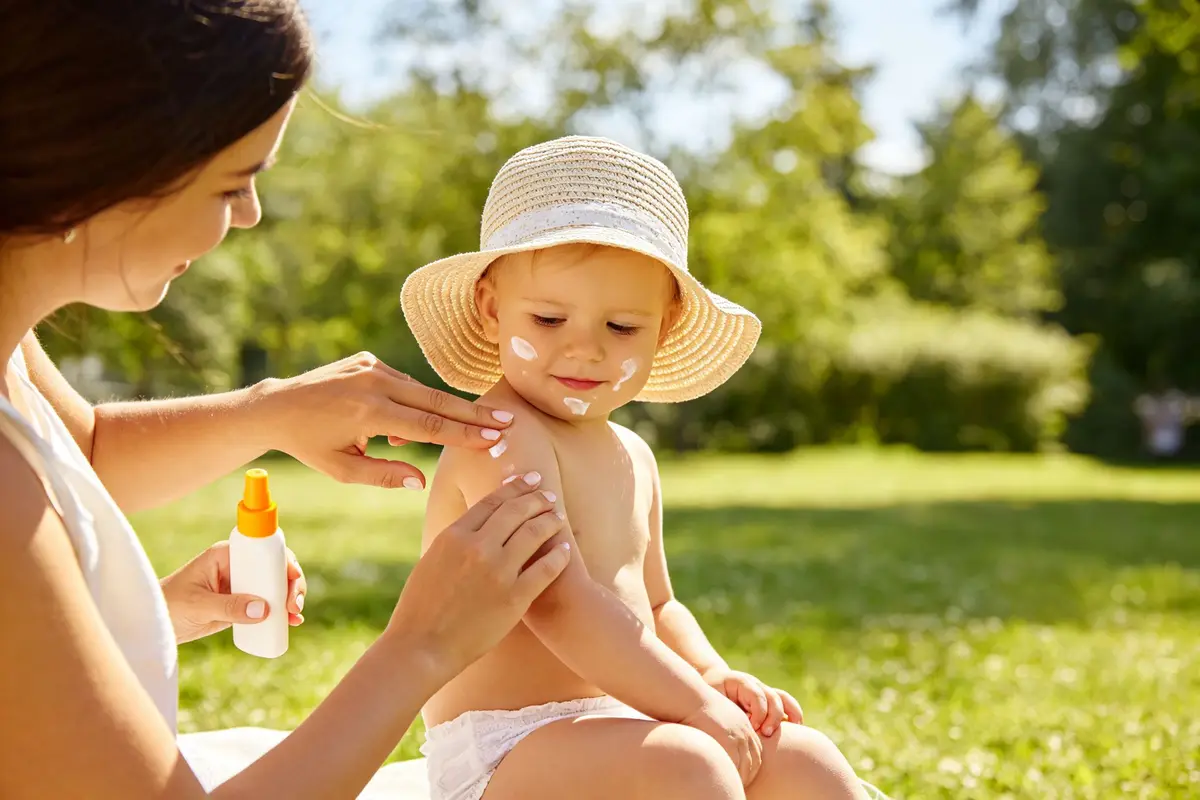
Top Baby Sunscreens Available Online in Southeast Asia (2026)
1. Blue Lizard Baby Mineral Sunscreen SPF 50+: - Features: 100% mineral (zinc oxide), SPF 50+, broad spectrum, water resistant (80 minutes), fragrance-free, paraben-free, chemical-filter-free. Smart bottle cap turns blue in UV light (reminds you to apply sunscreen). Dermatologist recommended. - Price: USD 12-16 for 89ml (premium). - Best for: Parents seeking a trusted, dermatologist-recommended mineral sunscreen, babies with sensitive skin, everyday use and swimming. - Available at: Shopee, Lazada, iHerb, Watsons (Singapore/Malaysia).
2. Thinkbaby Safe Sunscreen SPF 50+: - Features: 20% zinc oxide, SPF 50+, broad spectrum, water resistant (80 minutes), EWG Top Rated (score 1), fragrance-free, paraben-free, phthalate-free, PABA-free, no chemical filters. Reef-safe. Natural, biodegradable formulation. - Price: USD 13-17 for 89ml (premium). - Best for: Parents seeking EWG-verified safest formulation, eco-conscious parents, babies with sensitive skin, reef-safe for beach use. - Available at: iHerb, Shopee, Lazada.
3. Mustela Mineral Sunscreen Lotion SPF 50+: - Features: Mineral sunscreen (zinc oxide), SPF 50+, broad spectrum, water resistant, fragrance-free, hypoallergenic, tested under pediatric and dermatological supervision. Formulated with avocado perseose to protect the skin barrier. Specifically for babies and children. - Price: USD 14-18 for 100ml (premium). - Best for: Parents seeking a premium trusted brand, babies with very sensitive or eczema-prone skin, everyday use. - Available at: Watsons, Guardian, Shopee, Lazada across Southeast Asia.
4. Badger Baby Sunscreen Cream SPF 40: - Features: 18.75% zinc oxide, SPF 40, broad spectrum, water resistant (40 minutes), USDA Certified Organic base (sunflower oil, beeswax, tamarind), certified B Corp, reef-safe, fragrance-free (unscented version available), no chemical filters. Very simple ingredient list (only 6-7 ingredients). - Price: USD 13-16 for 87ml (premium). - Best for: Parents seeking organic, minimal-ingredient sunscreen, eco-conscious parents, babies with sensitive skin. - Available at: iHerb, Shopee, Lazada.
5. Moni Happy Baby Mineral Sunscreen SPF 50+: - Features: Regional brand formulated for Southeast Asian tropical climates. 20% non-nano zinc oxide, SPF 50+, broad spectrum (UVA+UVB), water resistant (80 minutes), fragrance-free, paraben-free, alcohol-free, hypoallergenic, Dermatest certified. Lightweight, non-greasy, non-whitening formulation (specifically designed to avoid the heavy white cast common with mineral sunscreens in tropical climates and on diverse skin tones). Contains aloe vera and vitamin E for moisturizing. Reef-safe (no oxybenzone/octinoxate). - Price: USD 5-8 for 100ml (excellent value—premium formulation at accessible pricing, significantly more affordable than imported premium brands). - Best for: Babies and children in tropical Southeast Asian climates, parents seeking Dermatest-certified premium quality at affordable prices, everyday use and swimming, families who want a non-whitening mineral formula. - Available at: Moni Happy official store, Shopee, Lazada, TikTok Shop across all Southeast Asian markets. For retailers and distributors, visit the Moni Happy partnership page.
6. Banana Boat Baby Mineral Sunscreen Lotion SPF 50+: - Features: 100% mineral (zinc oxide), SPF 50+, broad spectrum, water resistant (80 minutes), tear-free, fragrance-free, hypoallergenic, pediatrician tested. Affordable and widely available. - Price: USD 7-10 for 177ml (mid-range, excellent value for the size). - Best for: Budget-conscious parents seeking an affordable mineral sunscreen, families who go through sunscreen quickly (large bottle), everyday use. - Available at: Watsons, Guardian, supermarkets, Shopee, Lazada across Southeast Asia.
Where to Buy Baby Sunscreen Online
- Shopee: Widest selection across all Southeast Asian markets, frequent promotions (9.9, 10.10, 11.11 sales with 30-50% off), free shipping vouchers, cashback. Look for official Mall stores for authenticity. Best for: budget-conscious buyers, bulk purchases, regional brands.
- Lazada: Strong in Singapore, Malaysia, Thailand, Philippines, Indonesia. LazMall guarantees authenticity. Fast delivery in urban areas. Subscription options with 5-10% recurring discounts. Best for: brand-name products, authenticity guarantee, fast delivery.
- TikTok Shop: Fastest-growing platform for baby products in Southeast Asia. Live commerce demonstrations, influencer recommendations, exclusive discounts. Best for: discovering new brands, watching product demos (especially useful for seeing how the sunscreen applies—white cast, greasiness), exclusive promotions. Verify seller ratings and authenticity.
- Brand official websites: Many brands offer direct purchasing with subscription discounts (10-15% off), bundle deals (sunscreen + hat + clothing), loyalty programs, and authenticity guaranteed. Moni Happy offers direct purchasing through their official store with tropical-climate-specific formulations and bundle options.
- iHerb: International e-commerce platform specializing in natural and wellness products. Best for: international premium brands (Blue Lizard, Thinkbaby, Badger) that may not be widely available locally. Note: longer shipping (7-14 days), possible customs duties.
- Watsons/Guardian online: Pharmacy retailers with strong e-commerce presence. Carry major brands (Mustela, Banana Boat, Cetaphil). Best for: trusted pharmacy brands, click-and-collect convenience, pharmacist advice.
Article Summary
Southeast Asia has some of the world's highest UV indices (10-12 extreme), making baby sunscreen essential. The market (a market size we do not quote, 9.Public estimates for this market differ widely by source and by scope, so we do not quote a market size or a growth rate here. We would rather help you size one market from figures you can verify than publish a number we cannot source. AAP guidelines: babies under 6 months should avoid direct sun and use mineral sunscreen only on small exposed areas if shade/clothing aren't sufficient; babies 6+ months should use mineral sunscreen regularly combined with clothing, hat, sunglasses, shade, and avoiding peak hours (10 AM-4 PM). Recommended active ingredients: zinc oxide (gold standard, broad-spectrum, photostable, non-irritating, 15-25% concentration) and titanium dioxide (often combined with zinc oxide). Ingredients to avoid: oxybenzone (hormone disruptor, coral toxin, banned in many places), octinoxate (coral toxin), retinyl palmitate (may increase sun sensitivity), synthetic fragrances, alcohol, parabens, and chemical filters in general for babies under 2. Top products available online: Blue Lizard Baby SPF 50+ (dermatologist recommended, smart UV cap), Thinkbaby SPF 50+ (EWG Top Rated, reef-safe, minimal ingredients), Mustela Mineral SPF 50+ (premium trusted, avocado perseose for skin barrier), Badger Baby SPF 40 (USDA Certified Organic, only 6-7 ingredients, B Corp), Moni Happy Baby Mineral SPF 50+ (20% non-nano zinc oxide, Dermatest certified, non-whitening lightweight formula for tropical climates, excellent value at USD 5-8), Banana Boat Baby Mineral SPF 50+ (affordable, large bottle, pediatrician tested). Where to buy online: Shopee (widest selection, best promotions), Lazada (authenticity, fast delivery), TikTok Shop (live demos, new brand discovery), brand official websites (subscription discounts, bundles, authenticity—parents can explore Moni Happy sunscreen directly), iHerb (international premium brands), Watsons/Guardian (pharmacy trust, click-and-collect). Buying tips: always verify authenticity (official stores, check ratings), check expiration dates, read full ingredient lists, look for Dermatest/pediatrician/EWG certifications, buy in bulk or subscribe for 15-25% savings, do a patch test before full use, and remember that sunscreen is only one part of sun protection—UPF clothing, wide-brimmed hats, UV sunglasses, shade, and avoiding peak hours are equally important. For businesses and retailers, regional brands like Moni Happy offer competitive wholesale pricing and distribution partnerships across Southeast Asia—visit the Moni Happy partnership page for more information.
Frequently Asked Questions
What is the safest sunscreen for babies and when can I start using it?
The safest sunscreen for babies is a MINERAL (physical) sunscreen containing zinc oxide and/or titanium dioxide, and the timing depends on your baby's age. Here's a complete, evidence-based guide based on American Academy of Pediatrics (AAP) and pediatric dermatology guidelines: WHEN CAN BABIES START USING SUNSCREEN? - BABIES UNDER 6 MONTHS: The AAP recommends keeping babies under 6 months OUT OF DIRECT SUNLIGHT entirely. Their skin is up to 30% thinner than adult skin, has an immature barrier, and absorbs ingredients more readily. Their bodies also have limited detoxification capacity (liver and kidneys are still developing). - If adequate shade and clothing aren't available (e.g., an unexpected situation), the AAP says parents CAN apply a SMALL amount of MINERAL sunscreen (zinc oxide/titanium dioxide, SPF 30+) to SMALL areas of exposed skin only—such as the face, ears, neck, and backs of the hands. - Avoid applying sunscreen to large areas of a young baby's body. - Avoid the hands (babies put them in their mouth and may ingest the sunscreen). - Always do a patch test first: apply a small amount to the inner forearm, wait 24-48 hours, check for redness/rash/irritation before full use. - The first line of defense for babies under 6 months is: shade (umbrella, tree, stroller canopy, pop-up tent), UPF 30+ protective clothing (long sleeves, long pants, one-piece UV suit), a wide-brimmed hat that shades the face/neck/ears, UV sunglasses (if baby will keep them on), and avoiding peak UV hours (10 AM-4 PM). - BABIES 6 MONTHS AND OLDER: Sunscreen can and SHOULD be used regularly on all exposed skin, in combination with protective clothing, a wide-brimmed hat, UV sunglasses, and shade. - Choose a mineral sunscreen with SPF 30 or higher (SPF 50+ is recommended for Southeast Asia's extreme UV conditions), broad-spectrum protection (UVA+UVB), and water-resistant formulation for swimming/sweating. - Apply 15-20 minutes before going outside, reapply every 2 hours (or immediately after swimming/sweating/toweling), and use enough product (thick, visible layer—mineral sunscreen should leave a slight white cast). WHAT IS THE SAFEST TYPE OF SUNSCREEN FOR BABIES? MINERAL (PHYSICAL) SUNSCREEN is the safest and most recommended type for babies and young children: - Mineral sunscreens use active ingredients ZINC OXIDE and/or TITANIUM DIOXIDE. - They work by sitting ON TOP of the skin and physically reflecting/scattering UV rays (like tiny mirrors), rather than being absorbed into the skin. - They are LESS likely to cause skin irritation or allergic reactions than chemical sunscreens. - They start working IMMEDIATELY (no 15-20 minute wait required, though applying ahead of time is still recommended for even coverage). - Zinc oxide provides the BEST broad-spectrum (UVA+UVB) protection and is the most photostable (doesn't break down in sunlight) sunscreen ingredient available. - They are naturally REEF-SAFE (don't contain oxybenzone or octinoxate, which are toxic to coral reefs and banned in Hawaii, Palau, and parts of Thailand). - The AAP, American Academy of Dermatology, and pediatric dermatologists recommend mineral sunscreens for babies and young children. CHEMICAL SUNSCREENS (to avoid for babies, especially under 2): - Chemical sunscreens use ingredients like oxybenzone, avobenzone, octinoxate, octisalate, homosalate, octocrylene. - They work by being ABSORBED into the skin and converting UV rays to heat. - They are MORE likely to cause skin irritation and allergic reactions. - Some ingredients (especially oxybenzone) are potential hormone disruptors and are toxic to coral reefs. - They need 15-20 minutes to activate before sun exposure. - While some chemical filters are approved for use in children by regulatory bodies, the AAP and pediatric dermatologists generally recommend MINERAL sunscreens for babies and young children due to their superior safety profile. KEY ACTIVE INGREDIENTS TO LOOK FOR: 1) ZINC OXIDE: - The gold standard for baby sunscreen. - Provides excellent broad-spectrum (UVA+UVB) protection. - Most photostable (doesn't break down in sunlight). - Non-irritating, hypoallergenic. - Safe for sensitive skin and eczema-prone skin. - Look for concentrations of 15-25% for SPF 30-50 protection. - Non-nano zinc oxide (larger particles) is preferred by some parents because it doesn't penetrate the skin, though both nano and non-nano are considered safe by the FDA and regulatory bodies. 2) TITANIUM DIOXIDE: - Another mineral filter that provides good UVB protection and some UVA protection. - Often combined with zinc oxide for comprehensive broad-spectrum coverage. - Generally non-irritating and safe for babies. - Look for concentrations of 5-15%. INGREDIENTS TO AVOID IN BABY SUNSCREEN: 1) OXYBENZONE (benzophenone-3): - Potential hormone disruptor (mimics estrogen). - Common allergen and skin irritant. - Toxic to coral reefs (banned in Hawaii, Palau, Key West, Bonaire, and parts of Thailand). - The AAP and many pediatric dermatologists recommend avoiding oxybenzone in children's sunscreen. 2) OCTINOXATE (ethylhexyl methoxycinnamate): - Coral reef toxin (banned in many reef-protected areas). - Potential hormone disruptor. - Avoid for babies. 3) RETINYL PALMITATE / RETINOL / VITAMIN A: - A form of vitamin A that may increase skin sensitivity to sunlight. - Some animal studies have associated retinyl palmitate with increased skin tumors when applied to sun-exposed skin. - Avoid in sunscreen (it's fine in nighttime moisturizers, but not in sun-exposed products). 4) SYNTHETIC FRAGRANCES/PERFUME: - Common skin irritants and allergens. - Choose fragrance-free sunscreen for babies. 5) ALCOHOL (denatured alcohol, ethanol, SD alcohol): - Can be drying and irritating to baby skin. - Avoid high concentrations. (Note: fatty alcohols like cetyl alcohol are safe emollients and not the same as denatured alcohol.) 6) PARABENS (methylparaben, propylparaben): - Potential endocrine disruptors. - Choose paraben-free formulations. 7) PABA (para-aminobenzoic acid): - An older chemical filter that commonly causes allergic reactions. - Most modern sunscreens are PABA-free, but check the label. RECOMMENDED BABY SUNSCREENS (all mineral, fragrance-free, broad-spectrum): - Blue Lizard Baby Mineral Sunscreen SPF 50+ (zinc oxide, dermatologist recommended, smart UV-indicator cap, water resistant 80 min) - Thinkbaby Safe Sunscreen SPF 50+ (20% zinc oxide, EWG Top Rated score 1, reef-safe, minimal ingredients, water resistant 80 min) - Mustela Mineral Sunscreen Lotion SPF 50+ (zinc oxide, avocado perseose for skin barrier, hypoallergenic, pediatrician tested, water resistant) - Badger Baby Sunscreen Cream SPF 40 (18.75% zinc oxide, USDA Certified Organic base, only 6-7 ingredients, B Corp, reef-safe) - Moni Happy Baby Mineral Sunscreen SPF 50+ (20% non-nano zinc oxide, Dermatest certified, non-whitening lightweight formula for tropical climates, fragrance-free, paraben-free, water resistant 80 min, excellent value) - Banana Boat Baby Mineral Sunscreen Lotion SPF 50+ (zinc oxide, tear-free, hypoallergenic, pediatrician tested, affordable, large bottle) IMPORTANT SUN SAFETY REMINDERS: - Sunscreen should NEVER be the only method of sun protection. The most effective approach is a COMBINATION of: sunscreen + UPF 30+ clothing + wide-brimmed hat + UV sunglasses + shade + avoiding peak hours (10 AM-4 PM). - Apply sunscreen 15-20 minutes before going outside. - Reapply EVERY 2 HOURS, or immediately after swimming, sweating, or toweling off. - Use ENOUGH product: a thick, visible layer (about 1-2 teaspoons for a baby's face/neck/ears, more for the body). Mineral sunscreen should leave a slight white cast—if it rubs in completely invisibly, you're probably using too little. - Don't forget commonly missed areas: ears (top and back), back of neck, scalp (part line, especially if baby has thin hair—use a hat for extra protection), tops of feet, back of hands. - Check expiration dates—sunscreen does expire (usually 3 years from manufacture). If it's changed color, consistency, or smell, throw it away. - Store sunscreen in a cool, dry place—don't leave it in a hot car or direct sunlight (high heat degrades active ingredients). The bottom line: For babies under 6 months, avoid direct sunlight and use mineral sunscreen only on small exposed areas if shade/clothing aren't sufficient. For babies 6+ months, use a mineral (zinc oxide/titanium dioxide) sunscreen with SPF 30+ (SPF 50+ for Southeast Asia), broad-spectrum, water-resistant, fragrance-free, paraben-free formulation, applied thickly and reapplied every 2 hours, always in combination with protective clothing, hat, sunglasses, and shade. Avoid chemical sunscreens (especially those with oxybenzone, octinoxate, or retinyl palmitate) for babies under 2 years old. When in doubt, ask your pediatrician or a pediatric dermatologist for a recommendation based on your baby's skin type and your specific needs.
How much sunscreen should I apply to my baby and how often should I reapply it?
Applying the right amount of sunscreen and reapplying frequently are critical for effective sun protection—most people apply too little (which drastically reduces the effective SPF) and forget to reapply. Here's the complete guide: HOW MUCH SUNSCREEN TO APPLY: - The general rule for adults is 1 ounce (a shot glass full) for full-body coverage, and about a nickel-sized amount for the face. - For BABIES, use approximately: - 1-2 teaspoons for the face, ears, and neck - 1-2 teaspoons for each arm - 2-3 teaspoons for the chest/abdomen/back - 1-2 teaspoons for each leg - Total: roughly 6-10 teaspoons (1-1.5 ounces) for full-body coverage on a baby, depending on the baby's size. - The key principle: apply a THICK, VISIBLE layer. If you're using a MINERAL sunscreen (zinc oxide/titanium dioxide), it should leave a slight white cast on the skin. If it rubs in completely and invisibly, you're probably using TOO LITTLE. - The SPF rating is based on applying 2 mg/cm² of sunscreen (about 1 ounce for an adult). Most people apply only 1/4 to 1/2 that amount, which can reduce the effective SPF by more than half. For example, SPF 50 applied too thinly may only provide SPF 15-25 protection. - For the FACE: use about a nickel to quarter-sized amount (for a baby's smaller face, a pea-sized to dime-sized amount may be sufficient, but err on the side of more rather than less). Cover the forehead, cheeks, nose, chin, and don't forget the ears (top and back of ears are commonly missed and highly prone to sunburn). - For the SCALP: if your baby has thin hair or a part line, apply sunscreen to the exposed scalp. A wide-brimmed hat is the best protection for the scalp, but sunscreen on exposed areas is important too. - For the LIPS: for babies 6+ months, you can use a lip balm with SPF (mineral-based, zinc oxide). For younger babies, keep them in shade and use a hat—don't apply lip products (they'll lick them off). - For the EYE AREA: be careful not to get sunscreen in the baby's eyes (it can sting). Use a sunscreen stick for precise application around the eyes, and use a hat with a brim for shade. If sunscreen gets in the eyes, flush gently with water. - For the HANDS: apply sunscreen to the backs of the hands (the palms don't need it as much, but babies put their hands in their mouth—if your baby is constantly sucking their hands, you may want to avoid sunscreen on the hands and use mittens or keep hands covered instead, especially for babies under 6 months). - Don't forget commonly missed areas: ears (top, back, earlobes), back of neck, scalp (part line, thin hair), tops of feet, back of hands, behind the knees, and the diaper area if it will be exposed (e.g., wearing just a diaper outdoors). WHEN TO APPLY: - Apply sunscreen 15-20 MINUTES before going outside. While mineral sunscreens start working immediately (they sit on top of the skin and reflect UV), applying ahead of time gives the product time to adhere to the skin and ensures even coverage. For chemical sunscreens, 15-20 minutes is REQUIRED for activation. - Apply BEFORE getting dressed, so you don't miss areas that will be exposed (shoulders, neck, back, tops of feet). - For babies under 6 months: only apply to small exposed areas (face, ears, neck, backs of hands) if shade and clothing aren't sufficient. Do a patch test first. HOW OFTEN TO REAPPLY: - Reapply EVERY 2 HOURS, regardless of the SPF. No sunscreen lasts all day—even SPF 100 needs reapplication every 2 hours. - Set a timer on your phone to remind yourself—it's easy to lose track of time at the beach, park, or pool. - Reapply IMMEDIATELY AFTER: - Swimming (even water-resistant sunscreen needs reapplication after 40 or 80 minutes in water, depending on the rating) - Excessive sweating - Toweling dry (toweling removes sunscreen, so always reapply after drying off) - Your baby has been rubbing their face/eyes or touching their skin (which can remove sunscreen) - If your baby is in and out of water frequently, reapply every 40-80 minutes (check the water-resistance rating on the label). WATER RESISTANCE RATINGS: - Sunscreens labeled 'water resistant' are tested to maintain their SPF for either 40 minutes or 80 minutes in water. - 'Waterproof' is no longer allowed on sunscreen labels (the FDA banned this term because no sunscreen is truly waterproof). - Even water-resistant sunscreen needs to be reapplied after swimming or sweating—water resistance doesn't mean it stays on indefinitely. - If your baby is in the water for 40 minutes straight with a 40-minute water-resistant sunscreen, you need to reapply as soon as they get out (or even while they're still in the water, if possible). SPECIAL SITUATIONS: - BEACH/POOL DAYS: Reapply every 60-90 minutes (more frequently than the standard 2 hours) because of water exposure, sweating, and toweling. Use a water-resistant sunscreen (80-minute rating is best for swimming). - HIGH ALTITUDE: UV radiation increases by about 4-5% for every 1000 feet (300 meters) of elevation. If you're in the mountains, reapply more frequently (every 90 minutes) and use SPF 50+. - REFLECTIVE SURFACES: Sand reflects up to 25% of UV rays, water reflects up to 100%, and snow reflects up to 80%. This means you can get sunburned even in the shade near these surfaces. Reapply every 90 minutes near water/sand/snow. - CLOUDY DAYS: Up to 80% of UV rays pass through clouds. Don't skip sunscreen or reapplication just because it's overcast. - CAR/TRAVEL: UVA rays penetrate window glass, so your baby can get sun exposure through a car or house window. Apply sunscreen before long car rides, and use window shades (UV-protective) for extra protection. - AIR-CONDITIONED INDOORS: If your baby is indoors away from windows, no sunscreen is needed. But if they're near windows or in a sunroom, apply sunscreen (UVA penetrates glass). TIPS FOR EFFECTIVE APPLICATION: 1) Do a patch test for any new sunscreen: apply a small amount to the inner forearm, wait 24-48 hours, check for reaction before full use. 2) Use sunscreen sticks for hard-to-reach or precise areas (face, ears, around eyes, scalp part line). Sticks are also great for touch-ups on the go. 3) For babies who hate sunscreen application: try singing a song, making it a game, letting the baby hold a special toy, or applying while the baby is in the bath (before getting out). Distraction works wonders. 4) If your baby rubs sunscreen into their eyes immediately after application, try applying it 15-20 minutes before going outside (so it has time to set), and use a less runny formula (cream or stick rather than lotion). 5) For mineral sunscreen that leaves a white cast: this is normal and actually indicates you're using enough. If the white cast is very heavy, you can gently blend it in more, but don't rub so hard that you remove the product. Some brands (like Moni Happy) formulate mineral sunscreens to be less whitening, which is especially nice for diverse skin tones and tropical climates. 6) Check expiration dates: sunscreen expires (usually 3 years from manufacture). If it's changed color, consistency, or smell, throw it away and buy new. 7) Store properly: keep in a cool, dry place. Don't leave in a hot car (temperatures inside a car can reach 60°C/140°F, which degrades sunscreen ingredients). If you're at the beach, keep the sunscreen in a cooler or shaded bag. The bottom line: Apply a THICK, VISIBLE layer of mineral sunscreen (1-2 teaspoons for face/neck/ears, more for body—total about 1-1.5 ounces for full baby body) 15-20 minutes before going outside. Reapply EVERY 2 HOURS (or every 60-90 minutes at the beach/pool, at high altitude, or near reflective surfaces), and immediately after swimming, sweating, or toweling dry. Use enough product (if mineral sunscreen doesn't leave a white cast, you're using too little), don't miss commonly burned areas (ears, neck, scalp, feet, hands), and always combine sunscreen with protective clothing, a wide-brimmed hat, UV sunglasses, and shade. With proper application and reapplication, you can significantly reduce your baby's risk of sunburn and long-term UV damage.
Can I use regular adult sunscreen on my baby or do I need a special baby sunscreen?
It is NOT recommended to use regular adult sunscreen on babies, especially under 2 years old. Adult sunscreens often contain chemical filters (oxybenzone, octinoxate) that are more likely to cause irritation, plus synthetic fragrances, alcohol, and retinyl palmitate. Baby-specific sunscreens use mineral filters only (zinc oxide/titanium dioxide) that sit on top of the skin, higher concentrations of gentle moisturizers, fragrance-free/paraben-free/alcohol-free formulations, and pediatrician/dermatologist testing. For babies under 6 months, avoid direct sun entirely and use mineral sunscreen only on small exposed areas if needed. For babies 6+ months, always choose a baby-specific mineral sunscreen with SPF 30+ (SPF 50+ recommended for Southeast Asia), broad-spectrum, and water-resistant.
What SPF does my baby need and does higher SPF mean I can stay out longer?
For babies in Southeast Asia (UV index often 10-12 extreme), SPF 50+ is recommended for babies 6+ months. SPF 30 is the AAP minimum for general use. SPF 15 blocks 93% of UVB, SPF 30 blocks 97%, SPF 50 blocks 98%, SPF 100 blocks 99%. IMPORTANT: Higher SPF does NOT mean you can stay out longer without reapplying. Reapply EVERY 2 HOURS regardless of SPF, or immediately after swimming/sweating/toweling. No sunscreen blocks 100% of UV—always combine with UPF 30+ clothing, wide-brimmed hat, UV sunglasses, shade, and avoiding peak hours (10 AM-4 PM). Apply enough product (thick visible layer—mineral sunscreen should leave a slight white cast). Even on cloudy days, 80% of UV passes through clouds. Reapply every 60-90 minutes at beach/pool, high altitude, or near reflective surfaces (water reflects up to 100% of UV).