
2026-08-31 · Moni Happy Editorial Team
Halal Certification Becomes Key Differentiator in Malaysia's Baby Products Market
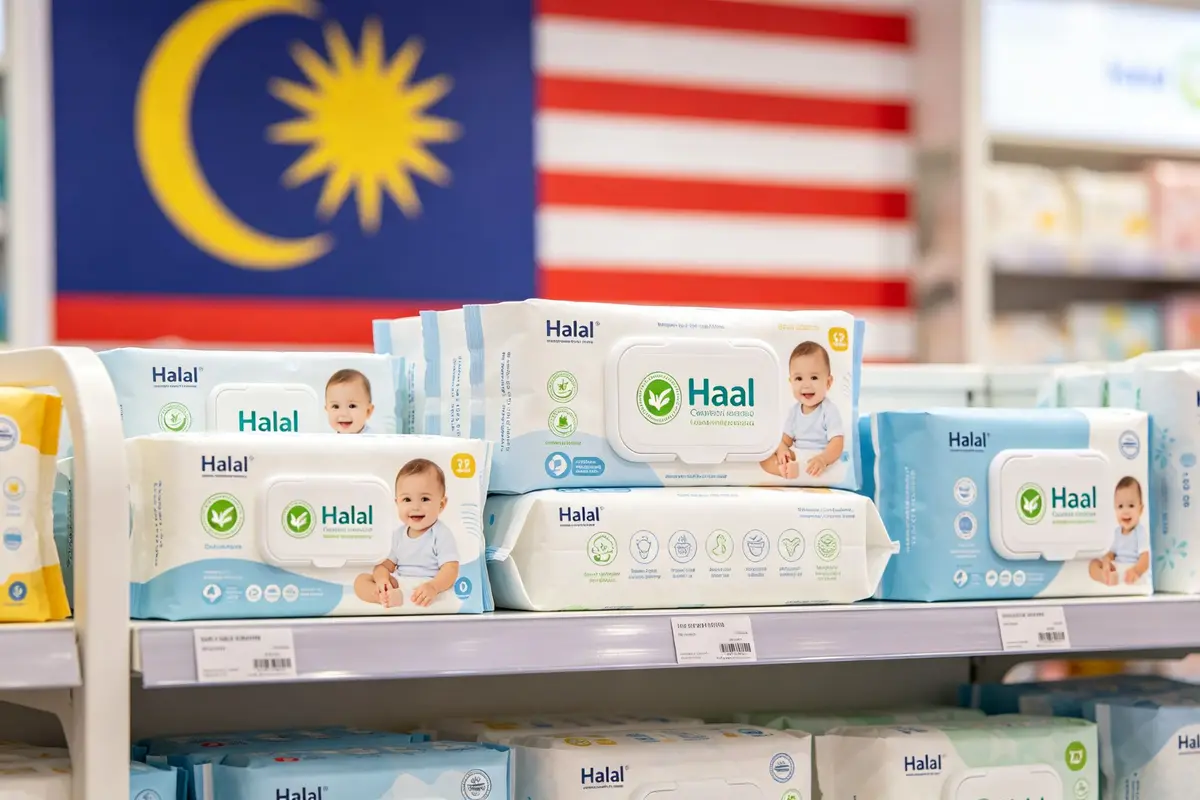
Halal Certification Becomes Key Differentiator in Malaysia's Baby Products Market
KUALA LUMPUR — In Malaysia's rapidly growing baby care market, halal certification has emerged as a critical differentiator for brands seeking to capture the attention of Muslim-majority consumers. As Malaysian parents become increasingly discerning about product ingredients and manufacturing processes, halal certification is no longer a nice-to-have—it's a baseline expectation for many consumers.
Why Halal Matters for Baby Products
Malaysia is a Muslim-majority country where approximately 63% of the population practices Islam. For Muslim parents, halal certification extends beyond food to include personal care products, including baby wipes, diapers, and skincare. The concern is twofold:
- Ingredient purity: Muslim consumers want assurance that products do not contain any haram (forbidden) ingredients, such as alcohol, pork-derived ingredients, or certain animal by-products.
- Manufacturing integrity: Halal certification also covers the manufacturing process, ensuring that products are not contaminated with non-halal substances during production, packaging, or storage.
For baby products, which come into direct contact with a baby's most sensitive skin, these concerns are amplified. Parents want complete transparency about what goes into the products they use on their children, and halal certification provides an independent, trusted verification.
The Malaysian Market Context
Malaysia's baby care market is one of the most developed in Southeast Asia, with high penetration rates for disposable diapers and baby wipes. The market is characterized by:
- High purchasing power: Malaysian consumers have relatively high disposable incomes compared to many Southeast Asian markets, with strong demand for premium and mid-premium products.
- Quality consciousness: Malaysian parents are among the most quality-conscious in the region, with high awareness of dermatological certifications, ingredient transparency, and product safety.
- Halal awareness: Malaysia has one of the most sophisticated halal ecosystems in the world, with the Department of Islamic Development Malaysia (JAKIM) overseeing halal certification. Malaysian consumers are highly educated about halal requirements and actively seek certified products.
- Modern retail infrastructure: Malaysia has a well-developed modern retail sector, including hypermarkets, supermarkets, pharmacies, and convenience stores, providing extensive distribution channels for baby care products.
Halal Certification: A Competitive Advantage
For baby care brands operating in Malaysia, halal certification offers several competitive advantages:
- Consumer trust: Halal certification signals to Muslim consumers that a brand respects their religious values and has undergone rigorous scrutiny. This builds trust and loyalty.
- Market access: Many major retailers in Malaysia, including pharmacy chains and hypermarkets, prioritize halal-certified products, particularly in the baby care category. Without certification, brands may face limited shelf space.
- Premium positioning: Halal certification, combined with dermatological certification and premium formulation, allows brands to position products at a higher price point with justified value.
- Export potential: Malaysia's halal certification is recognized globally, providing a pathway for brands to expand into other Muslim-majority markets, including Indonesia, Brunei, and the Middle East.
Beyond Halal: The Full Certification Picture
While halal certification is essential in the Malaysian market, leading brands are combining it with other certifications to create a comprehensive safety and quality profile. For example, Moni Happy's product range combines Dermatest International Safety Certification with premium Japanese manufacturing standards, providing parents with multiple layers of assurance. The brand's baby wipes are formulated with gentle, dermatologically tested ingredients, while the diaper range features a mildly acidic pH that closely mimics healthy baby skin.
Industry experts predict that as the Malaysian baby care market continues to evolve, consumers will increasingly expect brands to hold multiple certifications—halal, dermatological, safety, and eco-friendly—creating a higher bar for market entry and differentiation.
Outlook
Halal certification is no longer optional for baby care brands serious about the Malaysian market. As consumer awareness continues to grow and the regulatory environment becomes more stringent, halal certification will remain a key competitive differentiator and a baseline requirement for success.
For brands that can combine halal certification with premium quality, dermatological safety, and tropical-specific formulation, the Malaysian market offers significant growth potential. The brands that succeed will be those that understand and respect the cultural and religious values of Malaysian consumers, while delivering products that meet the highest international standards of safety and quality.
Explore Moni Happy's full range of premium baby care products at the official product page.