
2026-11-16 · Moni Happy
How should store staff explain a diaper wholesale price gap to a walk-in customer?

Convert both packs to cost per piece before saying anything about quality. A 40-piece pack at 12.50 and a 50-piece pack at 14.00 look far apart until the division: 0.31 against 0.28 per piece, and the cheaper-looking pack is the expensive one. Thai and Malaysian shoppers do this division on their phone in the aisle, and a diaper wholesale buyer watching the counter does the same, so staff who start with "this one is better" lose the conversation before it begins. Start with the number the customer cannot argue with, then explain where it comes from.
What actually makes two packs at the same count cost different?
Material weight, size range, and where the pack sits in the size run.
A pack of 40 medium diapers and a pack of 40 large diapers do not contain the same amount of material, because each piece carries more pulp and a longer sheet. Add a difference in core weight between two brands at the same size and the gap widens again. The diaper wholesale price a store pays reflects exactly those two things, material per piece and the size mix ordered, which is why the same brand can carry a different cost per piece in two sizes and a different shelf price in two shops. Staff who know this can answer the question in one sentence instead of defending the brand.
How do you show cost per piece without a calculator?
Round the pack price up to the nearest ten and divide by the piece count. The answer is close enough to settle the comparison.
A 12.50 pack of 40 rounds to 12, which divides to 0.30. A 14.00 pack of 50 rounds to 14, which divides to 0.28. Say the two numbers out loud and let the customer choose. Two rules keep it honest: always compare packs in the same size, and never compare a jumbo pack against a standard pack without saying so, since the pack size itself is part of the offer. A store that puts a cost-per-piece shelf label under the three best sellers stops having this conversation four times a day.
Which three things on the pack should staff point to?
The size range in kilograms, the piece count, and the size letter in the row printed on the front.
The kilogram range tells the customer whether the pack will fit, which is the question behind most returns. The piece count settles the per-piece arithmetic. The size row shows where the pack sits relative to the next size up, and it is the clearest way to explain why a large pack costs more than a medium pack of the same count. Pointing at printed numbers beats describing the product, because the customer can verify all three without trusting the staff.
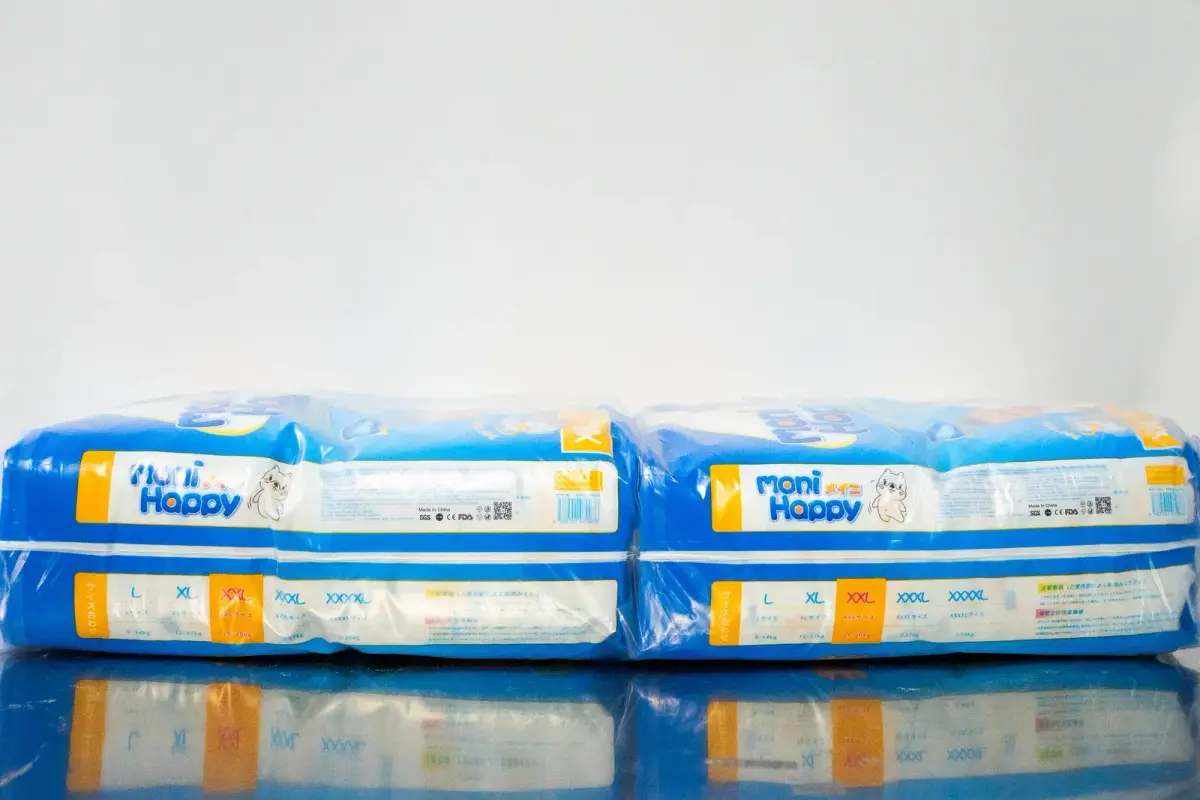
Why does the size row change the price more than the brand?
Because material per piece climbs as the size climbs, and the pack price has to follow.
Moving one size up in the same range adds pulp, a longer sheet and a wider core, so the cost per piece rises even when the piece count stays at 40. Two brands at the same size sit much closer to each other than one brand's medium sits to its own extra large, and that holds for baby diapers in every market we ship to. This is why a customer comparing an extra large pack against a medium pack from a different brand is not comparing brands at all. Saying that plainly, without implying the other brand is inferior, keeps the store's recommendation credible and keeps the customer in the aisle.
What should staff say when a customer quotes an online price?
Compare like with like, then name one thing the online listing does not include.
A marketplace listing may quote a per-piece price on a pack that ships from overseas with no local warranty, or a bundle that requires buying six packs. Ask which size and which piece count, and if the answer matches, say so honestly. Then point out what the store adds: a pack the customer can open and check, a size exchange if the fit is wrong, and no wait for delivery. Staff who deny an online price lose trust; staff who match it to the shelf pack and explain the difference keep the sale about half the time, which is better than an argument. The same logic applies when a small shop owner asks for diaper wholesale carton pricing.
How do you answer "is the dearer one better at night?"
Describe absorbency and fit in plain terms, and never promise a health outcome.
The honest answer covers three things: how much the core holds, how the leg cuff sits, and whether the size is right for the child's weight. A pack that fits properly at the right size usually outperforms a more expensive pack in the wrong size, which is why the kilogram range comes first. Staff should not claim the product prevents rash, cures anything, or is recommended by a doctor. Those claims belong in regulated territory, and a store repeating them takes on a liability the supplier never agreed to carry.
What should staff never claim?
Four things, and they come up most often with a customer who is already worried.
- That a pack prevents or treats nappy rash, which is a medical claim.
- That a brand is the same product as another brand made in the same country.
- That a size will last a stated number of months, since growth varies by child.
- That the price is about to rise, unless the store has a written notice to show.
Each of those is a claim the store cannot support, and the third one is the reason customers come back angry. Offer the kilogram range and let the parent judge. A staff member who says "this one covers 9 to 14 kilos, so it will fit longer than the pack you have" has answered the real question without promising anything.
For stores that want the product facts behind the counter conversation, the tape diaper range page lists size ranges and piece counts per pack, and the partner page covers trade terms for shops buying by the carton, subject to formal quotation.
Frequently asked questions
Should the shelf label show cost per piece?
Yes, under the three best sellers. It answers the most common question in the aisle and reduces returns caused by buying the wrong size.
How do staff handle a customer who insists the cheaper pack is better?
Compare the same size and show the division. If the cheaper pack really is cheaper per piece at the same size, say so, because credibility sells the next visit.
Is a jumbo pack always better value?
Usually per piece, not always per use. If the child is between sizes, a jumbo pack in the wrong size costs more than a standard pack that fits.
Can staff open a pack for a customer to check?
A display sample yes, a sealed sale pack no. Keep one open pack per size for touching, and keep the rest sealed for hygiene.
Sources and further reading
- WHO, recommendations on infant skin care and hygiene practices for health workers. who.int
- ISO 2859-1, Sampling procedures for inspection by attributes, used to judge pack quality in a delivery. iso.org
- ASEAN Tariff Finder, ASEAN Secretariat. Duty treatment for baby diapers across member states. tariff-finder.asean.org
Frequently Asked Questions
Should the shelf label show cost per piece?
Yes, under the three best sellers. It answers the most common question in the aisle and reduces returns caused by buying the wrong size.
How do staff handle a customer who insists the cheaper pack is better?
Compare the same size and show the division. If the cheaper pack really is cheaper per piece at the same size, say so, because credibility sells the next visit.
Is a jumbo pack always better value?
Usually per piece, not always per use. If the child is between sizes, a jumbo pack in the wrong size costs more than a standard pack that fits.
Can staff open a pack for a customer to check?
A display sample yes, a sealed sale pack no. Keep one open pack per size for touching, and keep the rest sealed for hygiene.
Distributor resources
If you are evaluating suppliers for your market, these are the pages that answer the commercial questions — in the order buyers usually need them.
