
2026-08-31 · Moni Happy Editorial Team
Southeast Asia Baby Diaper Market 2026: Premium Segment Drives Next Wave of Growth
Southeast Asia Baby Diaper Market 2026: Premium Segment Drives Next Wave of Growth
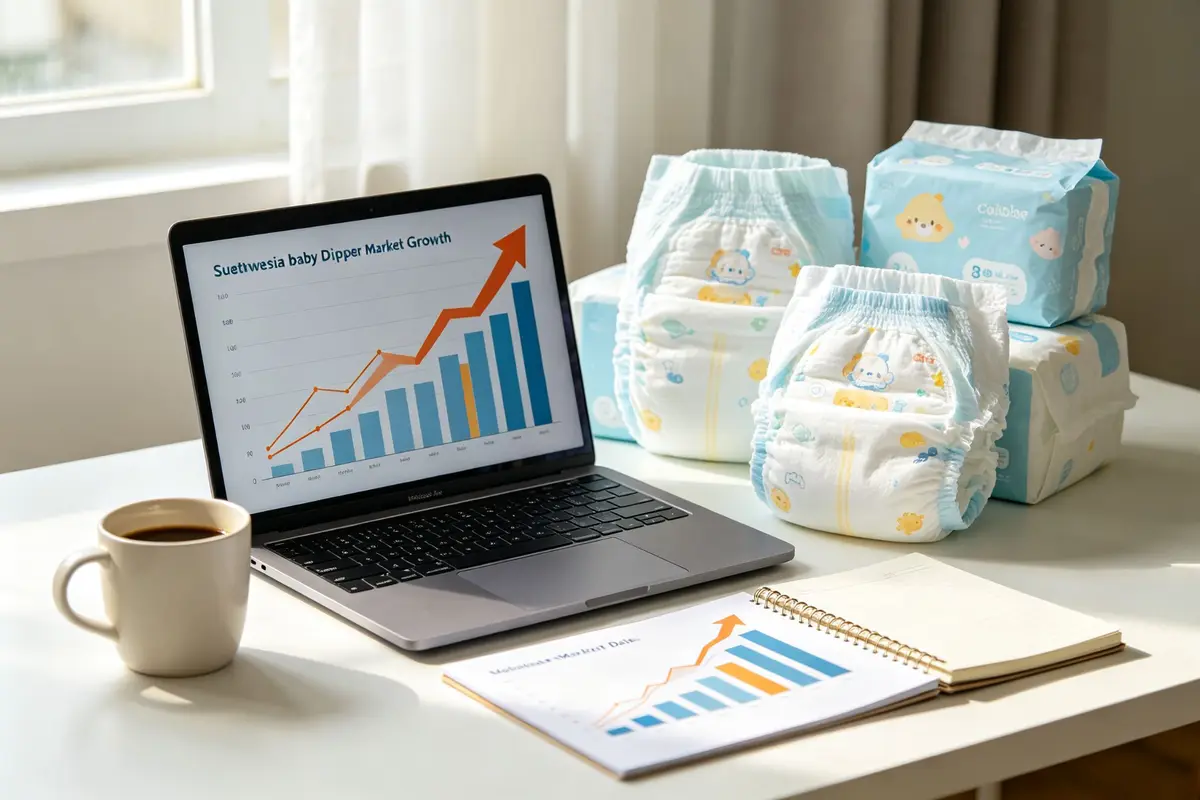
The Southeast Asian baby diaper market is entering a new growth phase in 2026, driven by rising disposable incomes, increasing urbanization, and a pronounced shift toward premium products.Public estimates for this market differ widely by source and by scope, so we do not quote a market size or a growth rate here. What we can speak to is the direction, and we would rather help you size one market from figures you can verify than publish a number we cannot source.

Country-Specific Market Dynamics
Indonesia: The largest market in Southeast Asia by volume, Indonesia is characterized by strong demand for value products but a rapidly growing premium segment, particularly in Jakarta, Surabaya, and Bandung. Halal certification is increasingly important for Muslim-majority markets.
Vietnam: One of the fastest-growing markets, with a young population and rising middle class. Vietnamese consumers are highly brand-conscious and responsive to Japanese and Korean premium products. Local brands are also gaining market share through aggressive pricing and distribution.
Thailand: A mature market with high diaper penetration and strong demand for premium and ultra-premium products. Thai parents are among the most discerning in the region, with high awareness of dermatological certifications and product ingredients.
Philippines: A price-sensitive market with strong growth potential. The rise of e-commerce and live commerce is making premium products more accessible to Filipino parents, particularly in Metro Manila and Cebu.
Malaysia: A mature, quality-conscious market where Halal certification and premium positioning are key. Malaysian parents have high purchasing power and are willing to pay for certified, high-quality products.
Singapore: The smallest market by volume but the highest in per-capita spending. Singaporean parents are early adopters of premium and ultra-premium products, with strong demand for eco-friendly and dermatologically certified options.
Competitive Landscape
The Southeast Asian diaper market is highly competitive, with international giants like Procter & Gamble (Pampers), Unicharm (MamyPoko), and Kao (Merries) dominating the premium segment. Regional players and local brands are also significant, particularly in the value segment.
Japanese brands like Moni Happy are carving out a distinct position by combining Japanese craftsmanship and quality standards with products specifically formulated for tropical climates. The brand's focus on dermatological certification, ultra-breathable design, and premium materials resonates strongly with the region's growing base of discerning parents.
Explore the full range of Moni Happy premium baby diapers and diaper pants designed for Southeast Asia's tropical climate.Public estimates for this market differ widely by source and by scope, so we do not quote a market size or a growth rate here. What we can speak to is the direction, and we would rather help you size one market from figures you can verify than publish a number we cannot source. Key trends to watch include:
- Continued premiumization across all income segments
- Growing demand for eco-friendly and biodegradable products
- Increasing importance of dermatological and safety certifications
- Rise of direct-to-consumer and e-commerce channels
- Product innovation in absorption technology, breathability, and skin-friendly materials
For brands that can deliver on quality, safety, and tropical-specific formulation, the Southeast Asian market represents one of the most attractive growth opportunities in the global baby care industry.