
2026-10-11 · Moni Happy
Is the Baby Diaper Market Growing in Vietnam? Distributor Opportunity 2026

Vietnam's baby diaper market is growing at an estimated 8–12% annually, driven by a population of ~100 million, a total fertility rate of 1.9 (World Bank 2024), rising middle-class disposable income and increasing diaper penetration from current estimates of 55–65% (vs. 85%+ in Thailand). Premium segment growth is even faster at 12–15% per year as Vietnamese parents trade up from unbranded/cloth diapers.
- Vietnam population: ~100 million; TFR 1.9 (World Bank 2024), ~1.5 million births/year.
- Diaper market growth: 8-12% annually; premium segment 12-15%.
- Current penetration: 55-65% (estimated), vs. 85%+ in Thailand — significant headroom.
- Key channels: modern trade (WinMart, Bach Hoa Xanh, Co.opmart), pharmacies, Shopee/Lazada/TikTok Shop.
- Import duty on diapers (HS 9619): 0-5% under ASEAN Trade in Goods Agreement (ATIGA), confirm with ASEAN Tariff Finder.
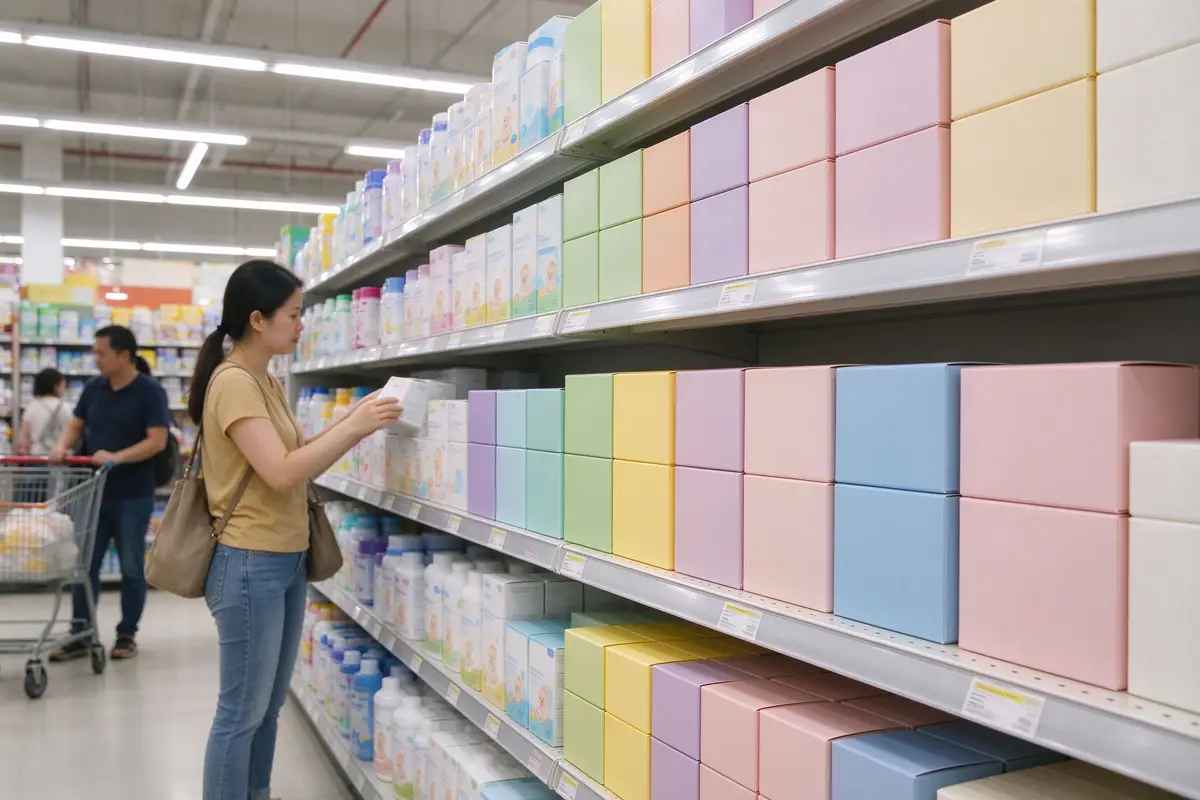
How big is the Vietnamese baby diaper market?
Vietnam has approximately 1.5 million births per year (based on a TFR of 1.9 and population of ~100 million, World Bank 2024). With current diaper penetration estimated at 55–65%, the addressable market is roughly 825,000–975,000 babies using diapers regularly. At an average consumption of 6–8 diapers per day for 0–12 months and 4–6 per day for 12–24 months, the annual market volume is estimated at 1.5–2.5 billion pieces. These are indicative estimates based on published demographic data; exact market size figures should be sourced from Euromonitor or NielsenIQ for formal business planning.
Why is the premium segment growing faster?
Three factors drive premium growth in Vietnam: (1) rising disposable income — Vietnam's GDP per capita crossed US$4,000 in 2023, creating a growing middle class willing to pay more for baby products; (2) increasing awareness of skin health — Vietnamese parents are seeking Dermatest-certified, hypoallergenic and chemical-free diapers, especially for newborns with sensitive skin; (3) e-commerce exposure — Shopee, Lazada and TikTok Shop give parents access to premium international brands that were previously unavailable in local stores. Moni Happy premium diapers are positioned for this premium segment with Dermatest 5-Star certification.
What are the main distribution channels in Vietnam?
Vietnam's diaper market is served through four main channels: (1) modern trade — WinMart (formerly VinMart), Bach Hoa Xanh, Co.opmart and Lotte Mart, with growing baby product sections; (2) pharmacies and drugstores — Pharmacity, Long Chau and An Khang, where parents trust pharmacist recommendations for baby skincare; (3) e-commerce — Shopee (market leader), Lazada and TikTok Shop, with diapers among the top-selling baby categories online; (4) traditional trade — local baby stores and wet markets, still important in provincial areas. For a new distributor, start with e-commerce (lowest barrier) and independent baby stores, then target modern trade once you have sales track record. See our complete channel guide for detailed channel strategies.
What import duties and regulations apply?
Baby diapers fall under HS code 9619. Under the ASEAN Trade in Goods Agreement (ATIGA), import duty from ASEAN member countries is typically 0–5%, but you must confirm the exact rate and rules of origin with the ASEAN Tariff Finder and a licensed Vietnamese customs broker. Vietnam's VAT rate is 10% on baby products. Product labeling must be in Vietnamese, including product name, manufacturer, importer, ingredients/materials, usage instructions and expiry date. For premium claims (e.g., Dermatest certified), retain the original certificate for customs and retailer verification.
Who are the main competitors in Vietnam?
The Vietnamese diaper market is dominated by global brands (Pampers/P&G, Huggies/Kimberly-Clark) and strong regional players (Drypers, PetPet, MamyPoko). Local unbranded and Chinese imported diapers compete at the low end (US$0.08–0.15 per piece). The premium segment (US$0.25–0.40 per piece) is less crowded and growing fastest — this is where Japanese-positioned brands with Dermatest certification and clean-ingredient claims can differentiate. Distributor opportunity exists in tier-2 cities (Da Nang, Can Tho, Hai Phong) where premium brand coverage is thinner than Ho Chi Minh City and Hanoi.
How do I become a distributor in Vietnam?
Steps to enter the Vietnamese market: (1) register a company or partner with a local importer — foreign companies cannot directly distribute retail goods without a Vietnamese entity; (2) obtain an import license and product registration (if required for baby products); (3) secure exclusive or non-exclusive distribution rights from a brand; (4) start with e-commerce and independent baby stores to build sales track record; (5) approach modern trade buyers with sales data and a marketing plan. Moni Happy is actively seeking distributors in Vietnam — apply for distribution rights and request a country-specific information pack including pricing, MOQ and marketing support.
The Vietnam baby diaper market is one of the most attractive in Southeast Asia for new distributors because premium penetration is still low and modern trade coverage outside Hanoi and Ho Chi Minh City is thin. Apply for Moni Happy distribution rights in Vietnam and request a country-specific information pack with pricing, MOQ and channel strategy.
Bottom line: Vietnam's baby diaper market is growing 8–12% annually with the premium segment at 12–15%, driven by 1.5 million births per year, rising middle-class income and penetration still at only 55–65%. The biggest opportunity is in premium-positioned, Dermatest-certified brands in tier-2 cities where coverage is thin. Entry requires a Vietnamese entity or local importer partner, starting with e-commerce before modern trade. All market figures are indicative estimates; confirm with Euromonitor/NielsenIQ and a local customs broker before investment.
If you already sell into Vietnam, the Vietnam partner programme sets out territory availability, what the launch package includes and how to apply.
The onboarding process for new distributors explains what we look for in a partner, the order in which territory and support are settled, and where price sits in that sequence.
Sources and further reading
Commercial figures are indicative planning ranges and subject to a formal quotation; statutory rates must be confirmed with a licensed customs broker.
Frequently Asked Questions
How fast is Vietnam's baby diaper market growing?
The market grows an estimated 8-12% annually, with the premium segment growing faster at 12-15% as Vietnamese parents trade up to certified, hypoallergenic products.
What is the diaper penetration rate in Vietnam?
Current penetration is estimated at 55-65%, significantly lower than Thailand's 85%+, indicating substantial growth headroom as more parents adopt disposable diapers.
What import duty applies to diapers in Vietnam?
Baby diapers (HS 9619) from ASEAN countries typically face 0-5% duty under ATIGA, plus 10% VAT. Confirm exact rates with the ASEAN Tariff Finder and a licensed customs broker.
Which cities offer the best distributor opportunity?
Tier-2 cities like Da Nang, Can Tho and Hai Phong offer the best opportunity because premium brand coverage is thinner than in Ho Chi Minh City and Hanoi, where global brands dominate.
Distributor resources
If you are evaluating suppliers for your market, these are the pages that answer the commercial questions — in the order buyers usually need them.