
2026-11-20 · Moni Happy
What does a diaper wholesale line need to reach Petronas Mesra shelves?
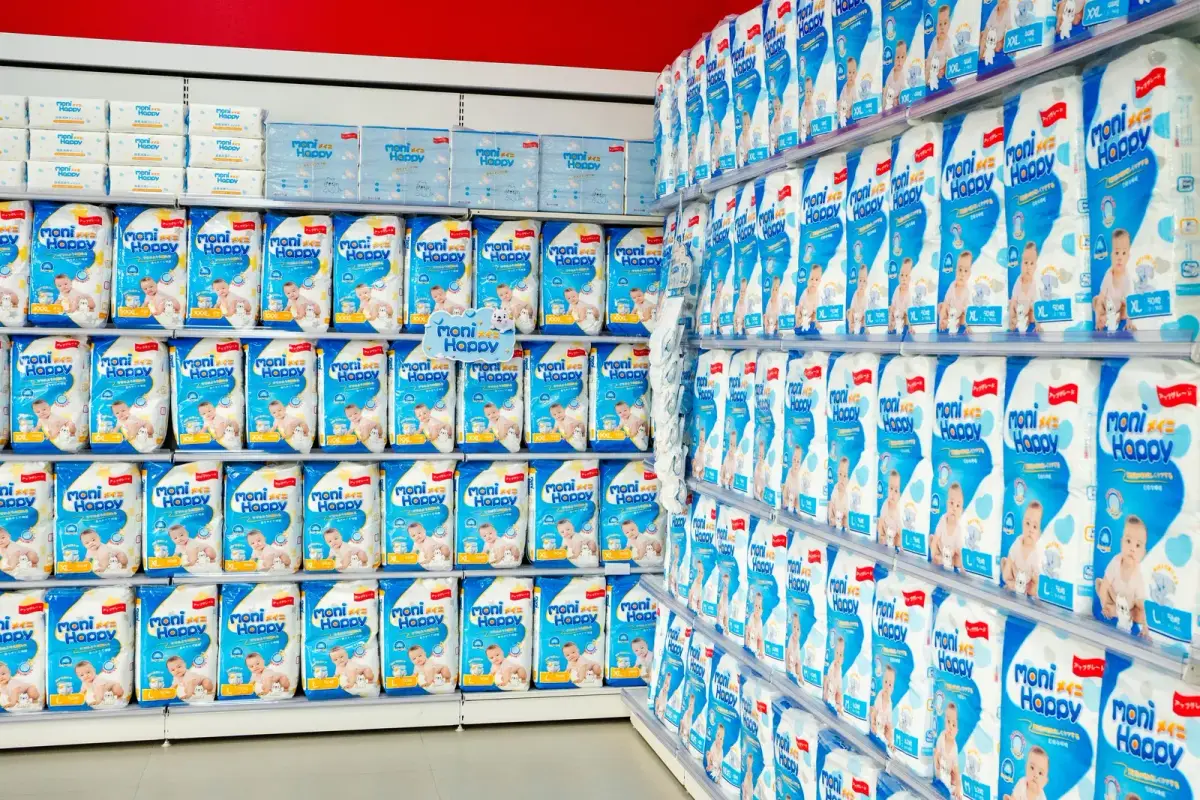
A fuel station shop gives a nappy line roughly four facings, a 40 centimetre shelf and a customer who is buying because it is 11pm and the hypermarket is shut. That is a different product from the jumbo pack on a supermarket endcap, and a diaper wholesale supplier who sends the same specification to both channels loses the convenience listing in the first quarter. The ranging decision is central, the planogram is fixed, and the review is quarterly. What the buyer needs is a small pack that turns, not a full size ladder.
Why does a fuel station shop stock nappies at all?
Because a parent who has run out at night will pay a convenience markup, and the store already owns the footfall.
Kedai Mesra outlets trade inside Petronas stations, most of them around the clock, and the largest part of their traffic is a driver stopping for fuel who then walks past the shelf. The baby category exists on that walk, not on a planned shopping trip. A shopper buying nappies in a supermarket compares price per piece across three brands. A shopper buying at a station compares whether the size is right and whether the store has it at all. Category depth stops mattering at that point.
That single behavioural difference reshapes the entire supply brief. Pack count drops, price per piece rises, and the number of sizes shrinks to the two that cover most of the population. A supplier who arrives with eight SKUs is asking the buyer to give up shelf that could hold a second drink chiller.
Which pack size fits a convenience shelf?
Small counts on a shallow shelf, and the depth of the shelf is the constraint nobody mentions in the brief.
A station shop shelf commonly runs 35 to 45 centimetres deep, against 60 in a supermarket. A jumbo pack 28 centimetres thick fills most of that depth and blocks the row behind it, so the buyer either delists it or turns it sideways, which wastes width. Packs of 8 to 20 pieces at 10 to 14 centimetres thick allow two rows deep and a second facing, and two rows on a shallow shelf is what makes a four-facing block look stocked between deliveries.
The price ladder then has to work at that count. A 20-piece pack at a convenience markup lands in a band the shopper will pay without comparing, and anything above it stops being an emergency purchase and becomes a decision the shopper defers to the next supermarket trip. The size that turns is usually the one that covers 4 to 9 kilograms, because that is the range where parents of newborns and toddlers both still need to buy.
What does the listing pack need before a buyer will look at it?
Five documents and one barcode that actually scans at the till.
- SSM registration. The contracting entity must be a Malaysian company. A foreign supplier invoices a local distributor, and the distributor carries the listing.
- GS1 barcode. Each pack count needs its own GTIN, registered with GS1 Malaysia and printed at a size and contrast that scans on a moving belt. A barcode that fails at the till is a delisting conversation, not a reprint conversation.
- Product liability cover. Retail groups ask for a certificate naming the chain as additional insured, usually at a limit set by the group rather than by the supplier.
- SST registration where applicable, and a local bank account for payment.
- Product specification and test reports for skin contact, plus the labelling in Bahasa Malaysia and English.
Missing any one of these stops the process at a different desk, which is why listing timelines stretch. The barcode and the labelling are the two that fail most often, and both are cheap to fix before submission and expensive to fix after.
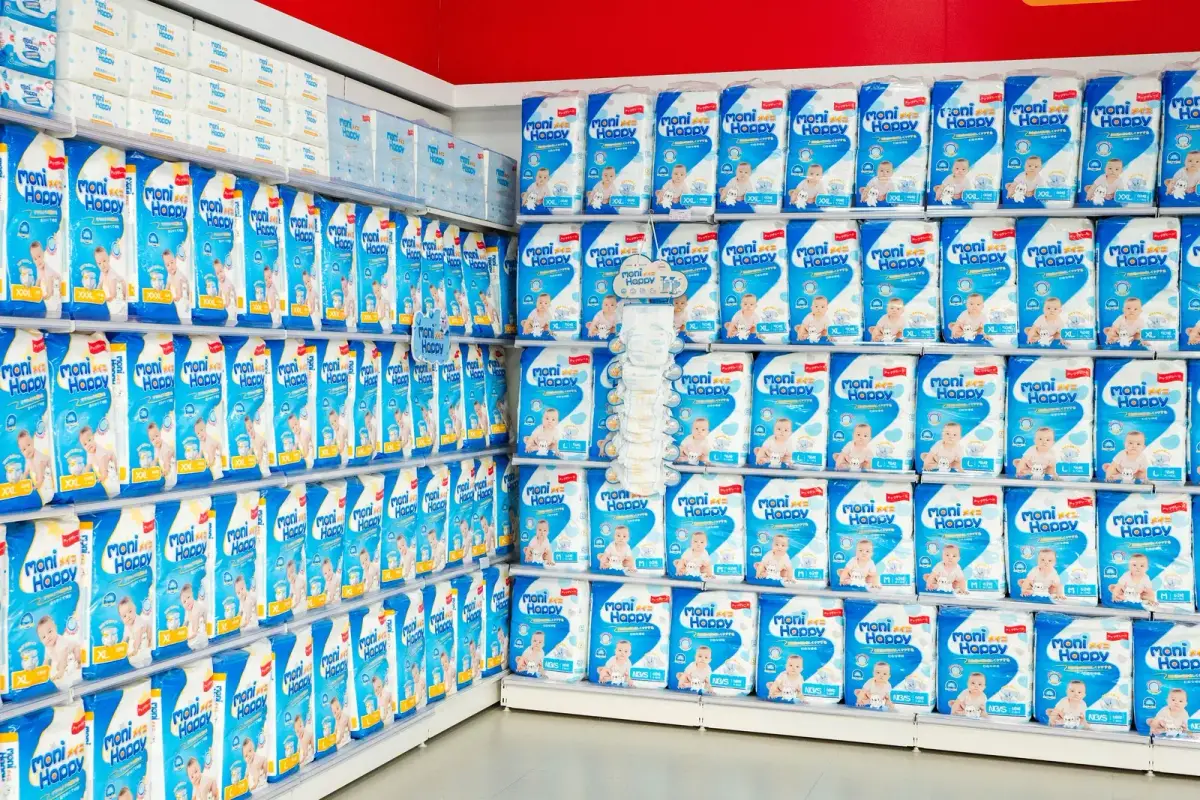
Who actually decides the ranging?
A category manager at the convenience arm, not the station operator, and not the fuel retailer's brand team.
Petronas Dagangan runs the Kedai Mesra network through its own convenience retail structure, and ranging sits with a category team that manages the whole shop, from drinks to phone credit to nappies. The station operator can request a product and cannot list it. A supplier who spends three months working the station level has spent three months talking to someone without a purchase order.
The category team reviews on a cycle, typically quarterly, against a planogram with a fixed number of positions per shelf. Nappies usually hold one block of four to six facings, and a new line enters by displacing an existing one. That is the real negotiation: not whether the category deserves space, but which current line loses its slot. A supplier who can show sell-through per facing from a comparable convenience format has the only argument that carries weight in that room.
What does the supply chain look like after listing?
Central delivery to a distribution centre, then store replenishment on the retailer's schedule, and the supplier absorbs the difference.
Deliveries go to a DC against a purchase order, usually in full cartons on a standard pallet, and the retailer moves stock to stores by its own routing. Order frequency is weekly or fortnightly, order quantities are small, and the minimum drop is set by the DC rather than by the store. A supplier geared to 20-foot containers has to build a buffer for the case where the DC orders 40 cartons and then skips a week.
Payment terms in Malaysian convenience retail commonly run 30 to 60 days from invoice, sometimes longer for a new supplier building a record. Add the DC's receipt cycle and the true cash conversion stretches well past the nominal term, which is why the first listing often needs working capital the supplier has not budgeted. Our note on working capital for a diaper wholesale distributor sets out how to size that gap.
What kills a c-store listing in the first quarter?
A facing that does not turn, and a pack that arrives damaged because it was built for a different channel.
Sell-through per facing is the only number the category team reviews. A block of four facings that produces less than the alternative use of that space loses its slot at the first review, and the supplier usually hears about it after the decision. The two avoidable causes are pack count mismatched to the price band, and cartons that crush in a mixed pallet because the pack was designed for a floor-loaded container rather than a DC build.
There is a third, less obvious one: promotional depth. A convenience shopper is not price-hunting, so a deep discount buys volume that disappears the week the promotion ends and leaves the category looking flat in the following four weeks. Trade spend in this channel works better on a permanent price point than on a two-week cut.
How should a supplier price for a c-store?
Build the price from the shelf backwards, and let the pack count carry the margin.
Start with the price the shopper will pay without thinking, subtract the retailer's margin, subtract the distributor's, and see what is left for the landed cost at the pack count you can fit on the shelf. If the arithmetic does not close at 20 pieces, it will not close at 12, because the fixed cost per pack — film, carton, handling — does not shrink with the count. That is why small packs in this channel are almost always a lighter grammage or a simpler fold, and why a brand that insists on its supermarket specification cannot make the format work at all.
Suppliers building a convenience entry alongside a supermarket listing usually run both from one production batch to keep the substrate and film on a single order. The channel maths for that split is set out in the Southeast Asia distribution channel guide, and a partner enquiry will get you the pack and pallet options for a convenience format.
Frequently asked questions
Can a foreign brand list directly?
Almost never. The buyer contracts locally, so a Malaysian entity or a distributor holds the listing and the credit.
Is a four-facing block realistic for a new brand?
Yes, if you can show sell-through from another convenience format. Without that data, expect two facings for a trial quarter.
Do station shops take returns on slow stock?
Rarely on a straight sale. Some agreements allow a swap within a window, which is worth asking for before signing.
Does halal certification matter for nappies?
Not for the product itself. It matters for the brand's wider credibility with Muslim shoppers, and some buyers ask about it even where it is not required.
Sources and further reading
- KPDN Malaysia — consumer product labelling and trade description requirements.
- Department of Statistics Malaysia — retail trade and household consumption data.
- GS1 barcode standards — GTIN allocation and retail scanning specifications.
Bottom line
A station shop is not a small supermarket. It sells a narrow, shallow, high-margin pack to a shopper who has no alternative at that hour, and it reviews the facing every quarter. Get the pack depth and the barcode right, accept that four facings is the whole prize, and bring sell-through evidence rather than a full size ladder.
Frequently Asked Questions
How many nappy SKUs does a fuel station shop carry?
Usually two to four, across one or two sizes. The category exists for the emergency purchase, so depth of size range matters less than having the size a driver needs at 11pm.
Do I need a local company to list?
Yes. The buyer contracts with a Malaysian entity registered with SSM, with a SST registration where applicable and a local bank account for payment terms.
What pack size sells in a convenience format?
Small counts, typically 8 to 20 pieces, priced so the unit economics survive a convenience markup without breaking the shopper's impulse threshold.
How long does listing take?
Eight to sixteen weeks from first submission to first delivery, most of it spent on barcode verification, credit application and the first purchase order against a planogram slot.
Distributor resources
If you are evaluating suppliers for your market, these are the pages that answer the commercial questions — in the order buyers usually need them.
