
2026-11-22 · Moni Happy
What does Bach Hoa Xanh demand from a diaper wholesale supplier before listing?
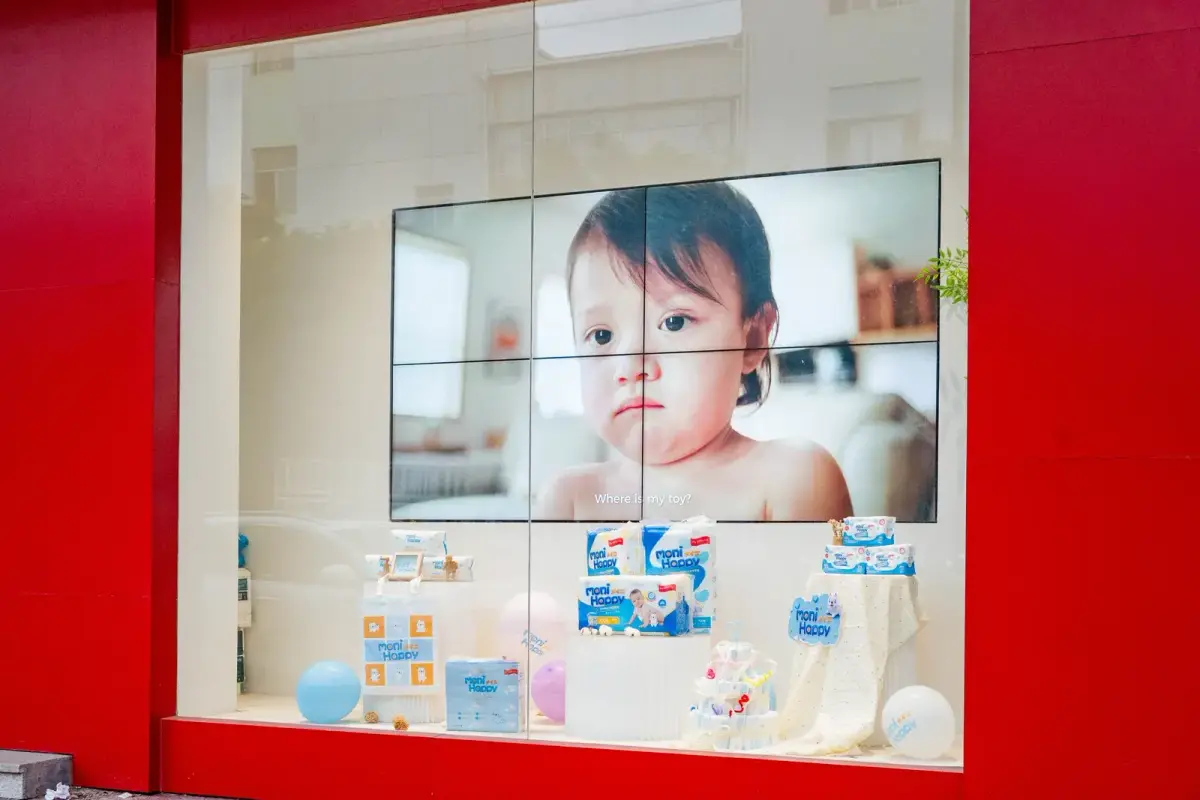
Bach Hoa Xanh, the grocery chain owned by Mobile World, lists a diaper line only after five things are settled: a valid product notification, a GS1 Vietnam barcode on every pack, a Vietnamese label that satisfies Decree 43, a delivery pattern that matches its depot schedule, and an entry range of two SKUs rather than a full size ladder. Everything else, including the listing fee and the payment term, is negotiated afterwards.
The chain operates more than 1,700 stores and rebuilt its model around fresh food, which changed what it wants from packaged goods. A baby care set that used to run eight or ten brands now runs fewer, with more space per brand and a shorter tolerance for slow movers. For a diaper wholesale supplier that is both an opportunity and a narrower door.
Why does Bach Hoa Xanh matter more than its store count suggests?
Because it reaches the shopper who buys diapers weekly, in the same trip as food, at a density no baby store chain matches.
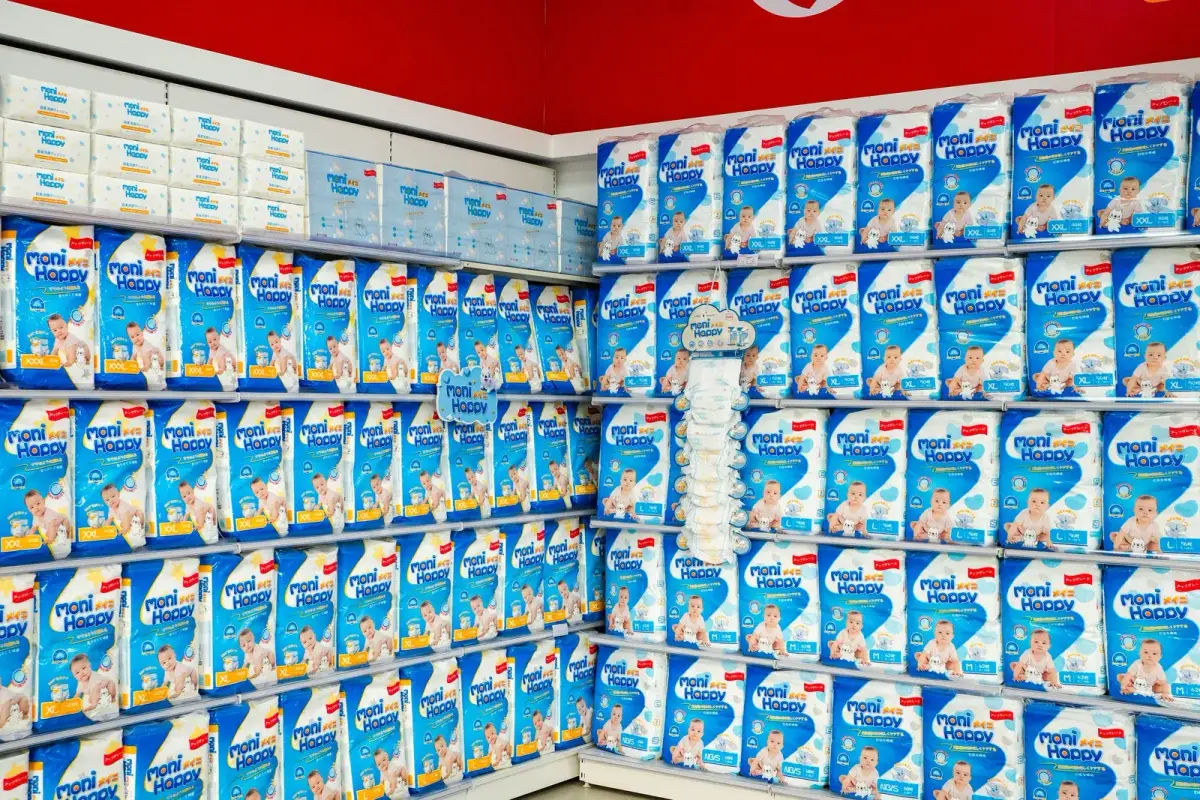
The stores sit in residential streets across Ho Chi Minh City, Binh Duong, Dong Nai and the Mekong provinces, and the format is small, typically 100 to 300 square metres. A small store cannot carry a wide range, so each facing has to earn its place on sales per metre rather than on brand completeness. That single fact shapes every term a supplier will be offered.
The assortment logic also explains why the chain is a good second step and a poor first one. A brand with no local sell-through data arrives with nothing to argue about, and the buyer has no reason to displace an incumbent. A brand that has already proved two SKUs in independent baby stores or on Shopee arrives with a number, and the conversation starts at the right place.
Which documents decide whether the file even opens?
Four, and three of them are cheap to fix and expensive to fix late.
- Product notification. Baby diapers and wet wipes sold as consumer goods in Vietnam need the appropriate self-declaration or publication, and wipes sold as cosmetics need a publication number issued through the health authority. The number goes on the file, and a supplier without one is not discussed.
- Barcode. A GS1 Vietnam prefix, printed on the pack, with the number registered to the importer of record. A barcode borrowed from another market scans once and then fails the chain's master data check.
- Vietnamese label. Origin, importer name and address, net content, size band and ingredients, in Vietnamese, applied before customs clearance. A supplementary label stuck on at the depot is allowed only in narrow circumstances and costs more per pack than printing.
- Quality and safety file. Test reports for absorbency, pH and microbiological limits, plus the factory audit the chain's quality team will schedule. A Dermatest report and an ISO 13485 certificate shorten this step because they answer questions before they are asked.
What does the delivery pattern have to look like?
It has to match a depot schedule that runs on fixed days, and it has to survive a partial rejection.
Deliveries move through regional depots rather than to individual stores, and each depot has a receiving window. A supplier who arrives outside the window waits, and a truck that waits is a cost that never appears on the invoice. Cartons need to be labelled with the purchase order number and the store-destination code, and pallets need to be stable enough for a forklift to move without restacking.
The rejection rule is the part new suppliers underestimate. One damaged carton in a mixed pallet can send the whole delivery back for re-checking, and the goods then sit in the supplier's warehouse while the depot reorders from someone else. Wrapping cartons to a 15 to 20 kilogram handling weight rather than to the maximum the corrugate will bear is one of the cheapest ways to reduce that risk.
How should a supplier price the listing?
Start from the shelf price the chain will set, work back through its margin, and see whether anything is left.
Modern-trade grocery in Vietnam applies a retail margin in the region of 20 to 30 percent on baby care, plus a listing or slotting fee per SKU per store cluster, plus a contribution to promotion. A diaper wholesale price that leaves 18 percent for the distributor disappears once those three are subtracted. The arithmetic that works starts with the shelf price the category already accepts, subtracts the chain's margin, subtracts the promotion contribution, and then asks what FOB the factory needs.
Two lines are worth naming separately in the negotiation. The listing fee is a one-off and can sometimes be converted into a promotional commitment, which is easier to justify internally because it produces a sales number. The payment term is a financing cost, and 45 days against a 9 percent cost of capital is roughly 1.1 percent of the invoice value, which belongs in the wholesale price rather than in a footnote. The margin guide sets out the full cost stack for this calculation.
What kills a listing after the first quarter?
Stockouts, and then a size mix that does not match the catchment.
A store that runs out of the medium size in a two-SKU range loses the shopper to the brand next door, and the chain's system records it as a lost sale on the supplier's line. Vietnamese birth weights cluster in a band where size S and M do most of the volume, so a first offer built on newborn and XL looks complete and sells badly. Reading the birth-weight distribution before choosing the ladder is worth more than any promotional budget.
Wet wipes attached to the same listing help, because they lift the basket without taking diaper shelf space, and they carry a higher margin per facing. That combination is the usual route for a new brand entering this chain: two diaper sizes for the volume, one wipes pack for the margin.
How does a distributor prepare for the first meeting?
With a two-page file, a shelf price, and a delivery commitment that can be kept.
The first page carries the brand, the two SKUs, the shelf price, the FOB and the notification numbers. The second carries the quality documents in a list, the depot delivery plan, and the promotion proposal for the first 90 days. Buyers in this channel read two pages and decide whether to ask for the rest, and a supplier who arrives with a catalogue and no price has already lost the slot to someone who arrived with both.
Where a distributor does not yet have the import licence or the notification, the route is to start with independent baby stores and e-commerce for two quarters, then return with sell-through data. That sequence is described in the distribution channel guide, and it is how most brands in this market actually got in.
Frequently asked questions
How many SKUs should a first Bach Hoa Xanh offer carry?
Two, and both should be the sizes that turn fastest in the catchment rather than the sizes that complete a range. The chain manages shelf space by sales per metre, so a four-size ladder on a first offer reads as a supply risk. A third size can follow once the first two have eight weeks of sell-through behind them.
Does the label have to be in Vietnamese?
Yes. Decree 43/2017, as amended, requires origin, importer name and address, net content and ingredients in Vietnamese on goods sold to consumers in Vietnam, and a supplementary label applied at the border is accepted only if attached before customs clearance. Printing the Vietnamese panel at the factory is cheaper than a relabelling operation at the depot.
Is payment on delivery or on terms?
Modern-trade grocery in Vietnam pays on terms, and 30 to 45 days from a valid invoice is the range a new supplier should model. The invoice has to match the delivery note and the purchase order exactly, because a mismatch restarts the clock, which is the most common reason a first payment arrives late.
Can a distributor hold the listing instead of the brand owner?
In practice the chain contracts with the importer of record, whoever that is. A distributor with the import licence, the notification number and the warehouse can hold the account, but it also carries the stock risk and the returns obligation, which is worth pricing into the wholesale margin before the first meeting.
Sources and further reading
- Mobile World investor relations, group reports covering the Bach Hoa Xanh store network and its shift to a fresh-food-led assortment, 2025 to 2026.
- Decree 43/2017/ND-CP, Vietnamese rules on goods labelling, as amended by Decree 111/2021/ND-CP.
- GS1 Vietnam, barcode prefix registration for importers and brand owners.
- ASEAN Cosmetic Directive, notification requirements for wipes sold as cosmetics in member states.
Bottom line. Bach Hoa Xanh is a narrow door with a short leash: two SKUs, a complete document file and a delivery pattern that holds are the price of entry, and sell-through per metre decides whether the listing survives the quarter. A supplier who arrives with a shelf price and a birth-weight argument gets a second meeting; one who arrives with a catalogue does not.
We support Vietnamese accounts with Vietnamese-language labelling printed at source, GS1-registered barcodes and a two-SKU entry range for modern trade. Request pricing and free samples, or see the diaper range for the size bands that carry the volume.
Frequently Asked Questions
How many SKUs should a first Bach Hoa Xanh offer carry?
Two, and both should be the sizes that turn fastest in the catchment rather than the sizes that complete a range. The chain manages shelf space by sales per metre, so a four-size ladder on a first offer reads as a supply risk. A third size can follow once the first two have eight weeks of sell-through behind them.
Does the label have to be in Vietnamese?
Yes. Decree 43/2017, as amended, requires the origin, importer name and address, net content and ingredients in Vietnamese on goods sold to consumers in Vietnam, and a supplementary label applied at the border is accepted only if it is attached before customs clearance. Printing the Vietnamese panel at the factory is cheaper than a relabelling operation at the depot.
Is payment on delivery or on terms?
Modern-trade grocery in Vietnam pays on terms, and 30 to 45 days from a valid invoice is the range a new supplier should model. The invoice has to match the delivery note and the purchase order exactly, because a mismatch restarts the clock, which is the single most common reason a first payment arrives late.
Can a distributor hold the listing instead of the brand owner?
In practice the chain contracts with the importer of record, whoever that is. A distributor with the import licence, the notification number and the warehouse can hold the account, but it also carries the stock risk and the returns obligation. That is worth pricing into the wholesale margin before the first meeting.
Distributor resources
If you are evaluating suppliers for your market, these are the pages that answer the commercial questions — in the order buyers usually need them.
