
2026-11-23 · Moni Happy
Which Laos provinces should a diaper wholesale distributor stock directly?
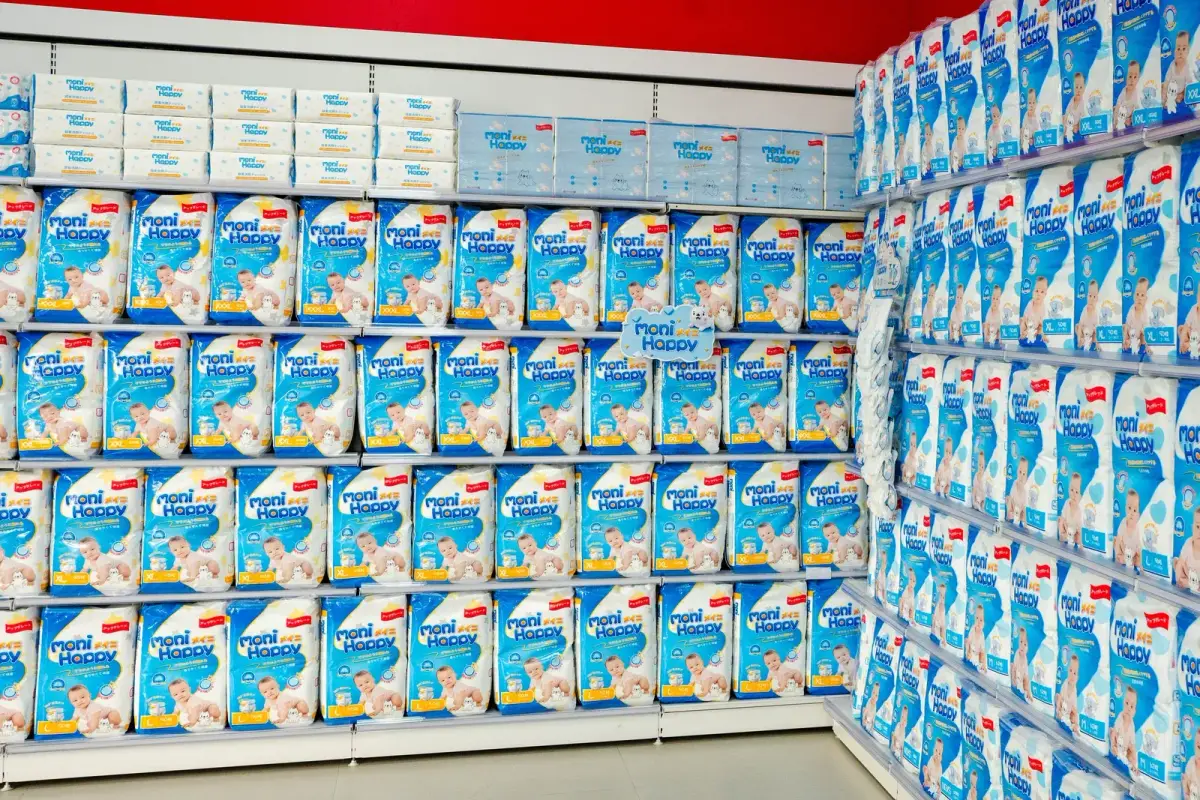
Three: Vientiane Capital, Savannakhet and Champasak. Those are the only provinces in Laos that can absorb a full three-tonne truck of diapers each month, which is about 300 cartons, and 300 cartons is the point at which direct stock beats a sub-distributor on cost. Everything north of Vientiane and the smaller eastern provinces belongs with a sub-distributor taking 8 to 12 percent.
The country has about 7.6 million people across 17 provinces, according to World Bank data, and roughly half of the modern retail floor space sits in two of them. A diaper wholesale distributor who opens a warehouse in every province spends the year moving stock between them instead of selling it.
Why does a 300-carton truck matter more than a province's population?
Because freight is charged per trip while margin is earned per carton.
A three-tonne body holds about 300 cartons of diapers at 9 to 10 kg each, which is 1,200 packs of four, or roughly 48,000 pieces. Run that truck from Vientiane to Pakse, about 800 km on Route 13, and the round trip costs USD 380 to 560 in fuel, driver allowance and vehicle wear at current Lao fuel prices. Divide by 300 cartons and the route cost is USD 1.30 to 1.90 per carton. On a carton that wholesales at USD 30 to 45, that is 3 to 6 percent, which a distributor can absorb.
Send the same truck with 140 cartons and the route cost per carton doubles to USD 2.70 to 4.00, which is 6 to 13 percent. At that point the trip has stopped being a delivery and become a subsidy. A sub-distributor who consolidates three brands into one truck does the same journey at a fraction of the cost per carton, and that is the whole argument for using one.
Which provinces can actually fill a truck?
Four can come close, and three can do it every month once the route cost is counted per carton rather than per truck.
- Vientiane Capital. Around 840,000 residents and the country's densest retail base, including Talat Sao and the surrounding wholesale streets. A distributor based here can deliver weekly and hold stock in one place.
- Savannakhet. The largest province by population at roughly one million, sitting on Route 13 with a border crossing to Vietnam at Lao Bao. It serves both its own retail base and cross-border buyers.
- Champasak. Around 780,000 people with Pakse as the southern hub, and the Dao Heuang market complex moving volume into the four southern provinces.
- Luang Prabang. Around 460,000 people and a strong tourist economy, but the mountain route and a retail base that is seasonal make it a quarterly direct drop rather than a monthly one.
What does a sub-distributor cost compared with a second warehouse?
Less, until the volume passes about 400 cartons a month.
A sub-distributor in Pakse or Luang Prabang will ask 8 to 12 percent off the distributor's transfer price and will expect support with a first stocking order, shelf talkers and a launch promotion. On 200 cartons a month at USD 35 per carton, that is USD 560 to 840 a month of margin given away. A rented bay with a part-time storekeeper in Pakse costs USD 250 to 400 a month before any stock is in it, plus a delivery vehicle and a person to drive it. Below 400 cartons the sub-distributor is cheaper even after the margin.
The trade-off is control, and it is not small for a diaper wholesale operation in its first year. A sub-distributor sets its own retail price, decides which pack sizes to push, and may carry a competing line. The way to hold the position without owning the warehouse is a written territory agreement with a minimum monthly purchase, a price ceiling, and a 90 day review. The distributor onboarding guide covers what those clauses look like when the counterparty is a family business rather than a corporate buyer.
How should stock be split inside Vientiane?
By pack size and price band, not by province.
The capital's retail base divides into modern trade, the traditional wholesale streets around Talat Sao, and the pharmacy and baby shop channel that sits between them. Modern trade wants the full size ladder and will not take a partial range. The wholesale streets want the two or three sizes that move fastest and will take a mixed pallet. Pharmacies want a small pack at a higher price per piece, because their customer buys one pack at a time.
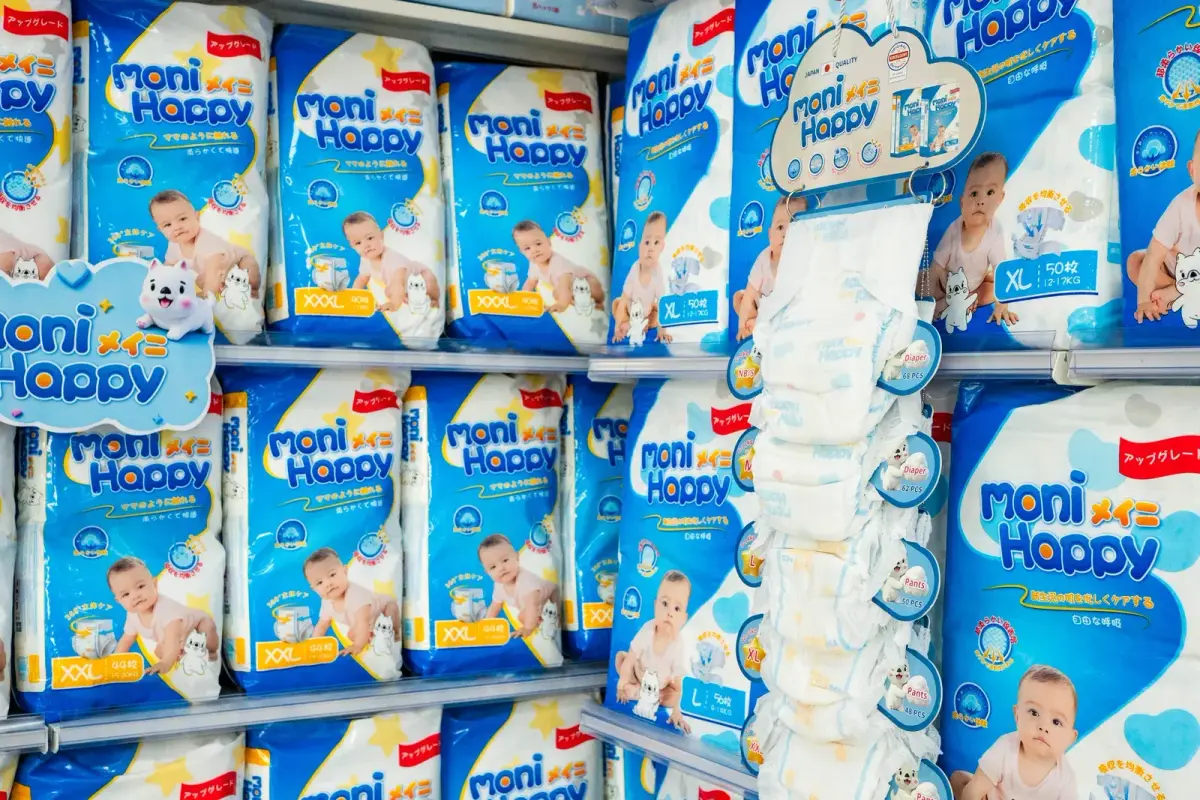
Provincial stock follows the same logic inside the capital: 55 to 60 percent of the value in the two fastest sizes, 25 percent across the middle of the ladder, and 15 to 20 percent in small packs for the pharmacy channel. A distributor who stocks all six sizes equally ends up with the slow sizes ageing on the top rack and the fast ones out of stock, which is the most common failure in a first year. Our diaper range is produced in the size ladder the Lao market asks for, and the pack count per carton can be set for a sub-distributor's storage rather than a hypermarket pallet.
What does the kip do to the stocking decision?
It shortens the planning horizon, which favours the smaller warehouse.
The kip has moved repeatedly against the dollar, and a distributor holding four months of stock in a depreciating currency is carrying a loss that no margin recovers. Two months of cover in the capital, six weeks in a sub-distributor's hands, and a repricing rule written into the territory agreement is a workable structure. The mechanics of repricing a price list when the kip slides are covered in the kip repricing note.
There is a second currency effect that is easy to miss. A sub-distributor paid in kip needs a margin wide enough to absorb a 5 percent move during the credit period. Ten percent, not eight, is the number that survives a bad quarter on a diaper wholesale price list, and it is cheaper to concede that at signature than to renegotiate after the first loss.
How does the import route change the answer?
It decides which provinces are cheap to reach and which are expensive.
Cargo entering over the First Thai-Lao Friendship Bridge at Nong Khai reaches Vientiane in under an hour, which makes the capital the natural first warehouse. Goods entering from Vietnam at Lao Bao land in Savannakhet, so a southern distributor sourcing that way avoids the 470 km haul north. Cargo from China through Boten comes down Route 13 into Oudomxay and Luang Prabang, which is why the north is sometimes better served from Yunnan than from Vientiane.
A diaper wholesale plan that assumes everything enters at one border and radiates outward will overpay on two of the three corridors. Ask the freight forwarder for a route cost and a landed cost per carton at each border before deciding where the warehouse goes; the difference between the corridors is often larger than the difference between provinces.
Frequently asked questions
Is a bonded warehouse worth it in Laos?
Rarely at first-order volumes. The duty deferral saves cash but the compliance cost and the reporting burden are fixed, and a distributor moving 500 cartons a month will spend more on administration than the deferral is worth.
How many sub-distributors can one country support?
Three to four in the first two years. Each needs a minimum monthly volume, and splitting 800 cartons four ways leaves every one of them below the level where the margin covers their own delivery cost.
Should provincial stock include pull-up pants?
Only in Vientiane and Savannakhet at first. Pants sell where disposable income and urban retail density are highest, and a slow pants range in a provincial bay ties up cash that tape diapers would turn twice.
What payment terms are normal with a Lao sub-distributor?
Cash on delivery for the first three orders, then 15 days against a post-dated cheque. Thirty days is achievable after a year of clean history, and asking for it earlier usually ends the conversation.
Sources and further reading
Population and urbanisation data for Lao PDR used in the catchment estimates: World Bank Open Data, Lao PDR.
Provincial population figures and the administrative structure of the 17 provinces and Vientiane Capital: Lao Statistics Bureau.
Duty treatment for absorbent hygiene products entering Laos under the ASEAN Harmonised Tariff Nomenclature: ASEAN Tariff Finder.
Bottom line: let truck fill decide the map, not the map decide the trucks, and treat a half-empty truck as a local operation rather than a distribution network. Vientiane Capital, Savannakhet and Champasak justify direct stock at 300 cartons a month; Luang Prabang and the north run better on a quarterly drop or a sub-distributor at 8 to 12 percent. Diaper wholesale distributors planning a Laos entry can request a landed cost per carton for both border routes through the partner desk.
Frequently Asked Questions
How many cartons does a province need to justify direct stock?
Roughly 300 cartons a month, which is one full three-tonne truck. Below that the route cost per carton climbs above the 8 to 12 percent margin a sub-distributor would take, and the direct model stops making money before it starts.
Is Vientiane Capital the same as Vientiane province?
No. Vientiane Capital is a prefecture containing the city, and Vientiane province surrounds it with a separate administration and a much thinner retail base. Route stock to the capital, not to the province, unless a provincial sub-distributor is already in place.
Why is the northern route so much more expensive?
Because Route 13 north of Vientiane climbs through mountains for about 380 km to Luang Prabang, and a loaded truck averages 35 to 45 km per hour rather than 60. Fuel per carton roughly doubles and the driver needs two days instead of one.
Can one warehouse in Vientiane serve the whole country?
For a first year, often yes, provided delivery to the south is by scheduled truck rather than on demand. Past 400 cartons a month into the south, a rented bay in Savannakhet usually costs less than the road freight it replaces.
Distributor resources
If you are evaluating suppliers for your market, these are the pages that answer the commercial questions — in the order buyers usually need them.
