
2026-11-23 · Moni Happy
Why does selling to NSK Trade City undercut the shops a diaper wholesale distributor supplies?

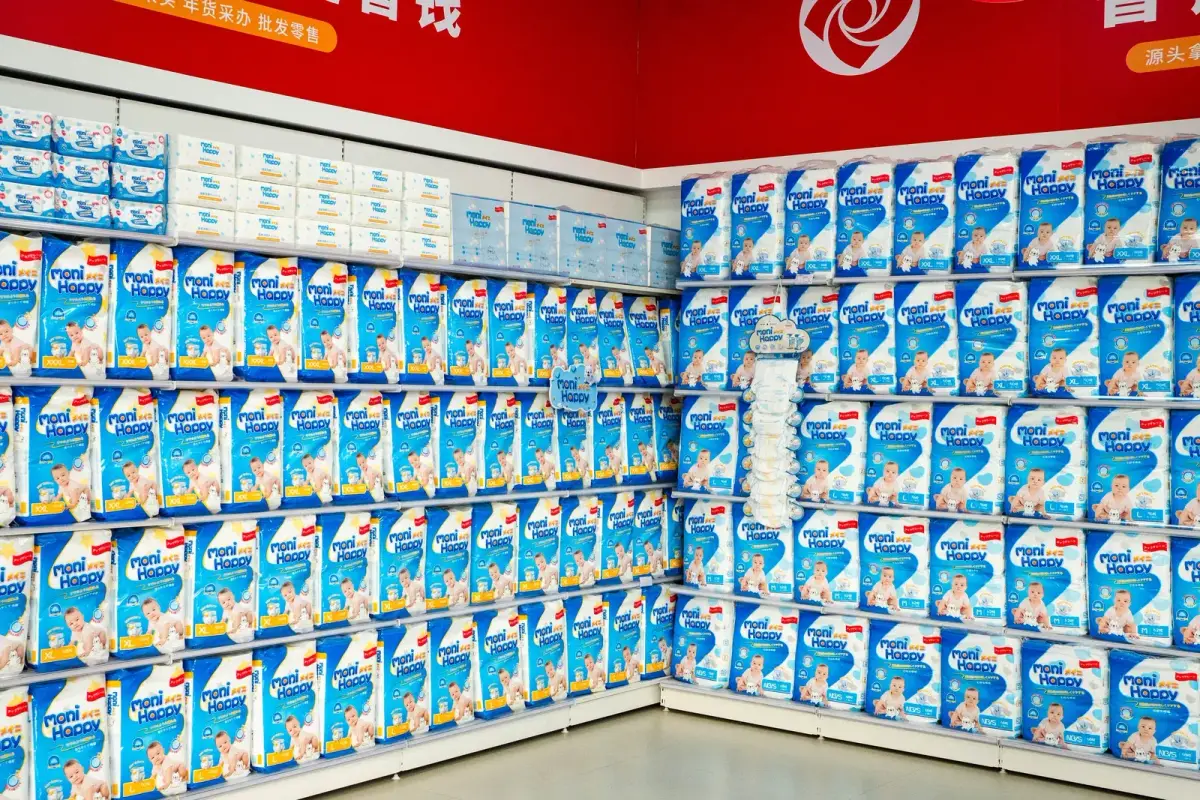
Because a wholesale-format hypermarket prices close to trade price on purpose. NSK Trade City is built to sell bulk groceries at a few points above wholesale, and the shelf price is read by every shopkeeper within driving distance. A distributor that lists a standard 80-piece pack there is publishing a reference price that its own shop accounts cannot match, and the complaints arrive within two weeks.
The volume looks attractive on the first purchase order. What the order does not show is the effect on the 60 to 120 shop accounts that generated the distributor's volume before the hypermarket appeared.
How does a wholesale-format hypermarket price differently?
It runs on turnover rather than on shelf margin, and that changes the reference price for everyone.
A conventional supermarket wants 25 to 35 percent gross margin on a diaper pack and accepts slower turns. A wholesale-format store in the NSK model works on 8 to 15 percent and expects the pallet to move in days. Both are legitimate businesses; the problem is that they occupy the same catchment. A shopkeeper who buys a pack at a wholesale price of RM 26 and sells at RM 32 sees the same pack on the hypermarket shelf at RM 27.50 and understands immediately that his customer will not pay RM 32 again.
Malaysia makes this sharper than most markets because the wholesale format is not confined to industrial zones. NSK Trade City sites sit on main roads in the Klang Valley, Johor and Penang, within reach of the same neighbourhood shops that a regional diaper wholesale distributor supplies. There is no spatial separation to rely on.
What actually happens to the shop accounts after a listing?
Order size falls first, then order frequency, then the account.
- Weeks 1 to 3. Shopkeepers notice the price. Most say nothing, and reorder at the usual size.
- Weeks 4 to 8. Reorders shrink by 20 to 30 percent as shops cut the facing they cannot sell at the old price. The distributor reads this as seasonality.
- Weeks 8 to 16. Shops start buying top-up stock from the hypermarket itself when it runs a promotion, which converts a wholesale account into a retail customer of a competitor.
- Month 4 onward. Two or three accounts drop the line entirely, and the hypermarket order has to grow by more than their combined volume just to hold the distributor flat.
What is the price ladder that prevents the conflict?
Three prices, written down before the first purchase order, with a guard band between them.
The ladder has a distributor transfer price, a shop supply price and a shelf price for each channel. Set the hypermarket shelf price at least 8 to 12 percent above the shop's landed cost, which covers the shop's delivery, shrinkage and a thin margin. If the arithmetic cannot produce that gap at a workable hypermarket margin, the product is not ready for that channel, and no amount of listing fee negotiation fixes it.
Run the numbers on a concrete case. A pack lands in the distributor's warehouse at RM 24 including duty and freight. Shop supply price is RM 26.50, the shop retails at RM 31.90, a 20 percent margin. For the hypermarket to retail at RM 32.50, its own purchase price has to be about RM 28.60 at a 12 percent margin, which is RM 2.10 above what the shops pay. That gap is the price of peace, and it has to be funded by a lower service level, a bigger pack, or a lower margin on the hypermarket line. It cannot be funded by selling the hypermarket cheaper than the shops and hoping nobody notices.
Does a different pack size solve it?
It solves most of it, provided the count difference is large enough to break the comparison.
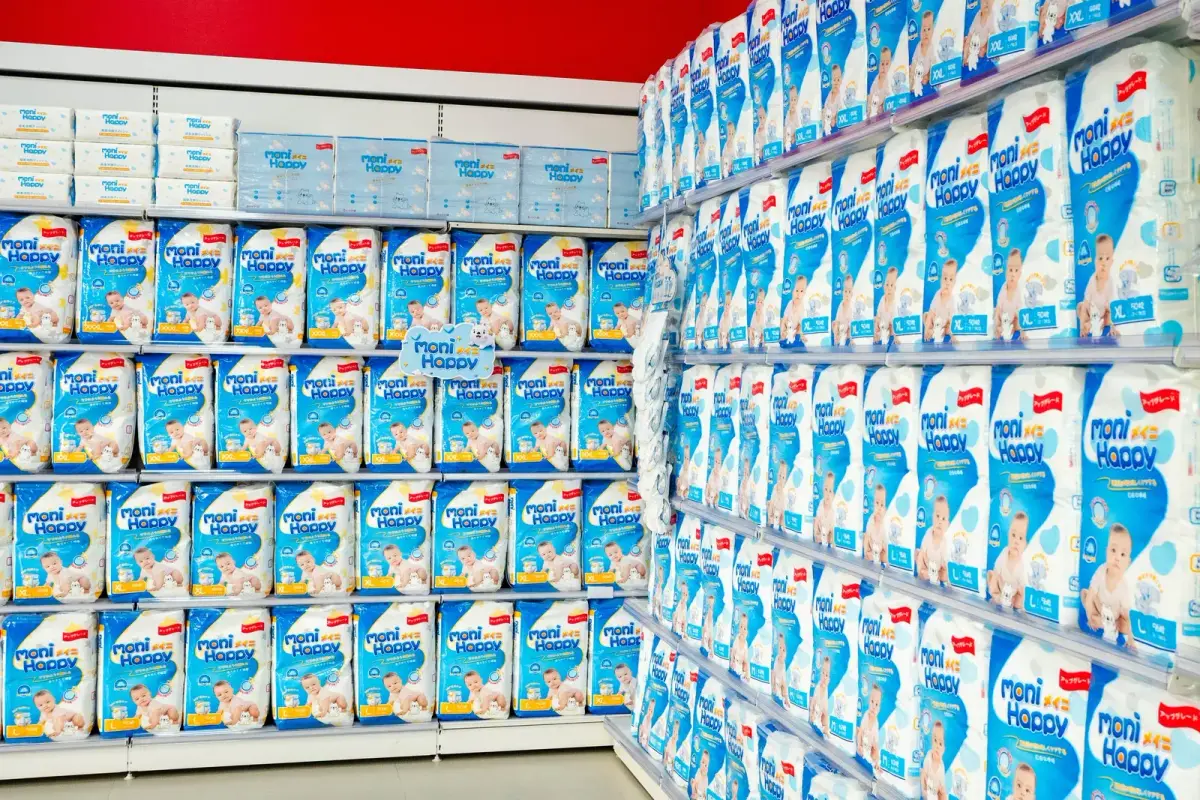
A club pack of 120 pieces against a shop pack of 80 makes the shelf prices incomparable at a glance. Shoppers who divide by piece will still find the club pack cheaper per piece, which is the point of a club pack and is acceptable to shopkeepers because the customer type differs. What fails is a cosmetic difference: the same 80 pieces in a slightly wider bag, or a two-pack of the standard pack sold at a discount. Both invite direct arithmetic and both generate the same complaint.
The club pack carries its own costs. A new film print, a new carton specification and a minimum order that the factory has to schedule separately. On a diaper wholesale line running 150,000 pieces per size as a minimum, a club pack is a real commitment rather than a packaging tweak, so it belongs in the annual plan and not in the week the hypermarket buyer calls.
How much volume does the listing actually add?
Usually less than the purchase order suggests, because part of it is volume the distributor already had.
A hypermarket listing of a standard pack does not create households; it moves existing demand from a shop down the road onto a bigger shelf. The distributor books 400 cartons on the first order and then watches the shop accounts lose 120 over the same quarter. Net growth is 280 cartons, and the listing fee, the rebate and the extra delivery stop take a further slice, so the contribution is lower again. Model the number as incremental rather than total before signing. If the incremental figure cannot carry the fee, the answer is a club pack or no listing.
What should the distributor ask the hypermarket buyer?
Five questions that decide whether the listing is worth having.
Ask which pack size they intend to carry, and whether they will accept a channel-specific count. Ask what shelf price they plan, in writing, before signing. Ask whether they will run below that price in a promotion and how much notice they give. Ask what the listing fee and the rebate structure are per SKU per store, and whether the terms are 30 or 60 days from delivery or from sale. Ask who holds the stock and who carries the damage.
A buyer who will not put the shelf price in writing is telling you the price will move. That is the single most useful signal in the conversation, and it arrives before any money changes hands. Distributors who want the price ladder modelled against their own cost base can work through it with the partner desk, and the channel guide sets out how the wholesale format sits alongside modern trade in each market.
Frequently asked questions
Is Malaysia's wholesale format growing?
Yes, and it has been for a decade, which is why the conflict keeps recurring. The format competes on price visibility, so any brand on those shelves becomes a price reference whether the supplier intended it or not.
Can a minimum advertised price clause help?
It helps with modern trade and does little with a wholesale format, because the format's whole proposition is low shelf price. A clause the retailer will not sign is worth less than a pack size they cannot compare.
What if the hypermarket is the only route into a state?
Then treat it as a market-entry cost and plan the shop accounts around it from day one, with the club pack as the shop line. Entering with the same pack and repairing the damage later costs more than entering correctly once.
Who owns the shop relationships in a dual-channel structure?
The distributor does, and the agreement should say so. If the brand sells directly to the hypermarket while the distributor carries the shops, the price reference is set by a party that does not carry the consequences.
Sources and further reading
Company registration and the filing requirements for a Malaysian supplier entity: Suruhanjaya Syarikat Malaysia.
GS1 Malaysia issues the barcode prefixes that a hypermarket listing requires before any purchase order is raised: GS1 Malaysia.
Population and household income data behind the catchment arithmetic for Klang Valley sites: Department of Statistics Malaysia.
Bottom line: a listing at a wholesale-format hypermarket is a price decision before it is a volume decision. Fix the ladder, hold a guard band of at least 8 to 12 percent above the shop's landed cost, and use a club pack if the standard pack cannot hold that gap. Distributors can model the ladder against their own landed cost through the partner desk, and the onboarding guide covers the agreement terms that keep both channels intact.
Frequently Asked Questions
Can a distributor refuse to supply a wholesale hypermarket?
Yes, within the limits of the distribution agreement. A non-exclusive territory agreement normally allows it, an exclusive agreement may not. Read the exclusivity clause before the first meeting, because a refusal after a verbal commitment is a relationship problem that costs more than the listing fee.
What is a club pack and why does it help?
A larger pack size sold only through one channel. If the wholesale hypermarket carries 120 pieces and the shops carry 80, the two prices cannot be compared directly, and the shop keeps its reference price. The pack has to be genuinely different in count, not a relabel, or shoppers will divide by piece and see through it.
How large is the price gap that starts complaints?
Shopkeepers usually notice a 5 percent difference and call about 10 percent. A guard band of 8 to 12 percent between the hypermarket shelf price and the shop's landed cost covers freight and a thin margin, and it is the band most suppliers try to hold.
Is the listing fee the main cost?
No. The fee is visible and negotiable, commonly RM 200 to 800 per SKU. The real cost is the price reference the listing creates, which persists for as long as the product sits on that shelf and affects every shop account in the same state.
Distributor resources
If you are evaluating suppliers for your market, these are the pages that answer the commercial questions — in the order buyers usually need them.
