
2026-11-23 · Moni Happy
At what shipment size does less-than-container freight stop paying on a wipes wholesale order?
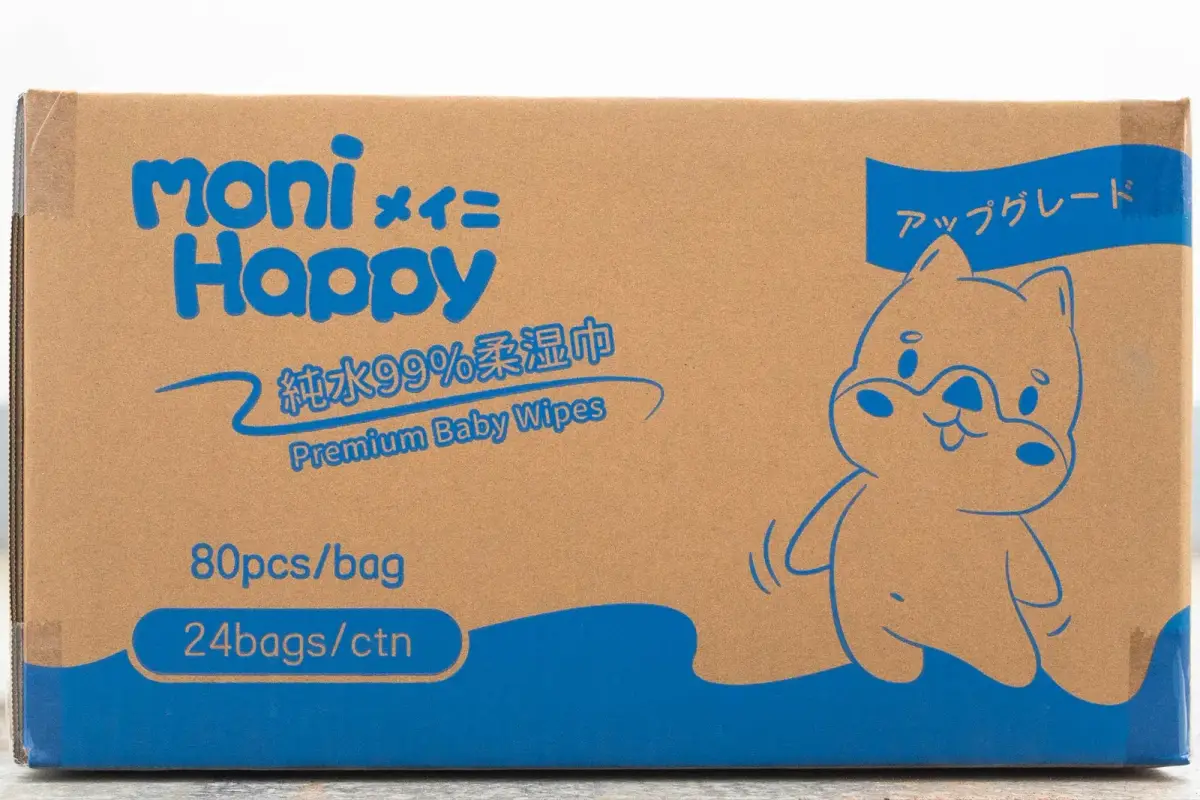
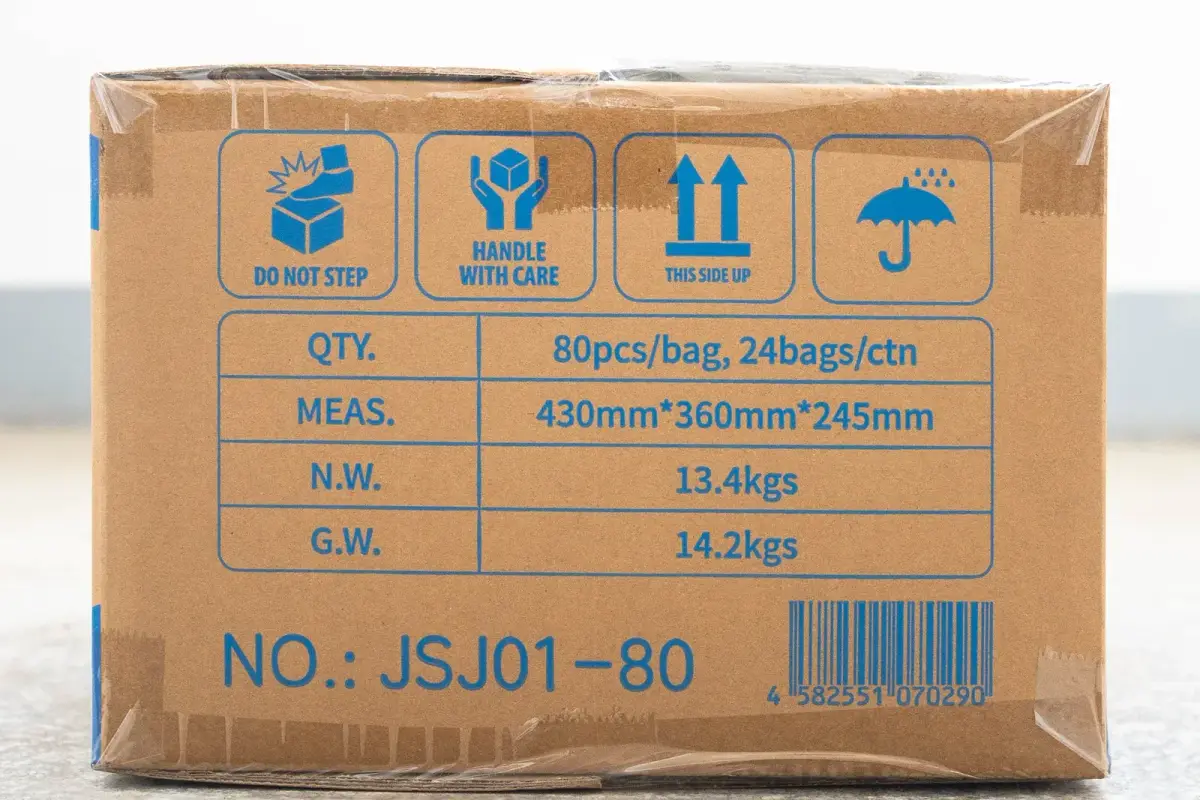
Around 300 cartons, or 11 to 12 cubic metres, is where less-than-container shipping stops being the cheap way to move wet wipes. The carton we ship measures 430 x 360 x 245 mm, holds 24 bags of 80 pieces and weighs 14.2 kg gross, so 300 cartons take up 11.4 cbm and carry 7,200 bags. Under about 180 cartons the per-shipment minimum decides the bill. Past 300, a 20GP costs less in total even when a third of the box sails empty.
Two wipes wholesale buyers on the same lane can disagree about this for years because they compare different things. One compares rate per cubic metre and concludes LCL is cheaper. The other compares the invoice at the end of the month and concludes the opposite. Both are reading real numbers off real documents.
How much space does one carton of wet wipes take?
Exactly 0.0379 cbm, and that single number drives everything else in this article.
Multiply 0.43 by 0.36 by 0.245 metres and the carton comes to 0.0379 cbm. It holds 24 bags at 80 pieces each, so 1,920 pieces per carton, and it weighs 14.2 kg gross against 13.4 kg net, which means 0.8 kg of carton and film for every 1,920 pieces. Load a 20GP at a usable 28 cbm and you get 738 cartons, or 17,712 bags, or 1,416,960 pieces. Load a 40HQ at 68 cbm and you get 1,793 cartons, at which point the gross weight reaches 25.5 tonnes and the road limit in most of Southeast Asia becomes the binding constraint rather than the cube.
That weight figure is worth pausing on. Wet wipes are not as light as tape diapers. A 40HQ of diapers fills at roughly 3 tonnes because the product is mostly air, while a 40HQ of 80-piece wipes packs 25 tonnes and runs into axle limits. Buyers who move from diapers to wipes often assume the same rules apply and then discover their 40HQ cannot be filled.
Why does a per-shipment minimum make small orders expensive?
Because the fixed block is charged before a single cubic metre is priced.
An LCL booking carries a minimum of one cubic metre, then a per-shipment charge for documentation, CFS receiving and a bill of lading, commonly USD 120 to 250 on an intra-Asia lane. Add the rate itself at USD 45 to 90 per cbm and destination CFS handling at another USD 25 to 45 per cbm, and a 4 cbm shipment of 105 cartons lands at USD 500 to 800 in total. Divide by 2,520 bags and the freight per bag comes to 20 to 32 cents, against a FOB of roughly 0.10 to 0.22 dollars per piece for the goods themselves.
On 12 cbm the same arithmetic gives a very different answer, because the fixed block is spread over three times the cargo. That is the whole mechanism: LCL punishes small, and it punishes small in a way that is invisible on a per-cbm quote sheet.
Where exactly does the 20GP take over?
Between 180 and 300 cartons, depending on the lane and the week, and the freight per bag roughly halves across that band.
- Under 180 cartons, 6.8 cbm. LCL wins on total cost, but the freight per bag is 20 cents or more. Only defensible for a genuine market trial or a spare-parts style top-up.
- 180 to 300 cartons, 6.8 to 11.4 cbm. The two models are within 10 percent of each other. This is the zone where a forwarder's relationship decides the answer, and where booking two weeks early is worth more than any rate negotiation.
- Over 300 cartons, 11.4 cbm. The 20GP wins on total cost with 40 percent of the box still empty. Freight per bag settles near 5 cents.
- Over 700 cartons. The box is full at 738, and the next step is a 40HQ, which cuts freight per bag again by 15 to 20 percent because the fixed charges do not double with the cargo.
Which costs does an LCL quote usually leave out?
Destination handling, and the stripping charge that follows it.
A quote that reads USD 55 per cbm rarely includes the destination CFS charge, the delivery order fee, or the cost of unstuffing the consolidated box and putting cartons on a truck. On a 6 cbm shipment those three lines commonly add USD 180 to 350 at the receiving end, which is 30 to 50 percent on top of the ocean rate the buyer thought he was paying. Ask for a door-to-door figure in writing, and ask which party pays the destination CFS charge: on many lanes it is the consignee by default.
The same trap exists in a container rate, but it is smaller. A 20GP has one destination terminal handling charge and one delivery order fee regardless of how full it is, so the fixed cost per bag falls as the box fills. That asymmetry, not the ocean rate, is what makes less-than-container shipping lose its advantage earlier than most wipes wholesale buyers expect.
What makes the crossover move?
Three variables, and a wipes wholesale buyer controls two of them.
For a wipes wholesale buyer the first is the freight rate itself. When intra-Asia rates spike, the gap between LCL and FCL widens in absolute terms but the crossover volume barely moves, because both move together. The second is carton cube: shave 20 mm off the height and the same pallet holds more, which lowers the volume at which a 20GP becomes worthwhile. The third is destination. A port with expensive CFS handling and slow release, such as a secondary port reached by feeder, pushes the crossover down to 8 or 9 cbm because the LCL fixed block is larger there.
Carton cube deserves more attention than it gets on a wipes wholesale order. A 430 x 360 x 245 mm box is a sensible size for 24 bags, and a 450 x 380 x 265 mm box for the same count wastes 16 percent of the container. On a full 20GP that is 118 cartons, or 2,832 bags, of paid-for air. The fix costs nothing at the specification stage and cannot be recovered afterwards.
How should a wipes wholesale buyer sequence the first three shipments?
Sample by air, commit by container, and never split the difference.
Send one carton by air express for the buyer's own testing and for the chain's quality team. Air on 15 kg costs USD 90 to 160 and buys a decision in ten days. Then place a 20GP of 600 to 700 cartons rather than three LCL shipments of 200. The freight per bag drops from 20 cents to 5, and the buyer gets a full assortment instead of a single SKU, which is what a shelf actually needs.
Where cash is the constraint, the better lever is the payment split rather than the shipment size. The standard terms on this trade are 30 percent deposit and 70 percent against the bill of lading copy, and a buyer who can only fund 200 cartons should ask for a mixed container shared with a second SKU rather than accept LCL pricing on the whole order. The wholesale price and margin guide sets out how the deposit, the freight and the first sell-through interact.
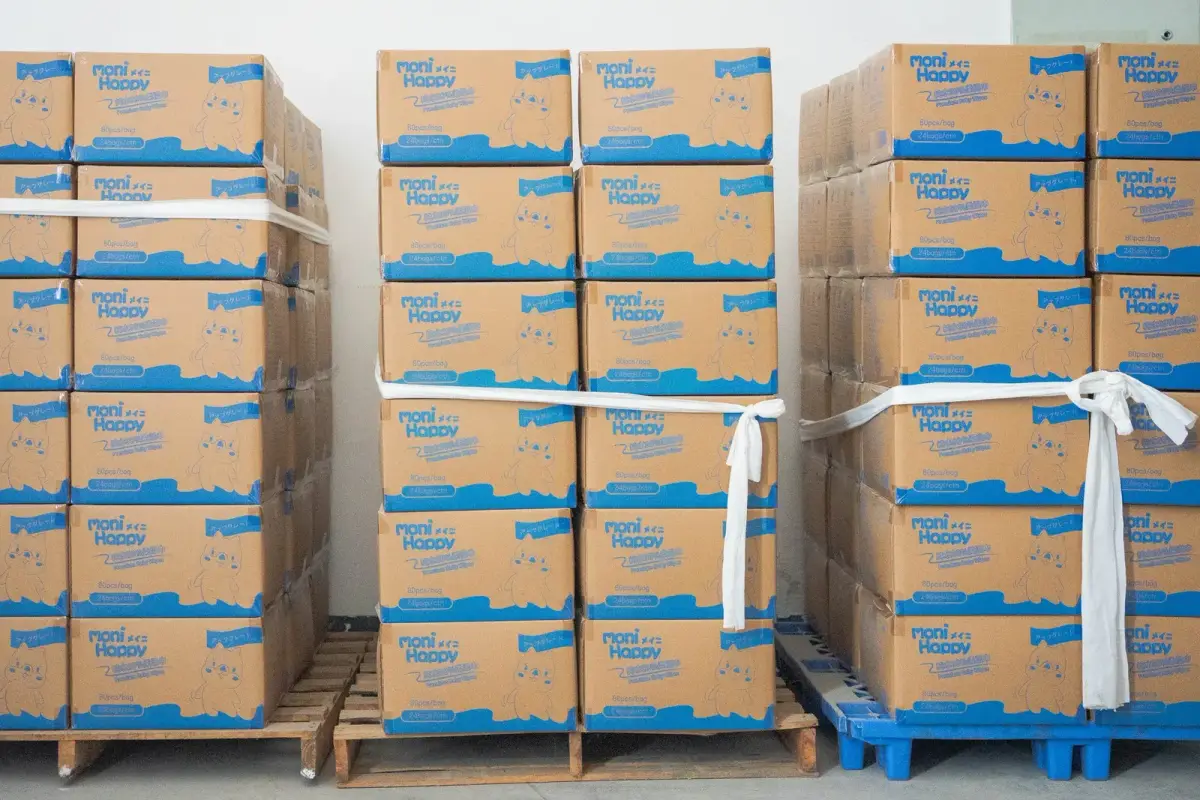
One more check before booking: confirm the carton count per pallet and the pallet height with the warehouse that will receive the goods. A 20GP stuffed to 738 cartons usually arrives as 18 to 20 pallets, and a warehouse with a 1.8 metre rack opening cannot take a 2.2 metre pallet no matter how cheap the freight was.
Frequently asked questions
Is LCL ever the right call above 300 cartons?
When the destination has no forklift and no container access, yes. A container dropped at a shop with no loading bay can cost more in unloading labour and waiting time than the freight saved, and in that case a consolidated delivery to a CFS near the buyer is the cheaper route.
Can two buyers share a 20GP?
Yes, and it is common on this trade when both parties are in the same market. Split the container, split the fixed charges, and agree in writing who clears customs and who holds the bill of lading, because the carrier will only release to one consignee.
Does the 40HQ always beat two 20GPs?
Not on weight-limited wipes. A 40HQ of 80-piece bags reaches 25 tonnes and hits road limits, so the extra cube cannot always be used. Check the gross weight before assuming the bigger box is cheaper per bag.
What should the purchase order say about carton dimensions?
State the external dimensions, the gross weight and the cartons per pallet, and make them part of the specification rather than a note. A carton that arrives 20 mm taller than agreed costs the buyer 16 percent of the container and is almost impossible to claim on afterwards.
Sources and further reading
Incoterms 2020 defines where the seller's cost stops on FOB and CIF terms, which decides whether the ocean leg and its surcharges sit on the buyer's invoice: ICC Incoterms rules.
Container internal capacities and payload limits for the 20GP and 40HQ used in this arithmetic: World Shipping Council.
ASEAN tariff schedules and the duty treatment of absorbent hygiene and wiping products by HS line: ASEAN Tariff Finder.
Bottom line: value the carton in cubic metres before negotiating anything, and let that number set the shipment mode. For 80-piece wet wipes in a 430 x 360 x 245 mm carton the line sits at 300 cartons and 11.4 cbm, and every bag below it carries 15 to 27 cents of freight that a full box does not. Buyers planning a first order can request carton dimensions, pallet configuration and a landed cost model through the partner desk, or start from the distributor onboarding guide.
Frequently Asked Questions
Does a half-empty 20GP really cost less than LCL?
Yes, once the volume passes about 11 cbm on most intra-Asia lanes. The reason is that a container is billed as one unit while LCL is billed per cubic metre plus a fixed handling charge at both ends. At 12 cbm the LCL total typically lands between USD 900 and 1,300, while a 20GP all-in sits at USD 700 to 1,100 for the whole box.
What is the minimum charge on an LCL booking?
Most consolidators apply a minimum of one cubic metre plus a per-shipment charge of USD 120 to 250 for documentation, CFS handling and a bill of lading. That fixed block is what makes small shipments expensive: on 2 cbm it can double the effective rate per cubic metre.
Should the first order be LCL to test the market?
Only if the test is genuinely about the market and not about freight. A 4 cbm trial of 100 cartons usually costs 14 to 20 cents per bag in freight against about 5 cents in a 20GP, so the test itself is being subsidised at the worst possible moment. Air-freighting a sample carton and shipping a full box is often cheaper overall.
Does carton cube change the answer?
It changes the number of cartons that fit, not the logic. A carton 10 mm taller on each dimension loses about 6 percent of the loadable cartons in a 20GP, which pushes the crossover point up by roughly the same proportion. Specifying the carton before the first order is cheaper than discovering the cube afterwards.
Distributor resources
If you are evaluating suppliers for your market, these are the pages that answer the commercial questions — in the order buyers usually need them.
