
2026-11-22 · Moni Happy
How do you train store staff to sell a diaper wholesale pack by piece price?
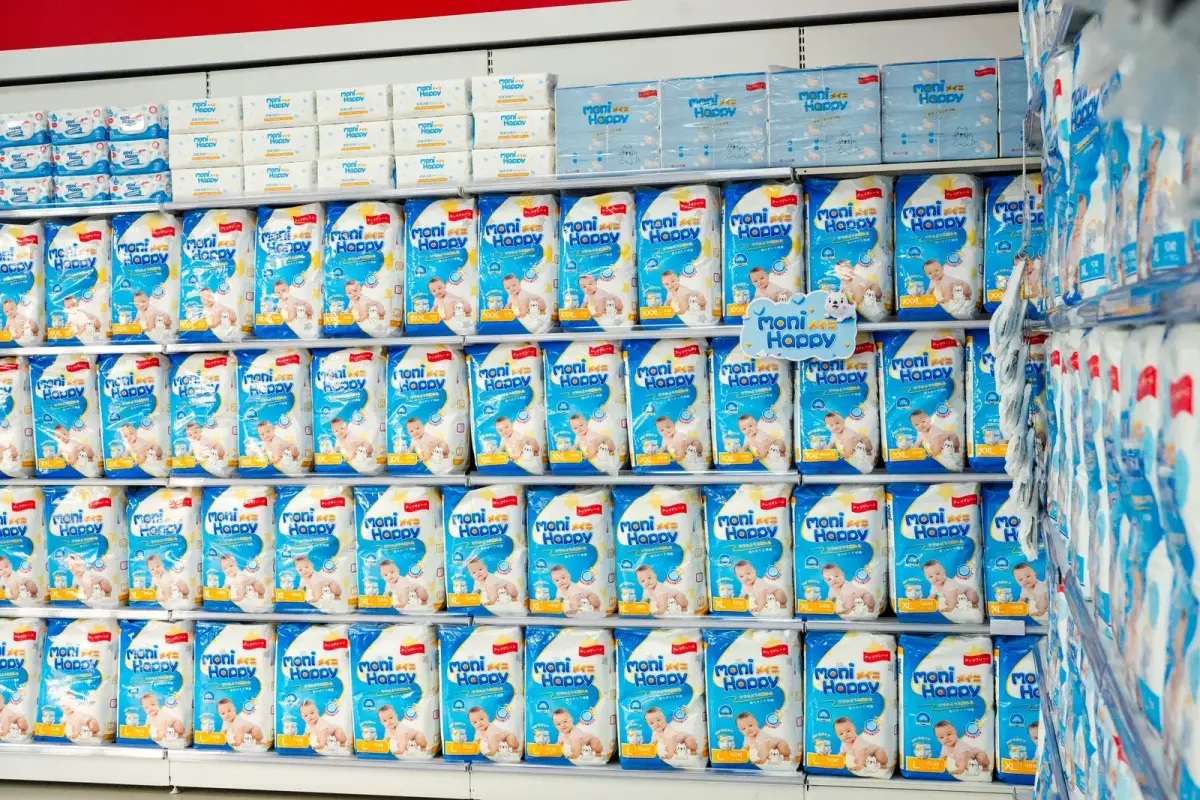
Teach staff to divide the shelf price by the piece count, and to do it only within the same size band. That one habit answers the price objection that costs a diaper range most of its sales, because pack counts differ across markets and a shopper comparing two pack prices is usually comparing two different amounts of product.
A 68-piece newborn pack at 19.90 dollars is 0.293 dollars per piece. A 44-piece large pack at 14.90 dollars is 0.339 dollars per piece, which is 16 percent dearer per change even though the pack is 5 dollars cheaper at the till. Both numbers are true, and only one of them answers the question the shopper is actually asking.
Why does the pack price mislead so often?
Because pack counts are set by the factory for the market, not for the shelf next to it.
A diaper wholesale range sold across five countries rarely has one pack count per size. Manufacturers run different counts for different markets to hit a price point, so the same size band can arrive as 60, 64, 68 or 72 pieces depending on the country and the channel. A store that carries two brands with different counts is putting two different products at two different prices on the same shelf, and the shopper reads the gap as a brand premium when part of it is arithmetic.
The same thing happens inside a single brand when a promotion pack arrives. A 2-pack bundle at 34.90 dollars looks cheaper than two singles at 19.90, and it is, but the staff member who cannot say by how much per piece cannot defend the bundle when the shopper asks whether it is really a saving.
What are the three questions staff should ask first?
Weight band, changes per day, and storage space at home. They take fifteen seconds and they decide which pack to recommend.
- Weight band. Not age. A baby at 7 kilograms sits in the band printed on the pack, and the band is what the size decision hangs on. Staff who ask for age get a guess; staff who ask for weight get a band.
- Changes per day. A newborn is changed ten to twelve times a day, a six-month-old six to eight, a toddler four to six. That number converts a pack into a duration, and duration is what the household is really budgeting.
- Storage. A household in a small flat cannot store four cartons, and a 68-piece pack that takes two months to finish is a pack that has been opened and closed forty times before the last sheet is used.
With those three answers the recommendation is mechanical. A newborn household on ten changes a day uses about 300 pieces a month, so a 68-piece pack lasts roughly a week and the lowest price per piece is the right answer. A toddler household on five changes a day uses about 150 pieces a month, so a 44-piece pack lasts nine days and the smaller pack is defensible even at a higher unit price.
How should the division be done at the shelf?
Round to the nearest cent, say the number out loud, and write it on the card if the store has one.
Teaching store staff to write the number on a card is half the job; saying it aloud is the other half. Three worked examples cover most of the range. Nineteen ninety for 68 pieces is 29 cents a piece. Twenty-four ninety for 90 pieces is 28 cents. Fourteen ninety for 44 pieces is 34 cents. Said aloud in that form, the comparison is instantly legible, and it survives the shopper's own arithmetic because the numbers are small enough to check.
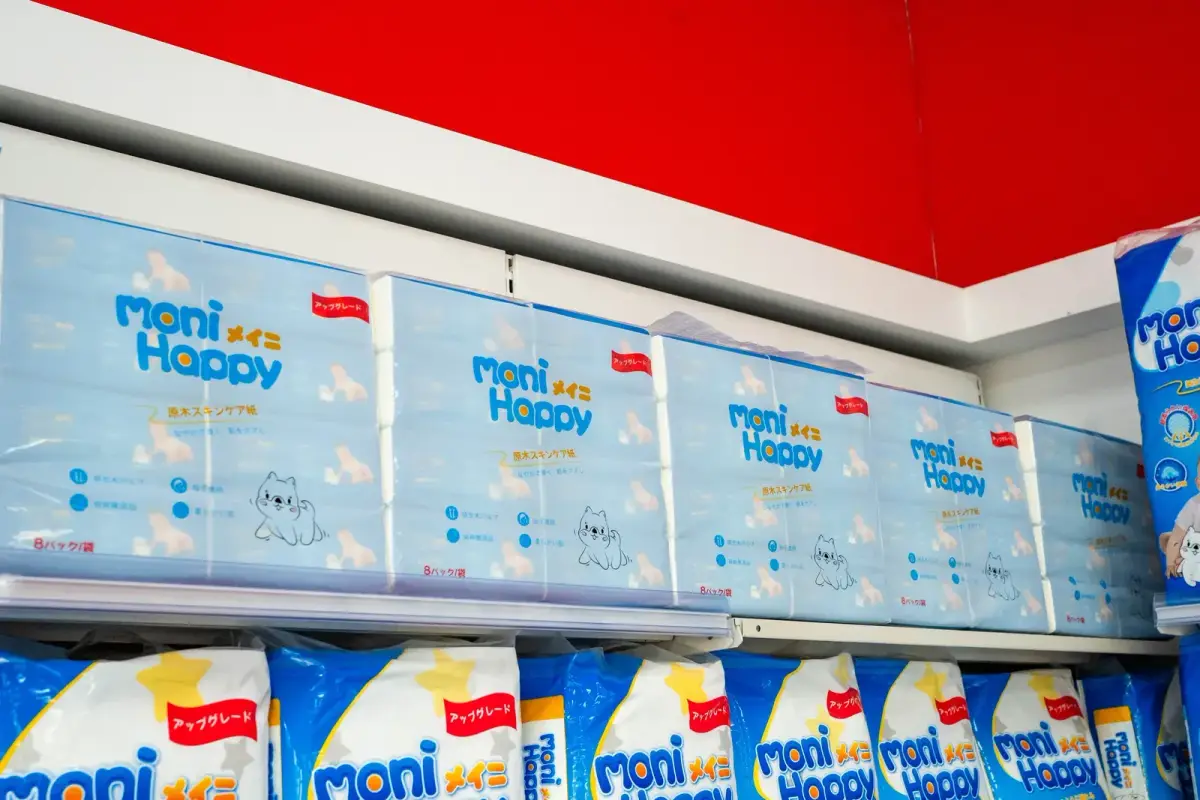
How does the script handle a straight price objection?
By agreeing with it, then moving the comparison to the same band and the same month.
The shopper says the other brand is cheaper. The staff member agrees, then asks the weight of the baby, then shows both prices per piece at that band, then converts to a month. A difference of 4 cents per piece at eight changes a day is 32 cents a day, or about 10 dollars a month, which is a number a household can weigh against fit and leakage. That is a fair conversation. A conversation about 5 dollars of pack price is not, because it is comparing two different quantities.
Two rules keep it honest. Never compare across size bands, because the pack that holds more material per piece will always look dearer. And never name the wholesale price or the store's margin, because that invites a negotiation the store has already settled with its supplier and it puts the staff member in a position they cannot defend.
What belongs on the shelf card?
Piece counts for the range, three worked examples, and one line on the band rule.
The card is the only artefact store staff keep after the training, so it should be small enough to sit in a shelf strip and readable at arm's length. Four columns do the job: size band, pack count, shelf price, price per piece. The band rule goes at the bottom in one sentence, because it is the mistake staff make most often. Updates go out whenever a pack count changes, which happens more often than a price change in this category.
The card also gives the store something to check. A pack count printed on the carton that does not match the shelf card is the first sign that a shipment has been mixed, and catching it before the packs are shelved avoids a customer complaint about a pack that holds fewer pieces than the one bought last month.
How does the training get refreshed?
Twenty minutes at handover, once a quarter, with the card in hand and the range on the shelf.
A 20-minute session for store staff at handover beats any e-learning module. Training that happens in a back room does not survive a busy Saturday. The version that works is done at the shelf, with the actual packs, and it ends with the staff member calculating one price per piece unaided. A quarterly refresh covers staff turnover, which in this channel is high, and it is also the moment to update the card when a new pack count arrives.
For the distributor, this is the cheapest support it can give a retail account. A store that can explain price per piece sells a wider range, reorders more often, and complains less about the packs that carry a higher unit price, which are usually the ones with the better margin for both parties. Our onboarding guide covers the rest of the retail support package, and the margin guide explains how pack counts move the wholesale price.
Frequently asked questions
Should staff always push the pack with the lowest price per piece?
No. A newborn household changes a baby ten to twelve times a day, so the lowest price per piece usually wins. A toddler household at six changes a day may be better served by a smaller pack that stays fresh and takes less space, even at a higher price per piece.
What if the shopper compares two different size bands?
Stop the comparison and restart it at the same band. Price per piece only means something within a band, because a large-size pack holds more material per piece. A staff member who lets the shopper compare an S pack with an XL pack has handed her a false conclusion.
Can staff quote the wholesale price?
No. The wholesale price is a commercial term between the distributor and the retailer, and quoting it invites the shopper to negotiate a margin the store has already committed to the supplier. Staff can explain pack economics without naming a cost.
How much time does the training take?
A 20-minute session per store, with a printed card at the shelf. The card carries the piece counts for the range and three worked examples, which is enough for staff to repeat the division from memory after one shift.
Sources and further reading
- World Health Organization, integrated care guidance on newborn care, used here for the frequency of diaper changes in the first weeks.
- American Academy of Pediatrics, parent guidance on diapering and sizing by weight rather than age.
- GS1 GTIN standards, the identifier that links a pack count to a shelf tag in retail master data.
- ASEAN Cosmetic Directive, labelling requirements for the pack face in member states.
Bottom line. Price per piece inside the same size band, converted to a month, is the only comparison that answers a price objection honestly. Teach it at the shelf with a card, refresh it quarterly, and the range stops losing sales to arithmetic.
Our packs are printed with the piece count and weight band on the front panel so staff can do the division from the pack in hand. Request pricing and free samples, or see the product range for pack counts by market.
Frequently Asked Questions
Should staff always push the pack with the lowest price per piece?
No. A newborn household changes a baby ten to twelve times a day, so the lowest price per piece usually wins. A toddler household at six changes a day may be better served by a smaller pack that stays fresh and takes less space, even at a higher price per piece.
What if the shopper compares two different size bands?
Stop the comparison and restart it at the same band. Price per piece only means something within a band, because a large-size pack holds more material per piece. A staff member who lets the shopper compare an S pack with an XL pack has handed her a false conclusion.
Can staff quote the wholesale price?
No. The wholesale price is a commercial term between the distributor and the retailer, and quoting it invites the shopper to negotiate a margin the store has already committed to the supplier. Staff can explain pack economics without naming a cost.
How much time does the training take?
A 20-minute session per store, with a printed card at the shelf. The card carries the piece counts for the range and three worked examples, which is enough for staff to repeat the division from memory after one shift.
Distributor resources
If you are evaluating suppliers for your market, these are the pages that answer the commercial questions — in the order buyers usually need them.
