
2026-11-21 · Moni Happy
How much does pack film structure add to a wipes wholesale cost per pack?
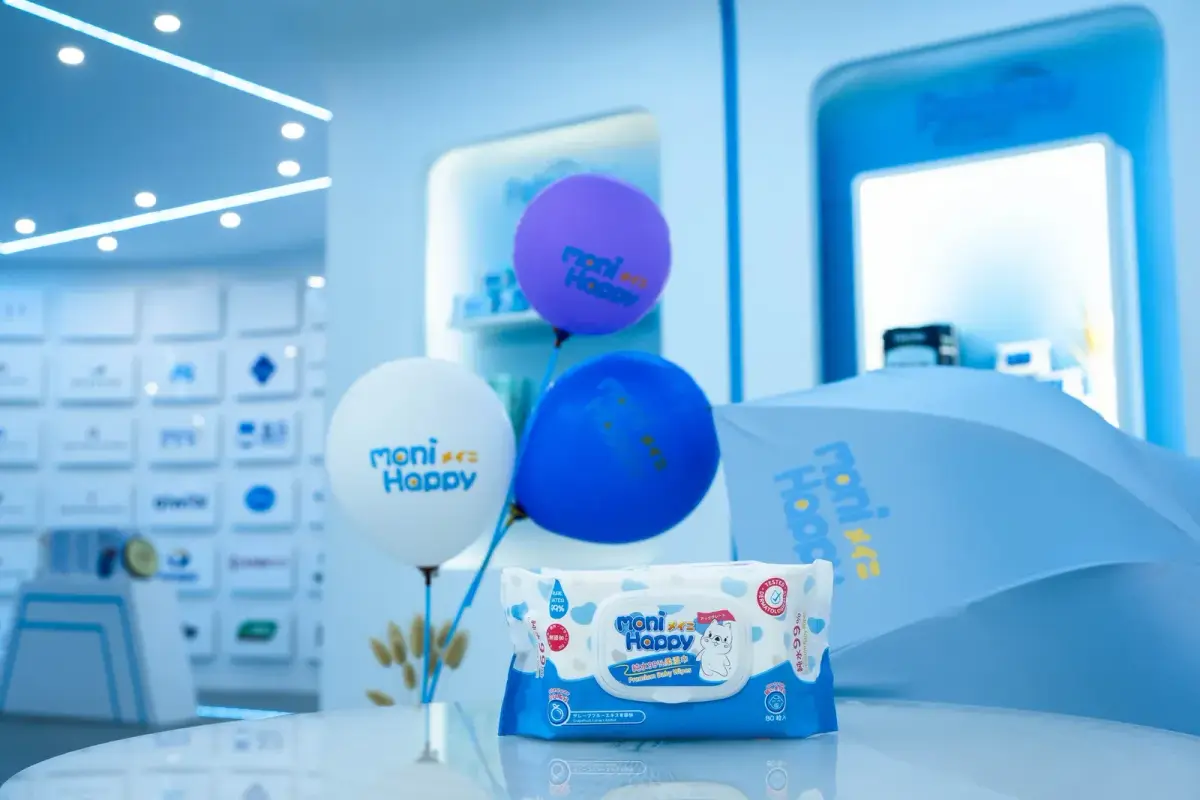
A 200 by 100 by 60 millimetre wet wipes pack needs about 0.064 square metres of laminate. At 70 grams per square metre that is 4.9 grams of film, and at converter prices it costs around 1.5 US cents.
That number is small enough to ignore, which is why so many wipes wholesale quotes get the pack film line wrong in the other direction. Pack film is not where a first order loses money. The cylinders, the minimum run per design and the lid are. A buyer who negotiates two cents off the film and accepts a new cylinder set for every SKU has paid for the discount three times over.
How much film does one pack actually use?
Work it out from the pack geometry rather than from the film price, because geometry is what a spec sheet controls.
A pillow pack has four panels: two faces and two side gussets. For a 200 by 100 by 60 millimetre pack, each face is 0.020 square metres and each gusset is 0.012, which totals 0.064. Add registration trim and the tail you lose at each stop, call it 9 percent, and the practical figure is 0.070 square metres per pack. At 70 gsm the laminate weighs 4.9 grams; at 90 gsm it weighs 6.3 grams. Run 100,000 packs and the difference between the two structures is 140 kilograms of film, roughly 450 US dollars at a film price of 3.20 dollars per kilogram.
Two levers hide in that arithmetic. Narrowing the gusset from 60 to 50 millimetres saves 0.008 square metres per pack and changes how the pack stands on a shelf. Reducing the face height by 10 millimetres saves 0.004 and may push the sheet count below what the retail planogram expects. Both are packaging decisions with a cost consequence, and neither should be made by the film supplier alone.
Which laminate structures are used, and how do they differ?
Four structures cover almost every wet wipes pack sold in Southeast Asia, and they differ in print quality, barrier and price per square metre.
- PET and PE. The workhorse. Polyester outside for print definition and stiffness, polyethylene inside for sealing. Good gravure reproduction, moderate barrier, mid-range cost.
- BOPP and CPP. Cheaper per kilogram and softer in the hand, with weaker stiffness, so the pack lies flatter on shelf and looks less premium. Common on value lines and on small travel packs.
- PET, aluminium foil and PE. The barrier option. A 7 to 9 micron foil layer cuts water vapour transmission by orders of magnitude, which matters on a two-year shelf life in a hot climate. Costs more and cannot be recycled in most municipal streams.
- Mono-PE. Recyclable in the streams that exist, weaker on stiffness and print, and increasingly requested by retail buyers in Singapore and Malaysia who carry packaging targets.
Price per square metre, not price per kilogram, is the comparison that matters, because a heavier structure can be cheaper per square metre if it is a lower-grade resin. Ask for both numbers on the quote, and ask which layers carry the barrier, because that is what the pack film is actually buying.
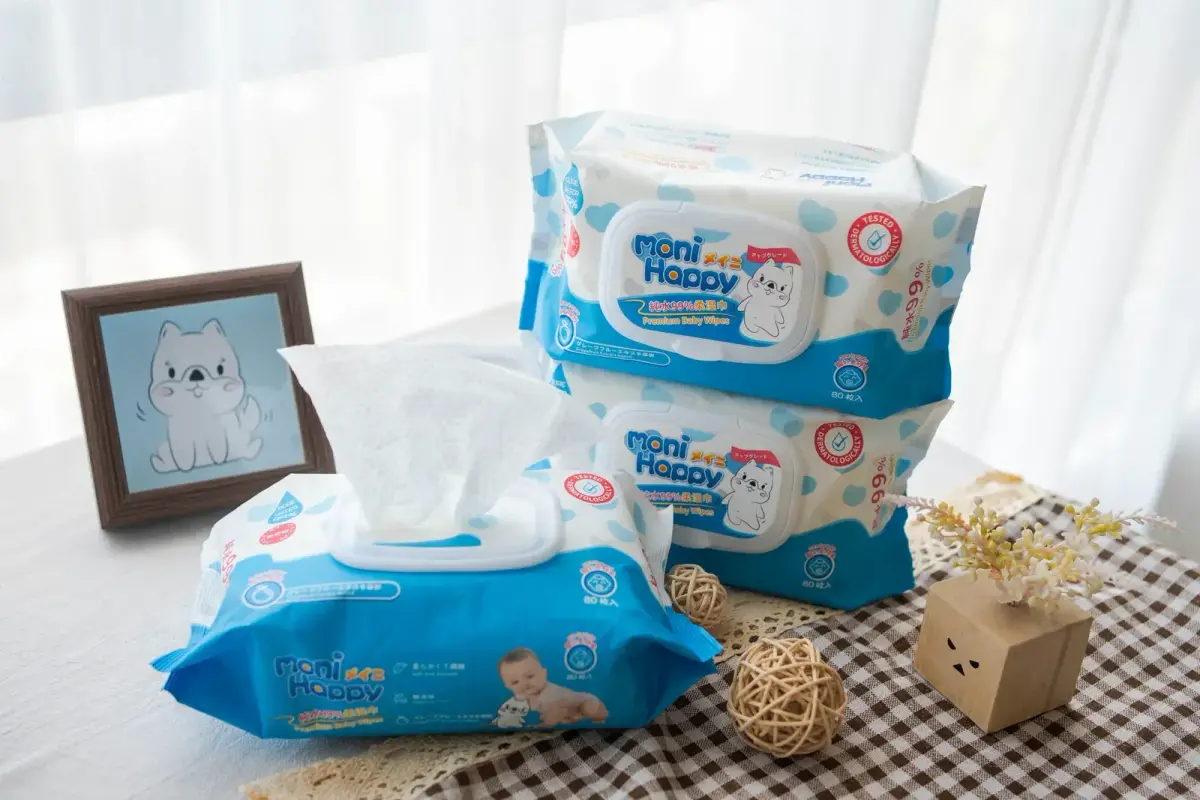
What does the print cylinder set add?
One cylinder per colour per design, charged once, and it is the reason short runs are expensive.
A gravure line prints the pack from engraved cylinders, one per colour. An eight-colour design therefore needs eight cylinders, and they are cut for that artwork only. Change the design, the size band or the language block, and the set is cut again. On a run of half a million packs the cylinder cost disappears into the unit price. On a first order of 30,000 packs split across four SKUs, it does not, and this is where a wipes wholesale buyer should spend the negotiation time rather than on the film.
Three questions settle it. Who pays for the cylinders and who owns them. What is the minimum run per design. And what happens to the cost when artwork is revised in year two. A supplier who will not answer the ownership question is telling you something about the second order.
Why does a thinner film sometimes cost more than a thicker one?
Because barrier and stiffness are functions of structure, and the cheapest resin is not the cheapest laminate.
Water vapour transmission is the number that decides whether the top sheet is still wet in month 18. It is measured on a standard gravimetric method and quoted in grams per square metre per day, and the test conditions matter as much as the value, so compare like with like. A 70 gsm PET-foil-PE structure will beat a 90 gsm all-PE structure by a wide margin on that test while weighing less and often costing less per pack. A thicker sealant layer buys seal strength, not barrier, and seal strength is a machine setting as much as a material property.
Where a heavier film does earn its price is abuse resistance. A pack that ships in a carton of 24 and gets compressed in a container in August needs a seal that survives the trip. That is a seal-strength specification, expressed in newtons per 15 millimetres, not a thickness specification.
Which lid choice changes cost and line speed?
Three options, and the choice of sealing lid tracks pack size rather than product quality.
- Flip-top moulded lid. A separate injection-moulded part applied by a lidding station. Highest part cost, best re-seal behaviour, and it makes the pack look like a premium line. Standard above 60 sheets.
- Resealable label. A printed sticker with a pressure-sensitive adhesive, applied inline. Cheaper per pack, and it is what most 10 to 40 sheet packs use. Re-seal performance drops after repeated opening, which shows up as complaints about dry sheets near the end of the pack.
- No lid. A perforated or tear-notch opening. Cheapest and fastest, and only defensible on single-use packs sold in multipacks where the whole pack is used at once.
On an 80-sheet pack sold at retail, the lid is the part a shopper touches first, and it is the first thing a buyer complains about when it fails. A sealing lid is a specification, not a decoration, and it is the cheapest place to lose a repeat order.
How should two film quotes be compared line by line?
Put the two quotes side by side on seven columns and the real difference usually appears in the fourth.
- Structure and total gsm, written as layers rather than as a grade name.
- Price per square metre as well as price per kilogram.
- Print colours and whether the cylinder set is included.
- Cylinder ownership and the cost of an artwork change in year two.
- Minimum run per design and the price break at 3 times and 10 times that minimum.
- Waste allowance, and whether film width is dedicated to your pack or shared on a common width.
- Seal strength and water vapour transmission values, with the test method named.
A quote that answers all seven can be compared. A quote that answers three is a price, not an offer, and the gap between the two is where wipes wholesale margins quietly disappear.
Frequently asked questions
Is a thicker film always better for a wet wipes pack?
No. Barrier comes from structure, not thickness. A 90 gsm all-polyethylene laminate passes more water vapour than a 70 gsm structure with a thin aluminium layer, and it costs more per square metre at the same time.
Who owns the print cylinders?
Whoever pays for them, and that should be written into the purchase order. If the converter owns them, changing supplier later means a new set, and artwork revisions are quoted at full cylinder price.
How much film waste should a quote allow for?
Three to five percent on a gravure line, depending on pack width and how often the run stops for registration. A quote showing zero waste has either buried the figure in the film price or never run this pack.
Does a flip-top lid raise the cost much?
It adds a moulded part and a lidding station, but it cuts re-seal failures. Above 60 sheets the lid usually pays for itself in complaints avoided; on 10-sheet travel packs it rarely does.
Sources and further reading
- Regulation (EU) No 10/2011 on plastic materials intended to come into contact with food, the framework most ASEAN converters test against for wipes packaging.
- 21 CFR 177.1520, olefin polymers, for the polyethylene grades used in the sealant layer.
- ASEAN Tariff Finder, checked November 2026 for HS 3920 film lines and import duty on converted film.
- ISO 15106 and ASTM F1249, water vapour transmission rate test methods quoted in converter data sheets.
Bottom line. On a full run the film is a cent and a half and nobody should spend a week on it. On a first order the cylinders, the minimum run and the lid decide whether the pack lands at a workable cost. Specify the structure by layer, buy the cylinders outright, and get water vapour transmission and seal strength quoted with the test method named. Then the film line stays a rounding error instead of becoming the reason the retail price does not work.
We quote wipes wholesale with the film structure, cylinder arrangement and minimum run stated separately, so the numbers can be compared with another supplier's. Ask for pricing and free samples, look at the wet wipes range, or read the distributor onboarding guide before the first order.
Frequently Asked Questions
Is a thicker film always better for a wet wipes pack?
No. Barrier comes from structure, not thickness. A 90 gsm all-polyethylene laminate lets more water vapour through than a 70 gsm structure with a thin aluminium layer, and it costs more per square metre at the same time.
Who owns the print cylinders?
Whoever pays for them, and that should be stated in the purchase order. If the converter owns them, switching supplier later means paying for a new set, and artwork changes are quoted at full cylinder price rather than at the marginal cost.
How much film waste should a quote allow for?
Three to five percent on a gravure line, depending on pack width and how often the run is stopped for registration. A quote that shows zero waste either buries it in the film price or has not run this pack before.
Does a flip-top lid raise the cost much?
It adds a moulded part and a lidding station to the line, but it cuts the complaint rate on re-seal failures. On packs above 60 sheets the lid usually pays for itself in returns avoided; on 10-sheet travel packs it rarely does.
Distributor resources
If you are evaluating suppliers for your market, these are the pages that answer the commercial questions — in the order buyers usually need them.
