
2026-11-10 · Moni Happy
How should store staff explain cotton towels versus wet wipes to a parent?
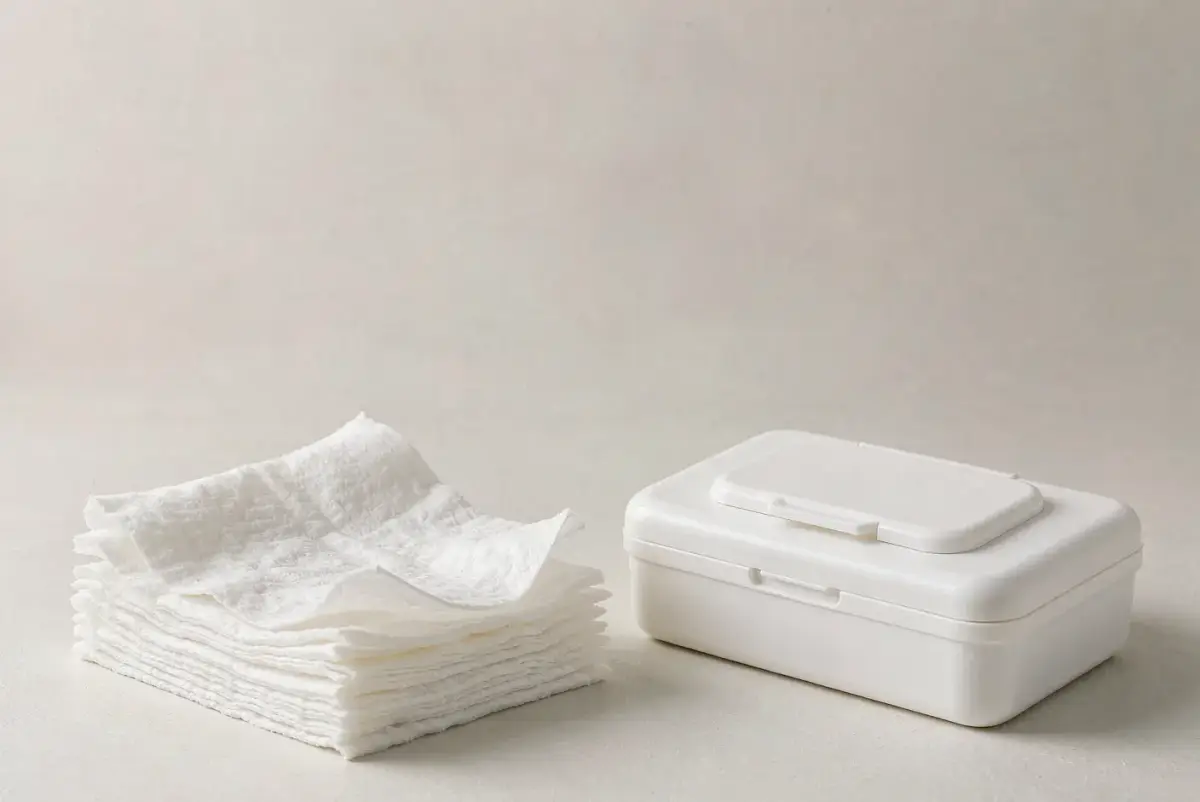
By asking two questions before recommending anything: where the change usually happens, and whether the baby skin reacts easily. Cotton towels are dry viscose sheets that a parent wets with warm water at the tap; wet wipes are pre-moistened and sealed so they work anywhere. The first suits the newborn weeks and sensitive skin, the second suits changes away from home and the middle of the night, and most families end up buying both.
That is the whole conversation, and it takes about forty seconds at the shelf. The reason it is worth putting in writing for every retail staff member is that most staff default to comparing price per pack, which is the one comparison that does not help a parent decide, because the two packs contain a different number of uses.
What is the actual difference between the two products?
One is a dry sheet that needs water; the other is a wet sheet that needs nothing.
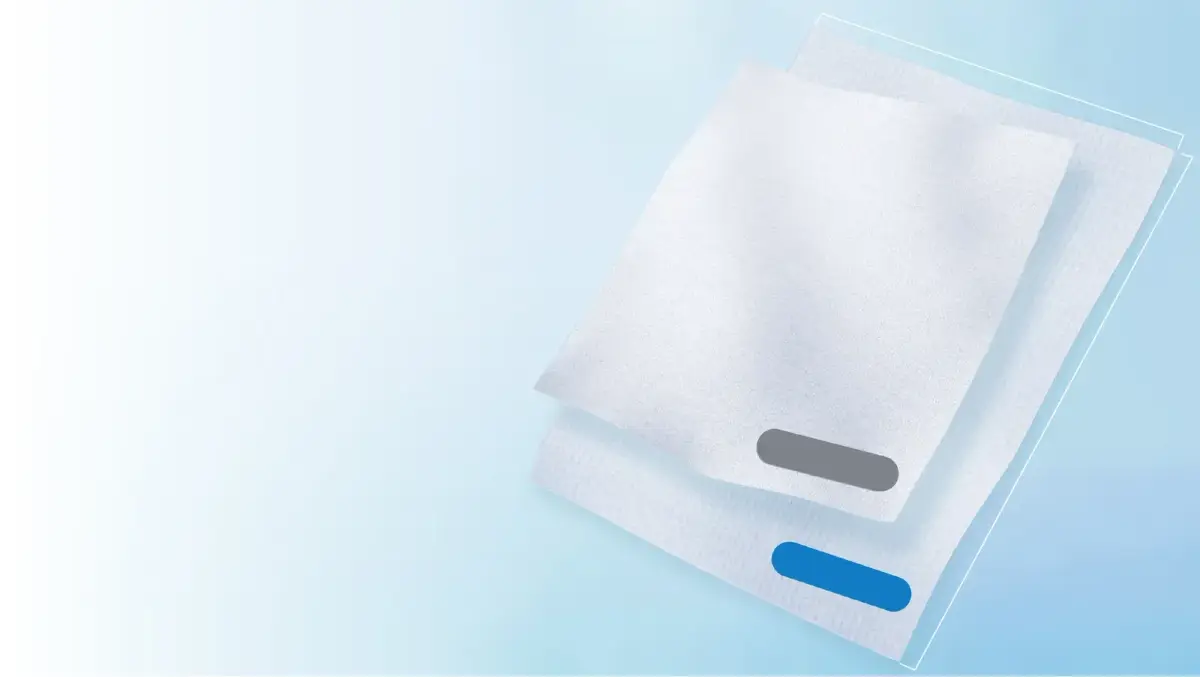
A cotton towel in this category is a soft non-woven viscose sheet, typically around 200 by 210 millimetres, packed dry. The parent wets it, wipes, and throws it away. Because the water comes from the tap at the moment of use, the sheet carries no preservative system and no fragrance, which is why it is the closest thing on the shelf to the water-and-cotton-wool method that health services describe for newborn care, and the default recommendation for sensitive skin.
A wet wipe is the same idea with the water built in. The pack holds moisture, so it needs a preservation system to stay stable, and it needs a seal that keeps working after the tenth opening. That engineering is what a parent is paying for: not the sheet, but the fact that it works in a car park.
Which one should a parent use in the first month?
The dry towel with warm water, in most cases, and staff can say so plainly without making a medical claim.
Newborn skin is thin, and the first weeks involve a lot of nappy change on skin that has never been wiped before. Health services in several markets recommend water and cotton wool for nappy changes in this period, mainly because it removes everything except water from the equation. A dry cotton towel is the retail product that matches that advice, which makes it an easy and honest recommendation for a grandparent or a first-time parent who asks what to use on a two-week-old.
The practical line for staff is that they are not giving medical advice, they are matching a product to a described situation. If a parent says the baby is three weeks old and the skin is perfect, the towel is a good default. If the parent says the baby is three weeks old and they are travelling to see family, the answer is both, and the wet wipes are for the journey.
When is a wet wipe the better choice?
Whenever water is not within arm's reach, which is exactly where wet wipes earn their place, and whenever speed matters more than control.
- Out of the home: the pack lives in the changing bag, and there is no tap in a shopping centre queue.
- Night changes: a parent who can complete a change in the cot without leaving the room changes the baby more often, which matters more than the product itself.
- Second parent, grandparent, babysitter: a wipe needs no technique, and consistency between carers is worth something.
- Nursery and travel: sealed packs survive a bag, a car and a plane in a way that a wet cloth does not.
The one caution staff should keep in mind is the seal. A pack that has been open in a hot car for a month is not the same product as a fresh one, and a parent who mentions a pack that has been in the car since the summer should be pointed to a fresh pack rather than to a different brand.
How do you advise a parent whose baby's skin reacts easily?
Remove variables rather than adding products, and hand the persistent cases to a pharmacist.
When a parent is shopping for sensitive skin, the useful move is to simplify rather than to add another product. A fragrance-free wipe removes one variable; a dry towel and water removes all of them. Staff should present those as options in that order and should not speculate about ingredients or causes, because the same symptom has several possible sources and none of them can be diagnosed at a till.
What staff can do is point at the label and read it with the parent: fragrance-free, the number of ingredients, and whether the pack states a skin test. That is factual, it is on the pack, and it lets the parent make the judgement. If the redness persists or the skin is broken, the answer is the pharmacist next door or the health visitor, not a different pack of wipes.
How do you compare cost per use honestly?
Divide the pack price by the number of sheets, and then say out loud what one nappy change actually uses. Cotton towels and wet wipes are counted differently, so the pack price on its own misleads.
This is where most shelf conversations go wrong. A pack of 80 wipes and a pack of 100 dry towels are not comparable at pack level, because a change may use one wipe or three, depending on the mess and the size of the sheet. The honest version is to give a range: one to three sheets per nappy change, so the parent can see that the cheaper pack is not necessarily the cheaper month.
There is also a hidden cost on the towel side, and staff should mention it rather than let a parent discover it: the towel needs water and a bin, which is fine at home and awkward in a car. A parent who buys only towels and then discovers they need wet wipes for the pram will come back anyway, which is why recommending both at the first conversation usually produces a happier customer and a larger basket.
What should staff never say at the shelf?
Anything that sounds like a medical claim, a guarantee, or a comparison the pack cannot support.
- Do not say a product treats, cures or prevents a rash. That is a medical claim and it is not what these products do.
- Do not call a wipe antibacterial or sterile unless the pack states it and the claim is permitted in that market. Most baby wipes are cleaning products, not hygiene chemicals.
- Do not say cotton towels can be reused for several changes. They are single-use sheets, and telling a parent otherwise is a quality complaint waiting to happen.
- Do not compare brands by ingredient count as if fewer always means gentler. Say what is on the label and let the parent decide.
- Do not promise a size or a pack will last a set number of weeks. Usage varies too much, and the parent will remember the promise at the till.
None of those restrictions make the sale harder. A parent who is told what a product is for, and what it is not for, tends to buy the second pack as well, because the recommendation sounds like advice rather than a pitch.
How do you demonstrate the difference at the shelf?
Open one of each, use water, and let the parent feel both.
A demonstration beats a description every time in this category. Wet a dry cotton towel in front of the parent and show that it holds together when lifted, then hand over a wipe from an open pack and let them feel the difference in thickness and moisture. Two products, thirty seconds, no claim made. Stores that do this consistently report that the towel sells alongside the wipes rather than instead of them, because the parent can see what each one is for.
The merchandising follows the same logic. Keep the cotton towels next to the wet wipes rather than in a separate baby aisle, put the newborn-relevant pack at eye level, and keep a tester pack open with a small water bottle if the store allows it. A parent who has to ask where the towels are is a parent who was not going to buy them. A retail staff member who can demonstrate that in thirty seconds usually sells the second pack as well.
Retailers building this category can stock the full range from one partner: the baby towels line, the baby wipes line, and the training material that goes with them. If you are a retailer or distributor who wants the shelf script, the pack facts and the display options together, apply as a partner and we will send the range sheet and the staff one-pager.
Frequently asked questions
Should the towels be kept in the fridge or warmed?
No. Room temperature water is what health services describe for newborn changes, and warming adds a step that most parents abandon within a week. A wipe warmer is a comfort product, not a requirement.
How many packs should a parent buy for a newborn?
Enough for two to three weeks of changes at home, plus one sealed pack for the bag. Staff should avoid quoting a weekly consumption figure, because it varies too much between babies.
Do dry towels work with cold water?
They work, and most parents prefer lukewarm water in the first weeks, especially at night. The sheet itself is unaffected by temperature.
Which pack size sells best in a small store?
The mid-size pack, because it fits a weekly shop and a small shelf. Very large packs belong in a supermarket trolley, and very small packs belong near the counter as an add-on.
Sources and further reading
- NHS - Nappy rash (UK National Health Service, current): the water-and-cotton-wool approach to newborn nappy cleaning that the towel recommendation is built on.
- WHO - Newborn health (World Health Organization, current): newborn skin care context for the first-month guidance.
- EDANA - nonwoven and absorbent hygiene product standards (EDANA, current): the material basis for the viscose sheet and wipe substrate described here.
Bottom line
Cotton towels and wet wipes are not competing products; they answer two different questions about where and how a nappy gets changed. Staff who ask about the situation and the skin, rather than about the price, sell both packs and reduce complaints, because the recommendation matches the parent's day. Compare cost per change rather than per pack, demonstrate with water at the shelf, and never turn a cleaning product into a medical claim.
Frequently Asked Questions
Are cotton towels just wipes without water?
Functionally close, and different in use. A dry cotton towel is a viscose sheet that a parent wets at the tap, so the water is fresh and the sheet is used once. A wet wipe is pre-moistened inside a sealed pack, so it works anywhere but the moisture has been in the pack since it was made.
Which is better for a newborn?
Water and a soft cloth or cotton wool is the common first-month recommendation from health services, so a dry cotton towel is the shelf product closest to that advice. Wet wipes are usually introduced once the skin has settled and the family is going out more.
Is one cheaper than the other?
Compare cost per change, not cost per pack. A pack of towels and a pack of wipes contain different numbers of uses, so the pack price tells a parent nothing useful without the count beside it.
What if a parent says the baby reacts to wipes?
Do not diagnose. Point to the fragrance-free option and to the dry towel alternative, and suggest they speak to their health visitor or pharmacist if it persists. Staff should never suggest a product treats a rash.
