
2026-11-19 · Moni Happy
What should a diaper wholesale buyer tell store staff about night leaks?
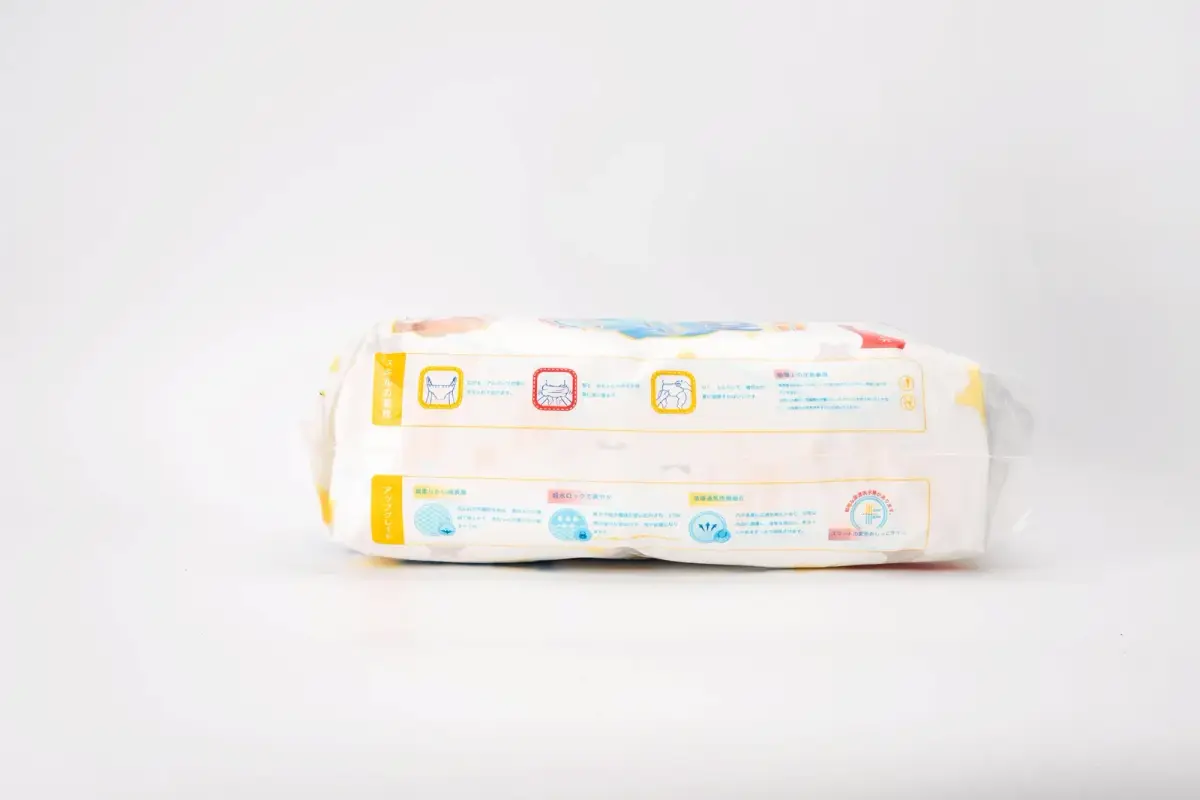
Most night leaks are a fit problem wearing an absorbency costume, and store staff can separate the two with four questions before they reach for a different pack. The four are the baby's weight, how many hours the diaper stays on, how it was fastened, and where the wet patch appears. Each one points at a different fix, and three of the four fixes do not involve selling anything. For a diaper wholesale buyer supplying independent shops, that matters commercially: a staff member who diagnoses keeps the customer for years, and one who sells a bigger pack sees the same complaint next week.
Why does the weight question come before everything else?
Because size is set by weight, not by age, and the top of a size band is where a night leak begins.
Every pack carries a weight range, and the size band printed on the front panel is the only reliable guide. The bands run in roughly 3kg steps from 6kg up to 30kg. On the range in this line, L covers 9 to 14kg, XL covers 12 to 17kg and XXL covers 15 to 30kg. A baby at 13.5kg is inside L on paper and at the very top of it in practice, which means the leg opening is at its limit and the tape lands near the edge of the landing zone. Parents usually keep buying the size they know. Store staff who ask the weight catch this in ten seconds, and the answer is often one size up rather than a different brand.
The reverse also happens. A parent who moved up too early, because the baby looked big, ends up with a cuff that gaps at the thigh. Going back down a size fixes a leak that a premium pack would not have fixed.
How long is the diaper actually on?
Ask for hours, because a pack built for daytime changes is not built for a ten hour stretch, and a night leak at hour nine is a duration problem rather than a defect.
Daytime use in most households means a change every three to four hours, so a 62-piece pack covers eight to ten days. Night use means one diaper for eight to twelve hours. That is two to three times the load on the same construction, and it changes which part of the pack matters: absorbency speed at the front, and back sheet breathability to keep the skin from staying wet. A parent using a thin daytime pack overnight, with a correct size and a correct fastening, will still see a leak at hour nine, and a 250ml overnight output is more than three times a daytime change. The fix is a different pack for the night, not a bigger size.
Store staff should also ask whether the diaper is changed immediately before bed. A diaper put on at 7pm and left until 6am has already done four hours of work before the overnight stretch starts.
Where is the wet patch?
Leg, back or side, and the location rules out half the causes immediately.
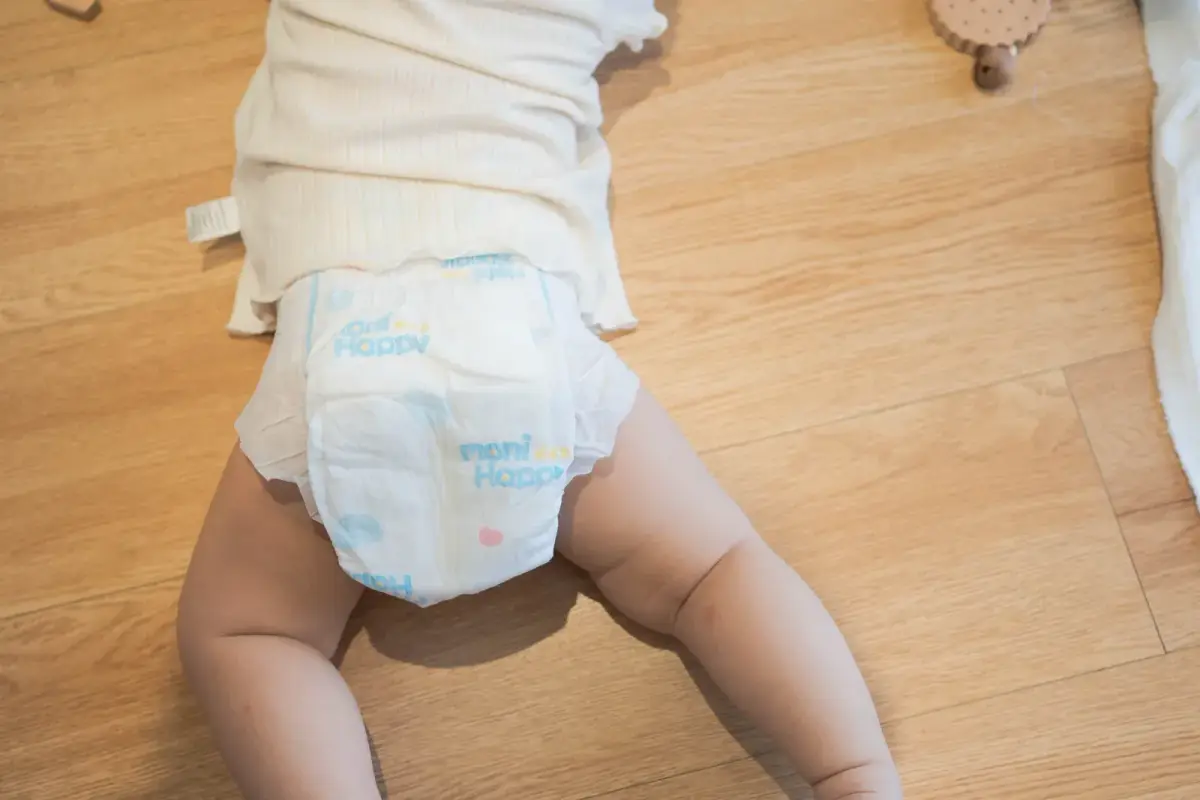
A leak at the leg, on one side, with a mark on the skin, is a fit issue: the inner cuff is folded inward, the fastening is uneven, or the size is at its limit. A leak at the back, at the waistband, is a position issue, common with babies who sleep on their stomach, and the answer is a higher waistband or a different fastening angle. A leak that soaks the whole front and wicks to the sides is a volume issue, and no fastening will fix it. A leak that appears as dampness across the back sheet rather than a puddle is a breathability and dwell time issue, which is the one case where a different pack genuinely helps.
Getting the location described accurately is the single highest value question in the sequence, and it is the one store staff skip most often. A night leak described as "everywhere" is usually a size band problem; one described as "left leg only" is usually a cuff problem.
What should staff show instead of explain?
Two things: the cuff, and the tape landing zone.
Run a finger around the inside of both leg cuffs after fastening, so the cuff stands upright against the thigh. The cuff is 25mm to 35mm deep on most tape diapers, and folded inward it holds nothing. Folded-in cuffs are the most common cause of a leg leak and the most common thing a parent never notices. Then show where the tape should land: inside the printed zone, level on both sides, not pulled so tight that the front panel buckles. A demonstration takes twenty seconds and transfers better than a sentence, which is why it belongs in the store staff briefing rather than in the leaflet.
The third demonstration is the size band check: put the baby's weight against the printed band and point at the number, not at the size letter. Parents remember numbers, and a parent who has been buying L for a year will move to XL without arguing once the number is in front of them.
When does a complaint become a quality issue?
When fit is right, size is right, duration is right and the leak still repeats in the same place across three nights.
At that point the useful information is the lot code printed on the pack, the size, the store, and the date of purchase. Three nights, one location, one lot code: that is the minimum a supplier can investigate. A single report is not a pattern; four reports from one batch, in one market, within a month, is. Buyers supplying through a diaper wholesale arrangement should have a route for that information to reach the supplier, because a batch problem that never gets reported turns into a brand problem that gets reported on social media instead.
The staff script for this is short: apologise, replace, record the lot code, and tell the customer it will be passed on. What store staff should not do is promise a cause, because the cause is not known at the counter.
How should this be briefed to shop staff?
One page, four questions, two demonstrations, one escalation rule, and a monthly refresh.
Long training documents do not survive a busy Saturday. The version that works fits on a single laminated card at the till: weight, hours, fastening, location. Give store staff the four questions in that order and they will use them; give them a manual and they will sell the bigger pack. Print the bands on the card too: S at 4 to 8kg, M at 6 to 11kg, L at 9 to 14kg, XL at 12 to 17kg, XXL at 15 to 30kg. A parent changing six times a day uses about 180 diapers a month, so a size error is not one pack wasted at 3 packs a month, it is the whole order bought twice. Add a photograph of a correctly fastened diaper and a photograph of a folded cuff, and the card does most of the work. Buyers can pull the size and weight ranges from the diaper range page, and the wider range logic from the product overview. Retail partners who want the printed card and the pack specification behind it can request both through the partner programme.
Refresh it when the range changes. A store staff card quoting an old size band is worse than no card, because it sends the customer to the wrong size with the store's authority behind it.
Frequently asked questions
Does a night-specific pack really exist?
It exists as a construction choice rather than a label: higher absorbent core weight, a longer back sheet, and a wider cuff. Buyers comparing two packs should compare core weight and cuff height, not the marketing name.
Should staff suggest limiting fluids before bed?
They can mention it, but it is a parenting decision and not a product fix. Leading with it reads as blame and loses the sale.
What if the customer already went up a size?
Then the fastening and the cuff are the next checks, followed by hours of use. Two size increases for the same complaint means the cause was never size.
Does a liner help?
It can add a small buffer at the front, and it does nothing for a leg leak. Staff should not present it as a general solution.
Sources and further reading
- American Academy of Pediatrics, HealthyChildren nappy and skin care guidance, for the change-frequency and skin-care context staff are asked about.
- ISO, ISO 13485:2016, the quality system behind batch traceability and lot coding.
- EDANA, absorbent hygiene product standards, for the performance test methods referred to on pack specifications.
Bottom line
Ask the weight, the hours, the fastening and the location before recommending anything, because three of those four answers lead to a fix that is not a new pack. For a diaper wholesale buyer, that is also the difference between a shop that keeps a family for five years and one that sells an extra carton and loses the account. Show the cuff and the tape zone rather than describing them. And when a leak survives all four checks across three nights, record the lot code and pass it up, because that is the only version of this complaint that is a supplier's problem.
Frequently Asked Questions
Is a night leak usually the product's fault?
Rarely. Fit, size band and how long the diaper is left on explain most cases, and a size change or a fastening correction fixes them without changing brands.
Should staff recommend going up a size?
Only when the baby is near the top of the weight band or the leg cuff is marking the skin. A baby in the middle of a band who leaks at night usually needs the fastening checked first.
What is the fastest thing to demonstrate?
The leg cuff. Run a finger around the inner cuff after fastening so it stands up rather than folds in, and show the customer how the front sits level with the back.
When should the complaint be escalated?
When the same pack leaks in the same place across three nights with correct fit, or when the lot code is from one production batch and several customers report it.
Distributor resources
If you are evaluating suppliers for your market, these are the pages that answer the commercial questions — in the order buyers usually need them.
