
2026-09-08 · Moni Happy Mom
Baby Diarrhea: Causes, Dehydration Signs & Home Care — A Mom's Guide

The first time my baby had diarrhea, I was completely unprepared. One minute she was her normal happy self, and the next minute her diaper was full of watery, explosive stool — and it kept happening, every hour, all day long. I was changing diapers so fast I could barely keep up, and I was terrified she'd get dehydrated. After a trip to the pediatrician (who assured us it was a viral stomach bug and sent us home with oral rehydration solution), we survived. But the experience taught me how important it is to know what to do when your baby has diarrhea — and, crucially, how to spot the warning signs of dehydration. Here's what I've learned from three kids and more stomach bugs than I care to count.
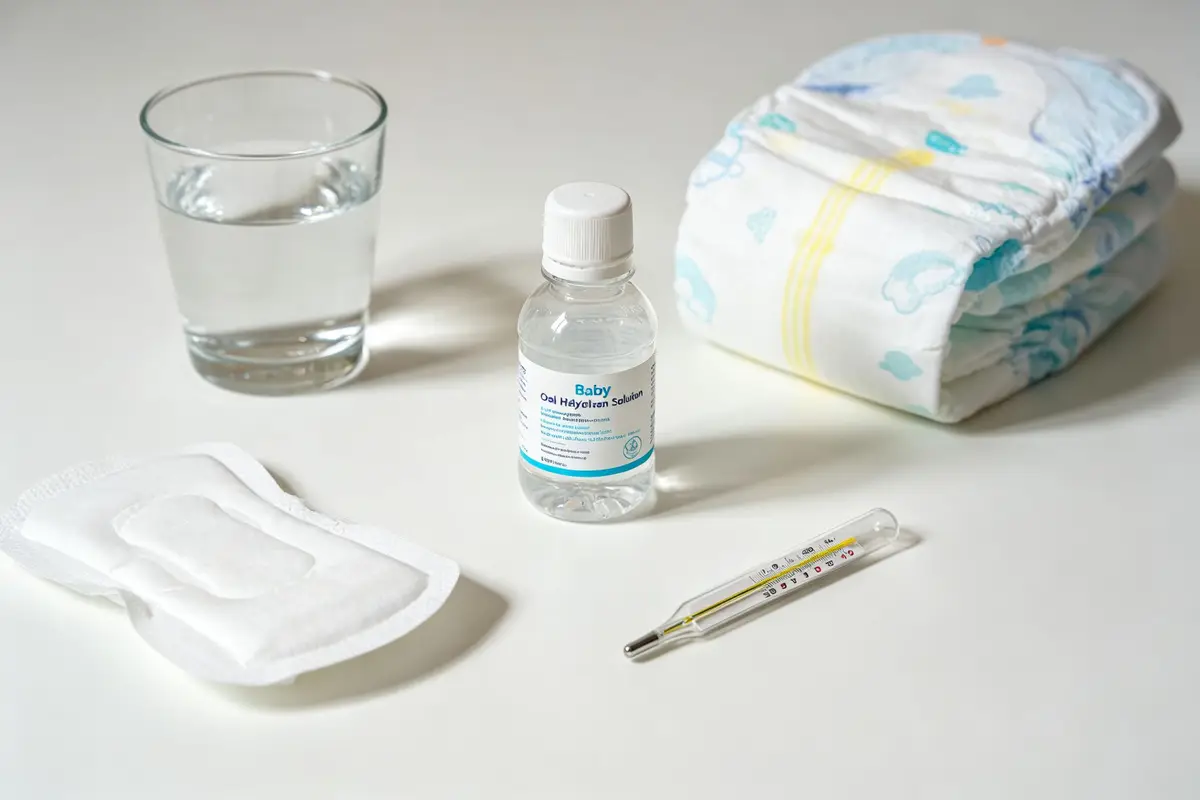
What Is Baby Diarrhea — and What Causes It?
Diarrhea in babies is defined as a sudden increase in the frequency and looseness of stool compared to the baby's normal pattern. It's important to know your baby's "normal" — breastfed babies typically have soft, seedy, mustard-colored stools that can be frequent (sometimes after every feeding), while formula-fed babies tend to have firmer, less frequent stools. Diarrhea is characterized by stools that are significantly more watery, more frequent, and larger in volume than usual, often accompanied by a change in color or a foul smell.
Common causes of baby diarrhea include:
- Viral infections: Viruses are the most common cause of diarrhea in babies. Rotavirus (now less common thanks to vaccination), norovirus, adenovirus, and astrovirus can all cause gastroenteritis (stomach flu) with diarrhea, vomiting, and sometimes fever. These viruses are highly contagious and spread easily through daycare, playgroups, and contaminated surfaces.
- Bacterial infections: Bacteria like Salmonella, E. coli, and Campylobacter can cause diarrhea, often through contaminated food or water. Bacterial diarrhea may be accompanied by blood or mucus in the stool and fever.
- Food intolerances or allergies: Some babies are sensitive to certain proteins (like cow's milk protein) or have difficulty digesting certain foods, which can cause diarrhea. This is more common when introducing new foods or switching formulas.
- Antibiotics: Antibiotics can disrupt the normal balance of bacteria in the gut, leading to diarrhea. If your baby develops diarrhea while taking antibiotics, contact your pediatrician — they may recommend probiotics or, in some cases, adjusting the medication.
- Too much juice or sugar: For babies over 6 months, too much fruit juice (especially apple, pear, or cherry juice, which contain sorbitol) can cause diarrhea. The AAP recommends no juice for babies under 1 year, and limited amounts (4 ounces or less) for toddlers.
- Parasitic infections: Parasites like Giardia can cause diarrhea, especially in settings with poor sanitation or contaminated water. This is less common but should be considered if diarrhea is persistent.
The Biggest Risk: Dehydration
The most serious complication of baby diarrhea is dehydration — the loss of too much fluid and electrolytes (sodium, potassium, chloride) from the body. Babies are at higher risk for dehydration than adults because they have a higher body water percentage, smaller fluid reserves, and can lose fluid quickly through diarrhea and vomiting. Dehydration can range from mild to severe, and severe dehydration can be life-threatening if not treated promptly.
Here are the signs of dehydration to watch for, organized by severity:
Mild to moderate dehydration:
- Fewer wet diapers — fewer than 6 wet diapers in 24 hours for infants, or no wet diaper for 6+ hours
- Dark yellow or strong-smelling urine
- Dry mouth, lips, or tongue
- Decreased tears when crying (or no tears)
- Sunken soft spot (fontanelle) on the top of the baby's head
- Less active or playful than usual, seeming tired or sluggish
- Irritability or fussiness
Severe dehydration (seek emergency care immediately):
- Very sunken eyes or fontanelle
- Extreme fussiness or lethargy, difficulty waking
- Cold, mottled, or clammy skin
- Rapid breathing or rapid heartbeat
- No urine output for 8+ hours
- Wrinkled skin that doesn't bounce back when pinched (poor skin turgor)
- Confusion or dizziness (in older babies/toddlers)
With my first baby, I checked her fontanelle constantly during her stomach bug — I'd read that a sunken soft spot was a sign of dehydration, and I wanted to catch it early. I also counted wet diapers obsessively. These are simple things you can do at home to monitor your baby's hydration status, and they gave me peace of mind during a stressful time.
How to Treat Baby Diarrhea at Home
Most cases of baby diarrhea are viral and resolve on their own within 3-7 days. The goal of home treatment is to prevent dehydration while the infection runs its course. Here's what our pediatrician recommended and what worked for us:
1. Continue Feeding (Don't Starve the Bug)
An old myth says you should stop feeding a baby with diarrhea to "rest the gut" — but this is wrong. Continuing to feed your baby provides nutrition and helps the gut recover. For breastfed babies, continue breastfeeding on demand — breast milk contains antibodies and nutrients that help fight infection and is easily digested. You may need to nurse more frequently to compensate for fluid loss. For formula-fed babies, continue offering formula at regular intervals, unless your pediatrician advises otherwise. Do not dilute formula — this can worsen electrolyte imbalances.
2. Use Oral Rehydration Solution (ORS)
Oral rehydration solution (like Pedialyte, Dioralyte, or a generic equivalent) is specially formulated to replace lost fluids and electrolytes. It's more effective than water, juice, or soda for treating dehydration, and it's safe for babies of all ages. Offer small, frequent amounts — 1-2 teaspoons every 5-10 minutes — especially if your baby is also vomiting. You can give ORS in addition to breast milk or formula, not as a replacement. We kept a stock of ORS packets in the medicine cabinet after our first stomach bug, just in case. If your baby refuses the ORS or vomits it up, try offering it with a syringe (without the needle) or a medicine dropper, in very small amounts.
3. For Babies Eating Solids: Offer the BRAT Diet (Gradually)
For babies over 6 months who are eating solids, you can gradually reintroduce bland, easy-to-digest foods as the diarrhea improves. The traditional BRAT diet (Bananas, Rice, Applesauce, Toast) can help firm up stools, but it's low in nutrition and should only be used short-term (24-48 hours) as you transition back to a normal diet. Other good options include plain crackers, boiled potatoes, plain yogurt (with live active cultures), and lean proteins like chicken. Avoid dairy (except yogurt), fatty foods, spicy foods, and high-sugar foods and juices, which can worsen diarrhea.
4. Practice Good Hygiene
Diarrhea-causing viruses and bacteria are highly contagious. Wash your hands frequently with soap and water for at least 20 seconds, especially after changing diapers and before preparing food. Use disposable diapers (not cloth) during the illness to contain the virus, and dispose of them carefully. Clean and disinfect changing surfaces, toys, and high-touch areas regularly. Keep your baby home from daycare or playgroup until the diarrhea has resolved for at least 24-48 hours, to prevent spreading the infection to other children.
What NOT to Do
- Do not give over-the-counter anti-diarrheal medications (like Imodium or Kaopectate) to babies — these can be dangerous and can slow down the elimination of the virus or bacteria, making the infection worse.
- Do not give your baby plain water in large amounts — water doesn't replace electrolytes and can cause a dangerous condition called hyponatremia (low sodium) in babies.
- Do not give fruit juice or soda — these can worsen diarrhea due to their high sugar content.
- Do not stop breastfeeding or formula feeding — continued nutrition is important for recovery.
- Do not switch formulas without talking to your pediatrician first — a temporary formula change may be recommended in some cases, but it should be done under medical guidance.
When Should I Call the Pediatrician or Seek Emergency Care?
While most cases of baby diarrhea can be managed at home, you should contact your pediatrician if:
- Your baby is under 3 months old and has diarrhea (babies this young are at higher risk for dehydration and complications)
- Diarrhea lasts more than 24-48 hours in infants, or more than 3-5 days in older babies
- You see signs of dehydration (fewer wet diapers, dry mouth, no tears, sunken fontanelle, lethargy)
- There is blood or mucus in the stool (this could indicate a bacterial infection or another condition that needs evaluation)
- Your baby has a high fever (102°F / 39°C or higher for babies 3-6 months, or any fever in babies under 3 months)
- Your baby is vomiting repeatedly and cannot keep fluids down
- Your baby seems very ill, extremely fussy, or difficult to console
- Your baby has recently traveled to a developing country (could be a parasitic or bacterial infection)
- Your baby is on antibiotics and develops diarrhea (could be antibiotic-associated diarrhea or, rarely, C. difficile infection)
Seek emergency care immediately if your baby shows signs of severe dehydration (very sunken fontanelle, extreme lethargy, cold/mottled skin, rapid breathing, no urine for 8+ hours), if there is a large amount of blood in the stool, if your baby has a seizure, or if your baby is unresponsive or difficult to wake. With our second baby, we ended up in the ER because she couldn't keep any fluids down and was showing signs of moderate dehydration — they gave her ORS through a nasogastric tube and monitored her for a few hours, and she was fine. It was scary, but catching it early made all the difference. Trust your instincts — if something seems wrong, don't wait.
Frequently Asked Questions
How long does baby diarrhea usually last?
Most cases of viral diarrhea in babies last 3-7 days, though some may last up to 10 days. Bacterial diarrhea may last longer and may require antibiotic treatment in some cases. If diarrhea lasts more than 24-48 hours in an infant under 3 months, or more than 3-5 days in an older baby, contact your pediatrician. Prolonged diarrhea (more than 2 weeks) is considered chronic and requires medical evaluation to identify the underlying cause, which could include food allergies, lactose intolerance, or a more serious condition.
Can I give my baby water for diarrhea?
Babies with diarrhea need fluids, but plain water alone is not the best choice. Water doesn't replace the electrolytes (sodium, potassium, chloride) lost through diarrhea, and giving large amounts of plain water to babies can cause a dangerous condition called hyponatremia (low blood sodium). Instead, use oral rehydration solution (ORS) like Pedialyte, which is specially formulated to replace both fluids and electrolytes. Continue breastfeeding or formula feeding as usual. For babies over 6 months, you can also offer small amounts of water in addition to ORS and milk, but ORS should be the primary fluid replacement.
Should I switch my baby's formula during diarrhea?
In most cases, you should continue your baby's regular formula during diarrhea — continued nutrition is important for recovery, and switching formulas can sometimes worsen digestive upset. However, in some cases, your pediatrician may recommend a temporary switch to a lactose-free formula, because diarrhea can temporarily damage the lining of the intestine and reduce lactase production (the enzyme that digests lactose), leading to temporary lactose intolerance. This is usually a short-term change, and most babies can return to their regular formula once the diarrhea resolves. Never switch formulas without talking to your pediatrician first.
When can my baby go back to daycare after diarrhea?
Most daycare centers require that a baby be diarrhea-free for at least 24-48 hours before returning, to prevent spreading the infection to other children and staff. This is because viral gastroenteritis is highly contagious and can spread quickly through a daycare setting. In addition to being diarrhea-free, make sure your baby is well-hydrated, eating normally, and has no fever before returning. Practice good hand hygiene at drop-off and pickup, and inform the daycare staff about the illness so they can take extra precautions with cleaning and disinfection. Some specific infections (like rotavirus or E. coli) may require a longer exclusion period or a doctor's note to return — check with your daycare's specific policies.
Article Summary
Baby diarrhea is a common condition usually caused by viral infections (like rotavirus or norovirus), though bacteria, food intolerances, antibiotics, and excess juice can also be culprits. The biggest risk is dehydration — babies lose fluid and electrolytes quickly, so it's essential to monitor for signs like fewer wet diapers, dry mouth, no tears, and a sunken fontanelle. Home treatment focuses on preventing dehydration through continued breastfeeding or formula, oral rehydration solution (ORS), and gradual reintroduction of bland foods for babies eating solids. Anti-diarrheal medications, plain water in large amounts, and juice should be avoided. Contact your pediatrician for diarrhea in babies under 3 months, persistent diarrhea, signs of dehydration, blood in stool, high fever, or repeated vomiting, and seek emergency care for severe dehydration or other concerning symptoms. With prompt hydration, good hygiene, and medical guidance when needed, most babies recover fully from diarrhea within a week.