
2026-09-07 · Moni Happy Mom
Baby Eczema: Causes, Treatment & Skincare Routine — A Mom's Guide
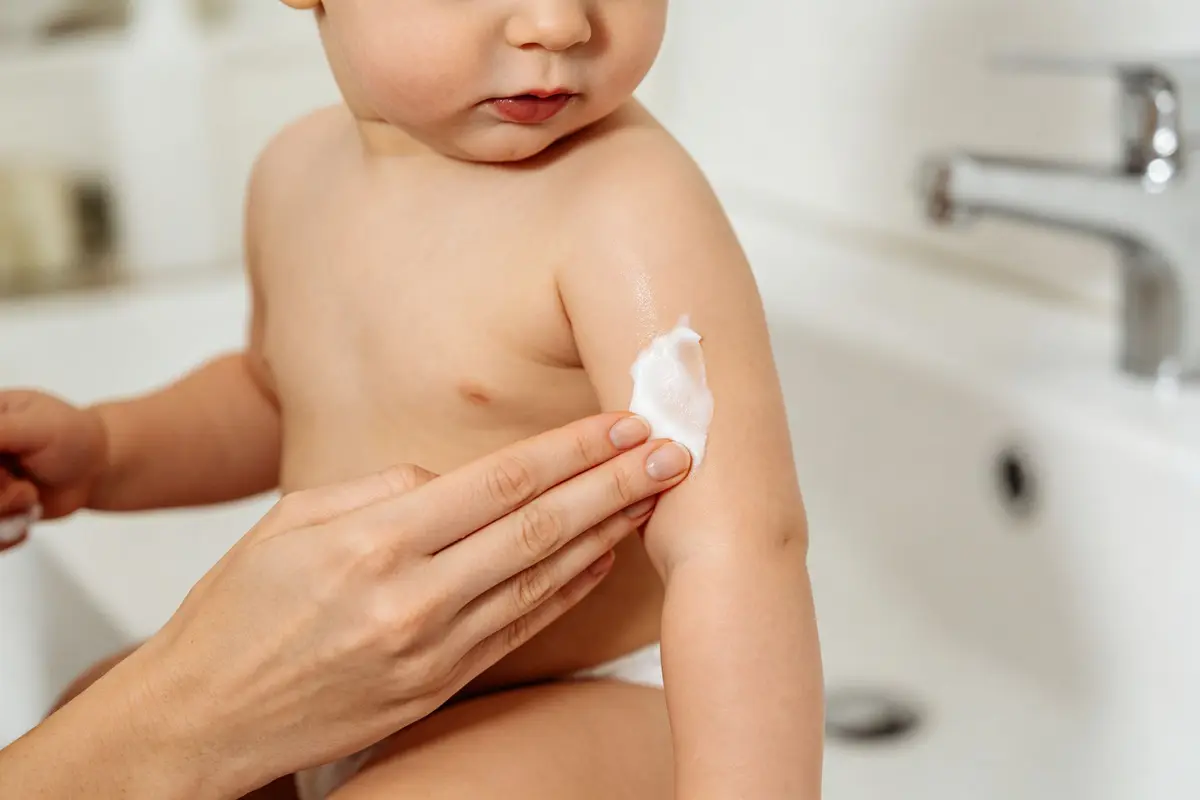
When my second baby was about 4 months old, I noticed red, itchy patches on her cheeks and behind her knees. At first I thought it was just baby acne or dry skin, but it kept getting worse — she was scratching until she bled, and nothing I tried seemed to help. Our pediatrician diagnosed it as atopic dermatitis, more commonly known as baby eczema. After months of trial and error, countless doctor visits, and a skincare routine that would make a esthetician proud, we finally got it under control. If your baby has eczema, I know how overwhelming it can feel. Here's what I've learned from my own experience and from working with our pediatrician and a pediatric dermatologist.
What Is Baby Eczema?
Baby eczema (atopic dermatitis) is a chronic, inflammatory skin condition that causes red, itchy, dry patches on a baby's skin. It's the most common skin condition in babies, affecting about 15-20% of infants worldwide. Eczema usually appears in the first 6 months of life, though it can develop later. In babies, it most commonly appears on the face (especially the cheeks), scalp, behind the ears, and in the creases of the elbows and knees. As babies get older and become more mobile, it often shifts to the inside of the elbows and behind the knees.
Eczema is not contagious — you can't catch it from or spread it to another person. It's also not caused by poor hygiene, despite what some well-meaning relatives might suggest. Eczema is a complex condition with genetic and environmental factors. Babies with eczema have a compromised skin barrier — their skin doesn't hold moisture as well and is more susceptible to irritants, allergens, and bacteria. This leads to dryness, inflammation, and itching, which creates a cycle: the skin is dry and itchy, the baby scratches, scratching damages the skin further, which causes more inflammation and itching.
What Causes Baby Eczema?
The exact cause of eczema isn't fully understood, but it's believed to be a combination of genetic and environmental factors:
- Genetics: Eczema tends to run in families. If one or both parents have eczema, asthma, or allergies (the "atopic triad"), their baby is more likely to develop eczema. About 70% of babies with eczema have a family history of atopic conditions.
- Immune system dysfunction: Babies with eczema have an overactive immune response to triggers, causing inflammation in the skin.
- Skin barrier defect: Many babies with eczema have a mutation in the gene that produces filaggrin, a protein that helps maintain the skin's protective barrier. Without enough filaggrin, the skin loses moisture more easily and is more vulnerable to irritants and allergens.
- Environmental triggers: Common triggers include dry air, heat and sweating, harsh soaps and detergents, fragranced products, wool or synthetic fabrics, certain foods (in some babies), and allergens like dust mites and pet dander.
It's important to note that eczema is not caused by a specific food allergy in most cases. While some babies with eczema may also have food allergies, food allergy is the primary cause in only a small percentage of eczema cases. Don't eliminate foods from your baby's diet (or your own, if breastfeeding) without talking to your pediatrician first — unnecessary food restrictions can lead to nutritional deficiencies.
How Is Baby Eczema Treated?
The main goals of eczema treatment are: repair and protect the skin barrier, reduce inflammation and itching, prevent flare-ups, and prevent infection. Here's the treatment approach that worked for us, under the guidance of our pediatric dermatologist:
1. Moisturize, Moisturize, Moisturize
This is the single most important thing you can do for your baby's eczema. Moisturizing helps repair the skin barrier, lock in hydration, and reduce flare-ups. Here's what I learned:
- Use ointments or thick creams, not lotions. Ointments (like petroleum jelly) and thick creams contain more oil and less water, which makes them more effective at locking in moisture. Lotions are mostly water and can actually dry out the skin as the water evaporates. We used a thick, fragrance-free ointment applied multiple times a day.
- Apply moisturizer within 3 minutes of bathing. This is the "soak and seal" method — bath to hydrate the skin, then immediately apply moisturizer to lock it in. We did this every night without fail.
- Apply moisturizer at least 2-3 times a day. We applied after every diaper change, after bath time, and before bed. During flare-ups, we applied even more frequently — up to 5-6 times a day.
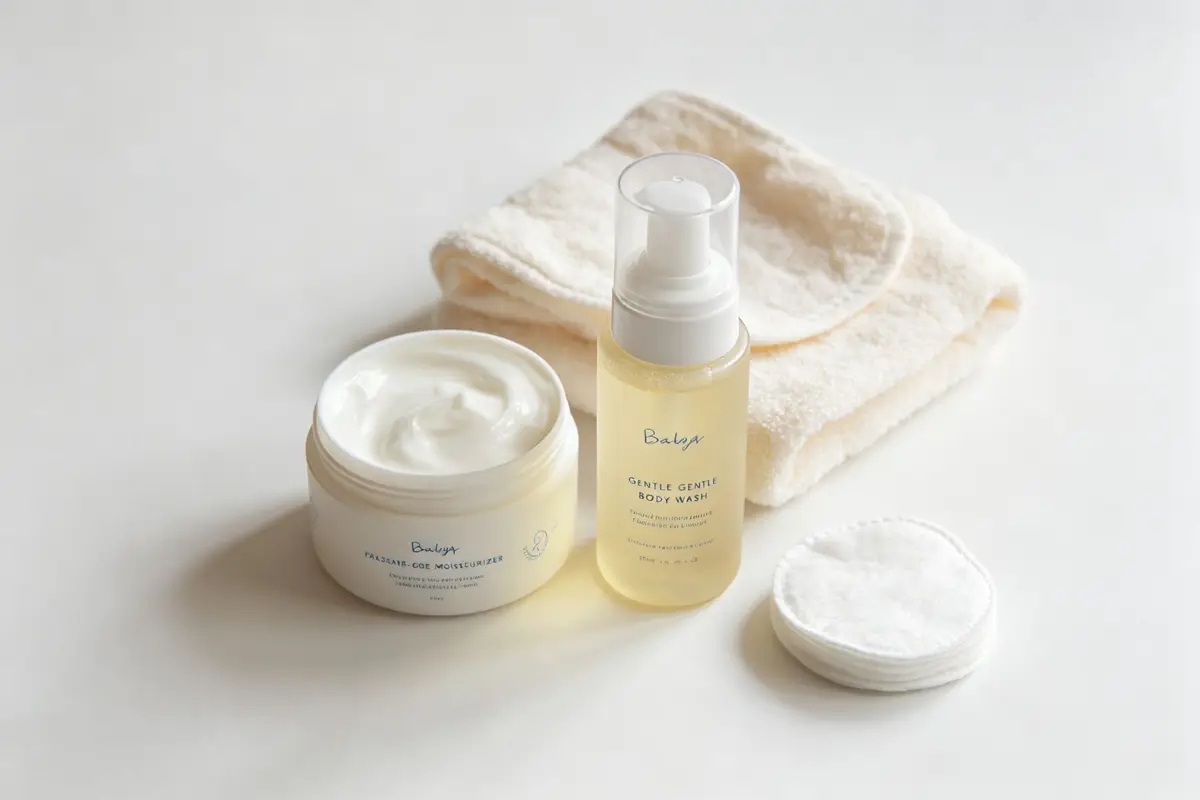
- Choose fragrance-free, hypoallergenic products. Look for products labeled "fragrance-free" (not "unscented," which can contain masking fragrances) and "hypoallergenic." Avoid products with alcohol, fragrances, dyes, or essential oils, which can irritate eczema-prone skin. We kept a soft, fragrance-free washcloth and gentle cleanser specifically for eczema-prone skin.
2. Bathing Best Practices
Contrary to what some people believe, regular bathing is actually good for eczema — it hydrates the skin and removes irritants and bacteria. The key is to do it correctly:
- Use lukewarm (not hot) water — hot water can dry out the skin and trigger itching
- Keep baths short — 5-10 minutes is ideal
- Use a gentle, fragrance-free cleanser only on dirty areas (diaper area, armpits, behind ears), not all over the body
- Pat (don't rub) the skin dry with a soft towel, leaving it slightly damp
- Apply moisturizer within 3 minutes of getting out of the bath
3. Topical Medications
During flare-ups, moisturizing alone may not be enough, and your pediatrician may prescribe topical corticosteroids (steroid creams or ointments) to reduce inflammation. I know many parents are nervous about using steroid creams on their babies, but when used correctly under medical supervision, they're safe and effective. Here's what I learned:
- Use the weakest strength that controls the flare-up — your doctor will prescribe the appropriate strength based on your baby's age and the severity and location of the eczema
- Apply a thin layer to the affected areas only, not all over the body
- Apply the medication first, then moisturizer over the top (or as directed by your doctor)
- Use for the prescribed duration — don't stop early just because the skin looks better, but also don't use longer than prescribed
- For the face and skin folds, use only the mildest steroids as directed — the skin in these areas is thinner and more sensitive
In some cases, your doctor may also prescribe topical calcineurin inhibitors (like tacrolimus or pimecrolimus), which are non-steroid anti-inflammatory medications. These can be useful for sensitive areas like the face or for long-term management.
4. Identify and Avoid Triggers
Every baby's eczema is different, and what triggers a flare-up in one baby may not affect another. Common triggers to watch for include:
- Heat and sweating: Keep your baby cool — dress in lightweight, breathable clothing, avoid over-bundling, and keep the room temperature comfortable (around 68-72°F / 20-22°C)
- Harsh fabrics: Dress your baby in soft, breathable cotton clothing. Avoid wool, polyester, and other synthetic fabrics that can irritate the skin. Wash new clothes before wearing to remove chemical residues
- Harsh detergents: Use a fragrance-free, dye-free laundry detergent, and avoid fabric softeners and dryer sheets. Double-rinse baby clothes if possible
- Fragranced products: Avoid fragranced lotions, soaps, shampoos, and wipes. Use fragrance-free, hypoallergenic products instead — we switched to fragrance-free, hypoallergenic wipes and noticed a difference
- Dry air: Use a humidifier in your baby's room during dry months or if you have central heating/air conditioning
- Scratching: Keep your baby's nails short and smooth to minimize skin damage from scratching. During flare-ups, you can use soft cotton mittens at night to prevent scratching
When Should I See a Doctor?
While mild eczema can often be managed at home with a good skincare routine, you should see your pediatrician or a pediatric dermatologist if:
- The eczema is moderate to severe, widespread, or not improving with moisturizing alone
- The eczema is interfering with your baby's sleep, feeding, or daily activities
- Your baby is scratching until the skin bleeds
- You notice signs of infection — oozing, crusting, pus, increased redness, warmth, swelling, or fever
- The eczema appears suddenly and is accompanied by other symptoms like hives, swelling, or difficulty breathing (which could indicate an allergic reaction)
- You're unsure whether it's eczema or another skin condition
In our case, we saw our pediatrician first, who referred us to a pediatric dermatologist when the eczema didn't improve with basic measures. The dermatologist prescribed a mild topical steroid for flare-ups, gave us a detailed skincare routine, and helped us identify our baby's specific triggers. Within a few weeks, her skin was dramatically better, and within a few months, she was mostly flare-up free. Many babies outgrow eczema — about 50% see significant improvement by age 5, though some continue to have sensitive skin into adulthood.
Frequently Asked Questions
Is baby eczema contagious?
No, baby eczema is not contagious. It's a chronic inflammatory skin condition caused by a combination of genetic and environmental factors, not by a virus or bacteria. You cannot catch eczema from touching a baby who has it, and a baby with eczema cannot spread it to other children. However, if eczema becomes infected (which can happen when scratching breaks the skin), the infection itself may be contagious — signs of infection include oozing, crusting, pus, and increased redness, and require medical attention.
Will my baby outgrow eczema?
Many babies do outgrow eczema, though it varies from child to child. About 50% of children with eczema see significant improvement or complete resolution by age 5, and many more improve by adolescence. However, some children continue to have eczema or sensitive skin into adulthood. The good news is that eczema tends to become less severe as children get older, and with proper management, most children with eczema can live comfortable, active lives. Even if your baby doesn't completely outgrow it, good skincare habits established in infancy can make a big difference long-term.
Can breastfeeding prevent eczema?
Breastfeeding may offer some protective effect against eczema, especially in babies with a family history of atopic conditions (eczema, asthma, allergies). Some studies suggest that exclusive breastfeeding for the first 3-4 months may reduce the risk of eczema in high-risk infants. However, breastfeeding is not a guarantee — many breastfed babies develop eczema, and many formula-fed babies don't. If your baby has eczema and you're breastfeeding, you don't need to eliminate foods from your diet unless your doctor specifically recommends it based on testing. Focus on a healthy, balanced diet and continue breastfeeding as long as you and your baby are comfortable.
What's the best moisturizer for baby eczema?
The best moisturizer for baby eczema is one that is thick, fragrance-free, hypoallergenic, and that your baby tolerates well. Ointments (like petroleum jelly) are the most effective at locking in moisture because they contain the most oil and the least water, though some parents find them too greasy. Thick creams are the next best option and are often more cosmetically acceptable. Lotions are generally not recommended for eczema because they contain mostly water and can dry out the skin as the water evaporates. Look for products labeled "fragrance-free" (not "unscented"), "hypoallergenic," and "for sensitive skin" or "for eczema-prone skin." Apply within 3 minutes of bathing and at least 2-3 times a day.
Article Summary
Baby eczema (atopic dermatitis) is a common, non-contagious inflammatory skin condition affecting 15-20% of infants, caused by a combination of genetic factors (especially filaggrin mutations and family history of atopy) and environmental triggers. The cornerstone of treatment is frequent moisturizing with thick, fragrance-free ointments or creams applied within 3 minutes of bathing, along with gentle bathing practices and identifying/avoiding individual triggers like heat, harsh fabrics, fragranced products, and sweating. Moderate to severe flare-ups may require prescription topical corticosteroids or calcineurin inhibitors under medical supervision. Many babies outgrow eczema by age 5, and with proper management, most can live comfortably. See a doctor if eczema is severe, not improving, interfering with sleep, or showing signs of infection.