
2026-09-23 · Moni Happy Editorial
Baby First Food: When, What, and How Much to Start
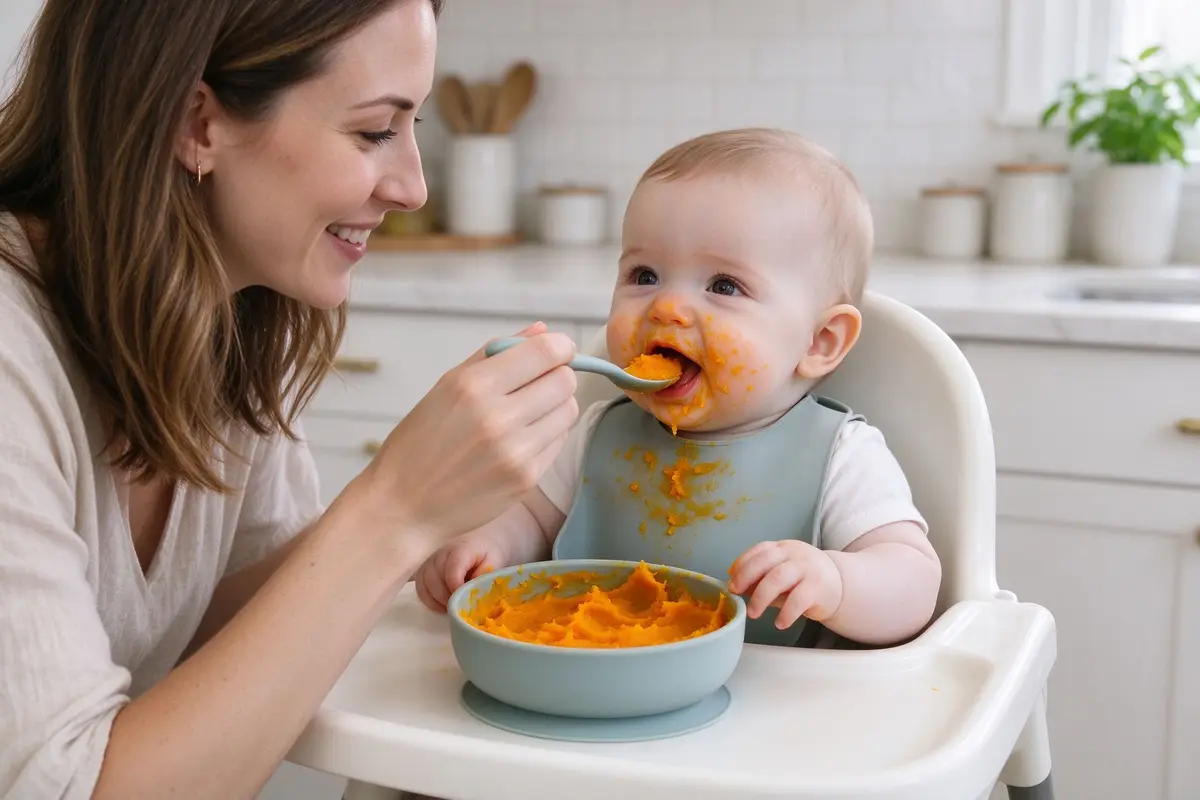
Most babies are ready for their first food around 6 months old, when they can sit unassisted, hold their head up, and show interest in your food. The AAP and WHO both recommend starting solids around 6 months, with iron-rich foods like iron-fortified cereal, pureed meat, or well-cooked beans as the first choice.
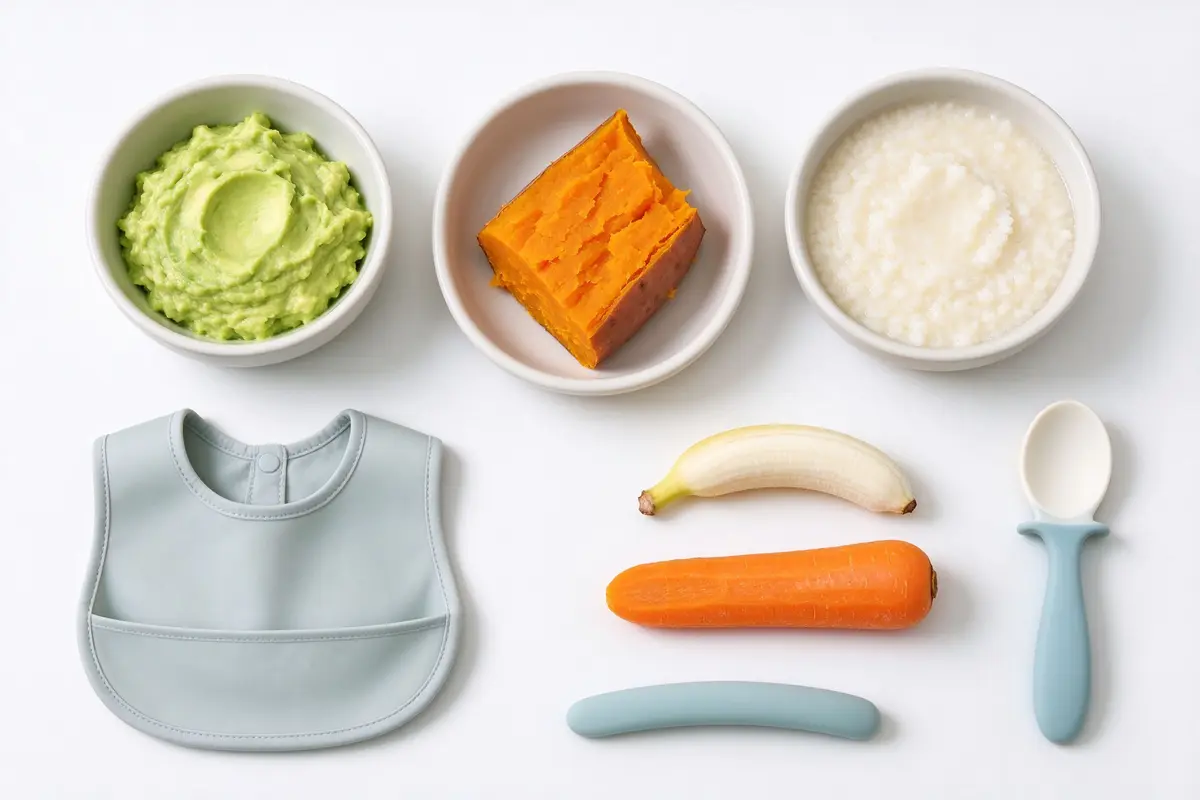
When Is My Baby Ready for Their First Solid Food?
Most babies are ready around 6 months old. Look for these signs: sitting unassisted for a few seconds, holding their head steady, opening their mouth when food comes, leaning forward, and showing interest in what you're eating. The AAP says every baby is different — some are ready at 5 months, others closer to 7 months. Never start before 4 months, as the gut and immune system aren't ready.
What Is the Best First Food for a Baby?
The best first food is iron-rich. The AAP and WHO both recommend iron-fortified infant cereal, pureed meat (chicken, turkey, lentils), or well-cooked beans as first foods. Historically rice cereal was standard, but today experts note that iron is the most critical nutrient at 6 months. Pureed sweet potato, avocado, or banana are fine as secondary foods. Start with 1 to 2 teaspoons once a day, then increase slowly.
How Much Should My Baby Eat at Each Meal in the First Month?
In the first month of solids, expect 1 to 4 teaspoons per meal, once or twice a day. The AAP emphasizes that breast milk or formula remains the main nutrition source until 12 months. Most babies will spit out, play with, or reject food at first — this is normal exploration. By 8 months, most babies eat 2 to 3 tablespoons per meal 2 to 3 times a day.
How Often Should I Offer New Foods?
Introduce one new food at a time, waiting 3 to 5 days between new foods to watch for reactions (rash, vomiting, diarrhea). The AAP notes that common allergens — peanut, egg, dairy, wheat, soy, fish, and tree nuts — should be introduced early and around 6 months, not delayed. In fact, early introduction of peanut around 6 months reduces the risk of peanut allergy by up to 80%, per LEAP study.
Is Baby-Led Weaning Better Than Purees?
Both approaches work. The AAP says there is no evidence that baby-led weaning (offering finger foods from the start) is nutritionally better than traditional purees. What matters is that iron-rich foods are offered, textures progress appropriately, and mealtimes are supervised. Many parents combine both — purees first, then finger foods by 7 to 8 months. Always stay within arm's reach and avoid choking hazards like whole grapes, nuts, or chunks of hard food.
Bottom line: Start solids around 6 months when baby sits, holds their head up, and shows food interest. Choose iron-rich first foods like fortified cereal or pureed meat, start with 1 to 2 teaspoons, and introduce allergens early. Breast milk or formula remains the main nutrition source through 12 months.
Frequently Asked Questions
When should my baby start solid food?
Most babies are ready around 6 months old, when they sit unassisted, hold their head steady, and show interest in food. Never start before 4 months.
What is the best first food for a baby?
Iron-rich foods are best: iron-fortified cereal, pureed meat, or well-cooked beans. The AAP and WHO both recommend prioritizing iron at 6 months.
How much food should a 6-month-old eat?
Start with 1 to 2 teaspoons once a day. Breast milk or formula remains the main nutrition source until 12 months.
When should I introduce common allergens?
Introduce peanut, egg, dairy, wheat, soy, fish, and tree nuts early around 6 months, waiting 3 to 5 days between each new food.