
2026-09-18 · Moni Happy Editorial
Baby First Words: How Language Develops and How to Help
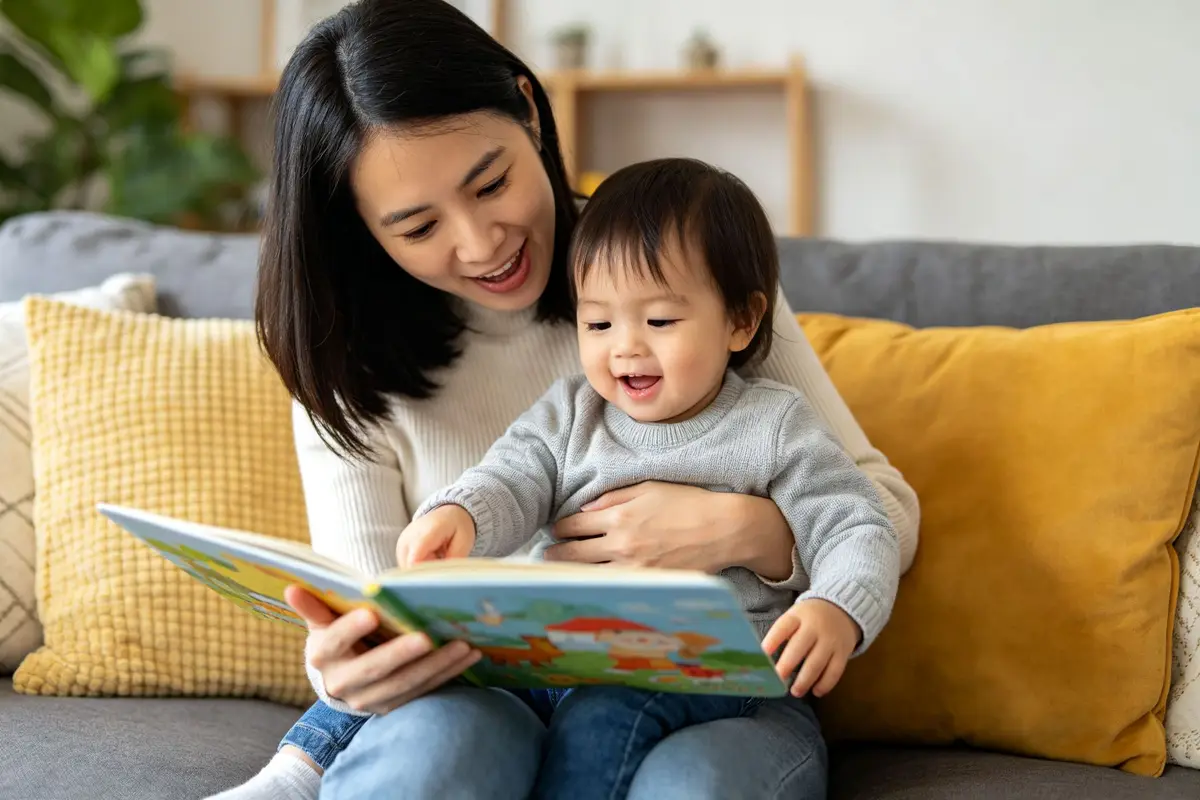
The day my baby said her first word — "mama" — I cried. She looked right at me and said it clear as day. I had been waiting for that moment for months. Language development is one of the most magical parts of parenting. Here's what I've learned about encouraging baby's first words without pushing too hard.
When Do Babies Say Their First Words?
Most babies say their first word around 12 months, though the range is wide — anywhere from 9 to 18 months is considered normal. First words are usually "mama," "dada," "hi," or "bye-bye." By 18 months, most babies say about 10-20 words. By 2, they're putting two words together ("more milk," "big dog"). Before first words, babies communicate through gestures (waving, pointing), sounds, and eye contact. This pre-language communication is just as important as words. If your baby isn't using any gestures or sounds by 12 months, or isn't saying any words by 18 months, mention it to your pediatrician. Early intervention can help if there's a delay, but many babies simply take their time.
How to Encourage Language Development
Here's what works: Talk to your baby all day. Narrate what you're doing: "I'm making your bottle. Here's the warm milk." This builds vocabulary. Read every day. Books are one of the best language tools. Even if they just chew the pages, it counts. Sing songs and nursery rhymes. The rhythm helps language processing. Respond to their babbling. When they say "ba-ba-ba," respond like you're having a conversation. Name everything. "This is a dog. The dog says woof." Give them time to respond. Don't fill every silence. Wait 5-10 seconds after you talk — they may be processing. Use simple, clear language. Short sentences, exaggerated intonation (parentese), and repetition help. For storytime, soft Moni Happy's tissues keep little noses clean during book time. Explore Moni Happy's collection for daily essentials.
What Doesn't Help
Screen time (under 18 months) doesn't help language development — videos don't replace real human interaction. Don't push or pressure your baby to speak. Every child develops at their own pace. If you're worried about hearing, speech, or social interaction, talk to your pediatrician. Early hearing tests and speech evaluations are simple and can rule out issues. Enjoy these early moments — they grow up fast.
Frequently Asked Questions
When do babies say their first words?
Most say their first word around 12 months, but 9-18 months is normal. By 18 months, most say 10-20 words. By age 2, they put two words together. Before words, babies communicate through gestures, sounds, and eye contact.
How can I encourage my baby to talk?
Talk to them all day and narrate your actions, read books daily, sing songs, respond to babbling, name everything around them, and give them time to respond. Use simple, clear language. Avoid screen time under 18 months.
Should I be worried if my baby isn't talking?
Mention it to your pediatrician if no gestures or sounds by 12 months, or no words by 18 months. Early intervention can help if there's a delay, but many babies simply take their time. Every child develops at their own pace.
Does screen time help baby language development?
No. Screen time under 18 months does not help language development. Videos do not replace real human interaction. The best language tool is talking, reading, and interacting face-to-face with your baby.